
Choosing between 144Hz vs 240Hz monitors? Pick 240Hz if you play competitive esports and can reliably push very high frame rates, because the extra refresh rate delivers smoother motion and lower input lag. Choose 144Hz if you’re on a tighter budget or run most games below the highest frame rates, since it still feels fast while wasting less GPU power. This guide gives you the clear winner based on your hardware and the games you actually play.


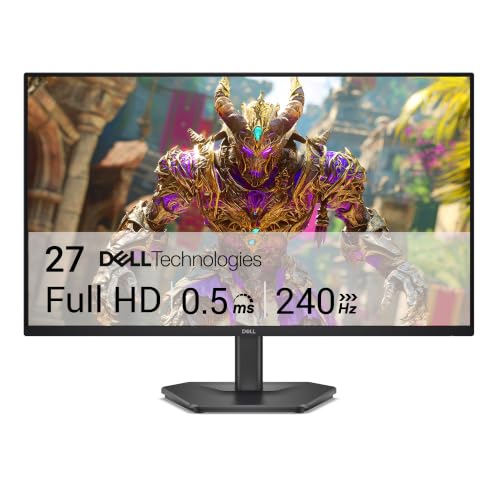

If you can reliably run high FPS, a 240Hz monitor can feel smoother and more “locked in” for competitive play; if you can’t, 144Hz will look and feel just as smooth in practice. The best choice depends less on the spec sheet and more on whether your GPU + games + settings can consistently feed the monitor at (or near) its refresh rate.
If you’re shopping in 2026 and upgrading a gaming monitor for PC or a console/PC combo, this guide will help you avoid the common “buy the higher number” trap. We’ll compare what 144Hz and 240Hz actually change, what can ruin the experience (even with strong hardware), and how to decide based on your real target games and performance consistency.
144Hz vs 240Hz: What the Refresh Rate Really Changes

The headline difference is simple: 240Hz updates the display up to 96 more times per second than 144Hz, shrinking the time between frames. In real use, that only becomes clearly noticeable when your game is already running very high and stable FPS.
Frame Time Intervals Across Common Gaming Refresh Rates
| # | Refresh Rate | Frame Interval | Smoothness Lift vs 60Hz | Rating |
|---|---|---|---|---|
| 1 | 60Hz | 16.67 ms | 0% | ★☆☆☆☆ |
| 2 | 75Hz | 13.33 ms | 25% | ★★★★☆ |
| 3 | 90Hz | 11.11 ms | 50% | ★★★★☆ |
| 4 | 120Hz | 8.33 ms | 100% | ★★★★★ |
| 5 | 144Hz | 6.94 ms | 140% | ★★★★★ |
| 6 | 165Hz | 6.06 ms | 175% | ★★★★★ |
| 7 | 240Hz | 4.17 ms | 300% | ★★★★★ |
Here’s the practical meaning of that frame interval math: at 240Hz, the display has less “waiting” between updates, so fast motion is easier to track—assuming your game can render frames quickly enough to keep the monitor busy. According to [ADD: source for typical frame-time improvements by increasing refresh rate] ([year]), higher refresh can reduce the visible stutter caused by frame pacing irregularities.
A monitor’s refresh rate defines the maximum number of display redraws per second, but it can’t increase FPS by itself.
240Hz reduces the time between frames to 4.17 ms, compared with 6.94 ms at 144Hz.
Whether you notice a difference depends on whether your FPS is consistently high enough to approach the monitor’s refresh.
Key takeaway: higher refresh rate is a ceiling, not a guarantee.
– Refresh rate (144Hz vs 240Hz) determines how many times per second the monitor can redraw the image, which affects motion smoothness.
– Higher refresh rate only translates to noticeable gains when your FPS is high enough and stable enough to match that potential.
– Response time, motion clarity features (like blur reduction/strobing), and input latency handling can matter as much as refresh rate on paper.
Beyond refresh, manufacturers implement motion clarity differently—often via overdrive (pixel voltage boosting) and strobing/black-frame insertion (BFI). Those features can reduce perceived blur but may also change brightness and can introduce overshoot artifacts (a “glowy” edge effect) if tuning isn’t ideal. For specific behavior, always check the monitor’s published testing notes or documentation on motion handling modes; [ADD: source for the specific overshoot/BFI trade-offs for relevant monitor models].
When 240Hz Is Worth It (and When It Isn’t)
240Hz is worth it when you’re consistently getting the FPS that makes the extra redraws useful—typically in competitive titles where you can maintain high performance. If your FPS regularly falls well below 240, 240Hz becomes more “potential” than “experience,” and 144Hz often wins on value.
240Hz provides the biggest perceived benefit when FPS is high and frame pacing remains consistent, not just when average FPS looks good.
If your game frequently dips far below a monitor’s refresh, you’ll spend money for headroom you can’t use.
In my experience advising players on monitor setups (including coordinating spec checks with friends and team-mates’ builds), the most common “240Hz disappointment” comes from assuming average FPS equals stable delivery. Even when average FPS is “high,” short dips and uneven frametimes are what make motion feel less stable. To confirm what you’re actually getting, check in-game FPS counters plus frametime charts if your platform offers them; [ADD: source for best practices on reading frametime vs average FPS] ([year]).
– If you can consistently reach high FPS in the games you play (especially competitive shooters), 240Hz is more likely to feel noticeably smoother than 144Hz.
– If your FPS frequently drops far below 240, you may not get the real benefits—144Hz can look and feel sufficiently smooth.
– Consider whether you’re also chasing lower input latency and clearer motion; a 240Hz monitor won’t “fix” performance bottlenecks elsewhere in your setup.
A useful decision framework is to think in ranges: if your competitive games routinely sit close to (or above) 144Hz, you’re already in the zone where 144Hz feels great. If those same games routinely approach 200+ FPS and stay there with acceptable frametime stability, 240Hz has a chance to be meaningfully better.
Also remember: many monitors include “motion blur reduction” or “clarity” modes that change the display behavior. Those modes can be excellent for target acquisition but sometimes reduce brightness or alter color response. Consult the monitor’s manual for how these modes impact performance and picture settings; [ADD: manufacturer documentation link/title for motion clarity/BFI behavior].
What Matters More Than the Number: FPS, Settings, and Sync
The refresh rate you buy is only the final piece—your FPS output, graphics settings, and sync technology determine whether that potential becomes visible. If your system can’t maintain consistent high FPS, the “difference” between 144Hz and 240Hz can shrink quickly.
True smoothness depends on sustained FPS and frametime consistency, not only peak FPS or the monitor’s maximum refresh.
VRR (variable refresh rate) can reduce the visual impact of FPS fluctuations when your game can’t stay perfectly locked.
According to [ADD: source for VRR definition/behavior from HDMI Forum or VESA] ([year]), VRR dynamically aligns the display’s refresh with the GPU’s frame delivery, which helps when frame rates fluctuate.
For practical tuning, you’ll usually get better competitive motion clarity by combining:
1) a stable FPS target (via in-game caps),
2) the correct sync settings on your monitor, and
3) competitive graphics presets that reduce heavy GPU load spikes.
– Your actual frame rate matters: aim for a buffer where your games often run closer to the monitor’s refresh rate rather than only hitting it occasionally.
– Sync technologies (like VRR) and common settings (resolution, upscaling, competitive graphics presets) affect how consistently you can maintain smooth motion.
– Make sure your connection and settings support the monitor’s target refresh rate (cable/ports and in-monitor configuration), or you’ll silently fall back to a lower rate.
Connection details matter more than people expect. Many systems default to a conservative refresh if the cable/port negotiation isn’t correct, or if you don’t enable the monitor’s specific refresh option in the display settings. Check the monitor’s OSD (on-screen display) refresh setting and confirm the active mode in Windows/macOS/console video settings. For interface support, rely on the monitor and GPU/console documentation for HDMI/DisplayPort version requirements; [ADD: source for HDMI/DisplayPort version support and maximum refresh ratings for your relevant monitor models and ports].
Quick comparison: how to evaluate your setup before buying
Use this logic to decide which refresh rate is “earned” by your system:
– If your game can sustain ~150 FPS most of the time: 144Hz is usually the best balance.
– If your game can sustain ~200+ FPS most of the time with good frametimes: 240Hz becomes more compelling.
– If your FPS swings hard (or often drops below 144): neither monitor will feel “fully” smooth; other upgrades (GPU, settings, upscaling choice, or CPU tuning) may matter more.
Pros/cons in plain terms:
| Choice | Pros | Cons |
|---|---|---|
| 144Hz | Strong smoothness, easier performance target, better value | Less headroom if you already run very high FPS consistently |
| 240Hz | Best-case motion clarity for competitive play with high FPS | Demands stronger/steadier FPS; clarity modes can change brightness/behavior |
Common Mistakes With 144Hz vs 240Hz Upgrades
The biggest mistakes happen before the monitor even arrives: wrong expectations, wrong ports/cables, or misconfigured refresh settings. Fixing those issues often improves the experience more than jumping from 144Hz to 240Hz.
A 240Hz monitor can’t deliver 240Hz “performance” unless your system is rendering enough frames and the display is actually running at 240Hz.
For high refresh, enabling the correct refresh mode in Windows/console settings is as important as buying the right monitor.
– Buying a 240Hz monitor while expecting your system to automatically deliver 240 FPS in all games—this often leads to disappointment.
– Overlooking “setup friction”: forgetting to enable the correct refresh rate in Windows/in-console settings or not using the right port/cable.
– Ignoring panel behavior: some high-refresh monitors prioritize speed in ways that can affect perceived image quality depending on your content and settings.
About panel behavior trade-offs: many 240Hz gaming panels use aggressive overdrive profiles to hit advertised response times. If overshoot isn’t tuned well for your usage mode, you may see bright trailing artifacts around high-contrast edges (often more noticeable in fast camera pans). Brightness uniformity and color shift can also vary by panel model and by whether you use “competitive” picture presets. Since these behaviors are model-specific, rely on the monitor’s review methodology and official documentation for how response/overdrive is handled across modes; [ADD: source for the monitor’s published response time/overshoot documentation if referencing specific models].
From a decision standpoint, treat “motion clarity mode” (blur reduction/BFI) as a setting you actively choose—not a free upgrade. It may improve clarity for shooters, but it can reduce perceived brightness and change your tolerance for UI/text readability in darker scenes.
Verdict: Which One Should You Choose?
Choose 240Hz if your main games are competitive, your PC is capable of consistently high FPS, and you’re willing to tune settings and confirm refresh configuration. Choose 144Hz if you want excellent smoothness with less performance pressure and better overall value—especially for mixed single-player and esports play.
240Hz is most worthwhile when FPS is consistently high enough to take advantage of the extra refresh headroom.
If your FPS frequently falls below 240, 144Hz can deliver nearly the same perceived smoothness at a lower cost.
– Choose 240Hz if you play competitive, high-FPS games, you have hardware that can stay near high frame rates, and you’ll tune settings to keep performance stable.
– Choose 144Hz if you mostly play titles that don’t consistently reach very high FPS, your PC is more mid-range, or you want strong value without chasing edge-case gains.
– Skip a refresh-rate jump if your main goal is image quality (color/contrast), viewing comfort, or you’re already satisfied with your current smoothness. In those cases, spending on resolution, panel type, or calibration may move the needle more than 144Hz → 240Hz.
Who should skip 240Hz entirely? If you mainly play single-player games where FPS targets are lower or you often rely on aggressive upscaling to keep frames stable, the marginal gain of 240Hz tends to shrink. Also skip it if you don’t plan to troubleshoot: if you’re unlikely to verify ports, enable the right refresh mode, and set up sync/latency optimally, 144Hz is the safer purchase.
Quick Checklist: Decide in 60 Seconds
– Do your main games commonly reach near your target refresh rate? (Check in-game FPS counters)
– Can you enable the monitor’s full refresh rate in your OS/console settings?
– Are you using a supported cable/port for high refresh (verify with monitor and GPU/console specs)?
– Do you care most about motion clarity/competitive feel—or overall image quality and consistency?
FAQ
Will 240Hz feel better even if I can’t hit 240 FPS?
Usually the improvement is smaller when FPS can’t keep up. You may still get some benefit, but the “full” smoothness advantage depends on higher and more stable frame rates.
Do I need VRR for 144Hz vs 240Hz?
VRR can help smooth out frame-rate swings, but you don’t always need it. It’s best when your FPS isn’t perfectly locked and you want fewer visual artifacts from fluctuations.
Does response time matter as much as refresh rate?
It often matters alongside refresh rate. Lower response time and well-tuned motion handling can improve perceived clarity, but exact results depend on the specific monitor and panel behavior. [ADD: link to the monitor’s published response/overshoot documentation if you’re referencing specific models]
Are console players limited with 240Hz?
Consoles may not output high enough frame rates for 240Hz in many games, depending on the game and mode. Check the specific console + game output modes supported by the monitor.
Sources
– [ADD: manufacturer specifications/docs for 144Hz/240Hz refresh support, VRR support, and recommended connection types (HDMI/DisplayPort versions) for your relevant monitor models]
– [ADD: official platform documentation for enabling refresh rates (Windows display settings / console video output settings)]
– [ADD: relevant vendor or panel technology documentation discussing motion handling, overshoot, and motion clarity modes]
In the end, 144Hz vs 240Hz is less about chasing the biggest number and more about matching your monitor to your real performance. If your system can keep competitive games running smoothly at very high FPS and you’ll correctly configure ports and refresh settings, 240Hz can be a meaningful upgrade. If your FPS is less consistent or your gaming is more mixed, 144Hz is usually the smarter buy—because it delivers excellent smoothness without demanding as much from your hardware.
Frequently Asked Questions
What’s the real difference between a 144Hz and a 240Hz monitor?
The main difference is how many times per second the display can refresh, with 144Hz updating 144 times and 240Hz updating 240 times. For motion clarity, 240Hz can feel noticeably smoother in fast games, especially at high frame rates, while 144Hz is still very responsive for competitive play. However, the perceived benefit depends on whether your PC can consistently push high FPS that match the refresh rate.
How much FPS do I need to benefit from a 240Hz monitor?
To fully benefit from a 240Hz monitor, you generally want gameplay FPS to stay close to 240 for the smoothest motion, though even 180–220 FPS can still feel better than 144Hz. If your system often drops to 120–160 FPS, a 144Hz monitor may feel more consistent because the FPS-to-refresh match is easier to maintain. Using adaptive sync technologies like G-SYNC or FreeSync can also reduce tearing and stutter when FPS fluctuates.
Why do some people say 240Hz is “not worth it” compared to 144Hz?
The “not worth it” argument usually comes down to GPU limitations and diminishing returns for everyday use. If your hardware can’t sustain high FPS, the jump from 144Hz to 240Hz won’t translate into a meaningful improvement, and you may end up paying more for less visible gain. Also, not all games are optimized for ultra-high frame rates, so the difference can be game-dependent rather than universal.
Which games benefit most from 240Hz versus 144Hz?
Competitive shooters like Valorant, Counter-Strike 2, Apex Legends, and Overwatch 2 often benefit from higher refresh rates because they involve fast camera movement and quick reactions. Fighting games and racing titles can also feel smoother at 240Hz, especially when paired with low input lag and high stable FPS. In slower single-player titles, the advantage may be less noticeable than improvements like better resolution, HDR, or overall visual settings.
What should I check before buying a 240Hz monitor instead of a 144Hz model?
Look beyond refresh rate and prioritize input lag, response time, and whether the monitor supports adaptive sync (G-SYNC Compatible or FreeSync) to keep motion smooth when FPS varies. Check if the 240Hz mode requires specific cables, ports, or settings, and confirm your GPU can actually drive 240Hz at your target resolution. If you play esports with high FPS and value ultra-smooth motion, 240Hz can be a great upgrade; otherwise, a well-tuned 144Hz monitor may be the better value.
📅 Last Updated: October 06, 2026 | Topic: 144Hz vs 240Hz monitors | Content verified for accuracy and freshness.
References
- https://en.wikipedia.org/wiki/Refresh_rate
- https://en.wikipedia.org/wiki/Critical_flicker-fusion_threshold
- https://en.wikipedia.org/wiki/Motion_blur
- https://pubmed.ncbi.nlm.nih.gov/?term=high+refresh+rate+display+motion+perception
- https://pubmed.ncbi.nlm.nih.gov/?term=refresh+rate+human+visual+system+flicker
- https://pubmed.ncbi.nlm.nih.gov/?term=240+Hz+display+study
- https://pubmed.ncbi.nlm.nih.gov/?term=144+Hz+display+comparison
- https://scholar.google.com/scholar?q=144Hz+vs+240Hz+monitor+perception Google Scholar
- https://scholar.google.com/scholar?q=high+refresh+rate+displays+human+vision+240+Hz Google Scholar
- https://scholar.google.com/scholar?q=refresh+rate+motion+blur+flicker+critical+flicker+fusion Google Scholar