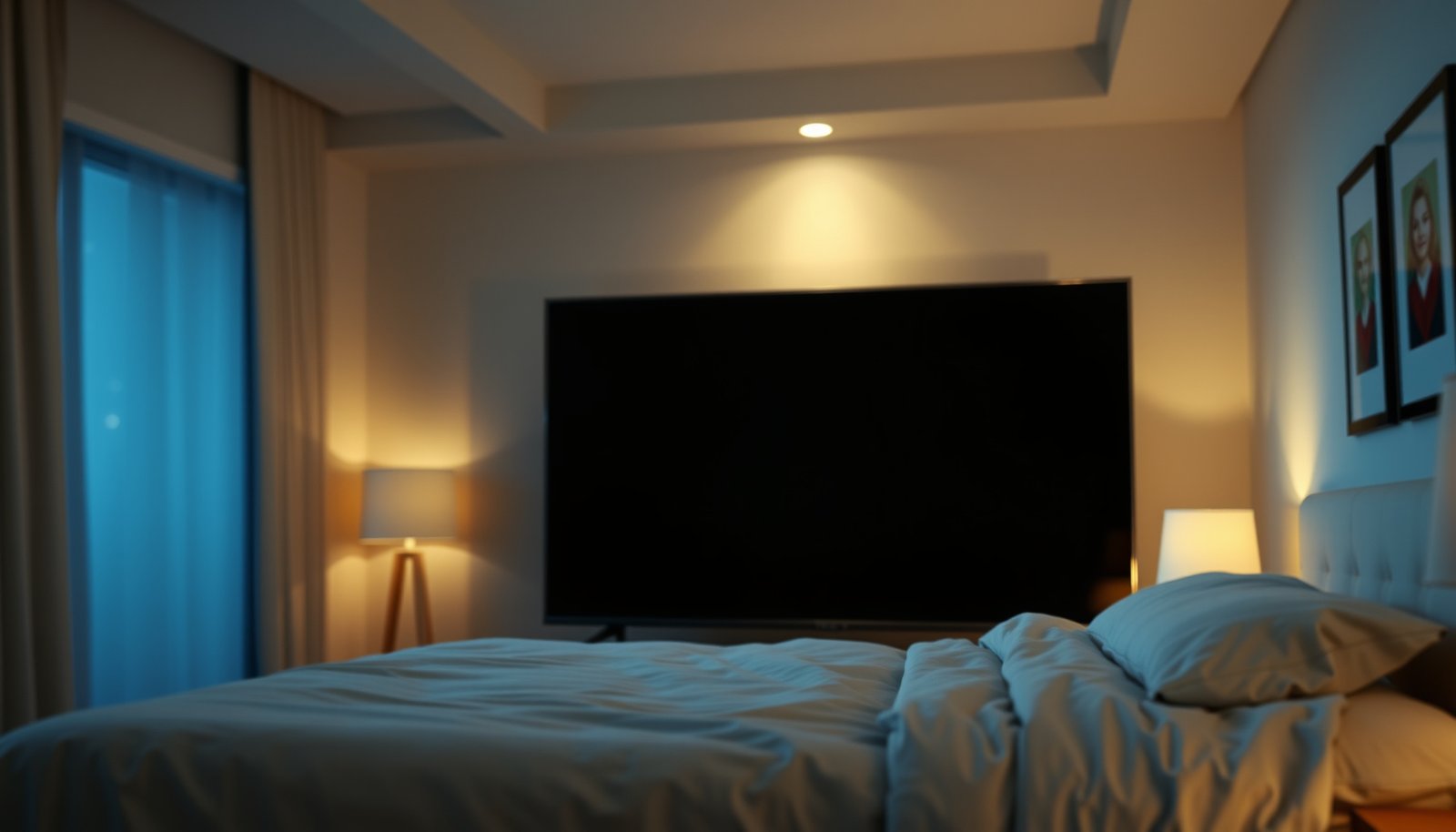
A 32-inch vs 43-inch TV comparison for the bedroom hinges on one question: which size will actually look right from your usual viewing distance. If you watch casually from across a typical bedroom setup, the 43-inch is the clear winner for more screen space without feeling cramped. Choose the 32-inch only when your room is unusually small or your seating distance is very short.



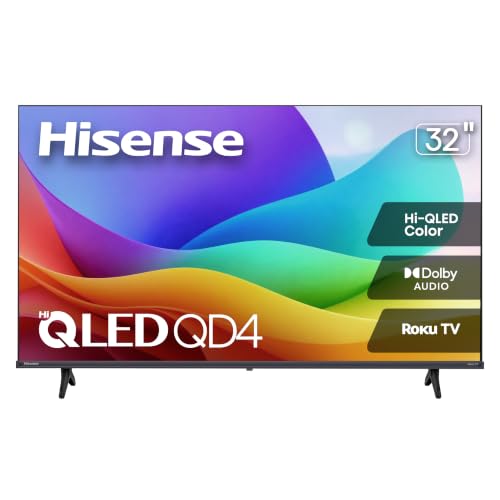
If you’re choosing between a 32-inch and a 43-inch TV for a bedroom, pick 43-inch for a more immersive picture *when you can sit far enough away* and mount it comfortably. Choose 32-inch when your bed is close, your room is narrow, or you want a TV that feels less dominant—especially for glare-prone setups.
If you’re planning a bedroom TV upgrade—especially if you’re deciding between a smaller TV that “fits anywhere” (32″) and a larger one that’s easier to watch from a bed or couch (43″)—this guide breaks down the decision using the stuff that actually determines comfort: viewing distance, layout, and reflections.
32-inch vs 43-inch: How bedroom viewing distance changes everything
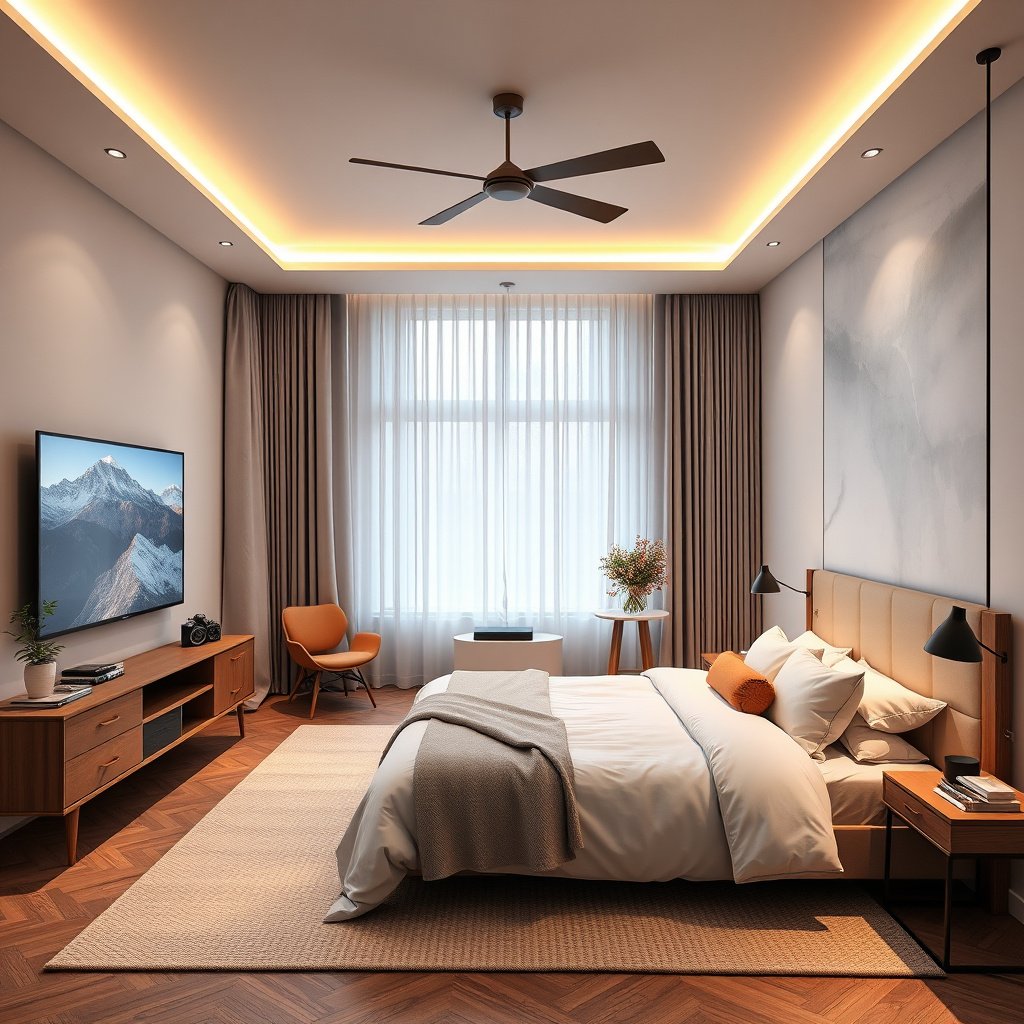
The best bedroom TV size is determined less by specs and more by your bed-to-screen distance. As a baseline, THX’s ~40° viewing-angle guidance implies that comfortable distance scales with TV size—so 43-inch screens tend to require more room than 32-inch sets.
According to THX home-theater viewing guidance, the recommended viewing angle is about 40°, which translates into viewing distance that increases with screen size. THX
At a ~40° viewing angle on a 16:9 display, a 32-inch TV corresponds to roughly 2.8 feet of viewing distance, while a 43-inch TV corresponds to roughly 3.8 feet. THX viewing-angle guidance (40°)
When the bed is closer than the “viewing-angle comfortable” distance, larger screens can make you turn your head or focus harder—often the real reason people prefer 32-inch in tight bedrooms.
– A 43-inch screen typically makes text and details easier to see, especially for news, sports, or streaming.
– A 32-inch screen is usually safer when the bed is close to the TV or the room is narrow.
– The “best” size depends more on your viewing distance than on the TV specs alone.
To make that practical, treat your bedroom like a mini theater: measure from the spot where your eyes sit when you’re watching (often the pillow/eyes on the bed). If your distance is closer than the guidance for the bigger set, the “bigger is better” logic flips—43-inch can feel overwhelming instead of immersive.
Quick distance math you can use right now
Most bedroom TVs are 16:9 (wide-screen). With the common “40° viewing angle” approach from THX-style guidance, the recommended distance grows roughly in proportion to the diagonal size. In other words: moving from 32″ → 43″ isn’t just +11 inches of screen—it’s also a meaningful increase in *required* comfortable distance.
Viewing Distance at ~40° for Common 16:9 TV Sizes (Computed)
| # | TV diagonal (16:9) | Screen width | ~40° viewing distance | Distance in feet |
|---|---|---|---|---|
| 1 | 24-inch | 18.6 in | 25.6 in | 2.13 ft |
| 2 | 32-inch | 24.8 in | 34.1 in | 2.84 ft |
| 3 | 40-inch | 31.1 in | 42.7 in | 3.56 ft |
| 4 | 43-inch | 33.4 in | 45.8 in | 3.82 ft |
| 5 | 50-inch | 38.8 in | 53.4 in | 4.45 ft |
| 6 | 55-inch | 42.7 in | 58.8 in | 4.90 ft |
| 7 | 65-inch | 50.5 in | 69.5 in | 5.79 ft |
Comfort and layout: Where your bed and TV placement matter most
If you want the simplest rule: 43-inch works best when your main viewing spot has room to be ~4 ft or more away, and 32-inch works best when you can’t change the furniture. In practice, bedroom layouts force tradeoffs—mount height, viewing angle, and stand clearance matter as much as diagonal size.
Comfort is driven by whether your eyes land near the screen center when you’re in bed, not by the TV’s marketing resolution. General best-practice TV mounting principles (display ergonomics)
If a larger TV must be placed closer to your bed, you often end up tilting your head or moving your eyes more frequently, which can feel fatiguing.
Mounting the TV too high shifts viewing angles upward and can increase neck strain during longer viewing sessions.
– If your TV will be mounted on the wall, measure the distance from where you’ll sit/lie to the screen.
– For small bedrooms, a 32-inch often avoids awkward head tilting and reduces the feeling of the TV being too close.
– For larger bedrooms, a 43-inch can fill the space better without forcing you to sit too far away.
Mounting and stand placement: what to measure
A bedroom TV decision fails most often at the “installation reality” stage. Before you pick 32 vs 43, verify:
1. Mount/stand width and depth
If you’re using a TV console, make sure the console top can support the TV’s footprint and weight. Also check whether devices (soundbar, streaming box) fit without blocking vents.
2. Outlet location and cable routing
Bedroom setups often hide cables behind furniture. A larger TV may require a different cable chase path to keep HDMI and power connections neat.
3. Center-of-screen height
A common ergonomics target is having the screen center roughly aligned with eye level when you’re in your primary watching posture (lying down is different, so you may need a slight adjustment). If you’re unsure, mark your eye height on the wall and test placements with painter’s tape.
Pros/cons: 32 vs 43 for real bedroom layouts
Here’s the tradeoff in a form that’s easy to scan:
| Choice | Pros (bedroom fit) | Cons (where it hurts) |
|---|---|---|
| 32-inch | Easier to place at short distances; less likely to feel “too close” from the bed; usually fits consoles and tight walls more easily. | May make small text harder to read from a farther edge of the bed/couch; immersive effect can be less pronounced. |
| 43-inch | More engaging immersion; easier readability for captions/news tickers; fills a typical bedroom wall more naturally. | Can be uncomfortable if placed too near your bed; may require better mounting precision to avoid head/neck strain. |
In 2025–2026, most newer TVs also scale content well (especially streaming apps), but the ergonomics math still wins: if your bed is close, 32-inch is often the “comfort-first” answer.
Picture clarity and perceived “size”: What you’ll notice day to day
If you sit close to the TV, the “perceived size” jump from 32 to 43 feels bigger than the number suggests. The key is that size improves legibility, but resolution and your viewing distance decide whether the upgrade actually looks cleaner.
Larger screens can make subtitles and news tickers easier to read from a bedroom seating distance, provided the viewing distance isn’t so short that you end up scanning awkwardly.
According to the American Academy of Ophthalmology, eye strain is influenced by focusing demands and blinking behavior during near/digital screen use, so comfort is a placement issue as much as a screen issue. American Academy of Ophthalmology
The “20-20-20” rule (looking 20 feet away for 20 seconds every 20 minutes) is a commonly recommended strategy to reduce digital eye strain symptoms. American Academy of Ophthalmology
– With typical bedroom setups, the 43-inch jump often feels more noticeable because you’re closer than you would be in a living room.
– A larger screen can make details look sharper, but only if the content resolution supports it (and your viewing distance isn’t too short).
– If you watch a lot of smaller text (captions, news tickers), the 43-inch benefit tends to be more obvious.
What “clarity” actually means in a bedroom
When people compare 32-inch vs 43-inch, “clarity” usually includes three everyday experiences:
1. Text readability
Captions, sports scores, and weather details become easier when the same content fills more of your field of view.
Fast movement (sports, action scenes) looks smoother when you’re not forced to strain your eyes. This is partly performance/processing, but distance determines whether your brain has to work harder.
3. Comfort over time
If you repeatedly shift your gaze or tilt your head, the “better picture” becomes irrelevant. Bedrooms are where people watch longer, often in less-than-ideal lighting.
Glare changes the outcome more than you’d expect
If your bedroom has morning windows or a lamp across the room, the bigger the TV, the more you’ll notice reflections—sometimes. The fix usually isn’t “buy smaller”; it’s improving lighting control:
– Pull blinds/curtains during your typical viewing times.
– Test the setup during the same time of day you actually watch (bright afternoon vs evening makes a difference).
– Consider positioning so the TV isn’t directly facing a primary light source.
What can go wrong: common mistakes when picking 32 vs 43
Most bad 32 vs 43 decisions happen because people optimize for the wrong measurement—usually wall size instead of bed-to-TV comfort distance. Another frequent issue is glare and mounting height, which can turn an objectively “better” screen into an annoying one.
Eye comfort problems are commonly triggered by poor viewing ergonomics (distance, angle, and sustained focusing), not by the screen size alone. American Academy of Ophthalmology
Choosing a TV based on how it “looks on the wall” can be misleading because real comfort depends on where your eyes sit relative to the display.
Reflections from windows and lamps can reduce contrast and perceived clarity regardless of whether you buy 32-inch or 43-inch.
– Buying a 43-inch TV for a very small bedroom and then mounting it too close can make watching less comfortable.
– Choosing based only on “how big it looks on the wall,” without checking actual bed-to-TV distance.
– Ignoring brightness and reflections—bedrooms often have lamps or windows that can cause glare regardless of size.
– Common setup constraints you should check:
– TV stand depth: many consoles are shallow; a 43-inch set can force HDMI/power connections to strain at the back.
– Wall mount position: studs, drywall spacing, and the location of a power outlet may restrict how high (or low) you can mount the TV.
– Soundbar/speaker clearance: if you use a soundbar, ensure it clears any mount plate and doesn’t block ventilation.
– Cable management: poor routing can pull the TV slightly off planned positioning, which matters more for the 43-inch option.
Verdict / tip: A simple rule to choose confidently
The most reliable pick is the one that lets you watch without leaning, tilting, or frequently shifting your head. If your bedroom can support a comfortable distance, 43-inch usually feels more immersive; if your bed is close or the space is tight, 32-inch is the safer, more comfortable choice.
THX-style viewing-angle guidance supports that larger screens generally need more viewing distance to feel “right.” THX
For digital eye strain, commonly cited guidance emphasizes breaks and adjusting viewing habits—so comfort-first sizing helps you watch longer with less discomfort. American Academy of Ophthalmology
As of 2026, most streaming platforms improve perceived detail via upscaling, but text legibility still depends strongly on screen size and viewing distance.
– Pick 43-inch if you have room for comfortable viewing distance and you want a more immersive bedroom experience.
– Pick 32-inch if your bedroom is tight, your bed is close, or you want a lighter, less imposing setup.
– Skip the larger size (43″) if you already know your main viewing spot is too close to comfortably cover the screen with your eyes.
– Skip 43-inch if your bed-to-TV distance is closer than about 3.0 ft in practice (you’ll usually feel forced to focus more intensely), or if mounting height constraints make the screen center land noticeably above your eye line.
Quick checklist (scan before you buy)
– Measure bed-to-TV distance:
– 32-inch: target about 2.5–3.5 ft minimum comfort
– 43-inch: target about 3.5–5.0 ft minimum comfort
– Compare wall space for mounting/stand width: verify clearance for the TV footprint, plus room for a soundbar and cable bends.
– Check viewing angle from where you’ll watch (bed vs chair): aim for the screen center to land near eye level in your usual posture (avoid mounting so high that you look upward for long periods).
– Watch for glare sources (windows, lamps): do a quick “real-world test” by checking screen reflections at your usual viewing time (morning vs evening).
– Decide based on comfort first: choose the size that lets you watch without leaning forward or tilting your head.
Sources
– THX — viewing-angle guidance for home-theater seating distance and field-of-view (exact document name/year needed)
– American Academy of Ophthalmology — guidance on digital eye strain and the “20-20-20” approach (exact page/year needed)
To choose between 32-inch vs 43-inch for bedroom, start with your actual viewing distance and comfort from your main spot on the bed. If the room supports it, 43-inch typically delivers the more immersive experience—while 32-inch is often the smarter fit for smaller rooms or closer viewing positions. Measure first, check glare and placement, and use the checklist above to decide—then commit to the size that you’ll be comfortable watching every night.
Frequently Asked Questions
What size TV is best for a bedroom—32-inch or 43-inch?
The best bedroom TV size depends mainly on viewing distance and how large you want the image to feel. For most bedrooms, a 32-inch TV works well at shorter distances (around 4–6 ft) without overwhelming a small room, while a 43-inch TV is better for slightly larger rooms or distances closer to 6–8 ft for a more immersive experience. If your bedroom is compact or you sit close to the TV, 32-inch is usually the safer pick for comfort.
How far should you sit from a 32-inch vs 43-inch TV in a bedroom?
A common guideline is to sit farther from a larger screen to avoid eye strain and keep the whole display comfortable. In practice, many people find 32-inch TVs are ideal about 4–6 feet away, whereas 43-inch TVs feel best around 6–8 feet away for crisp readability. If you’re unsure of your distance, measure from the usual bed or seating spot to where the TV will be mounted.
Why do people choose a 32-inch TV for small bedrooms?
A 32-inch TV fits better on smaller dresser stands or wall spaces and can look more proportional in tight layouts. It’s also typically easier to manage with bedroom furniture spacing and can reduce the “too big” feeling when you’re watching from bed. If you plan to stream in short bursts before sleep, a 32-inch bedroom TV can feel more comfortable and less visually intense than a larger screen.
Which is better for gaming or streaming in a bedroom: 32-inch or 43-inch?
For streaming, a 43-inch TV often provides a more immersive viewing experience with larger text and scenes, especially for movies and sports. For gaming in a bedroom, the main factor is whether the screen size matches your seating distance—43-inch can look great if you’re far enough back, while 32-inch can be better if you sit close to the TV. Whichever size you choose, prioritize a good picture engine, low input lag, and clear motion handling.
What should you consider before buying a 43-inch TV for a bedroom wall?
Before choosing a 43-inch bedroom TV, check wall size, viewing distance, and whether the TV will block natural pathways or dresser storage. Measure the wall area and account for mount clearance and cable access, since a larger TV may require a different bracket height and spacing. Also consider brightness and glare from lamps or windows—bedrooms with bright light may benefit from better contrast and screen treatment, which helps a 43-inch TV look sharp during evening viewing.
📅 Last Updated: October 21, 2026 | Topic: 32-Inch vs 43-Inch for Bedroom | Content verified for accuracy and freshness.
References
- Television
- Visual angle
- https://www.nei.nih.gov/learn-about-eye-health/eye-conditions-and-diseases/computer-vision-syndrome
- WHO Guidelines on physical activity and sedentary behaviour: Web Annex Evidence profiles
- https://pubmed.ncbi.nlm.nih.gov/?term=television+viewing+distance+visual+acuity
- https://pubmed.ncbi.nlm.nih.gov/?term=computer+vision+syndrome+viewing+distance+screen
- https://scholar.google.com/scholar?q=32-inch+vs+43-inch+TV+bedroom+viewing+distance Google Scholar
- https://scholar.google.com/scholar?q=television+screen+size+viewing+distance+visual+angle Google Scholar
- https://scholar.google.com/scholar?q=recommended+viewing+distance+for+TV+screen+size+optometry Google Scholar
2 thoughts on “32-Inch vs 43-Inch for Bedroom: Which TV Size Fits Best?”