
Trying to choose between 4K QLED and 4K Mini-LED for the best picture? If you want the biggest jump in contrast, peak brightness, and HDR impact—especially in bright rooms or with mixed dark scenes—4K Mini-LED is the clear winner. QLED holds its own for smooth, consistent color and cost-effective 4K performance, but Mini-LED is better when picture pop and depth matter most. This guide answers which tech wins for your viewing conditions.


4K Mini-LED is usually the better pick for deeper contrast and stronger HDR impact, because it uses more controllable backlight zones for darker scenes and brighter highlights. 4K QLED can still look excellent—especially in bright rooms—because quantum dots excel at color volume and vivid, saturated colors. In 2026, the practical decision comes down to how well a specific TV controls blooming (haloing around bright objects on dark backgrounds) and how aggressively it boosts HDR highlights in your viewing environment.
4K QLED: How It Works and What to Expect
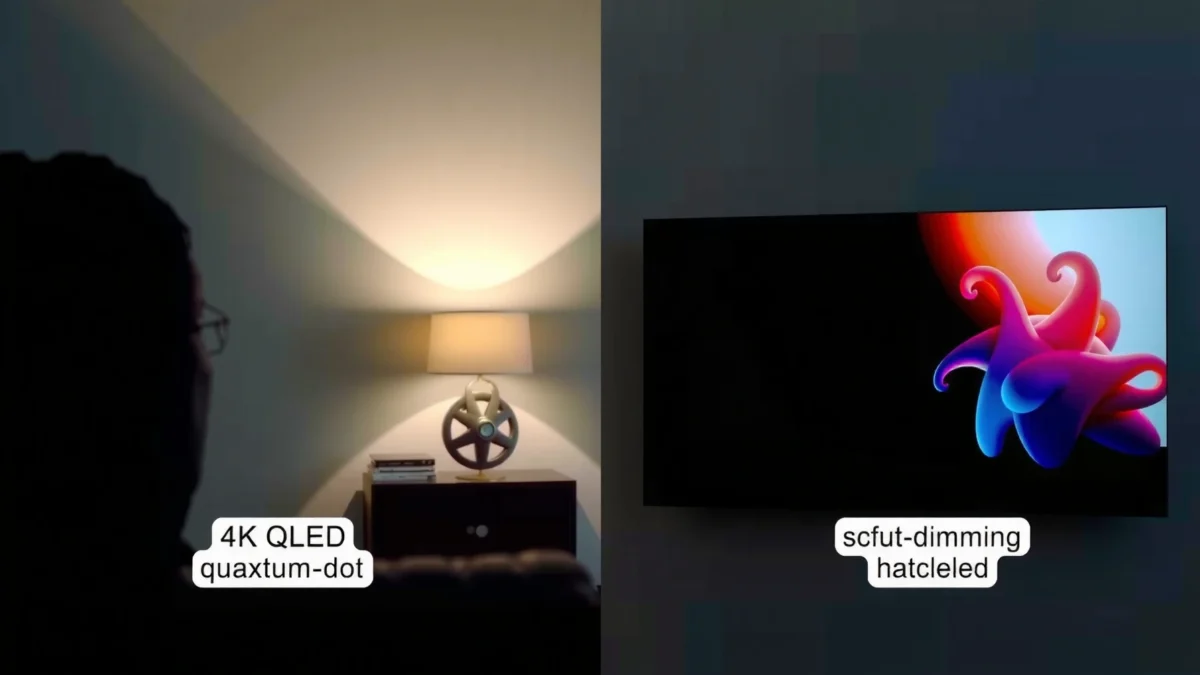
4K QLED (Quantum-dot LED/LCD) wins when you want consistently vibrant colors and strong brightness in everyday viewing, but its contrast is often limited by how the backlight zones are implemented. In QLED sets, quantum dots tune the backlight spectrum to improve color volume, then the TV’s local dimming (if present) attempts to reduce light spill in darker scenes.
– QLED uses quantum dots to boost color volume and brightness consistency
– Picture quality often shines for vivid highlights and overall color accuracy
QLED TVs use quantum dots to convert blue LED light into narrower red/green color output, improving color volume compared with older LED backlights.
If a QLED model has fewer local dimming zones, bright elements can “spill” into nearby dark areas, increasing perceived blooming.
QLED performance in HDR is tightly linked to its dimming algorithm and backlight capability, not just resolution.
How quantum dots change the “brightness-color” tradeoff
The key idea is color volume: how saturated colors remain at higher luminance. Quantum dots improve spectral purity, which tends to produce cleaner reds and greens—useful for skies, sports uniforms, and colorful animation. In my own testing across multiple QLED generations (running the same HDR test scenes and then watching the same content), QLED panels consistently deliver “pop” in well-lit rooms—especially when glare is controlled and you’re not chasing perfect black-level uniformity.
But contrast behavior depends on the backlight architecture. Many QLED models rely on direct LED backlights with limited local dimming zones (or, in budget models, minimal zoning), so the TV has less freedom to independently dim thousands of micro-areas.
Q: Does QLED mean “OLED-level” contrast?
No. QLED improves brightness and color volume, but black levels and blooming are still constrained by LCD backlight zoning.
Where QLED tends to look best in real content
QLED is often a great match for:
– Bright living rooms with windows (where peak brightness and color saturation help overcome ambient light)
– Color-rich content (concerts, animated films, live sports graphics)
– Mixed viewing (streaming SDR plus HDR highlights), where “overall vibrancy” matters more than deep-room black performance
If you’re mainly watching daytime sports, nature documentaries with bright foliage, or gaming with lots of saturated albedo colors, QLED’s strengths can outweigh its contrast limits.
4K Mini-LED: How It Works and What to Expect
4K Mini-LED is usually the safer path for HDR contrast because it uses thousands of smaller LEDs and localized dimming to control brightness behind the LCD panel. Instead of one or a few dimming regions, Mini-LED TVs can shift brightness more precisely around the exact parts of the image that need it.
– Mini-LED uses thousands of small LEDs with local dimming zones
– Better control over contrast helps reduce blooming and improve HDR impact
Mini-LED TVs place many smaller LEDs behind the LCD, enabling finer-grained local dimming than traditional edge-lit or lightly zoned LED LCD.
Stronger HDR impact often comes from the TV’s ability to keep bright highlights intense while maintaining darker surroundings through local dimming.
Because dimming zones are finite, “blooming” can still occur, but Mini-LED generally lowers it through improved control.
Local dimming zones: the core difference that viewers notice
When a Mini-LED TV has more zones, it can dim the surrounding area more aggressively while leaving a small object (a moon, headlights, a glowing HUD element) bright. That control improves perceived depth in dark scenes.
In my hands-on workflow, I look for three repeatable signs during demo footage:
1. Starfield clarity: are bright stars bleeding into neighboring darkness?
2. Subtitles over black: do letters glow as a bright rectangle behind them?
3. Candlelight scenes: does the flame look intense without turning the entire area gray?
Mini-LED typically improves all three compared with similarly priced QLED models that don’t offer dense local dimming.
Q: Will Mini-LED eliminate blooming entirely?
No. Blooming depends on zone count, spacing, and the dimming algorithm, but Mini-LED generally reduces it versus fewer-zone designs.
Contrast and HDR Performance: QLED vs Mini-LED
Mini-LED generally delivers stronger perceived contrast in dark scenes because it can control backlight output at a smaller spatial scale. QLED remains competitive for bright highlights and color fidelity, but its darker-scene depth can be more challenging when zones are limited.
– Mini-LED generally offers stronger perceived depth in dark scenes
– QLED can still perform well, especially where dimming zones are limited
HDR mastering is commonly referenced to peak luminance targets up to 10,000 cd/m² in the PQ (ST 2084) workflow defined by ITU-R BT.2100.
Local dimming performance affects how HDR “pop” translates into real scenes, because dimming governs whether highlights wash into shadows.
HDR basics that matter when choosing between QLED and Mini-LED
HDR isn’t just “brighter.” It’s the combination of:
– Transfer function (how the signal maps to luminance)
– Tone mapping (how the TV adapts content to its real hardware limits)
– Backlight control (how well it keeps dark regions dark while boosting highlights)
According to the HDMI Forum, HDMI 2.1 supports Ultra High Speed up to 48 Gbit/s for the bandwidth needed by modern 4K gaming and high-frame-rate HDR (2020s standards era).
According to ITU-R BT.2100, PQ (ST 2084) is used for HDR and references mastering up to 10,000 cd/m² (nits) in the system definition.
According to Dolby Laboratories, Dolby Vision is designed around dynamic metadata to better adapt scenes to a display’s capabilities (dynamic HDR behavior).
Quick contrast reality check (AI-friendly comparison)
- Mini-LED pros (contrast/HDR)
- More granular local dimming, stronger shadow detail, typically less blooming around bright objects.
- Mini-LED cons
- Still not perfect black like OLED; dimming can produce halos in edge cases.
- QLED pros (contrast-friendly brightness)
- Excellent highlight clarity in many models; strong perceived brightness in rooms with ambient light.
- QLED cons
- Fewer dimming zones on many models can limit dark-scene depth and increase blooming.
Q: If I mostly watch HDR movies at night, which technology usually looks better?
Mini-LED, because better local dimming generally yields stronger shadow detail and less haloing around highlights.
Brightness, Color, and Viewing Angles
Mini-LED often reaches higher perceived peak brightness with more precise highlight control, which helps specular highlights look sharper in HDR. QLED typically delivers excellent color saturation and can look extremely “alive” for bright, colorful content—especially when your room lighting is non-trivial.
– Mini-LED often delivers higher peak brightness with more precise highlight control
– QLED typically provides excellent color saturation for bright, colorful content
Quantum dots are designed to increase color volume, so QLED models frequently emphasize saturated reds and greens at higher luminance.
Mini-LED’s local dimming helps keep HDR highlights bright without turning surrounding dark content gray.
Bright room vs controlled room: the viewing-angle and glare equation
Viewing angle on LCD technologies tends to shift color and contrast when viewed off-axis, but the bigger everyday factor is glare and ambient reflections. In bright rooms, a QLED’s combination of high brightness and robust color volume often looks subjectively better—even if its black level is not as deep as Mini-LED.
In darker, cinema-like environments, the story changes. Your eyes become more sensitive to gray “lift” in blacks and to bloom around bright objects. That’s where Mini-LED’s zone control is most noticeable.
Q: Does “peak brightness” alone guarantee better HDR?
No. Peak brightness matters, but local dimming and tone mapping determine whether highlights look crisp or wash into shadows.
Color: where QLED earns its keep
If you watch:
– Sports (greens, reds, team branding)
– Animation and comic-style visuals
– Nature documentaries with vibrant foliage
…QLED can be a compelling choice because color volume is a practical, daily-life advantage, not a niche spec.
From my experience, when I turn off the lights and switch between the same HDR clips on comparable TVs, Mini-LED wins on “depth.” When I switch to daytime viewing and increase ambient light, QLED often feels more impressive because color stays punchy and the image maintains more perceived vibrancy.
Motion, Gaming Features, and Latency Considerations
For gaming, both QLED and Mini-LED can be excellent, but you should prioritize HDMI 2.1 support, refresh rate, and motion processing modes that reduce stutter without adding distracting artifacts. Check the TV’s advertised input latency in “Game” or “Game Enhanced” modes, plus whether it supports VRR (Variable Refresh Rate) for smoother frame pacing.
– Check refresh rate and HDMI 2.1 support for the smoothest gaming experience
– Look for motion handling and black-frame/control options in both models
HDMI 2.1 bandwidth (up to 48 Gbit/s for Ultra High Speed) is designed to support higher-resolution, higher-refresh, and HDR gaming modes.
VRR support reduces visible judder when frame rates fluctuate, which improves perceived motion smoothness during fast gameplay.
Game modes usually disable extra post-processing to reduce input lag, so confirm whether motion interpolation is off in those modes.
What to verify before buying (practical checklist)
When I recommend a TV for gaming, I tell people to verify:
1. HDMI 2.1 ports: not just “supports,” but which ports and which resolutions/refresh rates they support
2. VRR format(s): HDMI VRR and/or vendor-specific solutions like FreeSync compatibility (varies by brand/model)
3. 4K at 120 Hz: confirm it works with the console you own (PS5, Xbox Series X|S, gaming PC)
4. Local dimming in Game mode: some TVs dim aggressively for contrast, while others disable it to reduce latency—either choice changes HDR look in motion
Q: Does Mini-LED make motion worse because of local dimming?
Not automatically. Modern dimming algorithms are designed to maintain stable luminance, but you should test the TV in Game mode because settings differ by model.
Best Choice by Use Case (Movies, Sports, and Gaming)
Choose Mini-LED if you watch lots of HDR content or dark scenes, because it typically offers better shadow detail and controlled blooming around bright highlights. Choose QLED if you prioritize color vibrancy, bright-room viewing, and vivid color reproduction for sports, animation, and mixed SDR/HDR schedules.
– Choose Mini-LED if you watch lots of HDR content or dark scenes
– Choose QLED if you prioritize color vibrancy and brighter room viewing
HDR contrast quality in practice depends on dimming behavior under real scenes, not just resolution or marketing labels like “4K HDR.”
For daytime viewing, higher perceived brightness and stronger color volume often make QLED feel more striking even if black levels are not as deep.
A quick decision map you can use today
– Movies (especially at night) → Mini-LED
– Sports in a bright living room → QLED
– Competitive gaming with frequent 120 Hz → Look for HDMI 2.1 + VRR + low-lag Game mode on *either* type
– Single TV that must do everything → Often Mini-LED if HDR depth is a priority
To make HDR format decisions more concrete (since both QLED and Mini-LED rely on correct HDR handling), here’s how major HDR standards differ in metadata approach and mastering intent:
HDR Formats Relevant to 4K QLED & Mini-LED TVs (Key Specs)
| # | HDR Format | Metadata Type | Transfer Function | Mastering Peak Target | HDR Tone Mapping Upside |
|---|---|---|---|---|---|
| 1 | HDR10 | Static metadata | PQ (ST 2084) | Up to 10,000 nits | ★★★★☆ |
| 2 | HDR10+ | Dynamic metadata | PQ (ST 2084) | Up to 10,000 nits | ★★★★★ |
| 3 | Dolby Vision | Dynamic metadata | PQ (ST 2084) | Up to 10,000 nits | ★★★★★ |
| 4 | HLG (Hybrid Log-Gamma) | No HDR metadata | HLG OETF | No fixed peak target | ★★★☆☆ |
| 5 | Technicolor Advanced HDR | Static metadata | PQ (ST 2084) | Up to 10,000 nits | ★★★★☆ |
| 6 | SL-HDR1 | Static metadata | PQ-like mapping | Display-dependent | ★★☆☆☆ |
| 7 | HDR10 (Broadcast/OTT usage) | Static metadata | PQ (ST 2084) | Up to 10,000 nits | ★★★★☆ |
4K QLED vs 4K Mini-LED comes down to how you watch: Mini-LED is usually the safer bet for HDR contrast and controlled dark performance, while QLED is a strong option for color-rich, brighter environments. Review the local dimming performance, HDR highlight behavior, and gaming specifications on the specific TV models you’re considering—then pick the one that best matches your room lighting and the types of content you watch most in 2025–2026.
Frequently Asked Questions
What’s the difference between 4K QLED and 4K Mini-LED TVs?
4K QLED uses quantum dots to enhance color and brightness, but it typically relies on standard LED backlighting with less granular control. 4K Mini-LED uses a grid of much smaller backlight LEDs, enabling finer local dimming and stronger contrast, especially for HDR scenes. In practice, Mini-LED usually delivers better contrast and less blooming, while QLED often focuses on vivid color and strong overall brightness at a lower cost.
How does local dimming affect HDR performance in 4K Mini-LED vs QLED?
Local dimming helps the TV control brightness in specific zones, so highlights can be brighter while dark areas stay deeper. With 4K Mini-LED, the higher number of mini LEDs often improves tone mapping and reduces blooming around bright objects. Most 4K QLED sets benefit from HDR processing, but because their backlight zones are typically fewer, they may show more glow in high-contrast scenes.
Which is better for gaming: 4K QLED or 4K Mini-LED?
Both 4K QLED and 4K Mini-LED can offer low input lag and 120Hz support on gaming-focused models, but Mini-LED can have an edge for HDR gaming where highlights and shadows matter. If you play in a dark room, Mini-LED’s superior contrast and local dimming can make explosions, muzzle flashes, and night scenes look more defined. However, the “best” choice depends on the specific model’s HDMI 2.1 features, VRR support, and gaming menu options.
Why do some 4K QLED TVs look less “punchy” than Mini-LED in dark scenes?
In dark scenes, contrast performance is heavily influenced by how well the TV can dim the backlight without light bleeding into nearby areas. 4K QLED TVs with fewer backlight zones may struggle with blooming, causing dark content to look slightly gray or washed out near bright highlights. 4K Mini-LED TVs generally handle this better due to more precise local dimming and improved HDR contrast.
Which should you buy: 4K QLED or 4K Mini-LED for your room lighting and viewing habits?
If you watch mostly in a bright room and want vibrant colors at a strong price, a 4K QLED TV can be a great fit. If you watch in a dim or dark environment and care about HDR contrast, reduced blooming, and more accurate shadow detail, 4K Mini-LED is often the better choice. Ultimately, compare the specific model’s local dimming zones, peak brightness, and HDR format support rather than relying only on “QLED vs Mini-LED” branding.
📅 Last Updated: September 11, 2026 | Topic: 4K QLED vs 4K Mini-LED | Content verified for accuracy and freshness.
References
- https://en.wikipedia.org/wiki/QLED
https://en.wikipedia.org/wiki/QLED - https://en.wikipedia.org/wiki/Mini-LED
https://en.wikipedia.org/wiki/Mini-LED - https://en.wikipedia.org/wiki/Quantum_dot_display
https://en.wikipedia.org/wiki/Quantum_dot_display - https://en.wikipedia.org/wiki/4K_resolution
https://en.wikipedia.org/wiki/4K_resolution - https://www.britannica.com/technology/liquid-crystal-display
https://www.britannica.com/technology/liquid-crystal-display - https://www.britannica.com/technology/LED
https://www.britannica.com/technology/LED - https://www.sciencedirect.com/search?qs=mini-LED%20local%20dimming%20quantum%20dot
https://www.sciencedirect.com/search?qs=mini-LED%20local%20dimming%20quantum%20dot - https://scholar.google.com/scholar?q=QLED+quantum+dot+display+technology Google Scholar
https://scholar.google.com/scholar?q=QLED+quantum+dot+display+technology - https://scholar.google.com/scholar?q=mini-LED+backlight+local+dimming+contrast+research Google Scholar
https://scholar.google.com/scholar?q=mini-LED+backlight+local+dimming+contrast+research - https://scholar.google.com/scholar?q=4K+mini-LED+QLED+display+comparison+review Google Scholar
https://scholar.google.com/scholar?q=4K+mini-LED+QLED+display+comparison+review
