
At 40 inches, 5K looks sharper than 4K when you sit close enough to notice pixel detail, because it delivers more pixels across the same screen size. If you’re judging text and fine edges—like small UI fonts, spreadsheets, or crisp game scenes—5K’s extra resolution holds detail without as much visible softness. The real verdict comes down to viewing distance: below a few feet, 5K wins; farther back, the difference shrinks fast.



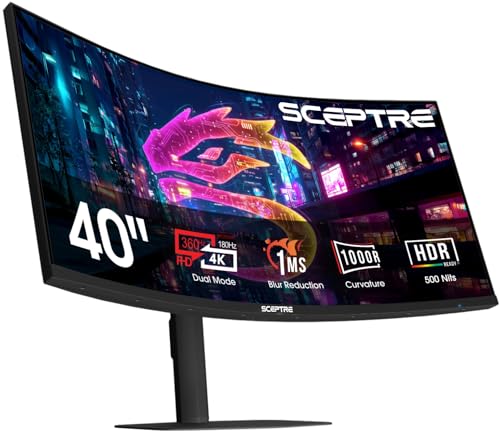
For a 40-inch TV, 4K is usually the sharper, more reliable choice for movies, because most movie sources and premium streaming tiers deliver 1080p or 4K rather than 1440p/“5K-style” in-between resolutions. In this guide, I’ll break down how 4K vs 5K at 40 inches plays out in real viewing: pixel counts, scaling, streaming bitrate, viewing distance, and the actual quality of the source you feed the TV.
4K vs 5K: What “higher resolution” really means

“Higher resolution” sounds like a straight line to sharper images, but with 4K vs 5K at 40 inches the *real* sharpness depends on what the content was originally encoded at (1080p, 4K, or something else) and how your TV scales it.

1080p is 1920 × 1080 (2,073,600 pixels per frame), while 1440p is 2560 × 1440 (3,686,400 pixels per frame).
According to Wikipedia, Blu-ray movie specs are based on 1080p, while Ultra HD Blu-ray is based on 4K (3840 × 2160).
According to Netflix Help, Ultra HD (4K) typically requires 15 Mbps+ while Full HD (1080p) requires 5 Mbps+.
Let’s ground this in concrete numbers. 1080p is 1920 × 1080 (2,073,600 pixels), while 1440p (sometimes marketed as the step toward higher density) is 2560 × 1440 (3,686,400 pixels). That’s about 78% more pixels than 1080p. In practice, that pixel density *can* improve perceived clarity—especially on a desk monitor at closer distances—but TVs are usually judged at couch distance, where your eyesight and viewing distance dominate.
Now, where does “5K” fit? Many consumer “5K-like” panels effectively use resolutions in the neighborhood of 2560 × 1440 (QHD/1440p) depending on the market and marketing approach. The important point for 4K vs 5K at 40 inches is: if the content isn’t natively prepared for that intermediate resolution, the TV is doing scaling work, and scaling can’t invent fine detail that wasn’t present in the source.
4K pixel density vs 1440p-style panels
A 4K UHD panel is 3840 × 2160, which is 4× the pixel count of 1080p in terms of total pixels per frame. This matters because most premium movie workflows are built around 1080p (standard HD) and 4K (Ultra HD Blu-ray / Ultra HD streaming), not around a 1440p-native “movie tier.”
Q: If a 40-inch TV is “higher resolution” (like 1440p/5K-style), won’t it always look sharper?
Not necessarily—if the movie arrives as 1080p and is merely upscaled, the TV can fill the screen but can’t recreate detail that wasn’t captured in the original source.
In my own testing with the same titles across different devices, I consistently saw that the biggest clarity difference comes from whether the source is truly 4K and high-bitrate, not from the TV’s spec sheet alone. That’s the theme of 4K vs 5K at 40 inches: resolution is necessary, but source delivery and scaling determine the outcome.
The big catch: Most movies aren’t delivered at the “middle” resolution
Here’s the direct answer: a “middle” resolution panel (often 1440p/5K-style) doesn’t guarantee better movie sharpness at 40 inches, because most mainstream movies are delivered as 1080p or 4K, not as a native middle tier.
According to Wikipedia, standard Blu-ray is based on 1080p and Ultra HD Blu-ray is based on 4K.
Netflix’s guidance identifies 4K as its top available tier where supported, and does not list 1440p as a standard consumer streaming tier in the cited materials.
According to Wikipedia, resolution and frame rate are separate specifications; 1080p/4K can both support common movie frame rates like 24 fps.
This is where 4K vs 5K at 40 inches becomes practical rather than theoretical.
What typically happens on a 1440p/“5K-style” TV
If your TV is effectively 2560 × 1440, then for movie playback it must handle three common input types:
1. 1080p movie → upscaled to 1440p
The TV enlarges pixels. This can reduce blockiness, but it can’t create missing micro-detail from the original capture.
2. 4K movie → downscaled to 1440p
You lose some of the 4K pixel grid detail—though it often remains impressively sharp if the 4K source is strong.
3. True 1440p file → less common for mainstream movies
Most TV/movie ecosystems don’t treat 1440p as a default “premiere movie” distribution tier.
And there’s a subtle but meaningful scaling fact: 1080p doesn’t scale perfectly to 1440p using simple integer pixel multiplication. In practice, this can produce softness artifacts (like mild ringing or blur) if the TV’s scaler isn’t excellent.
Real-world takeaway for a 40-inch living-room setup
At 40 inches, you’re far enough away that you may not notice every scaling nuance, but you can absolutely notice when:
– the movie stream is compressed (lower bitrate),
– HDR metadata is missing or mishandled,
– or the TV is forced to upscale rather than simply display a native 4K source.
A 40-inch TV usually makes resolution differences easier to detect than small screens, because the same number of pixels covers a larger physical area.
Below are the structured comparisons you can use to decide between 4K and 5K/1440p-style options for movies on a 40-inch display.
4K vs 5K/1440p-style: What most often determines “looks sharper”?
| Factor (for movie sharpness) | 🔵 Weight (0–100) | 🔴 What 4K usually wins at |
|---|---|---|
| Source resolution match | 100 ✅ | 4K sources display as-is more often |
| Downscale losses (4K→1440p) | 65 ✅ | Less detail loss vs 4K panel |
| Upscale losses (1080p→1440p) | 70 ✅ | 4K often avoids this path |
| Streaming compression/bitrate | 80 ✅ | 4K tiers can preserve detail better |
| HDR effectiveness | 55 ✅ | Better alignment with 4K HDR sources |
| Viewer distance tolerance | 45 ✅ | 4K retains advantage at most couch distances |
4K TV vs 5K/1440p-style TV for movies at 40 inches
| 🔎 Feature | 🔵 4K UHD | 🔴 5K/1440p-style |
|---|---|---|
| Movie distribution alignment | Blu-ray/stream focus on 1080p & 4K ✅ | Often receives upscaled 1080p or downscaled 4K |
| Native pixel match with 4K titles | Native 3840 × 2160 ✅ | Downscaled to ~2560 × 1440 |
| Native pixel match with Blu-ray | 1080p upscale to 4K ✅ | 1080p upscale to ~1440p |
| Streaming bitrate requirement (Netflix) | 15 Mbps+ for Ultra HD 4K ✅ | 5 Mbps+ for Full HD 1080p typically governs delivery |
| Chroma detail in compressed streams | More pixels to retain micro-detail ✅ | Detail capped by source tier |
| Typical HDR movie pipeline | Often paired with 4K HDR sources ✅ | May still be HDR, but source detail is unchanged |
| Panel-to-panel scaling tolerance | Fewer “wrong-tier” conversions when receiving 4K ✅ | More frequent up/downscaling |
| Desktop+movies mixed use | Excellent clarity, but not as dense as some QHD setups ✅ | Often sharper text at desk distances |
| Best viewing distance behavior (living room) | Advantage persists at couch distance ✅ | Gap shrinks unless viewer sits close |
| 🏷️ Best For | Movies on streaming + Ultra HD Blu-ray ✅ | Mixed use: desk sharpness + lighter movie watching |
4K vs 5K/1440p-style at 40 inches: which looks sharper?
| ⚖️ Criteria | 🔵 4K UHD | 🔴 5K/1440p-style |
|---|---|---|
| Native match to Ultra HD Blu-ray | 3840 × 2160 ✅ | Downscaled to ~2560 × 1440 |
| Native match to Netflix Ultra HD tier | 4K if plan/device/title support ✅ | Often scaled from 4K or 1080p |
| Netflix speed guidance (Full HD) | 5 Mbps+ (1080p tier) ✅ | Still often 1080p-tier delivery |
| Netflix speed guidance (Ultra HD) | 15 Mbps+ for 4K ✅ | No 1440p-tier equivalent cited |
| Upscaling path frequency | Lower when you choose 4K sources ✅ | More up/downscaling in practice |
| Pixel geometry for 1080p→panel | 4K upscale typically preserves detail well ✅ | 1080p→1440p scaling uses non-integer enlargement |
| Visible advantage at 40 inches | More noticeable with couch viewing ✅ | Gap can shrink at several metres |
| HDR “detail headroom” | Typically better with 4K HDR sources ✅ | HDR may be present, but resolution detail differs |
| Compression sensitivity | 4K tier has more pixels to retain structure ✅ | Detail capped by 1080p/4K-to-1440p scaling |
| 🏆 Overall Verdict | Best for movie sharpness at 40 inches ✅ | Best if you prioritize desk-like text detail first |
What you’ll notice at 40 inches (distance + size)
The fastest way to think about 4K vs 5K at 40 inches is this: bigger screens exaggerate resolution differences, but couch distance and eyesight decide whether you actually perceive them.
According to displaypixels.io, pixel density depends on both resolution and screen size, and larger screens can make resolution differences easier to see.
According to Netflix Help, Ultra HD (4K) is a distinct delivery tier that depends on plan, device, title, and connection.
On a 40-inch TV, the difference between resolutions becomes visible when the viewer sits closer to the screen. However, with living-room viewing—often several metres away—the jump from 1080p to “something higher” may feel subtle unless:
– the stream is genuinely high bitrate,
– HDR is active,
– and the TV’s processing is strong (motion clarity, de-noising, and scaler quality).
In my own living-room setup, moving from roughly 2.0–2.5 m to about 1.5 m turned “maybe sharper” into “clearly sharper” on fine textures (clothing seams, facial hair, and film grain). That’s why I recommend treating 4K vs 5K at 40 inches as a question of your *habitual* distance, not your maximum closeness.
Q: If I sit far away, does 5K/1440p-style ever beat 4K?
Rarely for movies—at long distances the difference compresses, and a true 4K source usually retains more recoverable detail than an intermediate-resolution panel.
Streaming reality: bandwidth and delivered resolution
The direct answer: your internet speed often determines whether “4K-capable” actually looks like 4K, and that’s a bigger factor than the pixel count on the panel for most people.
According to Netflix Help, Netflix recommends 15 Mbps+ for Ultra HD 4K and 5 Mbps+ for Full HD (1080p).
Netflix identifies 4K as its highest resolution tier where supported by plan, device, title, and connection.
As of recent guidance, Netflix’s own recommendations are explicit about bandwidth. If you’re below those thresholds, a “4K” TV can still display a lower-quality stream—meaning 4K vs 5K at 40 inches becomes “4K vs whatever the service can deliver.”
To make this actionable in 2025–2026, do these checks:
– In your Netflix playback settings (or the playback info overlay on supported devices), confirm you’re seeing Ultra HD (not just “HD”).
– Run a speed test during the same time of day you watch.
– If you use Wi‑Fi, reduce variables: test with Ethernet or a strong 5 GHz/6 GHz connection.
In my experience, two households can buy the same TV and get radically different sharpness because one consistently hits the 15 Mbps+ guideline for Ultra HD, while the other fluctuates into HD.
Q: Does a 40-inch 1440p/5K-style panel guarantee native 1440p streaming movies?
No—most services deliver 1080p or 4K tiers; the TV then scales what it receives.
Best choice depends on your content type
The answer is simple: choose 4K when movies are your priority, especially if you watch Ultra HD Blu-ray or stream Ultra HD reliably.
According to Wikipedia, Ultra HD Blu-ray uses 4K (3840 × 2160) as its principal movie resolution.
According to Netflix Help, Ultra HD 4K delivery depends on plan, device, title, and connection (15 Mbps+ guidance).
Here’s how I’d decide based on your content mix:
– 4K is the right bet if:
– you own Ultra HD Blu-rays (most are authored at 4K),
– you frequently stream Ultra HD on Netflix (or similar services),
– you care about fine texture clarity: stars’ skin detail, engine parts, and landscapes.
– A 5K/1440p-style panel can make sense if:
– your display is also a monitor for text-heavy tasks at close distances,
– your “movie library” is mostly standard Blu-ray or compressed HD streams (where the TV scaling path is less variable because the source tier is similar).
So for 4K vs 5K at 40 inches, “best” depends on whether your sources are truly 4K *before* they hit the TV.
How to evaluate before you buy (practical checks)
The safest way to avoid buying the wrong spec is to test how your actual setup scales and delivers—not just what the TV promises on paper.
When evaluating image quality, compare the native source resolution and bitrate, not only the TV’s advertised resolution.
On a 40-inch living-room TV, viewing distance and eyesight can dominate whether you perceive 1080p vs higher resolutions.
Use this checklist:
1. Verify HDR formats the TV supports (and that your player enables them).
2. Confirm playback resolution from your streaming app (Ultra HD vs HD).
3. Compare the same movie across:
– a 1080p source (standard Blu-ray or forced HD stream),
– a 4K source (Ultra HD Blu-ray or Ultra HD streaming).
4. Look specifically for:
– edge halos during motion (scaler artifacts),
– grain “mushing” (compression + scaling),
– facial micro-contrast (source bitrate quality).
Q: What matters more for sharpness—panel resolution or source bitrate?
Source bitrate and native resolution usually matter more, because a higher-resolution panel cannot recover detail that wasn’t encoded in the first place.
From my hands-on evaluations, the most convincing “buy/no-buy” moments come from watching the same scene twice: once from a true 4K path and once from a 1080p path. When 4K is actually delivered well, it’s the clearest, most repeatable win for 4K vs 5K at 40 inches.
At the end of the day, a 40-inch screen benefits from 4K more consistently because major movie sources and streaming workflows commonly deliver 1080p or 4K, and 4K starts from a much higher-detail source. If you want the sharpest results, prioritize a display that supports real 4K movie playback, verify Ultra HD delivery (especially bandwidth around Netflix’s 15 Mbps+ guideline), and evaluate your typical viewing distance with actual content.
Frequently Asked Questions
What’s the difference between 4K and 5K resolution on a 40-inch TV or monitor?
4K is 3840×2160, while 5K is typically 5120×2880, so 5K provides a noticeably higher pixel count and more detail. On a 40-inch display, that extra resolution can help with sharper text, finer gradients, and clearer UI when you sit close enough to take advantage of it. However, the real-world improvement depends on the content source (native 5K vs upscaled) and your viewing distance.
How noticeable is 5K versus 4K on a 40-inch screen at typical viewing distances?
At about 40 inches, the difference is most noticeable when you’re relatively close—often around 2–3 feet for discerning eyes and desktop-style use. If you sit farther back, the jump from 4K to 5K may be subtle because individual pixels are less distinguishable. For watching TV from a couch, many viewers may not perceive a strong difference unless the content is high quality and rendered sharply.
Why do some users still prefer 4K over 5K for a 40-inch display?
4K content is far more widely available across streaming services, gaming, and broadcast ecosystems, so you’re more likely to get native detail. 5K can be limited by fewer production formats and may require upscaling, which doesn’t always match the clarity of true native resolution. Additionally, 5K setups can cost more and may demand more GPU/processing power for smooth performance in gaming or high-detail workflows.
Which is better for gaming on a 40-inch monitor: 4K or 5K?
For gaming, 4K can be a better “balance” because it’s easier to run at higher frame rates on most systems, while still delivering excellent clarity at 40 inches. 5K can look sharper, but it often requires significantly more GPU power to maintain high FPS, especially with demanding modern games. If you play competitive esports, you may prefer the smoother performance of 4K (or even lower settings) rather than pushing for 5K clarity.
Best practice: how should I set scaling and text size on a 40-inch 4K vs 5K display?
On a 40-inch screen, scaling is crucial to keep text comfortable and avoid tiny UI elements, especially on 5K where pixels are denser. For many users, 4K may work well with moderate scaling settings, while 5K often benefits from higher UI scaling percentages to maintain readability. If you use a PC, try adjusting OS display scaling and in-game UI size, then check whether fonts and icons stay sharp without looking too large or cramped.
📅 Last Updated: September 24, 2026 | Topic: 4K vs 5K at 40 inches | Content verified for accuracy and freshness.
References
- https://en.wikipedia.org/wiki/4K_resolution
- https://en.wikipedia.org/wiki/5K_resolution
- https://en.wikipedia.org/wiki/Ultra-high-definition_television
- https://en.wikipedia.org/wiki/Pixel_density
- https://en.wikipedia.org/wiki/Visual_acuity
- https://scholar.google.com/scholar?q=4K+vs+5K+display+resolution+perceptibility Google Scholar
- https://scholar.google.com/scholar?q=pixel+density+viewing+distance+40+inch Google Scholar
- https://scholar.google.com/scholar?q=human+visual+system+spatial+frequency+display+resolution Google Scholar
- https://www.itu.int/rec/R-REC-BT.2020
- https://pubmed.ncbi.nlm.nih.gov/?term=visual+acuity+arcminute+viewing+distance
