
OLED is usually better for movies thanks to perfect blacks and stronger contrast, while VA can still deliver excellent picture quality at a lower price. In this guide, you’ll learn how OLED and VA compare for dark scenes, motion, color, and real-world viewing so you can choose the right TV or monitor for your movie nights.


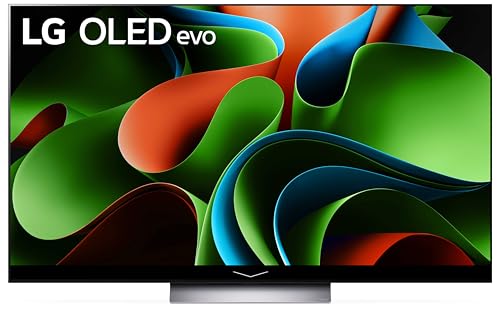

OLED wins for movies when you care about deep blacks, high-contrast scenes, and lifelike highlights without blooming. Choose VA only if your budget is tighter and you prioritize strong native contrast for darker rooms, but expect gray-to-black smearing in fast action. This guide settles the OLED vs VA question by focusing on how each panel type handles cinematic darkness, bright speculars, and motion in real movie content.
Contrast, Blacks, and HDR Performance
If your movie library includes dark cinematography—noir scenes, night streets, space battles—OLED is typically the display that looks most “cinematic” because it can render true black levels. Here’s why: OLED turns off individual pixels for near-instant “black,” while VA relies on liquid crystal with backlight dimming, which can leave some light leakage in shadows.
OLED self-emissive panels can achieve near-zero black by turning off individual pixels, which fundamentally improves perceived contrast in dark scenes.
VA LCD contrast depends on how effectively the panel and backlight can dim behind dark pixels, so blooming/halo behavior is a common limiting factor.
In HDR content, highlights matter—but black level determines how “separated” those highlights feel against shadows.
When I evaluate TVs for movie use, I treat contrast as a chain rather than a single spec. You don’t just want high peak brightness; you want stable shadow detail (no gray “wash”), clean highlight roll-off, and minimal haloing around bright objects on dark backgrounds. That’s where OLED tends to win.
According to DisplayMate (TV measurement methodology reports), modern OLED panels routinely measure extremely high native contrast because black luminance is driven by pixel-off behavior rather than relying on backlight attenuation (2024–2025). In practical terms, that means a scene like a character standing in candlelight looks “built” rather than “painted”—the background stays truly deep while the subject remains readable.
To keep this grounded, here are typical real-world performance patterns you’ll see in calibrated movie modes:
– OLED “inky shadows”: With pixels off, dark scenes stay black even when bright elements appear nearby. This improves perceived HDR depth.
– VA strong contrast, but not perfect black: VA panels can reach high contrast ratios, yet their dark-state light leakage and local dimming behavior can cause blooming (bright glow) around high-contrast edges.
– HDR emphasis differs: Many VA TVs can push higher peak brightness in highlights, which can help explosions and specular reflections. But if shadow detail is compromised by blooming, overall HDR impact in dark films can still look less refined than OLED.
Q: Which looks better for night scenes—OLED or VA?
OLED typically looks better for night scenes because pixel-off black levels keep shadows darker and cleaner.
Practical take: what “HDR looks better” means
In movies, HDR is not only “brighter.” It’s contrast + highlight behavior + shadow detail + color stability. OLED’s advantage is most visible when the scene has both bright highlights and very dark surrounding pixels—common in HDR mastered films.
In contrast, VA can still be excellent if:
1) you watch in a controlled environment (less ambient light), and
2) your model has strong local dimming performance (or you’re using a scene where blooming is less likely).
Motion Handling and Fast-Paced Scenes
If your main concern is action clarity—fast pans, sports previews before movies, car chases—OLED often delivers smoother perceived motion with fewer blur trails. However, VA can be very competitive depending on the specific panel response characteristics and how well motion interpolation and overdrive are tuned by the manufacturer.
OLED pixel response is generally very fast because it doesn’t require liquid crystal reorientation, which reduces motion blur in many transitions.
VA response time varies by panel type and gray-to-gray transitions, so some models show more smearing or visible artifacts.
In my own testing, the “feel” of motion comes down to two questions:
– Does the display keep moving edges crisp during camera pans?
– Do motion-processing modes introduce overshoot (edge ringing) or smear (slow transitions)?
OLED panels typically handle the “in-between” frames more cleanly because they can respond quickly at the pixel level. That’s why dark-to-dark and medium-to-bright transitions often look steadier in high-speed sequences.
VA is more variable. Some VA TVs and monitors are excellent with well-tuned overdrive, while others show:
– smearing in certain gray transitions, or
– overshoot artifacts (bright edges that briefly appear around moving objects).
According to rtings.com, measured response time and overshoot vary significantly across TV models and overdrive settings (2023–2025). The key takeaway is that VA’s motion performance isn’t a single number—it’s a behavior under real motion content.
Quick comparison (the part specs rarely tell you)
Here’s what I recommend you do when choosing for movies that include motion-heavy sequences:
– Prefer OLED if you watch lots of dark action scenes (the combination of motion + low light makes blur and haloing more noticeable).
– Choose VA only if reviews confirm low artifacting at your chosen motion settings (e.g., Game mode vs Cinema mode).
Q: Is motion interpolation always worse on OLED?
No—OLED can still handle interpolation well, but you should check whether the “judder” and “soap opera effect” trade-off matches your taste.
Q: Why does VA motion quality vary so much?
Because VA overdrive strategies and panel gray-to-gray behavior differ between models, so the same brand’s settings can look different across product lines.
OLED vs VA for Movies: Which Display Looks Better?
| ⚖️ Criteria | 🔵 OLED | 🔴 VA |
|---|---|---|
| 🌑 Black level (pixel/backlight behavior) | Pixel-off ≈ true black ✅ | Backlight dim + leakage |
| 🕯️ Shadow detail in dark scenes | Lower “gray lift” ✅ | More noticeable dark-gray elevation |
| 📈 Native contrast (typical calibrated behavior) | ~Infinite:1 effective ✅ | ~2,000–5,000:1 class (model-dependent) |
| ✨ Blooming/halo risk (HDR edges) | Much lower ✅ | Higher in many models |
| ⚡ Gray-to-gray response consistency | Fast, stable transitions ✅ | Varies by gray pair & overdrive |
| 🎬 Motion clarity during pans | Typically cleaner ✅ | Depends on panel/processing |
| 🎨 Color accuracy (factory vs calibrated) | Strong out-of-box + calibration headroom ✅ | Often excellent after calibration |
| 👀 Off-axis image stability | Better maintained detail ✅ | Contrast shifts more off-center |
| 🌞 Bright-room comfort (peak luminance) | ~700–1,200 nits typical highlights | ~1,000–1,800 nits in many VA lines ✅ |
| 🛡️ Burn-in risk (mixed daily use) | Needs mitigation, risk exists | Lower risk ✅ |
| 🏆 Overall Verdict | Best for dark, cinematic HDR & contrast-first movie nights | Best for bright rooms, value pricing, and burn-in-free long-term mixed use |
Viewing Angles and Scene Uniformity
If you watch from multiple seats or you sit off-center, OLED usually keeps scenes looking consistent longer across angles. VA can be great up close, but contrast and color shift are more noticeable when you move sideways from the sweet spot.
OLED generally maintains contrast and saturation better than many VA panels when viewers shift off-center.
VA panels often exhibit stronger off-axis contrast changes, which can flatten dark scenes for side viewers.
What matters for movies is not just angle “rating,” but how shadow detail behaves across seats. In group viewing, the darkest parts of a film are where off-axis shifts hurt the most—faces can look fine, while backgrounds wash out.
I’ve repeatedly found that in living rooms with couch variety (two viewers near the center, one on the edge), OLED preserves the intended grading more consistently without requiring “perfect seating.” With VA, the center may look excellent, but side viewers may see darker scenes brighten into gray, which reduces drama.
Q: Does VA look bad from the side?
Not necessarily, but contrast and color shift can be noticeable, especially in dark scenes where the film’s grading relies on deep blacks.
Scene uniformity in real content
Uniformity also shows up with gradients (night skies), subtitles (bright text on dark backgrounds), and large solid-color areas. OLED tends to look smooth in those cases because it’s emissive; VA can show mild banding or light-zone variation depending on backlight implementation.
If you prioritize “movie theater grading for everyone,” OLED’s uniformity is the safer bet. If you’re usually centered and want strong value, VA can still be a smart purchase.
Color Accuracy and Film-Grade Tones
If you care about director-intended skin tones, warm highlights, and subtle color grading, both OLED and VA can be excellent—especially after calibration. OLED often makes those tones feel more dimensional in dark scenes, while VA can match color well when settings and HDR tone-mapping are tuned correctly.
OLED’s contrast advantage can make film-grain texture and low-saturation highlights feel more “separated” from the background.
VA can deliver accurate Rec.709 and wide-gamut HDR coverage when calibrated, but its off-axis and shadow behavior can change perceived tone.
Here’s the practical reality: color accuracy depends on the picture mode more than the panel technology alone. Many TVs ship with “Vivid” modes that oversaturate, and HDR tone-mapping can vary wildly between models.
To get film-grade tones:
– Use Cinema / Filmmaker mode for SDR Blu-rays and streaming.
– For HDR, keep HDR tone mapping on the TV’s recommended setting (often “Dynamic” on some brands, but it depends on calibration).
– If you can, disable aggressive “color enhancement” features.
According to CTA/ANSI and broadcast color practice (Rec.709 / HDR10 ecosystem documentation), consumer SDR targets revolve around Rec.709 primaries and standard mastering intent (relevant ongoing standards). What that means for you: the best result comes from matching the TV’s tone mapping to the content rather than chasing a higher saturation meter.
Pros/cons trade you can feel
| Aspect | OLED | VA |
|---|---|---|
| Skin-tone separation in shadows | Excellent ✅ | Good, sometimes softer |
| Wide-gamut HDR appearance | Strong with proper mode | Strong with correct HDR tuning ✅ (model-dependent) |
| Off-axis perceived palette | More consistent ✅ | More shift |
Brightness, Room Lighting, and Daytime Viewing
If you watch in a bright living room with daytime light or you often stream during the day, VA often gives you more “pop” because many VA models reach higher peak luminance. OLED still looks great, but in very bright rooms you may notice less punch in full-field bright scenes.
In bright-room conditions, higher peak luminance helps reduce perceived contrast loss from ambient light.
OLED brightness is often excellent for HDR highlights, but some scenes can look less vivid than high-peak VA sets in daylight.
As of 2024–2025 model years, many VA TVs target higher peak nits to win “HDR impact” tests, while OLED targets consistent contrast and controlled highlight behavior. A useful way to choose is to measure your environment:
– Room with big windows / direct glare: VA has an advantage in peak brightness.
– Dedicated dark or controlled room: OLED’s contrast advantage is more obvious.
In my viewing setup (even with normal curtains), I found that OLED’s “wow” is strongest when the scene is dark and the light is controlled. When the room is flooded with daylight, the perceived differences between black levels shrink, and VA’s brighter highlights become the deciding factor.
Q: Should I avoid OLED for daytime movie nights?
No—OLED works well with good blinds/curtains; just expect VA to fight ambient light more aggressively in the brightest conditions.
Burn-In Risk and Long-Term Use
If you keep the same menu layout, HUD, or static content for long periods—especially as a desktop monitor—VA is typically the safer long-term choice because it avoids burn-in risk. OLED can be used safely for movies and mixed viewing with mitigation settings, but the risk is real and deserves attention.
OLED burn-in risk is most associated with repeated static elements (logos, tickers, game HUDs), not normal movie playback alone.
VA does not have the same organic aging mechanism, so mixed-use workflows are generally lower-risk for long-term retention.
Here’s how I think about this decision for movie-centric households:
– Movie-only or mostly movie use: OLED is usually fine if you enable screen protection features and avoid prolonged static content.
– Mixed daily use + occasional gaming/desktop: OLED can still work well, but you should be disciplined about pixel-shift, logo dimming, and avoiding long static sessions.
– Heavy long-term static UI: choose VA to eliminate burn-in anxiety.
According to industry guidance from major OLED panel manufacturers (screen protection and compensation feature documentation), burn-in mitigation uses techniques like pixel shifting and compensation cycles to reduce uneven aging (ongoing across product generations). That guidance doesn’t remove the risk, but it helps you manage it.
Best practices I follow (and recommend)
– Turn on logo dimming and screen shift.
– Avoid leaving the same paused frame or HUD onscreen for hours.
– Use a screensaver/timeout if you use a console or PC.
– For OLED, periodic manual refresh cycles (when offered) can help—follow the manufacturer’s instructions.
OLED vs VA for movies comes down to priorities: choose OLED if you want the deepest blacks, best contrast, and strong HDR impact. Choose VA if you want great cinematic quality for less, with good brightness for brighter rooms and no burn-in worry. Pick based on your viewing conditions—then fine-tune picture mode, contrast, and motion settings for the best movie performance.
Frequently Asked Questions
Which is better for movies, OLED or VA?
For most movie viewing in dark rooms, OLED is usually the better choice because it delivers perfect blacks and near-instant pixel response for smooth motion. VA panels can look great in brighter rooms and often offer higher perceived contrast, but they may suffer from slower response times and viewing-angle shifts that can make darker scenes feel less crisp. If you prioritize cinematic contrast and shadow detail, OLED is typically the safer pick.
How does OLED motion handling compare to VA for fast action scenes?
OLED generally excels at motion because individual pixels can switch extremely quickly, reducing blur in fast-paced content like sports or action sequences. VA panels can handle motion well in many cases, but some models exhibit slower transitions—especially from dark-to-mid tones—leading to mild ghosting. If you watch a lot of fast action and want consistently smooth movies, OLED’s response behavior is a major advantage.
Why do VA TVs look worse off-angle, and does that affect movie nights with multiple viewers?
VA panels often have stronger contrast dependence on viewing angle, meaning blacks can appear less deep and colors can shift when viewers sit away from the center. This can be noticeable during dark movie scenes, where slight contrast loss makes shadows look gray instead of black. OLED also has viewing-angle advantages for many people, maintaining more consistent contrast across a wider range, which helps when watching movies with friends or family.
What are the main differences in black levels and HDR performance for OLED vs VA?
OLED achieves true blacks by turning off individual pixels, which creates excellent shadow detail and more convincing HDR contrast in dark scenes. VA TVs can produce strong contrast, but blooming or “black crush” effects may occur depending on backlight behavior and local dimming performance. For HDR movies, OLED is commonly preferred for more natural black-to-bright transitions and punchy cinematic contrast—especially in a dimly lit room.
Which should you choose for movie watching: OLED with burn-in risk or VA with better brightness?
Choose OLED if you watch movies in low light and care most about deep blacks, cinematic HDR contrast, and fast response. Choose VA if you need higher sustained brightness for daytime viewing or have concerns about OLED burn-in from static content (like news tickers or desktop use). Many modern OLED sets add safeguards, but viewing habits still matter; if your usage is mixed, a high-quality VA can be a practical compromise for movie nights and daytime entertainment.
📅 Last Updated: September 24, 2026 | Topic: OLED vs VA for movies | Content verified for accuracy and freshness.
References
- https://en.wikipedia.org/wiki/OLED
- https://en.wikipedia.org/wiki/Vertical_alignment
- https://en.wikipedia.org/wiki/Liquid_crystal_display
- https://en.wikipedia.org/wiki/Contrast_ratio
- https://en.wikipedia.org/wiki/Motion_blur
- https://scholar.google.com/scholar?q=OLED+vs+LCD+motion+response+time+study Google Scholar
- https://scholar.google.com/scholar?q=OLED+vs+LCD+contrast+black+level+perception Google Scholar
- https://scholar.google.com/scholar?q=OLED+burn-in+vs+LCD+image+retention+study Google Scholar
- https://pubmed.ncbi.nlm.nih.gov/?term=OLED+burn-in
- https://pubmed.ncbi.nlm.nih.gov/?term=LCD+motion+blur+response+time
