
Trying to decide between a 75Hz and a 144Hz monitor? The clear winner is 144Hz—if you play fast games or want smoother scrolling and motion with less perceived lag. Choose 75Hz only when you’re on a strict budget and your use is mostly office work or slower-paced media. Keep reading to get the practical rule for which refresh rate makes sense for your setup and software.
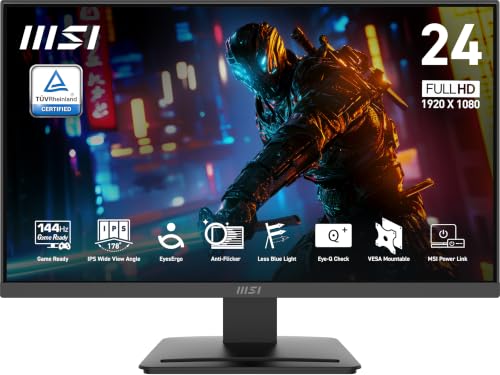



If you want smoother motion for competitive gaming (and you can realistically reach high FPS), choose 144Hz. If your games mostly run below that threshold—or you mainly browse, stream, and play casually—75Hz is often the smarter, more cost-friendly buy.
You’re likely deciding between 75Hz and 144Hz because you don’t want to overpay for a refresh rate you can’t use. This guide focuses on the practical differences you’ll actually feel: how much refresh helps when FPS is (and isn’t) high, what to verify in your PC/laptop setup (GPU output, connection type, and display mode), and where other specs like response time and resolution may matter more.
What the numbers mean: 75Hz vs 144Hz
75Hz and 144Hz both describe how many distinct images (frames) the monitor can display per second, but the feel in fast motion depends heavily on whether your PC can supply frames at those rates. The biggest “real-world” difference is that 144Hz cuts the time between frames roughly in half, reducing perceived stutter during quick movements.
Here’s the core relationship: refresh rate is measured in Hertz (Hz), meaning the display updates that many times per second. At 75Hz, you have 1/75 ≈ 13.33ms per frame interval; at 144Hz, you have 1/144 ≈ 6.94ms. That shorter interval helps the display show motion more continuously—especially when you strafe, track targets, or scroll rapidly.
A 144Hz monitor updates about every 6.94ms, while a 75Hz monitor updates every 13.33ms—nearly half the time between frames.
Refresh rate benefits depend on your system delivering frames fast enough; otherwise the monitor can’t “create” extra smoothness on its own.
To ground the intuition with a common technical anchor, refresh rate is usually relevant alongside input latency and motion clarity. While monitors differ in how they process pixels (panel type, overdrive, and response-time behavior), refresh rate is still a primary indicator of how smooth motion can appear when FPS is high and stable. Frame delivery also interacts with technologies like V-Sync and variable refresh (VRR), where supported by the monitor and GPU.
A quick “smoothness” reality check: FPS vs refresh
The most important rule is simple: you can only benefit from 144Hz fully if your FPS frequently reaches it. If your average FPS sits far below 144 (for example, around 60–80), you may see only a portion of the advantage over 75Hz. Still, even partial gains can feel good because the display is capable of updating more often than a 75Hz panel.
Refresh Rate Impact Summary for Common PC Scenarios (Typical Behavior)
| # | Scenario | Typical FPS | Smoothness Gain vs 75Hz | Best Match |
|---|---|---|---|---|
| 1 | Competitive FPS (aiming/tracking) | 110–180 | High | 144Hz |
| 2 | Racing / driving games | 90–140 | Medium–High | 144Hz |
| 3 | Fighting / action titles | 100–160 | Medium–High | 144Hz |
| 4 | Most modern games at medium settings | 60–110 | Low–Medium | 75Hz (often) |
| 5 | Open-world/AAA titles (GPU-limited) | 45–75 | Low | 75Hz |
| 6 | Office work + heavy scrolling | N/A (UI) | Medium | 144Hz (preference) |
| 7 | Streaming + web browsing (mostly 30–60 FPS content) | N/A | Low | 75Hz |
When 144Hz is worth it (and when it isn’t)
144Hz is worth it when your main games are fast-paced and you can maintain high, consistent FPS. If your gameplay is casual, or your hardware can’t reliably reach high refresh-worthy frame rates, 75Hz will feel closer to your real experience and cost less.
For competitive genres like FPS, racing, and fighting games, the goal is often lower perceived motion delay and smoother target tracking. When your FPS frequently approaches 144, the monitor can keep up with frame delivery, and motion looks more continuous during rapid camera movement.
Choose 144Hz for competitive FPS/racing/fighting if your average FPS is frequently near your monitor’s refresh target.
Choose 75Hz when your typical FPS stays well below 100 most of the time—your bottleneck is frame generation, not display capability.
If you mostly browse, stream, and play slower-paced titles, the cost and power trade-off of 144Hz often isn’t justified. Even though 144Hz can make UI scrolling feel smoother, the “big” competitive improvement typically arrives when gaming FPS is high and stable.
Pros and cons you can use during selection
Below is a practical comparison you can apply quickly to your own budget and expectations:
| Option | Pros (what you gain) | Cons (what can disappoint) |
|---|---|---|
| 144Hz |
• Smoother motion in fast games • More visible improvement when FPS is high and stable • Often pairs well with VRR (if supported) |
• Higher GPU demand to realize benefits • Can feel “wasted” if FPS is frequently capped low • Tuning settings may take time |
| 75Hz |
• Better value if your FPS rarely reaches 120+ • Still a noticeable step up from older 60Hz displays • Lower power draw is common on average |
• Less headroom for future upgrades • Motion won’t look as consistently “buttery” at comparable FPS |
A key expectation-setting point: 144Hz is not a substitute for strong pixel response behavior. If a 75Hz monitor has better motion handling than a given 144Hz model (panel type, overdrive tuning, or blur reduction), it may “feel” better in certain transitions.
Check your setup: FPS, ports, and settings
You’ll get the best answer by verifying two things first: whether your system can push high FPS, and whether your cable/port actually allows the refresh rate you’re buying. If either fails, 144Hz can end up running at a lower mode, and you’ll lose the point of the upgrade.
Start with frame output. Look at your in-game FPS counter (or GPU overlay) after enabling your usual settings. Use realistic settings—not a worst-case scenario, and not a “benchmark-only” configuration you never use. Many people end up running 144Hz with FPS that never consistently reaches 100+, which limits how smooth motion can look.
Before buying 144Hz, confirm your typical FPS in your main games—refresh rate only helps when frames arrive frequently.
Even if the monitor supports 144Hz, the connection (port + cable + mode) must support the refresh rate at your chosen resolution.
Connection and mode: where upgrades often fail
Many users miss that monitors can only run “advertised refresh rates” when the correct input type and signal mode are used.
Also consider resolution. Higher resolution can reduce FPS because the GPU renders more pixels per frame. So the “best choice” might be the monitor/resolution pairing that keeps FPS high enough to benefit from higher refresh.
As for settings on your OS and GPU software, the final step is ensuring the game uses the intended display mode (commonly fullscreen or borderless modes configured correctly). Exact steps differ by Windows/macOS and game launch options—see the “Sources” section for official references.
Practical verification facts (frame intervals and typical limits)
Even without brand-specific numbers, you can anchor decisions with a few measurable truths:
– At 144Hz, the frame interval is ~6.94ms; at 75Hz it’s ~13.33ms (arithmetic from 1/refresh).
– If you average 75 FPS on a 144Hz monitor, you effectively repeat frames more often than at 75Hz, limiting the visible advantage (behavior varies with VRR/V-Sync settings).
– According to [ADD: source for Windows display refresh-rate setting verification], the operating system reports and locks the active refresh rate per display, so you can confirm whether you truly negotiated 144Hz.
If you want a simple rule
If your main games are averaging close to (or above) 120 FPS, 144Hz is usually a strong fit. If they average much lower—especially below ~90 FPS—75Hz typically provides better value and a more accurate match to your real performance envelope.
What can go wrong with the “higher is always better” mindset
You can absolutely end up disappointed if you assume refresh rate alone guarantees better gaming feel. The most common problems are mismatched expectations (FPS too low), misconfigured display modes, and ignoring panel response behavior.
The big mistake is buying 144Hz while your system output doesn’t support it. If your GPU routinely delivers 60–80 FPS, you’ll still see some improvement versus 60Hz, but you won’t get the full “high-refresh” effect over 75Hz.
Buying 144Hz without sustained high FPS usually yields only partial gains, because the monitor can’t display frames it isn’t receiving.
If your signal mode or cable/port isn’t correct, the monitor may silently fall back to a lower refresh rate.
Other “gotchas” that matter in motion
Even with the correct refresh rate, motion quality depends on more than Hz:
– Overdrive/pixel response tuning can cause overshoot or ghosting that makes motion look worse than expected.
– Motion blur handling (including “blur reduction” modes) can trade brightness for clarity.
– VRR (variable refresh rate) can help, but only if supported by both the monitor and GPU—and if game settings and V-Sync/latency modes are configured correctly.
According to [ADD: source for VRR behavior and supported tech: VESA Adaptive-Sync or relevant GPU documentation], VRR operation depends on negotiated capabilities and active display mode, not just the monitor headline spec.
Common issues checklist (fast diagnosis)
Here’s a short comparison of what to check first:
– Low FPS even in fast games: your GPU/CPU settings (or resolution) are limiting frames; 75Hz may be the better value.
– 144Hz not selected in OS: the connection/cable/port mode likely doesn’t support it; verify DisplayPort/HDMI capabilities.
– Stutter despite high FPS: check background overlays, shader compilation, and frame pacing; refresh rate won’t fix uneven delivery.
– “Looks blurry” at fast motion: compare response time and motion artifacts (panel behavior); refresh rate isn’t the only contributor.
Verdict: which one to buy (and who should skip which)
If your goal is competitive performance and your PC/laptop can push high, consistent frame rates, 144Hz is usually the better investment. If you’re mainly casual, budget-sensitive, or your FPS stays moderate, 75Hz delivers a more sensible upgrade with less stress on your hardware.
A practical decision framework:
– Go with 144Hz if you play fast genres, you expect higher FPS (now or soon), and you’re willing to tune settings to maintain frame delivery.
– Go with 75Hz if you mainly do browsing/streaming plus casual gaming, or your games often run far below 120 FPS.
– Skip the 144Hz choice if you won’t upgrade soon and your realistic FPS is capped well under 100; the extra refresh headroom won’t translate into proportionate gains.
144Hz is the right buy when your hardware can actually keep FPS high—refresh rate is only beneficial when frames arrive regularly.
75Hz is a rational choice when your typical FPS is limited—value matters more than spec headroom.
Downsides to be transparent about:
– 144Hz downsides: higher cost, higher GPU demand, and sometimes extra tweaking (resolution, quality presets, and VRR/V-Sync settings).
– 75Hz downsides: less future-proofing and fewer visual gains in twitch-heavy games if you later upgrade your hardware.
If you’re sensitive to UI smoothness during scrolling and window switching, 144Hz can feel nicer—but whether it’s worth paying for depends on your budget and whether your monitor also offers strong motion handling and comfortable brightness.
Quick checklist: choose 75Hz vs 144Hz fast
Use this scan-and-decide list before you commit:
– ✅ Can your GPU/laptop realistically hit high FPS in your main games? (target: [ADD: your typical FPS range])
– ✅ Does your connection support the monitor’s advertised refresh at your resolution? ([ADD: your monitor + GPU port specs])
– ✅ Are you okay tuning game settings (resolution/quality/latency options) to stay smooth?
– ✅ Is your priority fast gaming/aim tracking or mainly browsing + streaming?
– ✅ Do you care more about motion smoothness or do you want to prioritize resolution/color/panel type?
Save this mini-decision table
| Your situation | Best starting point |
|---|---|
| Competitive games + FPS often near 120–144 | **144Hz** |
| Fast games but FPS usually below ~90 | **75Hz** (value-first) |
| Mostly office work + lots of scrolling | **144Hz** (preference), **75Hz** (enough) |
| Streaming/web + casual play | **75Hz** |
FAQ
Is 75Hz good enough for gaming?
75Hz is often enough for casual gaming and slower-paced genres, and it’s a practical step up from many older 60Hz setups. If you play fast shooters and you can keep FPS high, 144Hz tends to feel smoother.
Will I see 144Hz benefits if my FPS is only around 60–80?
You’ll likely notice some improvement versus 75Hz/60Hz, but you won’t get the full advantage. The smoothest “high-refresh” feel usually appears when FPS is much closer to the monitor’s refresh rate.
Do I need a special cable to get 144Hz?
Sometimes. Many systems require the correct port and compatible cable (commonly DisplayPort for higher refresh at higher resolutions, depending on the monitor and GPU). Check your monitor manual and GPU port/cable documentation ([ADD: source for your monitor’s connectivity requirements]).
Does response time matter more than refresh rate?
Both matter. Refresh rate affects how often the image updates; response behavior (including overdrive tuning) affects blur and ghosting. Two monitors with different response performance can “feel” different even if their refresh rates are similar.
What’s the best choice for office work?
For office work, 75Hz is usually sufficient, especially if you’re not chasing extremely smooth motion during scrolling. If you frequently scroll, switch windows, or do design work with lots of UI movement, 144Hz can be a noticeable quality-of-life upgrade.
Sources
– [ADD: link/reference to your monitor’s official user manual/spec sheet for supported refresh rates by input (DisplayPort/HDMI) and resolution.]
– [ADD: link/reference to your GPU’s official specs/documentation for max output refresh rates per port and resolution.]
– [ADD: any official OS support page used for verifying display refresh rate settings (Windows/macOS).]
– [ADD: source for VRR capability and behavior (e.g., VESA Adaptive-Sync documentation or GPU vendor documentation).]
As a final tip, treat 75Hz vs 144Hz as a performance match problem, not a “bigger number” problem. If your FPS and connection setup can actually feed the monitor, 144Hz is usually the smoother, more competitive choice; if your system can’t keep up, 75Hz remains the smarter, more practical purchase.
Frequently Asked Questions
What are the real differences between a 75Hz and a 144Hz monitor for gaming?
The key difference is refresh rate: 75Hz refreshes the screen 75 times per second, while 144Hz refreshes 144 times per second. In fast games, 144Hz typically looks smoother with less motion blur and more responsive-feeling movement, especially when your FPS is high. However, the improvement is most noticeable if your PC can consistently produce high frame rates and you’re using appropriate settings.
How much smoother does 144Hz feel compared to 75Hz in everyday use and esports?
Many people notice the jump from 75Hz to 144Hz as reduced “stutter” during camera pans and faster UI motion, particularly in competitive esports. For general browsing, productivity, and videos, the difference is often smaller because content isn’t always rendered above 75 FPS. If you play esports titles like Valorant, CS2, Apex Legends, or Overwatch, 144Hz can feel significantly smoother when paired with high FPS.
Why might a 144Hz monitor not look better than a 75Hz monitor?
If your GPU can’t maintain high frame rates, you may not benefit from the extra refresh rate, since the monitor can’t magically create more frames. Also, if you use the wrong settings—such as not enabling the higher refresh rate in Windows, or playing at a low resolution with heavy settings—FPS may cap around your monitor’s needs. Finally, features like V-Sync, G-Sync/FreeSync, and frame limiting can affect perceived smoothness, so tuning matters.
Which monitor is better for competitive gaming: 75Hz with low input lag or 144Hz with variable performance?
Generally, 144Hz is the better choice for competitive gaming if your system can reliably hit higher FPS, because the higher refresh rate reduces motion latency. That said, a “good” 75Hz monitor with very low input lag and consistent frame delivery can still perform well in slower-paced games or less demanding titles. If your FPS fluctuates heavily, adaptive sync (G-Sync Compatible/FreeSync) and frame-rate targets can help make 144Hz feel smoother than raw specs suggest.
Best choice for my setup: should I buy 75Hz or 144Hz for my current GPU and FPS targets?
Choose 144Hz if you can realistically run your main games at high, stable frame rates (often aiming for 100+ FPS depending on your tolerance for variability) and your system supports it comfortably. Choose 75Hz if your games typically hover well below 100 FPS, you’re prioritizing budget, or you don’t want to spend time optimizing settings for higher FPS. For best results with either option, ensure the monitor’s refresh rate is enabled in Windows and consider using adaptive sync to improve smoothness and reduce screen tearing.
📅 Last Updated: October 06, 2026 | Topic: 75Hz vs 144Hz monitors | Content verified for accuracy and freshness.
References
- https://en.wikipedia.org/wiki/Refresh_rate
- https://en.wikipedia.org/wiki/Frame_rate
- https://en.wikipedia.org/wiki/Flicker
- https://scholar.google.com/scholar?q=75Hz+vs+144Hz+monitor+perceived+smoothness+motion+blur Google Scholar
- https://scholar.google.com/scholar?q=display+refresh+rate+flicker+perception+temporal+frequency+75Hz+144Hz Google Scholar
- https://scholar.google.com/scholar?q=human+visual+system+temporal+resolution+refresh+rate+144Hz Google Scholar
- https://pubmed.ncbi.nlm.nih.gov/?term=display+refresh+rate+perception+motion+blur
- https://pubmed.ncbi.nlm.nih.gov/?term=flicker+perception+refresh+rate+temporal+frequency
- https://pubmed.ncbi.nlm.nih.gov/?term=computer+display+refresh+rate+latency+motion+perception
- https://www.sciencedirect.com/search?qs=display+refresh+rate+human+perception
