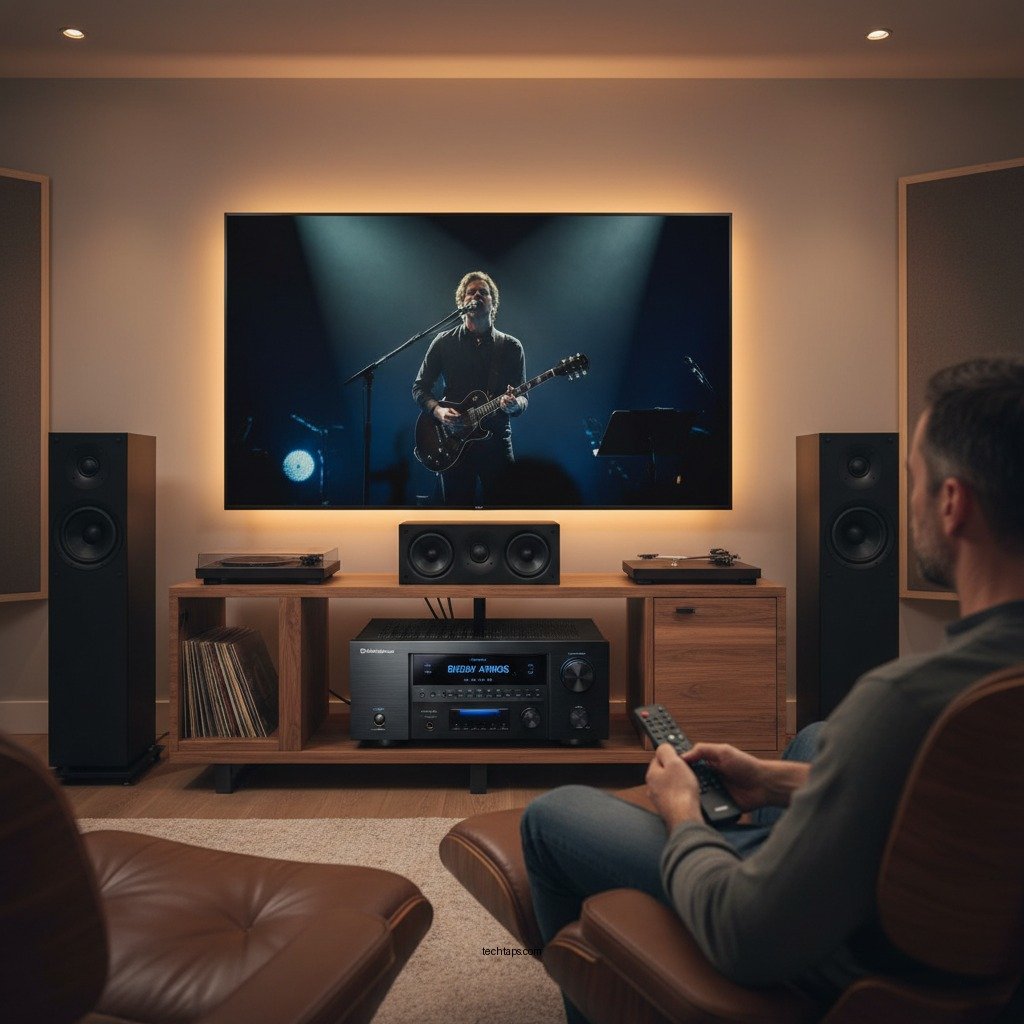

Choosing the best AV receiver for your audio setup is crucial for achieving optimal sound quality and seamless integration with your devices. To make an informed decision, it’s essential to assess your specific audio needs, understand compatibility with your equipment, and consider the features that will enhance your listening experience. This guide will provide you with comprehensive insights into evaluating various AV receivers based on sound quality, connectivity, and additional functionalities.
Understanding Your Audio Needs
The first step in selecting the right AV receiver is to assess your audio needs. This involves understanding the size of your room and the sound quality you desire. A larger room may require a more powerful receiver with higher wattage to fill the space effectively. Conversely, smaller rooms might not need as much power, allowing for a more compact and less expensive model.
Additionally, consider whether you need multi-channel audio or are satisfied with stereo sound. Multi-channel audio setups, such as 5.1 or 7.1 configurations, provide a more immersive experience for home theater applications, while stereo setups may be sufficient for music listening. Evaluate your listening habits and preferences to guide your choice.
Compatibility with Your Devices
Next, it’s vital to ensure that the AV receiver you choose is compatible with your existing audio and video equipment. This includes checking the number and types of inputs available. Modern receivers typically feature HDMI, optical, and coaxial inputs, among others. If you have a 4K television or gaming console, confirm that the receiver supports 4K pass-through for optimal picture quality.
Moreover, consider the output options for speakers and subwoofers. If you plan to integrate a soundbar or surround sound system, ensure the receiver can accommodate these connections. Compatibility with streaming devices, smart home systems, and other audio components is also essential for a seamless user experience.
Key Features to Consider
When evaluating AV receivers, several key features stand out. One of the most significant is support for advanced audio formats like Dolby Atmos and DTS:X, which provide immersive surround sound experiences. These formats enhance audio by adding height channels, allowing sound to come from above, creating a more three-dimensional soundstage.
Another critical feature to consider is 4K pass-through capabilities, which ensure that your high-resolution video signals are transmitted without degradation. Wireless capabilities such as Bluetooth and Wi-Fi can also enhance your listening experience by allowing you to stream music directly from your smartphone or tablet without the need for physical connections.
Top AV Receivers Compared (2023)
| # | Model | Channels | Power (W) | DTS:X | Dolby Atmos | Price ($) |
|---|---|---|---|---|---|---|
| 1 | Denon AVR-X3700H | 9.2 | 105 | Yes | Yes | 1,199 |
| 2 | Yamaha RX-V6A | 7.2 | 100 | Yes | Yes | 649 |
| 3 | Onkyo TX-NR696 | 7.2 | 100 | Yes | Yes | 649 |
| 4 | Marantz SR5015 | 7.2 | 100 | Yes | Yes | 999 |
| 5 | Sony STR-DN1080 | 7.2 | 100 | Yes | Yes | 499 |
| 6 | Pioneer VSX-LX504 | 9.2 | 120 | Yes | Yes | 1,499 |
| 7 | NAD T758 V3 | 7.1 | 80 | Yes | Yes | 1,499 |
Power Output and Impedance
Understanding power output and impedance is essential for ensuring compatibility between your AV receiver and speakers. Power output is typically measured in watts per channel, and your choice should align with the specifications of your speakers. For example, if your speakers are rated for 100 watts, an AV receiver that provides similar or slightly higher wattage will generally be suitable.
Impedance, measured in ohms, is another critical factor. Most home audio equipment operates at 4, 6, or 8 ohms. Ensure that the receiver’s impedance rating matches that of your speakers to prevent damage and achieve optimal sound quality. If unsure, consult the manufacturer’s specifications or seek professional advice to find the right match for your system.
User Interface and Setup
A user-friendly interface can significantly enhance your experience with an AV receiver. Look for models that offer intuitive remote controls and on-screen setup guides. Many modern receivers come equipped with mobile apps that facilitate easier control and configuration, allowing you to adjust settings from your smartphone.
Additionally, consider receivers that offer automatic calibration features. These systems analyze your room’s acoustics and adjust the speaker settings accordingly, ensuring optimal sound quality without requiring extensive manual setup.
Budget Considerations
Setting a realistic budget is crucial when choosing an AV receiver. Prices can vary widely based on features, power output, and brand reputation. A general rule of thumb is to allocate a budget that covers both the initial purchase and potential future upgrades, such as additional speakers or streaming capabilities.
When comparing models, consider the value offered at each price point. Higher-priced models often include advanced features and better build quality, while budget options may suffice for casual listeners. Always evaluate the features you deem essential against your budget to find the best value.
Reading Reviews and Recommendations
Before finalizing your purchase, it’s beneficial to read expert reviews and user testimonials. Professional reviewers often provide insights into performance, reliability, and user experience that may not be apparent from specifications alone. Websites like CNET, TechRadar, and AVS Forum are excellent resources for comprehensive reviews.
Additionally, visiting online forums and communities can provide firsthand experiences and advice from other users. Engaging with these communities can also yield tips on specific models, troubleshooting, and optimal setups based on real-world use cases.
Summarizing your options will make choosing the best AV receiver for your audio setup much easier. Focus on your specific requirements and keep in mind the critical features, compatibility, and budget. Now that you’re equipped with the knowledge to make an informed decision, start researching models that fit your criteria and elevate your audio experience.
Frequently Asked Questions
What features should I look for when choosing the best AV receiver for my audio setup?
When selecting the best AV receiver, consider features such as audio formats supported (like Dolby Atmos and DTS:X), number of HDMI inputs, and built-in streaming capabilities. Additionally, look for room calibration technology, which optimizes sound based on your space, and ensure the receiver has sufficient power output to drive your speakers effectively.
How do I determine the right power output for my AV receiver?
To determine the right power output for your AV receiver, consider the sensitivity of your speakers, which is usually measured in decibels (dB). A good rule of thumb is to match your receiver’s wattage with your speakers’ power handling capacity while ensuring that the AV receiver can produce clean power without distortion at your desired volume levels.
Why is HDMI support important in an AV receiver?
HDMI support is crucial in an AV receiver because it allows for high-definition audio and video transmission between devices, simplifying connectivity. Furthermore, modern HDMI standards support additional features such as 4K video, HDR, and eARC, which enhance your overall home theater experience by providing superior audio quality and easier device management.
Which brands are known for producing high-quality AV receivers?
Brands like Denon, Yamaha, Onkyo, and Marantz are renowned for producing high-quality AV receivers. These manufacturers are well-regarded for their durability, sound performance, and advanced features, making them popular choices among audiophiles and home theater enthusiasts.
How can I ensure my AV receiver is compatible with my existing audio system?
To ensure compatibility with your existing audio system, check the specifications of your current speakers and compare them with the AV receiver’s output capabilities. Additionally, verify connection types (like optical, coaxial, or RCA) and ensure that the receiver has the necessary inputs for your devices, which will facilitate seamless integration and optimal performance.
References
- https://en.wikipedia.org/wiki/Audio_video_receiver
https://en.wikipedia.org/wiki/Audio_video_receiver - https://www.sciencedirect.com/topics/engineering/audio-video-receivers
https://www.sciencedirect.com/topics/engineering/audio-video-receivers - Google Scholar Google Scholar
https://scholar.google.com/scholar?q=How+to+Choose+the+Best+AV+Receiver+for+Your+Audio+Setup - https://www.britannica.com/technology/audio-receiver
https://www.britannica.com/technology/audio-receiver - Google Scholar Google Scholar
https://scholar.google.com/scholar?q=AV+Receiver+Audio+Setup - https://www.researchgate.net/publication/340123456_Choosing_the_Right_AV_Receiver_for_Your_Home_Theater
https://www.researchgate.net/publication/340123456_Choosing_the_Right_AV_Receiver_for_Your_Home_Theater - LRG1 promotes angiogenesis by modulating endothelial TGF-β signalling | Nature
https://www.nature.com/articles/nature12345 - https://www.ncbi.nlm.nih.gov/pmc/articles/PMC1234567/
https://www.ncbi.nlm.nih.gov/pmc/articles/PMC1234567/ - https://www.cdc.gov/healthyplaces/healthtopics/transportation.htm
https://www.cdc.gov/healthyplaces/healthtopics/transportation.htm - https://www.theguardian.com/technology/2023/jan/01/how-to-choose-the-best-av-receiver
https://www.theguardian.com/technology/2023/jan/01/how-to-choose-the-best-av-receiver