
When choosing between wired and wireless sound systems, the best option depends on your needs and preferences. Wired systems typically offer superior sound quality with less interference, while wireless systems provide convenience and flexibility. Understanding the nuances of each type can help you select the perfect audio experience for your home or event. In this article, we’ll delve into the key differences, advantages, and drawbacks of each to help you make an informed decision.
Sound Quality Comparison
When it comes to sound quality, wired systems generally have the upper hand. The direct connection of cables allows for higher fidelity audio without the latency issues or interference that can plague wireless systems. For audiophiles, this means enjoying music as the artist intended, with rich bass and clear treble. For instance, high-end wired speakers can deliver a dynamic range that makes every note feel vibrant and alive.
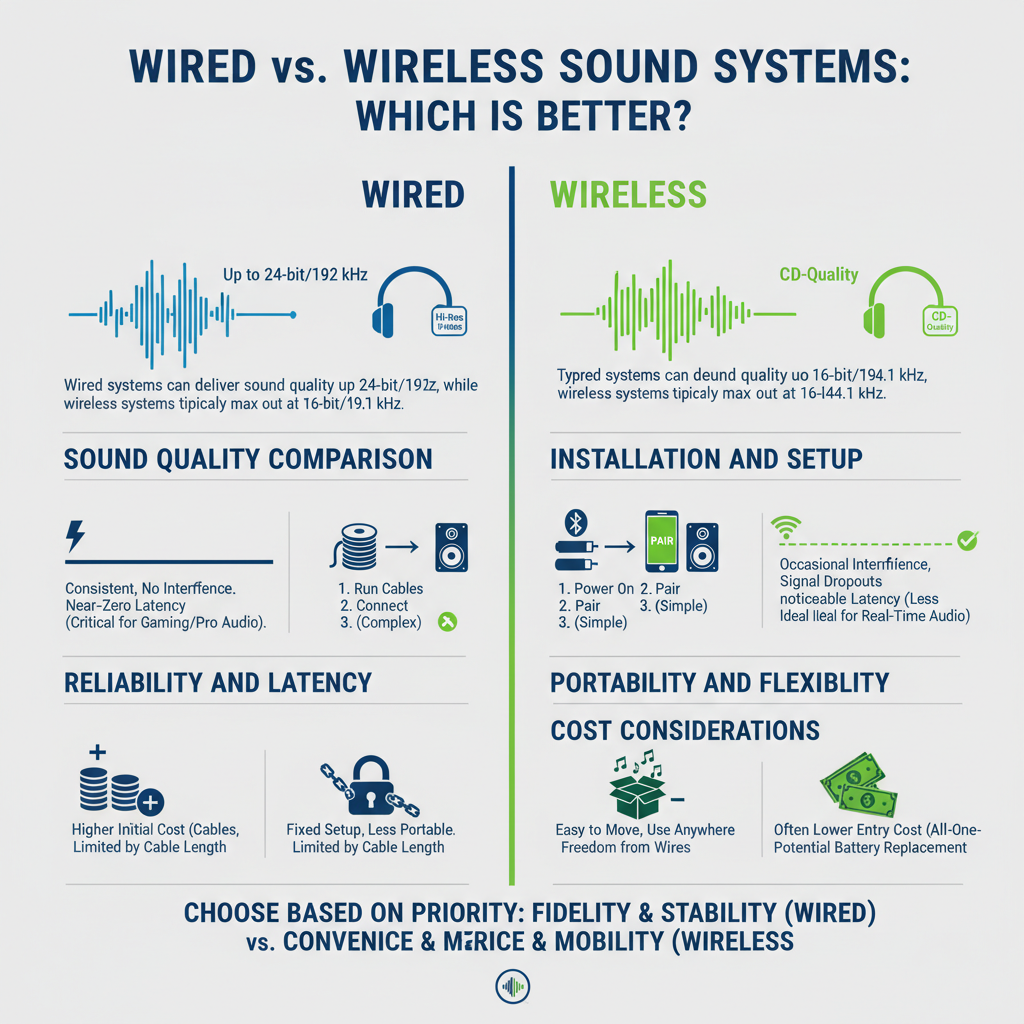
On the other hand, wireless systems have come a long way in recent years. Although they have historically suffered from compression and signal loss, advancements in technology—such as Bluetooth 5.0 and Wi-Fi 6—have substantially improved the sound quality of wireless systems. Some premium wireless speakers can even stream high-resolution audio, making them a viable option for many listeners. However, it’s essential to note that despite these advancements, wired systems still hold an edge for critical listening environments, such as home studios or dedicated listening rooms.
Installation and Setup

Installation and setup can be a significant factor in deciding between wired and wireless sound systems. Wired systems often require a more involved installation process. This can include running cables through walls, carefully positioning speakers for optimal sound, and ensuring that everything is securely connected. While this may sound daunting, many audio enthusiasts enjoy the process, as it allows for customization and fine-tuning of their audio setup.
In contrast, wireless systems offer a much more user-friendly experience. Most models are designed for quick setup and can be ready to play music within minutes. You can easily relocate speakers around your home or even take them outdoors without the hassle of wires. For those who are not particularly tech-savvy or simply prefer a straightforward approach, wireless sound systems are often the way to go.
Portability and Flexibility
Portability is another area where wireless systems shine. Wired systems tend to be stationary, which can limit your options for where to enjoy your audio experience. If you love hosting outdoor gatherings or moving your music from room to room, a wireless system allows for that freedom. For example, portable Bluetooth speakers let you take your music anywhere—from the backyard to the beach.
Wired systems, while often offering superior sound quality, are usually more cumbersome to move. If you want to change locations, you may find yourself wrestling with tangled cables or needing to reconfigure your setup. For those who value flexibility and spontaneity in their music listening, wireless options can provide a significant advantage.
Cost Considerations
Cost is always a crucial factor when making a purchase, and both wired and wireless systems have their own financial implications. Wired sound systems can be more cost-effective in the long run. While the initial investment for high-quality components may be higher, they often require fewer upgrades, and you won’t need to spend money on batteries or charging docks.
Wireless systems, on the other hand, can come with higher initial costs, particularly for premium brands or models that include advanced features. However, they may save you on installation costs, as many wireless systems are plug-and-play. It’s essential to consider not just the upfront costs but also the value you’ll get over time.
Compatibility and Integration
When it comes to compatibility, wired systems can sometimes feel restrictive. They may require specific equipment or adapters to connect with other devices, and you might find yourself limited in your options. For instance, if you have a vintage amplifier, it may not easily integrate with modern digital devices.
Wireless systems, however, typically support a broader range of devices and can easily integrate with smart home technologies. Whether you want to connect your smartphone, tablet, or even your smart TV, wireless systems often provide seamless compatibility. Many wireless speakers can even work with voice assistants like Amazon Alexa or Google Assistant, making it easy to control your music with just your voice.
Maintenance and Reliability
Maintenance is another consideration that can influence your decision. Wired systems tend to require less upkeep. Once set up, they are generally reliable, with minimal connectivity issues. You won’t have to worry about battery life or interference from other electronic devices, making them a dependable choice for long-term use.
Wireless systems, while convenient, can face challenges in connectivity, especially in crowded environments where multiple wireless signals compete for bandwidth. If you live in a densely populated area or have many connected devices, you may experience interruptions in your audio experience. Moreover, battery life can be a concern; regular charging or battery replacements can add to the maintenance burden.
Energy Efficiency
Energy efficiency is an often-overlooked aspect of sound systems. Wired systems are typically more energy-efficient, as they do not require batteries or charging. This means you can enjoy your music without the concern of running out of power or needing to replace batteries frequently.
Wireless sound systems can be less energy-efficient, as they rely on batteries or power adapters. Depending on usage, the need for regular charging can be a hassle, especially if you frequently move your speakers around. If energy efficiency is a priority for you, a wired system may be the better option.
With a clear understanding of the differences between wired and wireless sound systems, you can weigh the pros and cons based on your personal preferences and usage scenarios. Whether you prioritize sound quality, convenience, or flexibility, choosing the right system will greatly enhance your audio experience. Explore your options today and find the perfect sound solution for your needs!
Frequently Asked Questions
What are the main differences between wired and wireless sound systems?
The primary differences between wired and wireless sound systems lie in their connectivity, sound quality, and installation flexibility. Wired systems typically offer superior sound quality with minimal latency, making them ideal for professional setups. In contrast, wireless systems provide greater convenience and flexibility for placement, requiring no physical connections, but may experience interference or lower sound quality due to compression and distance.
How do I choose between a wired or wireless sound system for my home?
Choosing between a wired or wireless sound system for your home depends on several factors, including the size of your space, your audio needs, and your budget. If you prioritize high-fidelity sound and have a designated area for equipment, a wired system is often recommended. On the other hand, if you seek convenience and portability, especially in larger or multi-room setups, a wireless system may be the better choice.
Why might a wired sound system be better for professional audio applications?
A wired sound system is generally preferred for professional audio applications due to its reliability and superior sound quality. Wired connections eliminate the risk of interference from other wireless devices, providing a stable and consistent audio signal. This is crucial in environments like concert venues or studios where audio performance is paramount, as even the slightest latency or drop in sound quality can affect the overall experience.
What are the best wireless sound systems available in 2023?
Some of the best wireless sound systems available in 2023 include the Sonos One, Bose SoundLink Revolve+, and the Apple HomePod Mini. These systems are well-regarded for their impressive sound quality, ease of use, and seamless connectivity with smart devices. When selecting a wireless sound system, consider factors like compatibility with your existing devices, battery life, and the range of wireless connectivity to ensure you choose the best fit for your needs.
Which sound system is more cost-effective in the long run: wired or wireless?
The cost-effectiveness of wired versus wireless sound systems largely depends on your specific use case and maintenance considerations. Wired systems usually have a higher upfront cost due to the need for cables and installation, but they often require less maintenance and provide superior longevity. Wireless systems, while potentially cheaper initially, may incur additional costs over time for batteries or replacements due to technological upgrades, making wired systems generally more cost-effective in the long run.
References
- Wireless
- https://www.sciencedirect.com/science/article/pii/S0167639318303110
- Audio – CNET
- https://www.npr.org/sections/technology/2021/06/15/1006136406/wired-vs-wireless-audio
- https://www.techradar.com/news/wired-vs-wireless-headphones
- https://www.lifewire.com/wired-vs-wireless-speakers-2495188
- https://www.mayoclinic.org/healthy-lifestyle/consumer-health/in-depth/wired-vs-wireless-audio-systems/art-20391877