Finding the right audio cables for your Hi-Fi sound system is crucial for achieving the best possible sound quality. The best options ensure minimal signal loss and optimal performance, making your listening experience truly immersive. In this article, we’ll explore the top audio cables available, their features, and how to choose the right ones for your setup. Whether you’re a casual listener or a dedicated audiophile, understanding your options will help you elevate your sound game.




Understanding Audio Cable Types
When diving into the world of audio cables, it’s essential to understand the different types available and how they perform in various scenarios.
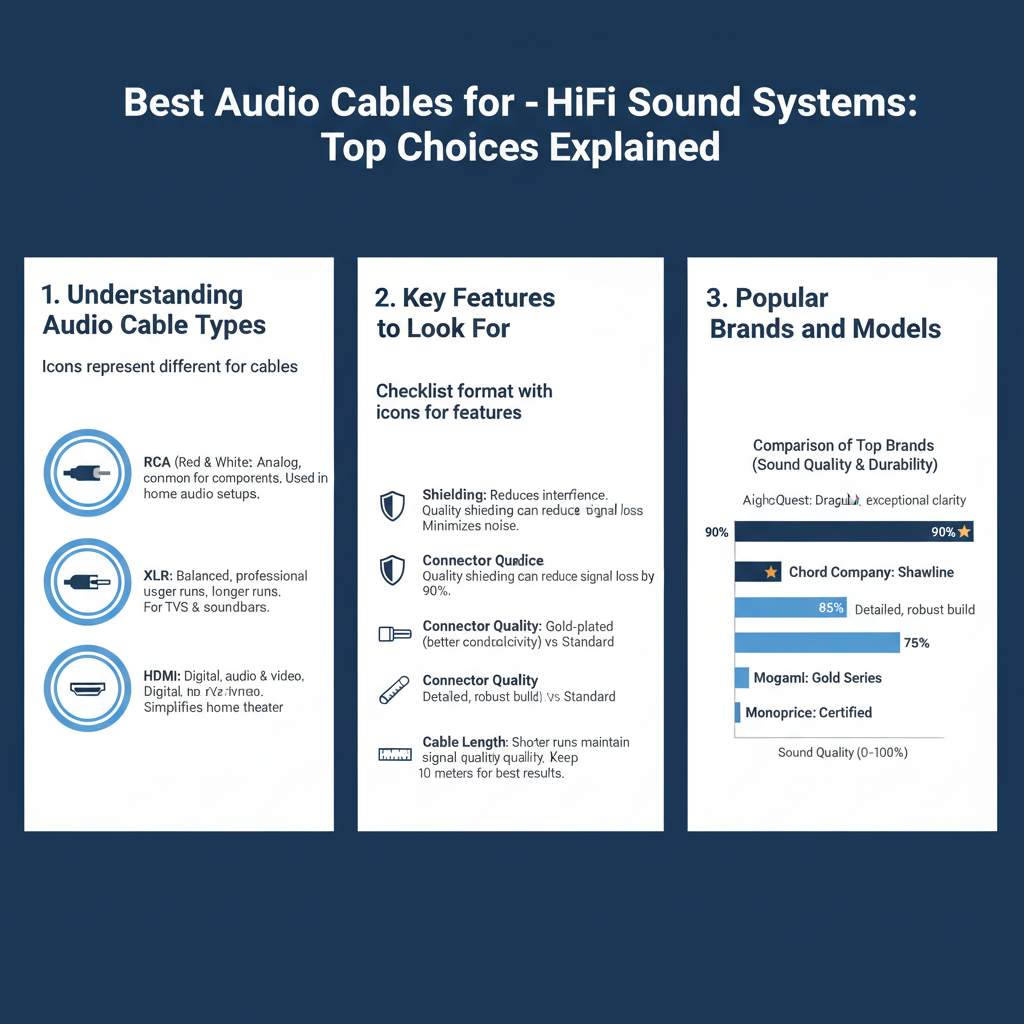
– RCA Cables: RCA cables are a staple in many home audio setups and are commonly used to connect devices like CD players, turntables, and receivers. These cables typically come in red and white (or yellow) connectors, where the red is for the right audio channel, and the white is for the left. They provide good sound quality for analog signals, making them suitable for casual listening and budget-friendly setups. However, for longer runs, they might be prone to interference and signal loss, so it’s best to keep them short.
– XLR Cables: If you’re stepping into the realm of professional sound systems, XLR cables are where it’s at. These cables are designed for balanced audio, which means they can cancel out noise and interference, making them ideal for microphones and high-end audio gear. The three-pin design allows for a secure connection and is commonly used in live sound setups and studios. When you want pristine audio quality without unwanted hum, XLR is the way to go.
Understanding these cable types will help you make informed choices based on the devices you are connecting and your specific audio needs.
Key Features to Look For

When shopping for audio cables, several key features will ensure you get the best performance for your investment.
– Material Quality: The quality of materials used in audio cables can significantly affect sound quality. Look for cables made with oxygen-free copper, as this offers better conductivity and reduces the chances of signal loss. Additionally, gold-plated connectors help prevent corrosion, ensuring a solid connection over time. Investing in high-quality materials will lead to better overall sound performance.
– Cable Length: It’s crucial to choose the right length for your audio cables. While longer cables can provide flexibility in your setup, they also increase the risk of signal degradation. Aim for a length that allows you to connect your devices comfortably without excessive slack. If you need longer runs, consider using higher-quality cables designed to maintain signal integrity over distance.
By focusing on these features, you can select cables that not only fit your needs but also enhance the overall sound quality of your Hi-Fi system.
Popular Brands and Models
The market is filled with brands that offer a variety of audio cables, but some stand out for their quality and reputation.
– Monster Cable: Known for high-performance audio products, Monster Cable has been a trusted name in the audio industry for years. Their cables are designed to deliver excellent sound quality, with features that minimize interference and signal loss. Whether you’re looking for RCA or XLR options, Monster Cable has something to fit your needs.
– Mogami W3103: A favorite among audio professionals, the Mogami W3103 is renowned for its reliability and clarity. This cable is often used in recording studios and live sound environments due to its balanced design, which ensures high-quality audio reproduction. If you’re serious about sound, investing in Mogami cables can make a noticeable difference in your setup.
When exploring options, don’t hesitate to read reviews and seek recommendations to find the perfect cable for your Hi-Fi system.
Budget Considerations
Your budget plays a significant role in your choice of audio cables, and thankfully, there are options available for every price range.
– Affordable Options: If you’re on a budget, brands like AmazonBasics offer decent quality cables at a lower price point. While they may not have the premium features of more expensive brands, they can still deliver satisfactory performance for everyday use. These are great for casual listeners who enjoy good sound without breaking the bank.
– High-End Choices: On the other hand, if you’re looking to invest in your sound system, premium cables from brands like AudioQuest can enhance your system’s capabilities. These cables are often designed with advanced technology to minimize interference and optimize sound quality. Investing in high-end cables can be particularly beneficial if you’re using top-tier audio equipment.
Weighing your budget against your audio needs will help you make the best choice for your Hi-Fi system.
Installation Tips
Once you have your audio cables, proper installation is key to ensuring optimal performance.
– Proper Connections: Make sure all connections are secure. Loose connections can lead to signal loss and degraded sound quality. Take the time to ensure that each cable is plugged in correctly, and consider using cable ties to keep everything organized.
– Cable Management: Organizing your cables not only helps avoid tangling but also improves airflow around your equipment. Consider using cable sleeves or clips to keep everything tidy. Good cable management can also make troubleshooting much easier if issues arise in the future.
By following these installation tips, you can set up your Hi-Fi system for the best possible listening experience.
Maintaining Your Audio Cables
To ensure your audio cables last and perform well over time, regular maintenance is essential.
– Regular Checks: Periodically inspect your cables for any signs of wear and tear, such as fraying or exposed wires. If you notice any damage, it’s best to replace the cable to avoid compromising your sound quality. Keeping an eye on your cables can prevent larger issues down the line.
– Cleaning Tips: Dust and grime can accumulate on connectors, leading to poor connections and corrosion. Use a soft cloth to wipe down the connectors regularly. If you notice any corrosion, you can use a little rubbing alcohol on a cotton swab to clean it, ensuring a secure and clean connection.
By maintaining your audio cables, you can maximize their lifespan and keep your Hi-Fi system performing at its best.
Ensuring you choose the right audio cables for your Hi-Fi sound system can significantly enhance your listening experience. By understanding the types, features, and brands, you can make informed decisions that suit your needs and budget. From installation tips to maintenance advice, taking care of your setup will help you enjoy the best sound imaginable. So go ahead, explore your options and elevate your audio experience!
Frequently Asked Questions
What are the most important factors to consider when choosing audio cables for Hi-Fi sound systems?
When selecting audio cables for Hi-Fi sound systems, consider factors such as cable type (RCA, XLR, optical), material quality (copper vs. silver), length, and shielding. High-quality materials enhance conductivity and reduce signal loss, while proper shielding minimizes interference from external sources. Additionally, ensure the cable length is appropriate for your setup to avoid unnecessary signal degradation.
How do different types of audio cables affect sound quality in a Hi-Fi system?
Different types of audio cables can significantly impact sound quality in a Hi-Fi system. For instance, balanced cables (like XLR) reduce noise and interference, making them ideal for professional setups. In contrast, unbalanced cables (like RCA) are more susceptible to interference but can still provide excellent sound quality in short runs. Ultimately, the cable type should match your equipment and the specific audio environment for optimal performance.
Why is it important to use high-quality audio cables in a Hi-Fi sound system?
Using high-quality audio cables in a Hi-Fi sound system is crucial because they ensure accurate signal transmission, preserving the clarity and detail of the audio. Poor-quality cables can introduce distortion, noise, and signal loss, degrading the listening experience. Investing in quality cables allows you to fully appreciate the nuances of your music and enhances the overall performance of your sound system.
What are the best audio cables for connecting speakers to a Hi-Fi receiver?
The best audio cables for connecting speakers to a Hi-Fi receiver are typically speaker wires made from high-purity copper. Look for cables with adequate gauge (16 or 14 gauge is common) to ensure sufficient power delivery without loss. Additionally, consider cables with good insulation and flexibility for easier installation and better durability. Brands like Monster, AudioQuest, and Belden are known for producing reliable speaker cables that meet Hi-Fi standards.
Which audio cables are recommended for digital connections in Hi-Fi systems?
For digital connections in Hi-Fi systems, optical (TOSLINK) cables and coaxial digital cables are highly recommended. Optical cables transmit a digital signal using light, which eliminates electromagnetic interference, making them ideal for long distances. Coaxial cables, on the other hand, are more robust and can offer excellent sound quality when used with quality connectors. Choose cables from reputable brands to ensure the best performance and reliability.