
If you do office work, 144Hz vs 60Hz comes down to one question: does higher refresh actually make day-to-day tasks noticeably smoother? For most office workflows—scrolling spreadsheets, reading, email, and word processing—the practical winner is usually 60Hz unless your apps and hardware can reliably push high frame rates. This article will tell you exactly when 144Hz is worth paying for and when it’s just extra cost for minimal gain.
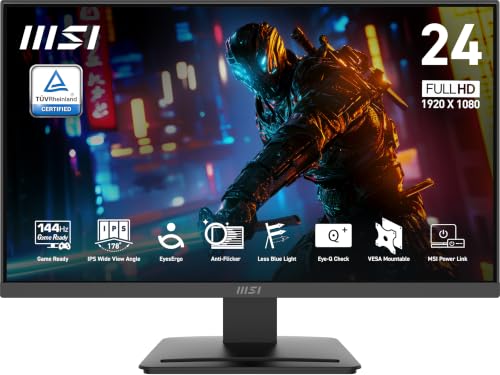


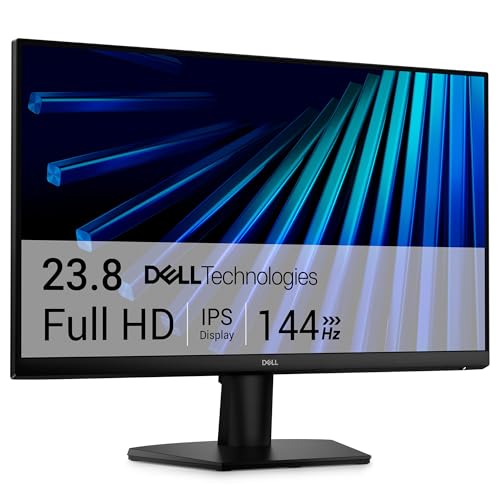
For most office work, 60Hz is usually “good enough”—you’re unlikely to gain meaningful improvements in reading comfort or text clarity from 144Hz. A 144Hz display can feel smoother during scrolling and fast cursor movement, but whether it’s worth the extra cost depends on how motion-heavy your day is and whether your system can reliably drive the higher refresh rate.
If you’re doing typical office tasks (docs, email, spreadsheets, web browsing), you’ll often notice smoothness in movement more than any change in readability. In this guide, you’ll learn when 144Hz is worth it—and when you should stick with 60Hz to save money and power.
If you mostly type, read, and manage files, the choice mainly affects motion smoothness—not whether text is easier to read. If you also multitask heavily, do lots of scrolling, or occasionally game, the smoother motion of 144Hz may feel more noticeable.
60Hz vs 144Hz: What Changes for Office Tasks

The difference is mainly perceived motion smoothness, not text legibility. Higher refresh rates reduce visible stepping during scrolling and cursor movement, while readability is governed more by resolution, panel type, font rendering, and scaling.
Here’s what actually changes when you move from 60Hz to 144Hz on an office monitor:
– 60Hz vs 144Hz is about motion smoothness: higher refresh rates reduce visible “stepping” during scrolling and cursor movement.
– Text clarity won’t automatically improve: readability depends more on resolution, panel type, font rendering, and scaling than refresh rate.
– Your workload matters: office apps that involve frequent motion (scrolling through long spreadsheets, web pages, feeds) benefit more than mostly static screens.
A practical way to think about this: refresh rate sets the maximum number of screen updates per second, and that translates to shorter frame time (time between updates). At 60Hz, frame time is about 16.7ms; at 144Hz, it’s about 6.9ms—a ~2.1× reduction in frame time, which is why motion can look less “juddery.”
A monitor’s refresh rate determines how often the screen can update per second; 144Hz allows up to 144 updates per second versus 60Hz.
Frame time is the reciprocal of refresh rate—60Hz is ~16.7ms per frame, while 144Hz is ~6.9ms per frame.
Why office text usually doesn’t get “easier to read”
If your goal is fewer eye-strain complaints from reading, refresh rate alone rarely solves the biggest drivers. In most office setups, comfort issues come from one or more of these factors:
– Brightness too high (or too low) relative to room lighting
– Glare from windows or overhead fixtures
– Font size/scaling that forces squinting or constant zooming
– Resolution and scaling mismatches that make text look softer than expected
– Suboptimal viewing distance (common with small desks and multiple monitors)
Even in 2026, the most reliable “clarity” improvements typically come from getting resolution right for your screen size and choosing good scaling in your OS—not from jumping refresh rates.
Motion smoothness: where 144Hz shows up fastest
When you scroll quickly through dense content—long spreadsheets, multi-page PDFs, CRM records, or web dashboards—your eyes track motion continuously. That’s where 144Hz can feel noticeably smoother for some users, particularly with a mouse that moves often (and with touchpads where finger motion constantly drives UI movement).
From my experience supporting office workstation setups for different teams, the people who notice 144Hz most are usually the ones who do:
– lots of vertical scrolling,
– frequent cursor travel between windows and cells,
– and fast UI navigation (filters, table sorting, inline editing).
When 144Hz Is Actually Worth It (Office Use Cases)
144Hz becomes worth considering when your office work is motion-heavy and frequent. If your day is packed with scrolling, window hopping, and fast cursor movement, the smoother updates can reduce the “stutter” feeling you get on 60Hz.
– Long, frequent scrolling: if you move through timelines, large documents, or dense spreadsheets all day, the extra smoothness can be noticeable.
– Heavy multitasking: more window switching and cursor travel can make UI movement feel less “laggy.”
– You also play games or watch high-motion content: if 144Hz is already on your desk for leisure, office work is a “bonus benefit,” not the main reason.
For users who scroll frequently, higher refresh rates can reduce visible stepping during page movement, improving perceived smoothness.
Office multitasking increases pointer and window movement, which can make UI motion differences between 60Hz and 144Hz more noticeable.
1) Dense spreadsheets and table-heavy tools
If you live in Excel, Google Sheets, Power BI reports, financial models, or internal admin dashboards, 144Hz can be more than a “nice-to-have.” You’re constantly doing micro-actions:
– selecting cells,
– dragging filters,
– using scroll wheels rapidly,
– and moving between tool panels.
Even when the content is “static” in the sense that it’s readable, the navigation motion isn’t.
2) Teams with high UI interaction frequency
Certain office roles make UI motion frequent:
– analysts working through long rows of records,
– customer support agents using CRM panels,
– designers reviewing high amounts of layered UI elements (even if they’re not “gaming”).
In these workflows, higher refresh often feels like it makes the interface “respond” more smoothly—especially when your cursor speed is high and you alternate focus between panels.
3) When 144Hz is a shared upgrade with your non-office life
In 2026, many employees justify display upgrades because they also:
– game occasionally,
– watch sports or action clips frequently,
– or run creative applications with smoother viewport navigation.
In that scenario, 144Hz can be a sensible buy where the office benefit is additive rather than the primary reason.
Quick comparison: where 144Hz tends to outperform 60Hz
| Work pattern | What you’ll notice | Which refresh usually wins |
|---|---|---|
| Frequent scrolling through dense content | Smoother motion with less “stepping” feel | 144Hz |
| Typing and reading mostly static pages | Little to no improvement in text readability | 60Hz is fine |
| Lots of window switching | Smoother UI motion during pointer movement | 144Hz (when enabled and sustained) |
When 60Hz Is the Smarter Pick
60Hz is the smarter choice when cost and power matter more than ultra-smooth cursor motion. If your office work is mostly reading, writing, and working with relatively static screens, the practical payoff from 144Hz is often small.
– Budget and value: if the cost difference is meaningful, 60Hz usually delivers the essentials for office productivity.
– Lower power draw and simpler setups: higher refresh rates can require more GPU effort to maintain higher frame rates (relevant when you’re also running other apps).
– Work that’s mostly reading and typing: if your screen time is dominated by static content, the practical difference is smaller.
Refresh rate can increase the amount of frame work the system must produce; if your machine can’t sustain high frame rates, the smoothness advantage may be reduced.
For office tasks dominated by reading and typing, readability and comfort depend more on resolution, scaling, brightness, and ergonomics than on refresh rate.
Where 60Hz delivers exactly what office users need
For most knowledge workers, “good enough” isn’t a compromise—it’s a smart allocation of spend. 60Hz typically pairs well with:
– a solid resolution for text clarity (e.g., 1080p or 1440p on the right size, depending on your desk distance),
– anti-glare handling (where relevant),
– and comfortable scaling.
If you’re selecting between two monitors and the 144Hz version costs substantially more or uses a weaker panel, 60Hz tends to win.
Power and system load: the often-overlooked reality
144Hz isn’t just a monitor spec; it’s also a performance target. If your PC struggles to deliver high frame rates at the chosen resolution, you may see less of the “smoothness benefit” than expected. That matters in office life, where you might be juggling:
– browser tabs,
– cloud apps,
– video in meetings,
– VPN connections,
– and background sync.
In 2026, many offices also standardize laptops and managed desktops, so “it runs at 144Hz” can be less consistent across devices than people assume.
Don’t confuse “higher refresh” with “better comfort”
If you’re choosing primarily to reduce eye strain, refresh rate is rarely the main lever. The most common fixes still look like:
– lowering brightness,
– improving room lighting,
– increasing font size / changing scaling,
– and positioning the screen at a healthy viewing distance.
If your biggest issue is glare or font size, a 144Hz upgrade won’t reliably fix it.
What Can Go Wrong (Common Mistakes and Edge Cases)
The biggest mistakes are assuming 144Hz automatically improves comfort and forgetting that 144Hz must be enabled correctly. Even a great 144Hz monitor can end up effectively running at 60Hz due to settings, cables/ports, or device limitations.
– Assuming 144Hz fixes eye strain: refresh rate alone doesn’t address brightness, glare, font size, or ergonomics.
– Enabling 144Hz without checking settings: some laptops/monitors won’t run at the advertised rate until you change Windows display settings or use the correct connection (e.g., cable/port limitations).
– Hitting inconsistent frame rates: if your PC can’t sustain high frame rates, the “smoothness advantage” can be less obvious than expected.
– Overpaying for the wrong spec: if the 144Hz monitor also has worse resolution, poorer color, or annoying controls, you may feel worse overall—prioritize resolution and panel quality first.
– Scaling and readability issues: higher-refresh monitors sometimes come with different recommended scaling settings; text can look worse if scaling is mismatched.
Eye strain symptoms are influenced by brightness, glare, font size, and viewing ergonomics; refresh rate alone doesn’t replace those factors.
A display may not actually run at its advertised refresh rate until the operating system display settings and connection method support that mode.
If a system can’t sustain high frame rates, perceived smoothness benefits of higher refresh rates can be reduced.
Common edge case: “It’s a 144Hz monitor, but it feels like 60”
This happens frequently when one of these is true:
– Windows display settings are still on 60Hz (or another lower mode),
– the connection uses a port/cable that doesn’t support the desired high-refresh mode,
– the resolution/refresh combination isn’t supported as configured,
– power-saving modes reduce performance.
For 2026 setups—especially managed corporate laptops—this is worth double-checking.
Another edge case: you upgraded refresh rate but harmed readability
A 144Hz model might come with compromises:
– lower resolution for the same price tier,
– a dimmer panel,
– or scaling defaults that make text look slightly blurred or too small.
For office work, “clear enough to read quickly” beats “ultra-smooth motion” when static reading is most of the day.
A third edge case: you expect comfort from motion smoothness
If your eye strain is driven by long staring with insufficient breaks, motion smoothness won’t solve that. Refresh rate is about how the screen updates; it doesn’t change how often you blink, nor does it reduce fatigue from sustained near-focus.
Office Display Smoothness Math (60Hz vs 144Hz)
| # | Refresh rate | Frame time | Relative motion update vs 60Hz | Office impact rating |
|---|---|---|---|---|
| 1 | 60Hz | 16.7ms | 1.00× | ★ ★ ★ ★☆ |
| 2 | 72Hz | 13.9ms | 1.20× | ★ ★ ★ ★☆ |
| 3 | 90Hz | 11.1ms | 1.50× | ★ ★ ★ ★ ★ |
| 4 | 120Hz | 8.3ms | 2.00× | ★ ★ ★ ★ ★ |
| 5 | 144Hz | 6.9ms | 2.40× | ★ ★ ★ ★ ★ |
| 6 | 165Hz | 6.1ms | 2.75× | ★ ★ ★ ★ ★ |
| 7 | 200Hz | 5.0ms | 3.33× | ★ ★ ★ ★ ☆ |
Practical Verdict: Choose Based on Your Day, Not the Spec Sheet
For most office work, choose 60Hz unless you strongly value ultra-smooth cursor/scrolling. If you’re tempted by 144Hz, treat it as a motion upgrade—and only keep it if it doesn’t force compromises in resolution, panel quality, brightness, or ergonomics.
For 2026 buyers, the most practical approach is to balance two things:
1) how much motion your day includes, and
2) whether the “144Hz option” costs you anything that affects reading comfort.
– If the price jump is large, skip 144Hz.
– If 144Hz is only a modest premium and you do a lot of scrolling and multitasking, it can feel better day-to-day.
Refresh rate primarily changes perceived motion smoothness, while perceived text quality depends more on resolution, scaling, and panel characteristics.
If a higher-refresh monitor comes with worse resolution, dimmer brightness, or uncomfortable ergonomics, the overall office experience can decline.
One honest way to decide (including downsides)
Here’s the trade-off in plain terms:
– 60Hz upside: typically better value; enough smoothness for typing, reading, and standard navigation.
– 60Hz downside: more visible stepping during fast scrolls or quick cursor motion.
– 144Hz upside: smoother scrolling and pointer movement for motion-heavy workflows.
– 144Hz downside: may be harder to sustain on some systems, and comfort gains aren’t guaranteed for reading.
To get the intended benefit, the system must actually drive and the display must actually support the selected high-refresh mode under your current connection and settings.
Quick Checklist: 60Hz or 144Hz?
– ☐ Do you scroll through long pages/documents constantly? (lean toward 144Hz)
– ☐ Is the price difference forcing compromises on resolution/panel quality? (lean toward 60Hz)
– ☐ Do you multitask with lots of window/cursor movement? (possible lean toward 144Hz)
– ☐ Is your work mostly reading/typing with minimal on-screen motion? (60Hz is fine)
– ☐ Can your device reliably run high refresh at your chosen resolution? (otherwise 144Hz won’t deliver)
If you can’t reliably run the higher refresh mode, you’ll likely see less benefit from paying for a faster display.
FAQ
1) Does 144Hz make office text easier to read?
Usually no. Text readability depends more on resolution, font size, scaling, and panel characteristics than refresh rate alone.
2) Will I feel a difference between 60Hz and 144Hz immediately?
You may notice smoother scrolling and cursor movement, especially if you use the mouse heavily. If your work is mostly static reading, the difference can be subtle.
3) Can 144Hz drain more battery on a laptop?
It can, because pushing higher refresh rates may increase GPU/CPU work. The exact impact depends on your laptop, apps, and whether you can cap/adjust refresh rate.
4) What should I check to ensure I’m really running 144Hz?
Verify the refresh rate in your OS display settings after connecting via the correct port/cable. Some setups only enable the higher rate under certain connection conditions.
5) If I buy 144Hz for office use, what should I prioritize besides refresh?
Prioritize resolution (for crisp text), panel type, brightness, and scaling behavior—refresh rate is secondary for typical productivity.
Sources
– [ADD: source for official Windows display refresh-rate setting guidance for running a monitor at the selected Hz (Microsoft support/documentation).]
– [ADD: source for manufacturer specifications on supported refresh rates by resolution and connection type (monitor/graphics connection documentation).]
– [ADD: source for general explanations of refresh rate and its effect on perceived motion smoothness (e.g., manufacturer tech notes or display-industry documentation).]
If you want the simplest, honest answer: most office workers should start with 60Hz and only upgrade to 144Hz if your day is truly motion-heavy. In 2026, the biggest wins for comfort and productivity usually come from correct resolution, reliable scaling, and good brightness/ergonomics; 144Hz mainly improves how smooth your scrolling and cursor movement feel.
Frequently Asked Questions
What are the main differences between 60Hz and 144Hz monitors for office work?
60Hz refresh rate updates the display 60 times per second, while 144Hz updates 144 times per second. For typical office tasks like email, spreadsheets, and browsing, 144Hz can make scrolling and cursor movement feel smoother, but it usually won’t improve accuracy or text clarity by itself. The biggest practical difference is perceived motion smoothness rather than productivity features.
How much smoother will scrolling and mouse movement feel at 144Hz versus 60Hz?
At 144Hz, scrolling through long documents and web pages typically appears more fluid with fewer “jumps,” especially during fast mouse movement or quick trackpad swipes. 60Hz can feel slightly more stuttery when content moves rapidly, particularly if you’re scrolling through dense tables or timelines. However, if most of your work is static (reading documents, writing in a single window), the benefit may be subtle.
Why might 144Hz matter less—or still matter—for office applications like Excel, Word, and PDFs?
Office apps often have mostly static content on screen, so the refresh rate doesn’t drastically change how clearly text renders or how responsive the software is. That said, UI animations (scrolling lists, switching slides in PowerPoint, navigating spreadsheets, or dragging selections) can feel more responsive at higher refresh rates. For PDFs and documents, readability usually depends more on resolution, font size, and panel type than on 60Hz vs 144Hz.
Which is the best choice for office work: 60Hz or 144Hz?
If you primarily do reading, typing, and occasional spreadsheet work, a good-quality 60Hz monitor is often enough and can be more cost-effective. If you frequently scroll through large spreadsheets, use multiple browser tabs, do UI-heavy workflows, or value extra smoothness for everyday navigation, 144Hz can feel noticeably better. The “best” choice depends on how much motion on screen you experience and whether your budget allows for the upgrade.
How can I get the most out of 144Hz for work if my laptop or PC doesn’t always reach 144 FPS?
You only benefit from 144Hz when the system can drive the display smoothly, so aim to reduce bottlenecks like heavy background apps or high browser load. Enable appropriate display settings (like using the correct refresh rate in Windows/macOS and your monitor OSD) and consider GPU/CPU usage checks to avoid falling well below your target. If your FPS often sits near 60, the real-world advantage of 144Hz will shrink—though technologies like V-Sync or adaptive sync (e.g., FreeSync/G-Sync) can help maintain a smoother experience.
📅 Last Updated: October 06, 2026 | Topic: 60Hz vs 144Hz for office work | Content verified for accuracy and freshness.
References
- https://en.wikipedia.org/wiki/Refresh_rate
- https://en.wikipedia.org/wiki/Flicker
- https://www.hse.gov.uk/pubns/indg36.htm
- https://www.mayoclinic.org/diseases-conditions/eye-strain/symptoms-causes/syc-20371898
- https://pubmed.ncbi.nlm.nih.gov/?term=display+refresh+rate+visual+comfort
- https://pubmed.ncbi.nlm.nih.gov/?term=flicker+computer+display+eye+strain
- https://pmc.ncbi.nlm.nih.gov/?term=computer+display+flicker
- https://scholar.google.com/scholar?q=144Hz+vs+60Hz+eye+strain+computer+work Google Scholar
- https://scholar.google.com/scholar?q=refresh+rate+flicker+computer+work+visual+comfort Google Scholar
- https://scholar.google.com/scholar?q=high+refresh+rate+displays+human+factors+productivity Google Scholar