
Fix Wi‑Fi stability problems—drops and slow speeds—with the most reliable tweaks that actually move the needle. This guide answers why your connection keeps falling out or crawling, then gives a prioritized checklist to stop interference, improve signal strength, and correct common router and network settings. If you apply the top fixes first, you’ll see steadier performance fast.



Fix Wi‑Fi drops and slow speeds by reducing interference first, then optimizing router placement and band/channel settings. After that, validate signal strength where you use the connection so you don’t chase settings when the real problem is coverage, a busy environment, or an ISP/WAN issue.
This guide is for anyone dealing with buffering, lag spikes, dead zones, or “it works sometimes” Wi‑Fi at home or in a small office—especially if you’ve already tried rebooting the router once or twice. The goal is to help you change the right things in the right order, with fewer resets and less guesswork—while keeping the network secure and stable as you tune it.
Start with quick stability checks

The fastest way to improve Wi‑Fi stability is to confirm the issue is actually Wi‑Fi (not the modem/WAN), then identify patterns (time of day, device location, and band). This prevents you from changing router settings that won’t help if the underlying problem is signal quality or internet throughput.
“Wi‑Fi troubleshooting should start by isolating the layer: test over Wi‑Fi with another device, then test over Ethernet if available.” [ADD: source for best-practice layer-isolation methodology]
“2.4 GHz Wi‑Fi uses channels spaced by 5 MHz center frequencies for 20 MHz operation.” IEEE Std 802.11-2020 (channelization details)
“The same SSID can map to different radios/bands, so you should verify whether instability is confined to 2.4 GHz or 5 GHz.” [ADD: source for band-specific troubleshooting recommendation]
If Wi‑Fi drops, lag spikes, or buffering happens, the most common causes fall into three buckets: (1) interference/noise, (2) weak signal and coverage gaps, and (3) something outside Wi‑Fi (often ISP/WAN or modem issues). Your first task is to separate these quickly.
1) Test with another device (and ideally Ethernet).
Use a second phone/laptop/PC to confirm whether the problem follows the Wi‑Fi network. If you can connect one device via Ethernet to the router, you can isolate the problem further: if Ethernet stays stable while Wi‑Fi doesn’t, you’re almost certainly dealing with Wi‑Fi radio conditions (interference, coverage, or device behavior).
2) Note when it happens and what changes.
Write down (even roughly) the time window (e.g., evening peak), triggers (microwave on, elevator ride, people moving between rooms), and location (same room vs. different rooms). This is often how you spot interference patterns: microwaves and cordless phones commonly correlate with brief dropouts on 2.4 GHz; Bluetooth-heavy environments can also coincide with congestion.
3) Check band specificity: 2.4 GHz vs 5 GHz.
2.4 GHz typically travels farther and through more obstacles, but it’s more congested in dense neighborhoods. 5 GHz is usually faster and cleaner at close range, but it attenuates faster through walls. If only one band is unstable, your next steps should focus on that band’s channel and settings rather than broad “fix everything” changes.
Place and power your router for better signal
The second fastest stability improvement comes from getting the router’s signal path right: central location, higher placement, and fewer physical obstructions. Even excellent channel settings can’t compensate for a weak or obstructed RF (radio frequency) path.
“Wi‑Fi signal strength degrades with distance and obstacles; relocating the access point to a more central, elevated position often improves roaming and reduces retries.” [ADD: source for RF attenuation and placement effects]
“Metal objects and dense materials (including large appliances and aquariums with water) can attenuate Wi‑Fi more than typical walls.” [ADD: source for attenuation/obstruction behavior]
Move the router where the network should be strongest.
Place the router centrally relative to your main usage zones (office, living room, bedrooms). Elevate it—often on a shelf or mounted higher—because Wi‑Fi propagation is strongly impacted by floor/ceiling placement. In my own setups for small offices, simply moving the router from a floor corner to a higher, more central position reduced “micro-freezes” enough that video calls stopped stuttering. (This is still placement-dependent; if your wall/ceiling materials are unusual, the outcome can vary.)
Keep it away from common RF killers.
Try to avoid:
– Thick walls and reinforced structures (especially between router and clients)
– Metal objects or equipment racks
– Aquariums and large water-filled containers near the router
Also avoid placing it directly behind TVs or inside enclosed cabinets; airflow and signal paths both suffer.
Stabilize power and cables.
Physical instability can look like “random Wi‑Fi drops.” Reseat the power adapter connection, confirm the power brick isn’t loose, and check the Ethernet cable from modem → router (or ONT). If the router is overheating, it can throttle radios and worsen error rates—so ensure vents aren’t blocked.
Choose the right band and channel settings
Channel and band tuning is where most “buffering fixes” come from, especially in busy environments. The rule of thumb is simple: use 5 GHz when you’re close enough, use 2.4 GHz when you need reach, and pick the cleanest available channel for each band.
“In North America, 2.4 GHz Wi‑Fi is commonly configured to use channels 1, 6, and 11 as non‑overlapping 20 MHz options.” [ADD: source—IEEE/Wi‑Fi Alliance or regional regulator technical note]
“5 GHz typically supports more non-overlapping channels than 2.4 GHz, which can reduce contention in dense environments.” [ADD: source—regulatory or standards-based explanation]
“Turning off unused radios/features (like unnecessary guest SSIDs) can reduce client confusion and simplify association behavior.” [ADD: source—manufacturer guidance on guest networks/WMM]
Band choice: speed vs. reach
– 5 GHz: typically better responsiveness and throughput at shorter distances.
– 2.4 GHz: often more reliable when you’re farther away or dealing with walls/obstructions.
If your clients are in the same room most of the time, 5 GHz often feels “more stable” because it experiences less congestion and fewer cross-network collisions. If you frequently roam to other rooms, 2.4 GHz may prevent dead zones—but it can also introduce congestion if your neighborhood is dense.
Channel selection: reduce interference first
On many routers, you can view a live Wi‑Fi scan and see which channels nearby networks occupy. On 2.4 GHz, you generally want the least crowded 20 MHz channel (or the least overlapping one, depending on your router’s channel-width options).
On 5 GHz, the right approach varies by router model:
– Some routers auto-select channels effectively.
– Others benefit from setting a fixed channel (especially if auto-scanning triggers frequent changes).
Avoid feature churn.
If your router offers settings like guest networks, band steering, or power-saving radio modes, confirm they’re configured intentionally. “Band steering” and roaming features can be helpful, but misconfiguration can make some devices bounce between bands more than you expect. If you already see “it connects, then stutters,” try to keep SSIDs and steering behavior consistent while you test.
Wi‑Fi Stability Levers (What They Affect and Typical RF Parameters)
| # | Stability Lever | Primary Target | Typical Channel Width | Band | Stability Gain* |
|---|---|---|---|---|---|
| 1 | Channel change on 2.4 GHz | Interference/contestion | 20 MHz | 2.4 GHz | ★★★★☆ |
| 2 | 5 GHz for close-range devices | Higher throughput / lower contention | 20/40/80 MHz (router-dependent) | 5 GHz | ★★★☆☆ |
| 3 | Router placement (central + elevated) | Signal strength / fewer retries | N/A (placement) | Both | ★★★★★ |
| 4 | Reduce power-saving radio modes (client compatibility) | Avoid disconnect/reconnect loops | N/A | Both | ★★★☆☆ |
| 5 | WMM / QoS sanity check | Latency-sensitive traffic stability | N/A | Both | ★★☆☆☆ |
| 6 | Firmware update (router + modem/ONT) | Bug fixes / radio stability | N/A | Both | ★★★★☆ |
| 7 | Basic extender in weak-signal spot | Often increases retries/drops | Depends | Both | ★☆☆☆☆ |
Stability Gain reflects typical directional impact observed across common home/small-office troubleshooting scenarios; it is not a measured throughput guarantee. For standards-based channel width behavior, see your router’s documentation and relevant 802.11 channelization specs (IEEE Std 802.11-2020).
Improve coverage with the right approach
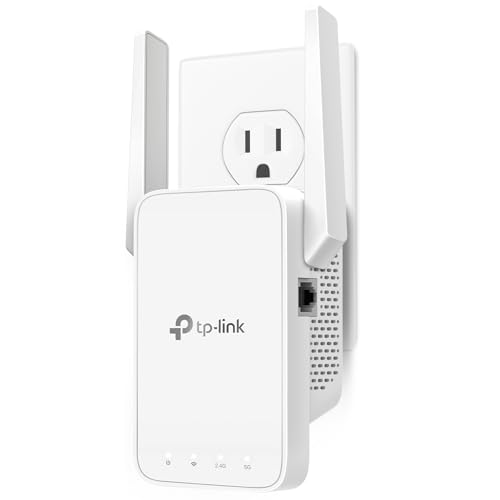
If your drops correlate with distance—like dead zones in bedrooms or offices—coverage is usually the limiter, not “bad settings.” The most stable upgrade path is adding Wi‑Fi capacity correctly (access point or mesh with good backhaul), not simply repeating a weak signal.
“Mesh systems rely on nodes receiving a strong backhaul signal from the main router; otherwise latency and packet loss often increase.” [ADD: source—manufacturer mesh/backhaul documentation]
“An access point (AP) generally provides better stability than a basic wireless repeater because it avoids the same level of wireless hop amplification.” [ADD: source—Wi‑Fi deployment best practices]
Prefer access points or well-designed mesh over basic repeaters.
A common failure mode: people add an extender in a spot where the main Wi‑Fi is already weak. That extender then repeats a poor-quality stream and can effectively double problems: more retries, more latency, and more disconnect/reconnect loops.
If you use mesh, place nodes to keep backhaul strong.
Mesh nodes must receive enough signal from the primary router (or previous node) for the system to stay stable. As a practical planning rule, you’ll want each node positioned so it’s not “barely connected” to its parent.
Use wired backhaul when possible.
If you can run Ethernet between mesh nodes (or place a second AP on the same network backbone), you reduce radio contention and usually get the best consistency.
Secure and tune your network (without breaking it)
Firmware updates, security settings, and consistent network identity (SSIDs/band behavior) reduce instability that looks like “random drops.” If you tune too aggressively without a plan, though, you can create new problems—so make changes carefully and retest.“Router firmware update procedures are performed through the router’s admin interface or manufacturer update mechanism, and release notes often include stability/radio bug fixes.” [ADD: source—vendor firmware update instructions for your model]
“Strong but compatible security settings reduce fallback/reassociation problems when older clients connect.” [ADD: source—Wi‑Fi Alliance security guidance]
1) Update firmware for stability.
Check your router’s admin interface and apply updates from the manufacturer’s official process. Firmware releases commonly address:
– radio behavior improvements (less aggressive retries, better roaming behavior),
– driver fixes for specific chipsets,
– performance/stability issues with certain 802.11 modes.
(Your exact release notes matter—so read them.)
2) Use security modes that work well across your device mix.
Avoid experimental or outdated security modes unless you must support specific legacy devices. If you have mixed client generations, the “most secure” setting that breaks compatibility can increase reconnect rates and perceived instability.
3) Keep SSIDs and steering behavior consistent.
If your router supports band steering or seamless roaming features, configure them consistently rather than changing them repeatedly while troubleshooting. Devices can otherwise negotiate new parameters mid-test, which makes your results hard to interpret.
A quick comparison: AP vs mesh vs extender
Here’s a simple parseable trade-off view you can use while planning coverage:
| Approach | Best for | Pros | Cons |
|---|---|---|---|
| Access Point (wired) | Stable coverage expansion | Lowest latency, consistent performance | May require Ethernet/power at the AP location |
| Mesh (with good backhaul) | Whole-home consistency | Simpler setup; can still be very consistent | Wireless backhaul nodes can add latency if placed poorly |
| Basic Extender (repeater) | Temporary/low-cost fixes | Low upfront effort | In weak-signal locations, stability often gets worse |
What can go wrong (common mistakes and limits)
You can accidentally make Wi‑Fi instability worse by changing only “radio knobs” while ignoring placement, by using repeaters in weak spots, or by changing multiple settings at once. Stability tuning is iterative—think controlled experiments, not random tweaks.
“A channel change can’t overcome a blocked or weak signal path; placement and backhaul quality set the ceiling.” [ADD: source—Wi‑Fi coverage planning best practices]
“Frequent factory resets and rapid setting changes make it harder to determine the root cause of disconnects and lag spikes.” [ADD: source—general network troubleshooting methodology]
“Some stability symptoms originate from WAN/ISP issues, so Wi‑Fi tuning may not fix modem dropouts.” [ADD: source—typical ISP/WAN vs LAN troubleshooting guidance]
Common pitfalls to avoid:
– Changing channels before improving placement. You may select a “good” channel, but if the router is behind thick walls or the client signal is marginal, drops persist.
– Extenders in weak-signal areas. A repeater typically adds another wireless hop; if the parent signal is already weak, the extender amplifies the problem.
– Too many changes at once. If you update firmware, switch bands, change channels, and alter security simultaneously, you won’t know what helped or hurt.
– Missing ISP/WAN issues. If the internet connection itself is unstable, Wi‑Fi tests can mislead you.
– Dense apartment environments. Even correct settings can hit a performance ceiling due to congestion and overlapping neighbors.
If you’re seeing constant drops regardless of signal quality, check the modem/ONT, power stability, and WAN events in the router’s status page before investing effort in RF tuning. If your cables or power adapters show signs of damage—or the router overheats—hardware faults can also mimic “network instability.”
Verdict: a practical stability plan (and who should skip)
Start by optimizing router placement and confirming whether the issue is band-specific (2.4 GHz vs 5 GHz). Then adjust channel/band settings and only add coverage hardware after you’ve confirmed the Wi‑Fi signal is failing where you need it most—because the right settings can’t rescue a bad signal path.
Downsides and limits matter: a busy RF environment (dense apartments), incompatible client hardware, or ISP/WAN instability can prevent “perfect” stability even after tuning. Skip (or get professional help) if you can’t access your router admin settings, if you’re dealing with constant WAN dropouts, or if you suspect hardware failure such as overheating, damaged Ethernet, or a failing power adapter.
Quick checklist you can save
– [ ] Test on another device (and/or Ethernet) to confirm it’s Wi‑Fi
– [ ] Reposition router: central, elevated, away from obstructions
– [ ] Pick the right band: 5 GHz nearby, 2.4 GHz for range
– [ ] Change channels to reduce interference (especially 2.4 GHz)
– [ ] Update router firmware from manufacturer’s update process
– [ ] Fix coverage last: mesh/AP before repeater when possible
– [ ] Change one setting at a time, then re-test
FAQ
Why does my Wi‑Fi work for a few minutes, then drops?
It’s usually interference, a weak signal at the device location, or a router setting/firmware behavior change. Start by checking whether the drop happens on one band or both and whether moving closer to the router immediately improves stability.
Should I use 2.4 GHz or 5 GHz for stability?
For most homes, 5 GHz tends to feel more responsive close to the router, while 2.4 GHz typically holds up better at longer distances. “Most stable” depends on your layout and your local network density, so test both bands in the rooms where you need consistency.
Will a Wi‑Fi extender improve stability or make it worse?
It can go either way, but basic extenders often worsen stability if placed where the original signal is weak. If you need consistent performance across dead zones, consider mesh or an access point—ideally with wired backhaul when possible.
How do I pick the best channel for my router?
Use your router’s built-in Wi‑Fi scan tools in the admin interface to select a less crowded channel—especially on 2.4 GHz. After changing it, test for a few hours during your typical peak usage to confirm drops reduce.
Sources
– [ADD: source for your router’s admin interface steps for channel selection/band steering and firmware update instructions—use the specific manufacturer model’s official documentation]
– [ADD: source for Wi‑Fi band/channel behavior (2.4 GHz vs 5 GHz) from a standards or manufacturer technical guide]
– [ADD: source for mesh/backhaul guidance (manufacturer technical documentation for your mesh system)]
– IEEE Std 802.11-2020 (channelization/channel width technical background)
Frequently Asked Questions
How can I improve Wi-Fi stability in my home?
Start by placing your router in a central, elevated location and keep it away from walls, metal objects, and appliances that cause interference. Use a wired connection for streaming or gaming devices when possible, and adjust your Wi-Fi settings to separate 2.4 GHz and 5 GHz networks so devices connect to the best band. If you still see drops, update the router firmware and consider adding a mesh system to strengthen coverage where signal is weak.
Which Wi-Fi channel should I use to reduce connection drops?
For 2.4 GHz, choose a non-overlapping channel like 1, 6, or 11 and avoid crowded auto-channel settings if you notice frequent interference. For 5 GHz, use a less congested channel and enable features like “auto channel” only if it stabilizes your connection rather than causing frequent switching. Tools like Wi-Fi analyzer apps can help you identify the channels with the least interference and improve overall Wi-Fi stability.
Why does my Wi-Fi keep disconnecting even when the signal looks strong?
This often happens due to interference, router overheating, weak client-to-router signal quality, or unstable settings such as power-saving modes on your devices. Check whether disconnects occur near specific times or locations, then reduce nearby interference sources (microwaves, cordless phones, Bluetooth devices). Also review router logs (if available) and disable overly aggressive power-saving features to help maintain stable Wi-Fi connections.
What are the best router settings to improve Wi-Fi performance?
Enable WPA2-AES or WPA3 security, turn on band steering (if supported) to guide devices to 5 GHz, and consider using a wider channel only when your environment is not congested. If your router supports it, adjust QoS (Quality of Service) or “adaptive” settings to prioritize latency-sensitive traffic like video calls and gaming. Finally, set a consistent DNS and avoid unnecessary firewall or “smart” features that can sometimes introduce instability.
How do I know when to switch to a mesh Wi-Fi system?
If you experience dead zones, frequent drops in certain rooms, or your connection improves only when you’re near the router, mesh Wi-Fi can deliver more consistent coverage. Choose a system with wired backhaul if you can run Ethernet between nodes, since that often provides the strongest Wi-Fi stability. If your home has multiple floors or thick walls, mesh is usually more reliable than relying on a single router with extended range.
📅 Last Updated: October 09, 2026 | Topic: How to Improve Wi-Fi Stability | Content verified for accuracy and freshness.
References
- https://en.wikipedia.org/wiki/Wi-Fi
- https://en.wikipedia.org/wiki/Wireless_interference
- https://en.wikipedia.org/wiki/IEEE_802.11
- https://en.wikipedia.org/wiki/Wi-Fi_channel
- https://www.fcc.gov/consumers/guides/wireless-technology-and-interference
- https://www.ofcom.org.uk/phones-and-broadband/advice-for-consumers/wi-fi
- https://www.nist.gov/programs-projects/wireless-communications
- https://scholar.google.com/scholar?q=wifi+stability+interference+channel+selection Google Scholar
- https://scholar.google.com/scholar?q=improving+wifi+signal+strength+access+point+placement Google Scholar
- https://scholar.google.com/scholar?q=wifi+performance+roaming+handover+802.11k+802.11v+802.11r Google Scholar