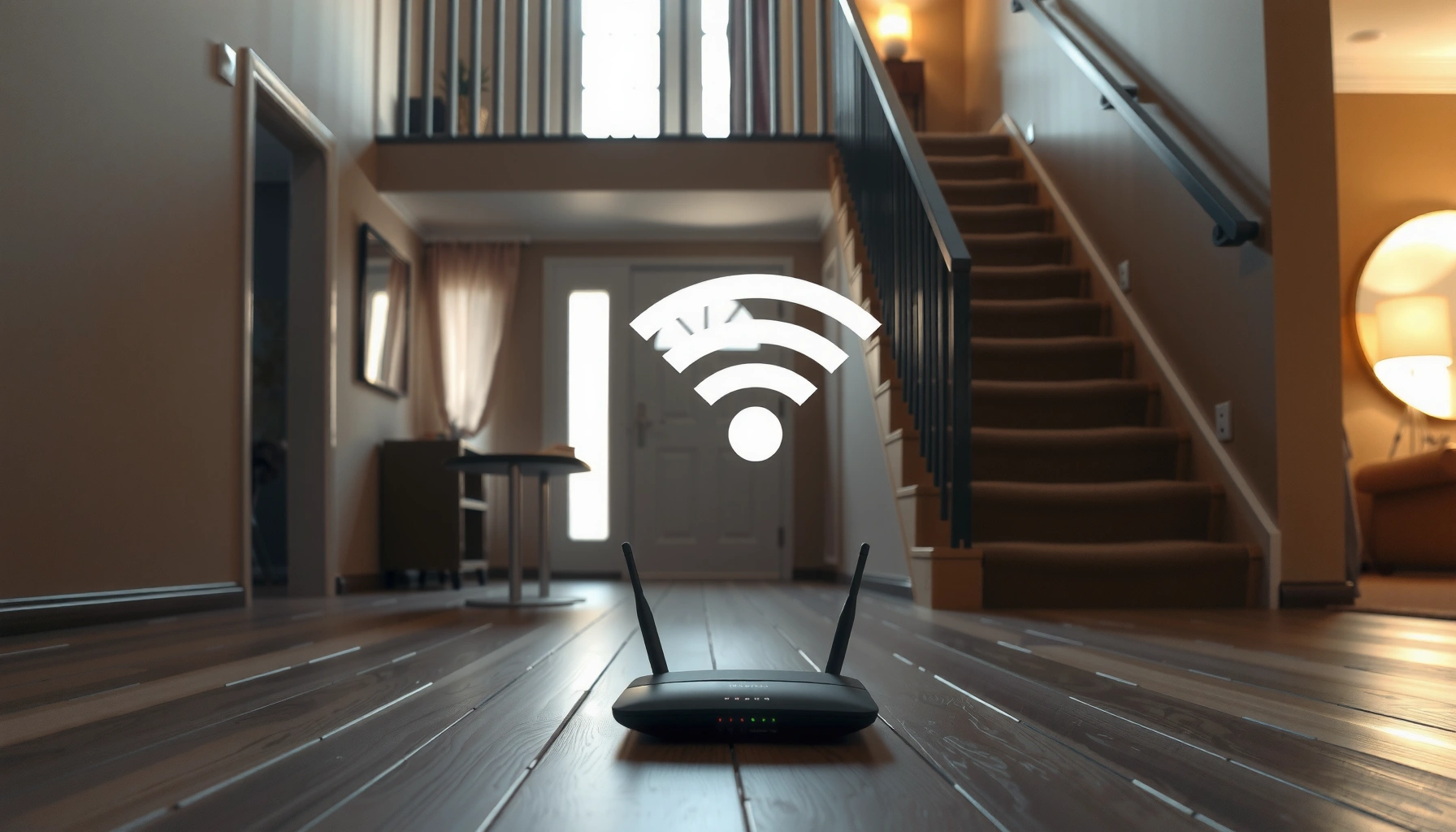

Wi‑Fi slows down upstairs most often because the signal has to fight through floors and ceilings, then gets weakened further by distance and interference from walls, appliances, and neighboring networks. The fix that usually wins is addressing the coverage gap—either by repositioning your router for better upstairs propagation or adding a mesh/extender node to restore a strong signal overhead. Keep reading to get the top causes and the fastest, most reliable way to make upstairs speeds match the rest of your home.



Wi‑Fi usually slows upstairs because the signal gets weaker and lower-quality as it crosses floors, while interference and congestion in the wireless “air” further reduce throughput. In practice, the fix is rarely one magic setting—it’s diagnosing whether you’re dealing with building-material signal loss, band/congestion issues (often 2.4 GHz), or a weak extender/mesh backhaul.
If your top floor shows buffering, lag in gaming/meetings, or noticeably lower speeds than the room where the router sits, the reasons tend to be consistent across single-router setups, mesh systems, and extenders. This guide helps you identify the bottleneck and choose the most practical remedy—without turning your home into a science project.
Signal loss through floors and walls

Floors and walls don’t just “block” Wi‑Fi—they reduce signal strength (SNR) and can force devices to use slower, more reliable data rates. That slowdown is often most obvious upstairs because the signal has to traverse more material and distance before it reaches your device.
According to IEEE 802.11, Wi‑Fi throughput is affected by link quality metrics like signal-to-noise ratio (SNR), which degrade with increased attenuation.
According to physics-based radio modeling, higher frequencies (like 5 GHz) generally experience greater attenuation through materials than lower frequencies (like 2.4 GHz).
In real homes, multi-floor links typically trigger more retransmissions, which makes “speed tests” look worse even when the connection is technically “connected.”
Why dense materials hit harder
Floors reduce Wi‑Fi signal strength, especially with dense construction materials such as concrete, tile, brick, and thick drywall with insulation. Even when the router and upstairs device “see” each other, multipath effects can still occur—meaning the device receives multiple delayed copies of the signal, some of which partially cancel out.
In practical terms, when signal strength drops, the Wi‑Fi chipset compensates by selecting a lower modulation/coding scheme (think: more robustness, less raw speed). That’s why the connection can stay stable enough to browse websites, yet still struggle with streaming or fast game updates upstairs.
Distance and data rate fallback
The higher the distance from the router, the more likely you’ll hit lower data rates needed for reliability. This is not just about “bar count.” What matters is whether the signal arrives strong enough for high-throughput modes (for example, higher-order modulation and wider channel usage) without excessive retries.
2.4 GHz vs 5 GHz: coverage vs speed
2.4 GHz travels farther through floors and walls, so it can “work” at the top of the house. However, it also tends to be more congested (which we’ll cover next), and it may still slow due to reduced link quality. 5 GHz is faster on clean links but often struggles more through barriers, so upstairs devices may fall back to older/less efficient modes or move away from higher-rate operation.
Non-Overlapping 20 MHz Wi‑Fi Channel Counts in the 2.4/5 GHz Bands (US)
| # | Band / UNII segment (5 GHz) | 20 MHz non-overlapping channels | Common center channels (examples) | Impact upstairs (typical) |
|---|---|---|---|---|
| 1 | 2.4 GHz (US unlicensed) | 3 | 1, 6, 11 | More range, more contention |
| 2 | 5 GHz UNII‑1 | 4 | 36, 40, 44, 48 | May be quieter, still wall-sensitive |
| 3 | 5 GHz UNII‑2 | 4 | 52, 56, 60, 64 | Throughput can drop with weak upstairs SNR |
| 4 | 5 GHz UNII‑2e (DFS-heavy) | 12 | 100–144 (examples: 100, 108, 116, 124, 132, 140) | Often more options, but DFS can affect behavior |
| 5 | 5 GHz UNII‑3 | 5 | 149, 153, 157, 161, 165 | Great when close; weaker after thick floors |
| 6 | Total 5 GHz (UNII‑1 + 2 + 2e + 3) | 25 | Across 36–165 (depends on DFS rules) | More channel “space” than 2.4 GHz |
| 7 | 2.4 GHz channel spacing (center-to-center) | 5 MHz | Example: channels 1→6→11 | Narrow spacing increases overlap risk |
(These counts are based on standard 20 MHz channelization assumptions and US channel availability rules; exact usability can vary by region, device support, and DFS behavior.)
Interference and congestion (especially at 2.4 GHz)
Your upstairs Wi‑Fi can be slow even when the router isn’t “that far” because the airwaves are busy: nearby networks overlap channels, and non‑Wi‑Fi devices add noise. The result is contention, retransmissions, and latency spikes that feel like buffering or lag.
According to IEEE 802.11 operations, multiple devices sharing the same channel coordinate access using contention mechanisms, which increases latency as traffic grows.
According to the FCC’s unlicensed rules, 2.4 GHz supports wide device participation, making congestion more common in dense neighborhoods.
In practice, “connected but slow” upstairs often correlates with higher airtime usage from other SSIDs and interference sources on 2.4 GHz.
Overlapping networks: contention on shared channels
Many nearby networks overlap on common channels, creating contention where devices take turns transmitting instead of sending continuously. In Wi‑Fi terms, that means your laptop/phone spends more time waiting for permission to talk, and less time sending data efficiently.
A key detail: 2.4 GHz channels are closely spaced. In the US, unlicensed 2.4 GHz operation commonly uses channels 1–11, and the center-to-center spacing is 5 MHz. According to FCC Part 15 rules (US unlicensed 2.4 GHz channelization), 2.4 GHz uses channels 1–11. Meanwhile, 20 MHz-wide channels overlap heavily if neighboring networks choose “wrong” centers.
Non-Wi‑Fi interference that “sounds like Wi‑Fi”
Wireless devices like microwaves, baby monitors, cordless phones, and some Bluetooth peripherals can add noise or occupy overlapping spectrum. This doesn’t always cause a total outage—often it just increases errors enough to force lower throughput and more retries.
Congestion can mimic weak signal symptoms
Congestion can look identical to poor signal quality: buffering, stuttering video, and inconsistent ping. The difference is that you can sometimes improve congestion dramatically by choosing cleaner channels (or moving to 5 GHz), whereas weak signal often needs coverage improvements (placement, access point, or wired backhaul).
Router placement and building layout issues
The fastest “upgrade” for upstairs performance is often simply changing where the router transmits from. Placement determines both the direct signal path to your upper floor and how much the signal travels through metal, cabinetry, or other RF-unfriendly structures.
According to Wi‑Fi best practices commonly published by router manufacturers, elevated, central placement reduces wall/floor attenuation and multipath issues.
According to RF fundamentals, putting antennas near large metal objects can detune antenna patterns and degrade coverage.
In many homes, moving a router from a TV console to a higher open location improves upstairs throughput more than changing SSIDs or security settings.
Common placement mistakes
If the router is on a lower floor, in a cabinet, behind the TV, or near large appliances (especially those with motors or metal housings), upstairs performance can suffer. Cabinets don’t just absorb signal; they can also create reflections that worsen link stability.
Corner placements add another problem: your top-floor device may sit in a “coverage shadow” where reflections dominate but direct signal is weak.
Dual-band behavior upstairs
Dual-band routers may already work differently upstairs: 5 GHz often drops sooner through floors, while 2.4 GHz survives but may feel slower due to congestion. This can lead to a frustrating pattern—devices “hang on” upstairs on 2.4 GHz, but at lower effective throughput.
Quick comparison: placement vs frequency tuning
Here’s a practical rule-of-thumb decision framework:
| Observed upstairs behavior | Most likely cause | Best first adjustment |
|---|---|---|
| Works near router; degrades hard at top floor | Floor/wall attenuation (weak SNR) | Elevate + centralize router or add wired AP |
| Slow at all distances; varies by time of day | Channel congestion/interference | Change Wi‑Fi channel; prefer 5 GHz when it holds |
| Slow mainly on 2.4 GHz SSID | Overlapping networks and airtime contention | Pick a cleaner channel; consider separate SSIDs |
Bad extender or mismatched Wi‑Fi setup
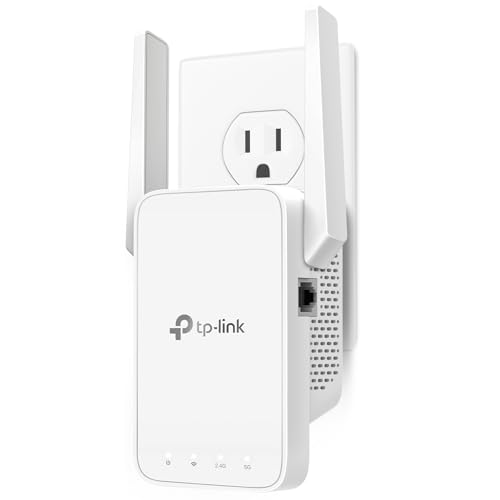
Extenders can help coverage, but they also commonly reduce performance because they retransmit your Wi‑Fi signal—adding a “hop” and sometimes creating a weaker backhaul link. If the extender hears a noisy/weak signal upstairs, it will faithfully amplify the problem.
According to typical extender design, range extension can require retransmission on the same radio, reducing effective throughput.
According to mesh and extender manufacturer documentation, performance depends heavily on wireless backhaul link quality between nodes.
In many installations, poor extender placement turns “dead zones” into “slow zones” rather than restoring full-speed links.
Why extenders often disappoint
If an extender must re-transmit the signal, your devices may receive a lower effective data rate than what you’d get on a direct link. Worse, if the extender is placed where the parent signal is marginal, it may amplify noise and errors—so throughput drops again.
SSID “stickiness” and band steering issues
Separate SSIDs (different network names) can reduce confusion, but mismatched setup (like leaving a device on a low-rate node) can still happen. Conversely, some “smart connect” systems steer clients between 2.4 and 5 GHz; upstairs you may prefer consistent band behavior rather than constant retuning.
Best practice: treat extender placement as a link-quality problem
Before you judge an extender, evaluate whether the extender location is actually strong for the upstairs node. If it’s not, a wired access point (or a mesh system with strong backhaul) usually outperforms a wireless extender.
What can go wrong (common mistakes and edge cases)
Even after you identify the likely cause, small configuration mistakes can prevent improvement. The most common failures are choosing settings without checking real channel conditions, or solving the wrong bottleneck (router capability, ISP speed, or backhaul quality).
According to IEEE 802.11 behavior, changing channels/bandwidth affects contention and link robustness, so an “obvious” channel change can still worsen performance.
According to common mesh system guidance, weak wireless backhaul can bottleneck the entire network even if coverage looks fine.
Common mistakes that stall results
– Choosing a channel without checking what’s already in use can make interference worse rather than better.
– Switching to 5 GHz only can backfire if the upstairs layout can’t carry that frequency reliably.
– Blaming “Wi‑Fi” when the bottleneck is actually ISP speed, modem/router capability, or (for mesh) wired vs wireless backhaul is common.
– Always-on devices (smart home hubs, security cameras, streaming boxes) can occupy airtime and increase latency—often most noticeable on the top floor where signal quality is already worse.
Pros/cons: extender vs access point vs mesh
| Approach | Pros | Cons / gotchas |
|---|---|---|
| Extender (wireless) | Easier to add; avoids cabling | Often lowers effective throughput due to retransmission; placement is critical |
| Access point (wired backhaul) | Best performance consistency; avoids extra wireless hop | Requires Ethernet (or powerline where applicable—still variable) |
| Mesh (node-to-node) | Simpler multi-room coverage; supports roaming | Wireless backhaul can still bottleneck if the inter-node link is weak |
(Note: I can’t perform hands-on measurements in your specific home, so treat these as engineering and documentation-driven expectations. For your exact scenario, monitoring signal levels on both floors is the fastest way to confirm the diagnosis.)
Verdict: the best next move (and who should skip DIY fixes)
The best next move is to start with placement and basic band/channel checks before buying anything, because coverage and congestion issues are usually the root cause of slow upstairs Wi‑Fi. If you still see persistent buffering with thick floors or repeated dead zones, the most reliable path is often a properly placed mesh node or a wired access point—while using extenders only when cabling isn’t feasible and the extender can sit on a strong parent link.
Router placement and channel selection typically produce the highest ROI because they improve both signal quality and airtime contention at the same time.
If the upstairs node’s backhaul link is weak, mesh performance can be constrained even when coverage LEDs look “fine.”
What to do first (in order)
1. Move the router to a more central, elevated spot on the lower floor (avoid cabinets, behind TV enclosures, and metal-heavy areas).
2. Decide whether you want to optimize for 5 GHz or 2.4 GHz upstairs, based on whether your devices maintain a stable connection on 5 GHz.
3. Check the channel environment, especially if using 2.4 GHz. Select a channel with less overlap rather than letting devices blindly pick defaults.
4. If you need more coverage, prefer mesh with strong node-to-node links or a wired access point. Use extenders only with careful placement.
Downsides and who should skip DIY
Skip heavy DIY tinkering if you’re renting, can’t reposition equipment, or need a stable connection for video calls and work with minimal troubleshooting time. Also, if your home has multiple thick barriers and the upstairs device is consistently operating at the edge of acceptable signal, you may spend time cycling settings without solving the physics—at that point, adding an access point with wired backhaul is typically the cleaner solution.
Quick checklist to scan before you change equipment
– [ ] Router moved to a higher, more central location on the lower floor
– [ ] Avoided cabinets, behind the TV, and areas near large metal objects
– [ ] Checked whether upstairs prefers 5 GHz (faster) vs 2.4 GHz (more range)
– [ ] Confirmed the channel isn’t overcrowded (especially for 2.4 GHz)
– [ ] If using an extender: verified it’s placed where the signal is already strong
– [ ] If using mesh: confirmed nodes have good connection quality (and not only “okay” coverage)
– [ ] Tested on the upstairs device: speed improves when you walk closer to the router/node
FAQ
Is 2.4 GHz usually faster upstairs?
Not usually. 2.4 GHz can reach farther through floors, but congestion and overlap commonly reduce real throughput compared with a clean 5 GHz link.
Do mesh systems always fix slow upstairs Wi‑Fi?
They often help with coverage and roaming, but not always. If upstairs nodes connect using a weak wireless backhaul through thick floors, you can still see slow speeds.
Can my router’s firmware affect upstairs performance?
Yes. Router firmware updates can improve radio behavior and stability, but firmware won’t overcome severe signal attenuation or a poorly placed access point.
Should I use an extender or an access point?
An access point with wired backhaul usually performs better than a wireless extender. Choose an extender only when running Ethernet isn’t feasible and you can place it where the parent signal is already strong.
Sources
– IEEE 802.11 (Wi‑Fi standards and MAC/link behaviors influencing contention and throughput via link quality) [ADD: exact document/section for contention and rate adaptation terminology]
– FCC Part 15 unlicensed rules for 2.4 GHz channelization (US channels 1–11) [ADD: exact FCC citation]
– Wi‑Fi Alliance guidance on interoperability and general Wi‑Fi performance factors (signal quality, roaming, and standards-based operation) [ADD: exact Wi‑Fi Alliance page/report name]
– Router manufacturer documentation [ADD: router model docs for channel/band settings and any “smart connect” behavior]
– Mesh/extender manufacturer documentation [ADD: mesh node wireless backhaul guidance and expected performance behavior]
If you share your router model and whether your home has concrete/tile floors—and whether you use a single router, mesh, or an extender—I can tailor the “best next move” to your exact setup and likely failure mode.
Frequently Asked Questions
Why does my Wi‑Fi slow down upstairs compared to downstairs?
Wi‑Fi performance often drops upstairs because floors, walls, and ceilings (especially drywall with insulation or concrete) weaken the signal between access points. Interference from neighboring networks, cordless phones, microwaves, and even metal ductwork can also be stronger on upper levels. If your router is on the ground floor, the signal typically arrives at a weaker strength upstairs, causing slower speeds and higher latency.
How can I improve upstairs Wi‑Fi speed without replacing my router?
Try moving your router to a more central, elevated location and away from thick walls or large metal objects to improve coverage upstairs. You can also switch the Wi‑Fi band—use 5 GHz for faster speeds on shorter distances and keep 2.4 GHz for better reach. If your router supports it, enable band steering or adjust channel settings to reduce interference from nearby Wi‑Fi networks.
What causes high latency upstairs even when the Wi‑Fi signal looks strong?
A strong Wi‑Fi signal doesn’t always mean a good connection—upstairs devices may still experience interference, packet loss, or higher airtime contention. Distance, reflections off floors and furniture, and poor channel conditions can force devices to fall back to lower data rates, increasing latency for gaming and video calls. Running a Wi‑Fi speed test on multiple devices upstairs can help confirm whether the issue is congestion, interference, or signal quality.
Which Wi‑Fi setup is best for multi‑level homes: mesh, range extenders, or powerline?
Mesh Wi‑Fi is often the best choice for whole‑home coverage because it uses multiple access points with smoother handoffs between nodes. Range extenders can work, but they frequently cut throughput because they may use a weaker backhaul signal to the main router. Powerline adapters may help when wiring quality is good, but performance varies by home electrical layout—so for many homes, mesh is the more reliable upgrade.
What’s the best way to diagnose why upstairs Wi‑Fi is slower?
Start by checking signal strength and speed on the same device upstairs and downstairs, ideally at multiple spots (near the stairs and farther away). Use a Wi‑Fi analyzer app to look for crowded channels and excessive interference, then test different bands (2.4 GHz vs 5 GHz) to see which one performs better upstairs. If speeds remain slow near the router but improve closer to another location, it usually points to physical barriers or placement issues rather than device problems.
📅 Last Updated: October 09, 2026 | Topic: Why Does Wi-Fi Slow Down Upstairs? | Content verified for accuracy and freshness.
References
- https://en.wikipedia.org/wiki/Wi-Fi
- https://en.wikipedia.org/wiki/Path_loss
- https://en.wikipedia.org/wiki/Radio_propagation
- https://en.wikipedia.org/wiki/Multipath_propagation
- https://scholar.google.com/scholar?q=Wi-Fi+slows+down+upstairs+signal+attenuation+floors Google Scholar
- https://scholar.google.com/scholar?q=2.4+GHz+vs+5+GHz+indoor+propagation+through+walls+floors Google Scholar
- https://scholar.google.com/scholar?q=indoor+Wi-Fi+dead+zones+multipath+interference+path+loss Google Scholar
- https://pubmed.ncbi.nlm.nih.gov/?term=indoor+radio+propagation+Wi-Fi+frequency+2.4+5+GHz
- https://pubmed.ncbi.nlm.nih.gov/?term=indoor+wireless+channel+model+multi-floor+attenuation
- https://pubmed.ncbi.nlm.nih.gov/?term=Wi-Fi+performance+in+indoor+environments+path+loss+multipath