Tri-band mesh Wi-Fi wins when you need high speeds across wirelessly connected nodes and its extra band provides dedicated backhaul; dual-band mesh is the better buy when you connect nodes by Ethernet or have modest bandwidth needs. Does your home need that extra wireless capacity, or would you be paying for little practical benefit? That is the question this comparison answers.



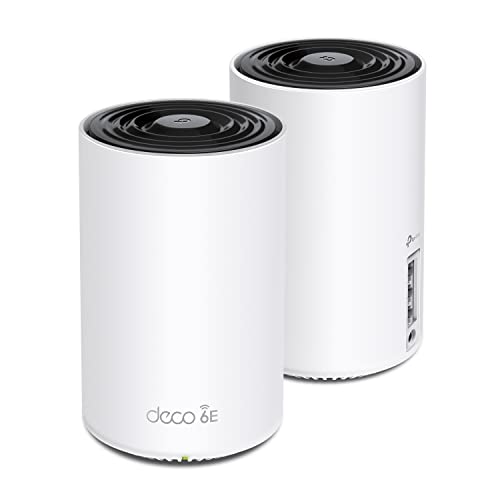
Tri-band mesh is often worth considering when mesh nodes connect wirelessly, especially if the system reserves a band for backhaul—the connection between nodes. Dual-band mesh is often the better-value choice when nodes use Ethernet backhaul or network demands are modest; the extra band alone does not guarantee faster Wi-Fi.
This comparison is for anyone choosing a mesh system for whole-home coverage. Start with whether you can wire the nodes together, then weigh your devices, layout, and budget.
What Dual-Band and Tri-Band Actually Mean

Dual-band mesh systems typically use 2.4 GHz and 5 GHz radios, while tri-band systems add a third radio. That third radio may operate on another part of the 5 GHz spectrum or on 6 GHz, depending on the model.
“Tri-band” describes a mesh system’s radio configuration; it does not establish whether the system has dedicated wireless backhaul.
Client connections carry traffic between devices and a mesh node. Backhaul carries traffic between mesh nodes. A radio can serve clients, backhaul, or both; manufacturers make different design choices.
According to [TP-Link’s Deco XE75 specifications](https://www.tp-link.com/us/deco-mesh-wifi/product-family/deco-xe75/#specifications), the XE75 uses 2.4 GHz, 5 GHz, and 6 GHz, with advertised radio rates of 574, 2,402, and 2,402 Mbps respectively (2026 comparison). By contrast, NETGEAR’s Orbi RBK752 uses 2.4 GHz and two 5 GHz radios.
A tri-band system with two 5 GHz radios is not equivalent to a tri-band system with 2.4 GHz, 5 GHz, and 6 GHz radios.
The following shortlist illustrates those differences. Specifications refer to the linked US models; check regional and hardware-revision documentation before purchase.
Seven Mesh Systems: Radio Bands and Ethernet Hardware
| # | System | Radio bands | Ethernet ports | Fastest port |
|---|---|---|---|---|
| 1 | TP-Link Deco X20 | 2.4 + 5 GHz | 2 × Gigabit per unit | 1 Gbps |
| 2 | TP-Link Deco X55 | 2.4 + 5 GHz | 3 × Gigabit per unit | 1 Gbps |
| 3 | TP-Link Deco X60 | 2.4 + 5 GHz | 2 × Gigabit per unit | 1 Gbps |
| 4 | TP-Link Deco XE75 | 2.4 + 5 + 6 GHz | 3 × Gigabit per unit | 1 Gbps |
| 5 | TP-Link Deco XE75 Pro | 2.4 + 5 + 6 GHz | 1 × 2.5G + 2 × Gigabit per unit | 2.5 Gbps |
| 6 | NETGEAR Orbi RBK752 | 2.4 + 5 + 5 GHz | Router: 4 × Gigabit; satellite: 2 × Gigabit | 1 Gbps |
| 7 | NETGEAR Orbi RBK852 | 2.4 + 5 + 5 GHz | Router: 1 × 2.5G WAN + 4 × Gigabit; satellite: 4 × Gigabit | 2.5 Gbps WAN |
Port-speed colors distinguish Gigabit from multi-gigabit hardware, not overall product quality.
Why Backhaul Matters More Than the Label
Backhaul can limit a satellite’s performance even when its connection to your laptop looks strong. When clients and backhaul use the same radio and channel, they compete for available airtime.
Wireless traffic forwarded over a shared mesh radio consumes airtime for both the client connection and the inter-node connection.
That does not imply a universal “half-speed” penalty: signal quality, traffic direction, interference, and topology affect the result.
According to [NETGEAR’s Orbi RBK752 documentation](https://www.netgear.com/support/product/rbk752/), its dedicated 5 GHz backhaul has a nominal 2,400 Mbps radio rate (2026 comparison). Client devices cannot use that reserved radio.
TP-Link’s XE75 documentation describes 6 GHz backhaul that can also support 6 GHz clients when configured accordingly. It should not be treated as identical to Orbi’s permanently reserved radio.
Ethernet backhaul removes inter-node traffic from the wireless link, reducing the reason to pay specifically for dedicated wireless backhaul capacity.
Ethernet still has limits. Check port speeds, switch compatibility, supported wiring topology, and whether an internet connection consumes the only multi-gigabit port.
Match the System to Your Home and Devices
Choose around your wiring and simultaneous activity, not floor area alone. A wired dual-band installation can be a better fit than a more expensive tri-band system with poorly connected satellites.
Consider an illustrative two-story home with an upstairs office, downstairs television, and several security cameras. With Ethernet upstairs, a dual-band node can serve office devices without forwarding their traffic wirelessly. Without Ethernet, video meetings, camera uploads, and streaming may place greater demands on wireless backhaul.
A household’s simultaneous traffic and node-to-node signal quality are more informative than a mesh kit’s advertised coverage area alone.
Brick, reinforced concrete, metal-backed insulation, and floors can weaken inter-node links. Position nodes where they still receive a strong upstream connection, rather than at the far edge of a dead zone.
- Dual-band with Ethernet
- Advantage: avoids wireless backhaul contention. Trade-off: requires suitable cabling and sufficient Ethernet ports.
- Tri-band with wireless backhaul
- Advantage: can provide additional inter-node capacity. Trade-off: costs more and remains sensitive to placement and construction.
Older client devices can benefit indirectly from stronger mesh backhaul even when they cannot connect to the system’s newest band.
What Can Go Wrong With Either Choice
Neither band count nor a high advertised speed can rescue a weak inter-node connection. Adding a satellite inside the problem room may simply create another poorly connected access point.
A mesh node needs a reliable connection to the rest of the network before it can provide reliable service to nearby devices.
Compatibility also matters. Wi-Fi 6 devices do not automatically support 6 GHz; that generally requires Wi-Fi 6E or suitable Wi-Fi 7 hardware, regional support, and compatible security settings. The Orbi RBK752 and RBK852 have no 6 GHz client radio despite being tri-band.
According to [TP-Link’s Deco XE75 Pro specifications](https://www.tp-link.com/us/deco-mesh-wifi/product-family/deco-xe75-pro/#specifications), each unit has one 2.5 Gbps port and two Gigabit ports (2026 comparison). Using its only 2.5 Gbps port for internet leaves Gigabit ports for wired backhaul on that unit.
Advertised combined Wi-Fi speeds add theoretical rates across radios; they are not expected download speeds for one device.
Likewise, the RBK852 router’s 2.5 Gbps WAN port does not make its satellite Ethernet ports multi-gigabit. For mixed-system expansion, verify exact satellite compatibility; sharing a brand name is insufficient.
Verdict: When to Pay Extra—and When to Skip It
Consider tri-band when Ethernet is impractical and the model’s documented backhaul design addresses a busy wireless mesh. Consider dual-band when nodes are wired or household demands are lighter.
Tri-band mesh is most compelling when its additional radio solves an actual wireless-backhaul constraint.
A useful buying sequence is backhaul → placement → client compatibility → ports → price. Also compare firmware support, security features, subscription requirements, and return policies. An extra radio is not compensation for shortcomings elsewhere.
Dual-band mesh can be the better-value purchase when Ethernet already provides the inter-node connection.
Tri-band may cost more without producing a noticeable improvement. Compare equal-size kits and required accessories rather than assuming every tri-band premium is justified.
A Quick Checklist Before You Choose
Confirm the connection plan before choosing a kit. These checks prevent paying for capacity your installation cannot use.
– Backhaul: Can you connect the nodes by Ethernet? If not, confirm how each system handles wireless backhaul.
– Compatibility: Check supported bands, Ethernet ports, and compatibility with any existing mesh equipment.
– Value: Compare the actual backhaul design and required features—not just the dual-band or tri-band label.
An Ethernet port’s speed and role matter: a multi-gigabit WAN port does not guarantee multi-gigabit wired backhaul.
Mixed mesh compatibility must be confirmed for the specific models, not inferred from their Wi-Fi generation.
Sources to Verify Before Publishing
Use manufacturer specifications and support documents to verify the exact hardware being sold. For a 2026 purchase, confirm regional variants, firmware-dependent features, and current support status.
– Radio bands and ports: TP-Link specifications for [Deco X20](https://www.tp-link.com/us/deco-mesh-wifi/product-family/deco-x20/#specifications), [X55](https://www.tp-link.com/us/deco-mesh-wifi/product-family/deco-x55/#specifications), [X60](https://www.tp-link.com/us/deco-mesh-wifi/product-family/deco-x60/#specifications), XE75, and XE75 Pro.
– Dedicated backhaul and hardware: NETGEAR specifications and manuals for [Orbi RBK752](https://www.netgear.com/support/product/rbk752/) and [RBK852](https://www.netgear.com/support/product/rbk852/).
– Ethernet backhaul: [TP-Link’s Deco Ethernet backhaul guidance](https://www.tp-link.com/us/support/faq/1794/).
– Placement and compatibility: The shortlisted models’ official installation manuals and support pages.
Manufacturer documentation establishes radio configuration and supported backhaul behavior; it does not establish real-world performance in a particular home.
A meaningful mesh comparison separates documented specifications from measured results and illustrative examples.
Choose based on how the nodes will connect, not the band count alone. Check your wiring options, review the shortlisted models’ official backhaul specifications, and pay extra for tri-band only when its capabilities address a real need in your home.
Frequently Asked Questions
What’s the difference between tri-band and dual-band mesh Wi-Fi systems?
Dual-band mesh routers typically use two Wi‑Fi bands (usually 2.4 GHz and 5 GHz), while tri-band systems add an extra 5 GHz band. That third band is often used as a dedicated backhaul to connect the mesh nodes, reducing contention with your devices. As a result, tri-band mesh can deliver more consistent performance, especially in larger homes with multiple nodes.
How does a tri-band mesh improve speed compared with dual-band mesh?
In many tri-band mesh setups, the extra 5 GHz radio handles backhaul traffic, so devices don’t have to compete for the same band. Dual-band mesh can also use 5 GHz for backhaul, but it may still share airtime with client devices more often. This typically helps tri-band systems maintain higher throughput and lower latency when streaming, gaming, or video conferencing across multiple rooms.
Which is better for my home: tri-band or dual-band mesh Wi-Fi?
Tri-band mesh is usually the better choice if you have a larger space, more mesh nodes, or lots of simultaneous users and high-bandwidth activities. Dual-band can be sufficient for smaller homes or lighter usage where fewer devices need stable, high-speed connections at the same time. If your home has thick walls or long distances between nodes, the dedicated backhaul in tri-band systems often provides more reliable coverage.
Why do some dual-band mesh systems perform worse in certain rooms?
With dual-band mesh, the system may rely on the same band for both backhaul and client connections, which can increase network congestion as you move farther from the main router or add more nodes. If a satellite node connects with a weaker signal, the effective throughput drops because it must retransmit more data. Tri-band mesh often mitigates this by using a dedicated band for backhaul, which helps keep room-to-room performance steadier.
What should I look for when comparing tri-band vs dual-band mesh for backhaul?
Check whether the tri-band system uses a dedicated backhaul radio (sometimes labeled “tri-band with dedicated backhaul” or similar) rather than sharing the third band with clients. Also compare whether both systems support wired Ethernet backhaul, because using an Ethernet backhaul can dramatically improve speeds for both tri-band and dual-band. Finally, review node count, coverage claims, and real-world specs like throughput and roaming support, since those factors impact performance as much as “tri-band vs dual-band” on the box.
📅 Last Updated: October 16, 2026 | Topic: Tri-Band vs Dual-Band Mesh | Content verified for accuracy and freshness.
References
- https://en.wikipedia.org/wiki/Wi-Fi_mesh_network
- Wireless router
- Wi-Fi
- Backhaul
- IEEE 802.11s
- Testing to determine if you are a bot!
- https://scholar.google.com/scholar?q=tri-band+dual-band+mesh+Wi-Fi+performance Google Scholar
- https://scholar.google.com/scholar?q=tri-band+mesh+backhaul+capacity Google Scholar
- https://scholar.google.com/scholar?q=dual-band+Wi-Fi+mesh+network+throughput Google Scholar



