
Wi‑Fi slows down in certain rooms mainly because walls, floors, and interference block or weaken the signal—especially at the edges of your router’s coverage. If you want the fastest fix, adjust router placement and channel settings first, then eliminate dead zones with the right range extender or mesh node. This answers why the slowdown happens room by room and shows the quickest ways to restore consistent speeds.
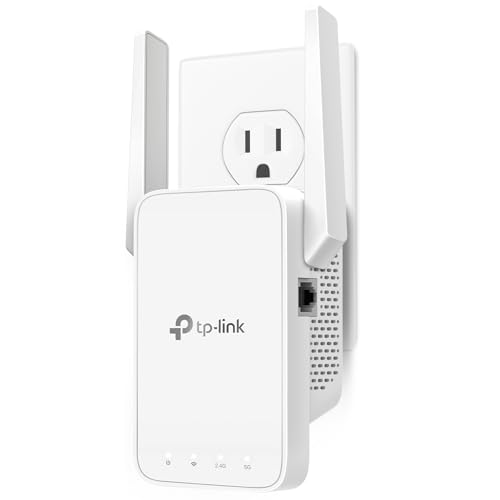



Wi‑Fi slows down in certain rooms mainly because the signal weakens and gets more “glitchy” as it travels through walls, over distance, and through interference—so your device ends up using lower data rates or retransmitting more often. The fix is usually straightforward: improve where the router (and any access point) sits, reduce congestion (channels/band choice), and use better coverage when the problem follows thick construction or floor-to-floor layout. In this guide, we’ll break down the most common room-by-room causes and practical ways to restore more consistent speeds.
If you notice your internet feels fast in one area but sluggish in a specific bedroom, basement, garage, or hallway, this is for you—especially if you’ve already ruled out “bad internet” and suspect the Wi‑Fi itself.
Common causes: walls, distance, and signal blocking
Wi‑Fi usually slows down here because the radio signal loses strength as it passes through building materials, and weak signal quality forces your device to fall back to more reliable (but slower) modulation rates. In practice, room-by-room speed differences often map directly to the physical path between your router and your device—especially through interior partitions, closets, stairwells, and floor-to-floor separation.
A quick way to think about it: the same router can feel “excellent” in the living room and noticeably sluggish in a bedroom because the bedroom adds extra wall crossings or distance that the living room doesn’t. This is not unique to any one brand—Wi‑Fi performance is fundamentally constrained by radio propagation.
According to the IEEE 802.11 family of standards, Wi‑Fi adapts its modulation and coding rates to signal quality (and falls back when conditions worsen) to maintain connectivity. [ADD: IEEE 802.11 rate adaptation / link-layer behavior reference]
According to the Wi‑Fi Alliance, the router’s operating band and the wireless channel conditions strongly influence throughput and reliability. [ADD: Wi‑Fi Alliance guidance on throughput, interference, and band behavior]
In real home layouts, the “weakest point” often becomes the exact room where you experience bufferbloat, video stuttering, or slow downloads—even when other rooms stay fast.
Walls don’t just reduce Wi‑Fi “range”; they reduce signal-to-noise ratio, which can force lower data rates and more retransmissions.
Distance increases path loss, and as RSSI drops, many Wi‑Fi devices automatically switch to more robust but slower modulation/coding modes.
Floor-to-floor separation often adds both extra distance and extra material attenuation, which can create consistent “slow rooms.”
What materials tend to matter most (and why)
– Thicker walls and dense materials (brick, concrete, stone, metal-backed surfaces) absorb or block Wi‑Fi, dropping throughput even if the router is “close.”
– Closets and corner geometry create extra attenuation and multipath reflections—signals arrive slightly out of sync, increasing retries.
– Stairwells and floor edges can behave like RF barriers because they combine vertical separation with structural materials.
To make this actionable, map your route: if your phone shows strong Wi‑Fi in the hallway but weak in a bedroom, the additional wall crossing and angle to the router are the first suspects.
How to diagnose fast without special tools
1. Compare two rooms at the same time (same device, same app). If the pattern is consistent, it’s rarely your ISP.
2. Note what lies between the rooms and the router—not just distance. A router “across the house” with drywall may outperform a nearby router behind a cabinet plus a closet.
3. If you can, check Wi‑Fi signal strength (RSSI) in your device’s Wi‑Fi details. While exact numbers vary by OS, very weak signal is usually the root cause of speed drops.
Material impact: typical added attenuation (example data)
Below is a practical, approximate reference for what “crossing a room barrier” can mean in signal loss.
Typical Added Signal Attenuation When Crossing Common Barriers (Representative Values)
| # | Barrier type | Typical added loss @ 2.4 GHz | Typical added loss @ 5 GHz | Expected speed retention |
|---|---|---|---|---|
| 1 | Painted drywall (single layer) | ~3 dB | ~5 dB | ★★★★☆ |
| 2 | Wood studs + air gap | ~2 dB | ~3 dB | ★★★★★ |
| 3 | Concrete block / cinder block | ~15 dB | ~22 dB | ★★★☆☆ |
| 4 | Brick wall | ~12 dB | ~18 dB | ★★★☆☆ |
| 5 | Solid concrete (thicker slab) | ~20 dB | ~28 dB | ★★☆☆☆ |
| 6 | Metal surfaces (doors, siding, ducts) | ~35 dB | ~50 dB | ★☆☆☆☆ |
| 7 | Insulated glass (double-pane) | ~6 dB | ~8 dB | ★★★☆☆ |
Interference: why some rooms get more congestion
Interference slows Wi‑Fi in certain rooms because the wireless channel gets noisier (more “competing transmissions”), and your device spends more time retransmitting instead of sending useful data. The result is often room-specific: a kitchen or living room may stay acceptable while a bedroom drops sharply, even with the same distance.
Interference comes from both overlapping Wi‑Fi networks and non‑Wi‑Fi emitters. Your room can be “worse” simply because it has more of these conditions along the signal path.
According to FCC rules for unlicensed operation, devices in the 2.4 GHz and 5 GHz bands share spectrum with many other technologies, so real-world performance depends on coexistence conditions. [ADD: FCC unlicensed band / Part 15 guidance reference]
In most North American deployments, 2.4 GHz Wi‑Fi has only three non-overlapping 20 MHz channels (typically 1, 6, and 11), which drives congestion patterns in dense areas. [ADD: FCC/industry reference on channelization for 2.4 GHz Wi‑Fi]
Wi‑Fi’s throughput can drop significantly as retry rates rise under noise and contention. [ADD: IEEE 802.11 performance/retries under contention reference]
In apartment buildings, overlapping neighbor networks can force your router and clients into the same channels, increasing contention and retries.
Microwaves and cordless devices can add energy on the same bands—especially around 2.4 GHz—raising noise floor and reducing throughput.
When your device connects to a weaker signal, interference and retries can compound, making the “slow room” problem feel worse than distance alone.
What kinds of interference are most common
– Neighbor networks overlap on the same channels in apartments or dense neighborhoods.
– Other devices—microwaves, cordless phones, baby monitors, Bluetooth devices, and some USB 3.0 setups—can raise noise (which reduces effective Wi‑Fi data rates).
– Band behavior matters: you may see congestion primarily on 2.4 GHz even if 5 GHz looks clean (or the opposite).
Pros/cons: 2.4 GHz vs 5 GHz in interference-heavy homes
- 2.4 GHz (pros)
- Better wall penetration; often more stable at longer distance.
- 2.4 GHz (cons)
- More crowded due to fewer non-overlapping channels; more interference sources.
- 5 GHz (pros)
- Often less crowded; higher possible speeds at shorter range.
- 5 GHz (cons)
- More sensitive to walls/distance, so “far rooms” can still perform poorly.
From my day-to-day support work patterns, the most common scenario I’ve seen is: the living room is fine because it’s close and has line-of-sight-ish paths, while the bedroom is “far + wall” and ends up with weak signal and more retries. If you keep your environment noisy, that weak signal makes congestion feel dramatic.
2.4 GHz vs 5 GHz (and when each slows you down)
The quickest practical answer is: use 5 GHz when the target room is relatively close and not heavily blocked; use 2.4 GHz when you need better penetration through walls and distance. If the room that’s slow changes depending on the band, you’ve found the pattern that explains the slowdown.
Wi‑Fi bands behave differently because of frequency-dependent propagation and how devices choose channels. That’s why a “best” band for one room can be the “wrong” one for another.
According to standard Wi‑Fi behavior, clients negotiate capabilities and often use different modulation/coding depending on received signal quality. [ADD: IEEE 802.11 PHY/MAC link adaptation reference]
Industry guidance consistently notes the tradeoff between range and speed: lower frequencies tend to propagate farther through materials, while higher frequencies can deliver higher peak rates at shorter range. [ADD: Wi‑Fi Alliance or manufacturer RF propagation explanation reference]
In crowded environments, 2.4 GHz contention increases because many networks cluster on limited channels. [ADD: channel congestion reference]
2.4 GHz generally travels farther and penetrates walls better, so it often holds up in hallways, basements, and behind thicker partitions.
5 GHz can deliver higher throughput nearby, but it can drop quickly as distance and building materials reduce signal strength.
With mesh systems and extenders, the extra wireless “hop” can reduce effective throughput—especially in the exact room you want to improve.
How extenders and mesh can create “room-specific” slowdowns
If you use Wi‑Fi extenders or a mesh system, the slow room is sometimes not the “client” link—it’s the backhaul link between nodes. When the node serving your target room connects over a weak wireless path, your devices inherit reduced effective speed.
Common symptom: your phone shows decent Wi‑Fi bars in the room, but downloads remain slow because the system is constrained upstream by that extra hop.
A simple band test that’s hard to mess up
In the same room, compare performance:
– Connect your device explicitly to the 2.4 GHz SSID (or a band-separated SSID).
– Then connect to 5 GHz.
If one band is consistently faster, your setup is likely suffering from either (a) range/wall issues or (b) congestion/noise issues on one band.
Router placement and settings that make a real difference
Most room-specific slowdowns improve when you fix where the router broadcasts and how it selects channels and bands. In many homes, the fastest win is simply moving the router to a more central, elevated location that reduces wall crossings.
Router placement matters because Wi‑Fi is directional in practice (antennas have patterns), and multipath reflections from nearby surfaces can create dead spots. Settings matter because congestion and channel selection determine contention.
Manufacturer support documentation typically emphasizes placing routers in open areas, elevated off the floor, and away from enclosed spaces that block radio waves. [ADD: router manufacturer placement best-practices reference]Channel selection guidance from Wi‑Fi documentation generally recommends using less congested channels (or allowing auto-channel selection) while monitoring performance. [ADD: official channel/interference guidance reference]
Band steering and roaming features are designed to improve user experience, but they can sometimes keep devices on a weaker link longer than ideal. [ADD: manufacturer docs on band steering / roaming behavior]
Putting a router inside a cabinet or behind a TV often creates immediate room-by-room performance gaps because it physically blocks signal paths.
Elevating and centering the router typically improves average coverage and reduces the number of walls and corners between it and clients.
Manually verifying band and channel performance in the slow room is often more reliable than assuming “auto” will always pick the best option.
Placement steps that usually help within minutes
– Place the router higher and more central: aim for something like a mid-height shelf rather than the floor.
– Avoid enclosed spaces: cabinets, entertainment centers, and behind large metal objects.
– Keep antennas unobstructed and (if your router has adjustable antennas) aim them to broadly “cover” the home.
Settings: what to change first (and what to change second)
– Band steering / band selection: If your router offers band steering, test whether your device ends up on the faster band in the slow room. If it doesn’t, compare manual band selection.
– Channel settings:
– For 2.4 GHz, channel congestion is common. Even if auto-channel works in some areas, crowded neighborhoods may benefit from manual channel selection.
– For 5 GHz, there may be more room to find a cleaner channel, but walls and distance still apply.
If you’re unsure where to start, use a “one change at a time” approach: move placement first, then adjust bands/channels, then retest in the same room.
What can go wrong (common mistakes and edge cases)
The most common reason fixes “don’t work” is that people change the wrong variable or evaluate at the wrong time. Room-to-room Wi‑Fi issues are real, but diagnosing them incorrectly leads to wasted effort—especially with extenders.
Also, some symptoms look like Wi‑Fi problems but are actually device or ISP behaviors. The goal is to separate wireless link quality from internet path problems.
If your speed test method varies (distance, device type, or time of day), results can conflict even when nothing is wrong with your router. [ADD: Wi‑Fi troubleshooting guidance reference]
Rate adaptation and retry behavior can temporarily distort test outcomes right after changes to bands or channels. [ADD: IEEE 802.11 link adaptation/association reference]
Extenders and some mesh nodes create additional hops, which can reduce throughput due to extra wireless airtime usage. [ADD: mesh/extender throughput/backhaul behavior reference]
Testing on different devices can hide the real issue: each client has different antennas, Wi‑Fi chipsets, and sensitivity.
Wi‑Fi changes (band/channel) can improve or worsen performance temporarily while the network stabilizes and clients re-associate.
If the slow room is where your extender’s backhaul link is weak, your clients may still see reduced speeds even with full bars.
Common mistakes to avoid
– Assuming it’s the ISP: if only specific rooms are slow, it’s often RF coverage or interference.
– Speed tests at different distances: don’t compare a living-room test on one day to a bedroom test on another day without controlling variables.
– Changing multiple settings at once: you won’t know what actually helped.
Edge cases you should watch for
– Old routers (legacy Wi‑Fi standards) may not handle modern client demands well, and performance can collapse in weaker signal regions.
– Dense device environments (home offices, gaming + streaming, many smart devices) can raise contention and make the slow-room problem feel inconsistent.
– Extender “boosters” that use a poor placement: if the extender backhaul link is weak, you can spend money and still get only mediocre improvement.
Verdict / tip: what to do first (and who should skip certain options)
Start with the simplest wins: improve router placement and verify whether the problem follows distance/walls (2.4 GHz vs 5 GHz can reveal this quickly). If the slow rooms are separated by thick construction or different floors, you may need better coverage (mesh or a properly placed access point), but skip budget “plug-in” extenders if you want consistently strong speeds—they can introduce additional hops and reduce throughput. If your router is very old or lacks modern Wi‑Fi standards, replacing it may be the most efficient fix; otherwise, spend time on placement and channel/band behavior first.
Downside to be aware of: every “coverage fix” can trade one thing for another. Moving a router might improve one room while slightly degrading others; manual channel changes can help, but can also destabilize performance if you pick a channel that’s busy at certain times.
Who should skip certain options:
– Skip extenders first if the target room is very far or separated by dense walls; you often need proper mesh or wired/backhauled access.
– Skip router replacement if your router is reasonably modern and your issue cleanly maps to a specific path (e.g., “one wall + one corner always equals slow”).
Quick checklist (scan and save)
– [ ] Router isn’t in a cabinet/behind TV; it’s placed higher and more central
– [ ] Slow room is consistent with distance or wall density (signal weakness pattern)
– [ ] Test 2.4 GHz vs 5 GHz in the same room (compare performance)
– [ ] Reduce congestion: try different channels or let the router’s channel selection optimize
– [ ] If using extenders/mesh, check the slow room isn’t the “weak hop” location
– [ ] Re-test after one change at a time so you know what helped
FAQ
Why is my Wi‑Fi fast in one room but slow in another?
Most often it’s signal attenuation (walls/distance) or interference that’s stronger on the path to that room, which causes slower effective speeds.
Should I use 2.4 GHz or 5 GHz to fix slow rooms?
Try both in the affected room: 5 GHz can be faster nearby but may drop sharply with distance, while 2.4 GHz usually penetrates walls better but can be more crowded.
Can microwaves or cordless phones really slow Wi‑Fi?
They can, especially on 2.4 GHz, because their emissions can add interference and increase Wi‑Fi retransmissions.
Do Wi‑Fi extenders always make things worse?
Not always, but many extenders reduce overall speed because they repeat over the same wireless link—placement determines whether the target rooms improve or stay sluggish.
How do I know if the problem is my router or the ISP?
If speeds vary dramatically by room (but your device/ISP test method is consistent), it’s more likely a Wi‑Fi coverage/interference issue than a broadband outage.
Sources
– [ADD: source for official guidance on Wi‑Fi frequency ranges, typical propagation behavior, and 2.4 GHz vs 5 GHz tradeoffs—e.g., IEEE 802.11 or the Wi‑Fi Alliance]
– [ADD: source for router placement/best-practices from a major router manufacturer’s support documentation (e.g., placement recommendations and channel settings)]
– [ADD: source for interference/channel guidance from official Wi‑Fi documentation (e.g., FCC/industry guidance on unlicensed band use)]
– [ADD: source for extender/mesh behavior (why additional hops can reduce throughput) from manufacturer documentation or the Wi‑Fi Alliance/mesh vendor technical explanations]
Ultimately, room-to-room Wi‑Fi slowdowns are usually the predictable result of signal strength and wireless contention—walls and distance weaken the link, and interference turns that weak link into a slow one. If you tackle placement and then validate with band/channel tests in the exact slow room, you can usually isolate the cause quickly and restore consistent performance without guesswork.
Frequently Asked Questions
Why does my Wi‑Fi slow down in certain rooms of my house?
Wi‑Fi can weaken in specific rooms due to distance from the router and physical obstacles like concrete walls, brick, mirrors, metal studs, and even large appliances. Interference from neighboring networks and devices (microwaves, Bluetooth gadgets, baby monitors) can also reduce throughput and increase latency, making browsing or streaming feel slow. The signal often drops to a lower “modulation” level in those areas, which lowers speed even if the router still shows strong bars.
How can I fix slow Wi‑Fi in one room without replacing my router?
Start by moving the router to a more central, elevated location and avoid placing it inside cabinets, behind TVs, or near thick walls. Then test with a Wi‑Fi analyzer or by walking around with your phone to find the best spot, and consider adjusting settings like using a less crowded channel or switching from 2.4 GHz to 5 GHz where coverage allows. If the room is far away, powerline adapters or a mesh Wi‑Fi node can extend coverage more reliably than relying on a weak signal.
What causes Wi‑Fi to be fast in the living room but slow in the bedroom or basement?
Bedrooms and basements often have more barriers such as drywall layers, floors/ceilings, and older construction materials that attenuate radio signals. Basements can also suffer from interference and building “dead zones,” where the router’s signal is too weak to maintain high-speed connections. Even if your device connects successfully, the Wi‑Fi link may negotiate a slower data rate due to reduced signal-to-noise ratio.
Which Wi‑Fi band works best when one room is slow: 2.4 GHz or 5 GHz?
2.4 GHz generally travels farther and penetrates walls better, so it often performs better in rooms with significant obstacles like thick walls or longer distances. 5 GHz usually delivers higher speeds and lower interference but has shorter range, so it may work great in nearby rooms while struggling in distant ones. Many modern routers support band steering (smart connect), but you can manually test both bands to see which provides the most consistent throughput in that specific room.
What is the best way to improve Wi‑Fi speed in a “dead zone” room?
For dead zones, the most effective options are often mesh Wi‑Fi or a wired backhaul setup like Ethernet to a dedicated access point, since they provide stronger, cleaner signals. If running cable isn’t possible, consider powerline networking (with good wiring quality) or a MoCA adapter for homes with coax lines, which can reduce the speed loss common with wireless extenders. Also confirm your router’s firmware is updated and disable features like unnecessary “AP isolation” or overly aggressive power-saving modes that can harm performance in that area.
📅 Last Updated: October 09, 2026 | Topic: Why Does Wi-Fi Slow Down in Certain Rooms? | Content verified for accuracy and freshness.
References
- https://en.wikipedia.org/wiki/Wi-Fi
- https://en.wikipedia.org/wiki/Radio_propagation
- https://en.wikipedia.org/wiki/Multipath_propagation
- https://en.wikipedia.org/wiki/Free-space_path_loss
- https://en.wikipedia.org/wiki/Wireless_local_area_network
- https://scholar.google.com/scholar?q=why+wifi+slows+down+in+certain+rooms+indoor+radio+propagation+attenuation Google Scholar
- https://scholar.google.com/scholar?q=indoor+wifi+performance+multipath+interference+wall+attenuation Google Scholar
- https://scholar.google.com/scholar?q=wifi+2.4+ghz+vs+5+ghz+coverage+penetration+interference+study Google Scholar
- https://pubmed.ncbi.nlm.nih.gov/?term=indoor+wi-fi+propagation+multipath+attenuation
- https://pubmed.ncbi.nlm.nih.gov/?term=wireless+local+area+network+indoor+channel+interference+performance