

Transparent displays work by utilizing advanced technology that allows light to pass through while still displaying images or information. This innovative design enables new ways of interaction and visual communication, blending digital content with the physical world. As we delve into the mechanics of these displays, their current uses, and their future potential, you’ll discover just how transformative they can be across various industries.
How Transparent Displays Operate

Transparent displays primarily rely on two technologies: liquid crystal displays (LCD) and organic light-emitting diodes (OLED). These technologies work together to produce images while allowing light to pass through the display, which is vital for maintaining transparency. In essence, LCDs use liquid crystals sandwiched between layers of glass or plastic. When electrical currents pass through these crystals, they align to create images.
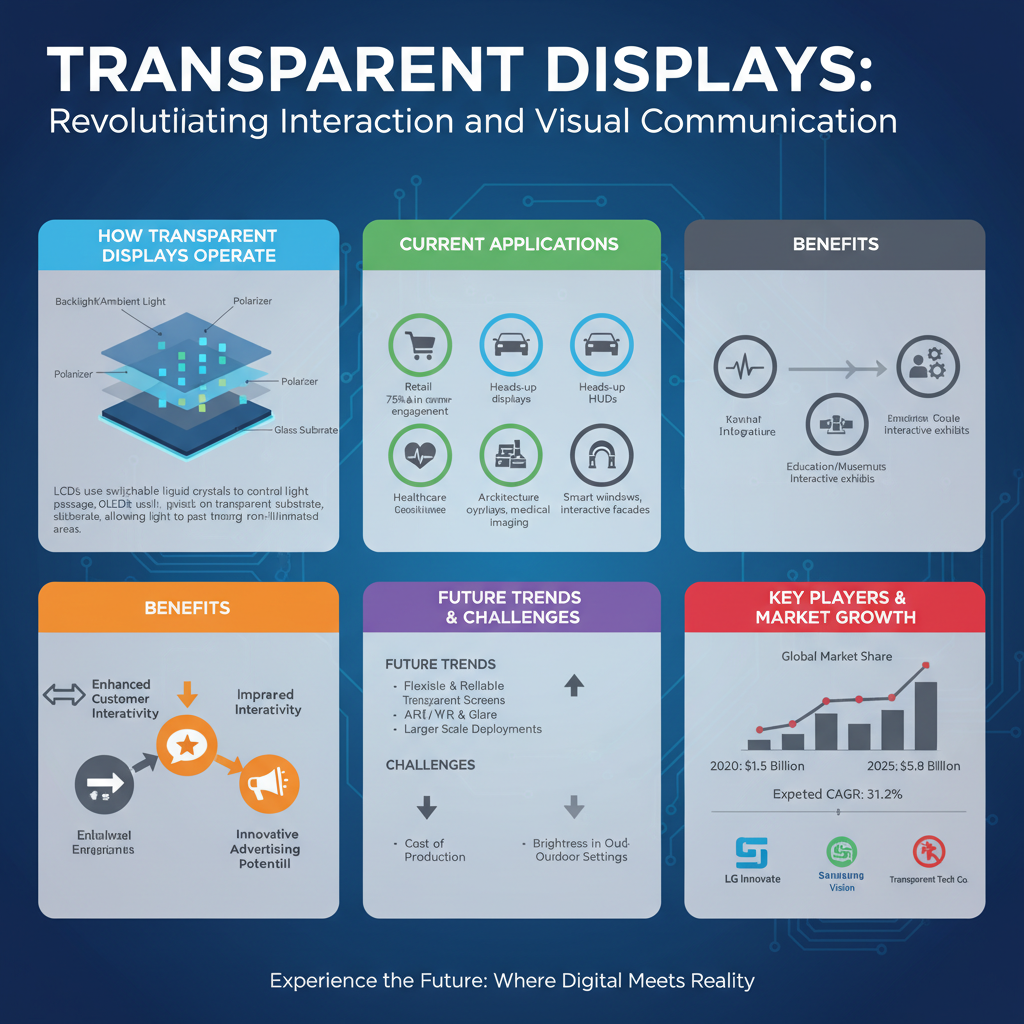
On the other hand, OLED technology uses organic compounds that emit light when an electrical current is applied. This means that OLED displays can be thinner and more flexible than their LCD counterparts. The magic of transparency comes from the combination of polarizers and special film layers that manage the light entering and exiting the display. These layers ensure that while you can see the images presented, the background remains visible, creating a stunning visual effect. This technology is not only innovative but opens the door to a new level of interactivity in environments where blending the digital with the physical is essential.
Current Applications of Transparent Displays

Transparent displays are already making waves in various industries, showcasing their versatility and potential. One of the most prominent applications is in retail. Imagine walking past a storefront window that not only displays the latest products but also allows you to see inside the store. Retailers are using transparent displays to create eye-catching advertisements that draw customers in while enabling a clear view of what’s available inside. Brands like Samsung have showcased these displays in their flagship stores, creating immersive shopping experiences.
In the automotive industry, manufacturers are integrating transparent displays into windshields and dashboards. These displays provide drivers with vital navigation and safety information without obstructing their view of the road. For instance, companies like Mercedes-Benz have introduced augmented reality features in their vehicles, allowing drivers to see navigation prompts directly on the road ahead. This technology enhances safety by keeping the driver’s focus on the driving environment while still providing necessary data.
Benefits of Transparent Display Technology
The advantages of transparent display technology are numerous and significant. One of the most compelling benefits is the enhanced user experience it provides. By seamlessly blending digital visuals with the physical environment, transparent displays create immersive experiences that can captivate an audience. For example, museums are beginning to use transparent displays to overlay historical information onto artifacts, providing context without detracting from the physical object.
Another key benefit is the increased information density that transparent displays offer. Unlike traditional displays that can create clutter, transparent screens can show multiple data points simultaneously. This is especially useful in environments like smart cities, where real-time data on traffic, weather, and public transport can be displayed without overwhelming citizens with information. Imagine a digital billboard that not only advertises but also displays live traffic updates, weather forecasts, and public announcements—all while allowing pedestrians to see through it.
Challenges Faced by Transparent Displays
Despite their impressive capabilities, transparent displays do face some challenges that hinder widespread adoption. One of the most significant issues is visibility. While these displays work well in controlled environments, bright ambient light can significantly affect their clarity. In direct sunlight, for example, the images may become washed out, making it difficult for viewers to see the displayed content. Manufacturers are working on enhancing brightness and contrast levels to mitigate this issue, but it remains a hurdle for outdoor applications.
Another challenge is the cost associated with transparent display technology. The intricate manufacturing processes and materials involved can make these displays prohibitively expensive for some applications. While prices are gradually decreasing as the technology matures, the initial investment can still deter businesses from adopting this innovative solution. As production scales up and more companies enter the market, we can hope for more budget-friendly options in the future.
Future Possibilities for Transparent Displays
Looking ahead, the future of transparent displays is brimming with potential. One exciting area is in smart homes. Imagine windows that can display real-time information, such as weather updates, news headlines, or even your energy usage right on the glass. This integration could transform how we interact with our living spaces, making them not only more informative but also more engaging.
Moreover, the potential for transparent displays in augmented reality (AR) is immense. By overlaying digital content onto the real world, transparent displays could create experiences that are both immersive and interactive. Picture walking through a historical site with a transparent display overlaying historical events or facts directly on the landscape in front of you. This kind of application could revolutionize education, tourism, and training, leading to richer, more engaging experiences.
Comparison with Traditional Displays
When compared to traditional displays, transparent screens offer a unique advantage: they can blend seamlessly with their surroundings. Traditional displays are opaque and often require dedicated space, which can limit their usability in various environments. In contrast, transparent displays can enrich spaces by providing information without taking up physical room. For example, in urban planning, city managers could utilize transparent displays on building facades to inform citizens about public services or upcoming events, creating a more interactive urban environment.
Furthermore, the creative possibilities with transparent displays are virtually limitless. Artists and designers are already exploring how to use these screens in installations that invite viewers to engage with both digital and physical elements. This opens up new avenues for creative expression that traditional screens simply can’t offer.
In summary, transparent displays represent a significant leap in display technology, offering unique benefits and a variety of applications across different industries. While challenges like visibility and cost remain, ongoing advancements promise to make this technology more accessible and effective. As we look to the future, the integration of transparent displays into everyday life could transform how we interact with both digital and physical environments. Keep an eye on innovations in this field, as transparent displays are set to change our visual landscape dramatically.
Frequently Asked Questions
What are transparent displays and how do they work?
Transparent displays are innovative screens that allow users to see digital content while still being able to view the environment behind the screen. They work by utilizing technologies such as OLED (Organic Light Emitting Diodes) or LCD (Liquid Crystal Display), which can emit light and display images while permitting light to pass through. This unique feature is achieved through layered materials that control light transmission and display visuals, making them ideal for applications in retail, automotive, and smart home environments.
How are transparent displays used in retail settings?
In retail, transparent displays are utilized to enhance customer engagement and product visibility. They can be integrated into storefront windows or shelving units, allowing retailers to showcase digital advertisements without obstructing the view of products. This interactive marketing tool not only captures attention but also provides information about featured items, thereby improving the shopping experience and potentially boosting sales.
Why are transparent displays considered the future of technology?
Transparent displays are considered the future of technology due to their versatility and ability to blend digital content with physical surroundings. As industries continue to seek innovative ways to enhance user experiences, these displays can transform various environments, from smart homes to augmented reality applications. Their potential for creating immersive experiences without disrupting the aesthetic of a space positions them as a cutting-edge solution for the evolving tech landscape.
What are the best applications for transparent displays in automotive design?
Transparent displays hold significant promise in automotive design, particularly for heads-up displays (HUDs) and infotainment systems. By projecting vital information, such as navigation cues and vehicle diagnostics, onto the windshield or dashboard, drivers can stay informed without diverting their attention from the road. This integration enhances safety and convenience while contributing to the sleek, futuristic design of modern vehicles.
Which challenges do manufacturers face in developing transparent display technology?
Manufacturers face several challenges in developing transparent display technology, including achieving high resolution and brightness while maintaining transparency. Additionally, ensuring optimal performance in various lighting conditions and creating cost-effective production methods are significant hurdles. As advancements in materials science and engineering continue, overcoming these challenges will be crucial for the widespread adoption of transparent displays across various industries.
References
- See-through display
- https://www.sciencedirect.com/science/article/abs/pii/S0360132319306438
- https://www.nature.com/articles/s41598-018-30110-2
- https://www.wired.com/story/transparent-display-technology/
- https://www.bbc.com/news/technology-49320324
- https://www.techrepublic.com/article/the-future-of-transparent-displays-and-where-they-could-lead/
- https://www.researchgate.net/publication/328786803_Transparent_Displays_An_Overview
- https://www.itu.int/en/ITU-T/focusgroups/ai4good/Pages/default.aspx