

Rollable displays are cutting-edge screen technologies that can expand or retract, offering an unprecedented level of flexibility in how we interact with our devices. These displays utilize advanced materials and engineering to create screens that can be rolled up or unrolled as needed, making them not only portable but also versatile for various applications. In this article, you’ll learn how these impressive displays work, their numerous benefits, and the exciting potential applications that could redefine consumer electronics and beyond.
Understanding Rollable Displays

Rollable displays primarily rely on flexible OLED (Organic Light Emitting Diode) or LCD (Liquid Crystal Display) technology. Unlike traditional displays that are made from rigid glass, rollable displays incorporate materials that allow them to bend and flex without losing functionality. This flexibility enables screens to be rolled into compact shapes, which significantly enhances their portability. Imagine a smartphone that can unfurl into a tablet or a TV screen that can be neatly rolled up when not in use – that’s the promise of rollable displays.
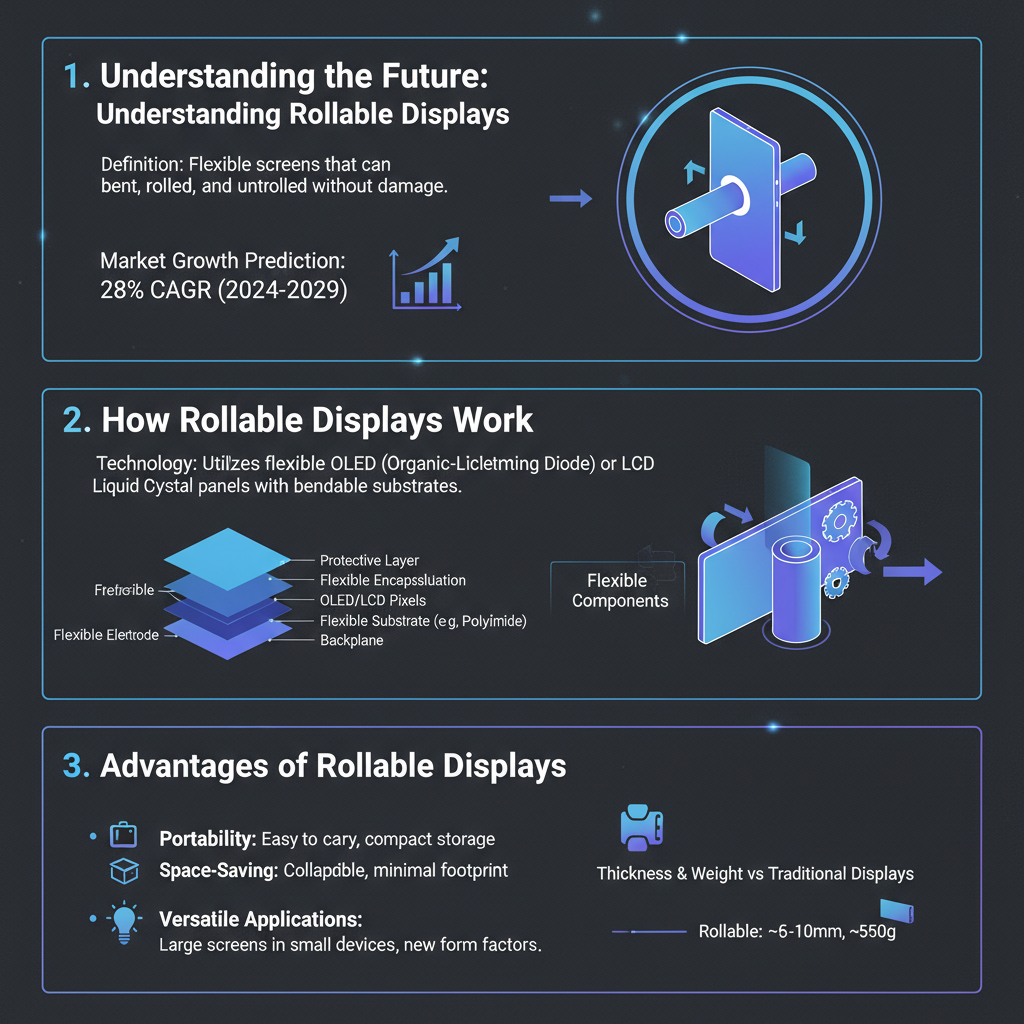
The innovation behind these displays is not just in their form factor but also in their construction. Engineers have developed complex layers of materials that can withstand the physical stresses of rolling and unrolling. This means that these screens can be integrated into everyday objects without compromising durability or performance, which is a game-changer for the industry.
How Rollable Displays Work

The magic of rollable displays lies in their core mechanism, which involves the use of flexible substrates made from advanced polymers and metals. These materials can bend without breaking, allowing the display to roll up like a piece of paper. At the heart of the technology are layers of organic compounds that emit light when an electric current passes through them, which is the foundation for OLED displays. In the case of LCDs, the technology relies on liquid crystals that shift in response to electrical signals.
Manufacturing techniques have evolved significantly to accommodate the integration of these electronic components into flexible materials. For instance, companies are employing methods like inkjet printing to create precise patterns of conductive materials on flexible substrates. This not only reduces waste but also paves the way for mass production of rollable displays at a lower cost. As technology progresses, the aim is to enhance the performance of these displays while maintaining their flexibility, ensuring they can withstand regular usage without degradation.
Advantages of Rollable Displays
One of the standout advantages of rollable displays is their space-saving design. By allowing screens to be rolled away when not in use, manufacturers can create devices with larger displays that fit comfortably into smaller form factors. For example, a smartphone could have a 7-inch display that rolls down to the size of a credit card, making it easy to carry in a pocket.
Additionally, rollable displays offer enhanced durability compared to traditional rigid screens. Since they are designed to flex, they are less likely to shatter when dropped. This durability opens up possibilities for use in environments where traditional screens might fail, such as in rugged outdoor conditions or in devices meant for children. Moreover, the ability to roll up a display minimizes the risk of screen scratches and damage, extending the life of the device.
Applications of Rollable Displays
The potential applications for rollable displays are vast and varied, spanning across numerous industries. In the consumer electronics sector, we can expect to see rollable displays in smartphones, tablets, and wearables. Imagine a smartwatch with a rollable display that expands to show notifications or health metrics in greater detail.
But the possibilities don’t stop there. Rollable displays also hold significant promise for advertising and signage solutions. Dynamic billboards could use rollable technology to create eye-catching displays that change shape and size, drawing in viewers and creating unique marketing opportunities. Additionally, in the realm of interior design, rollable screens could be integrated into homes as part of furniture or walls, transforming spaces when needed.
The versatility of these displays also makes them ideal for the automotive industry. Cars could feature rollable displays on dashboards or in entertainment systems, providing a sleek, modern look that enhances the user experience while offering functionality and ease of use.
Challenges Facing Rollable Displays
Despite their exciting potential, rollable displays are not without their challenges. One of the most significant technical hurdles is ensuring consistent performance with repeated rolling and unrolling. This requires rigorous testing and innovation to ensure that the displays maintain their quality over time without pixel burnout or degradation of the flexible materials.
Moreover, market acceptance and production costs can impede widespread adoption. Consumers are often hesitant to invest in new technologies that come with a higher price tag, especially when traditional devices are readily available. Manufacturers are working on reducing costs through economies of scale and improved manufacturing processes, but it will take time for rollable displays to become mainstream.
Future of Rollable Display Technology
The future of rollable display technology looks promising, with ongoing research and development aimed at improving performance and reducing costs. Major tech companies are investing heavily in this innovation, suggesting that we may see rollable displays integrated into everyday consumer products sooner than we think. Companies like LG and Samsung are already showcasing prototypes that hint at the future of mobile devices.
As advancements continue, we can expect to see rollable displays not only in consumer electronics but also in areas like education, gaming, and even healthcare. The ability to create versatile, adaptable screens will open up new avenues for creativity and functionality, enhancing how we interact with technology in our daily lives.
Summarizing the advancements and potential of rollable displays, this technology opens up exciting possibilities for the future of devices. With their innovative design, rollable displays promise to reshape the way we think about screens in everyday life. Stay informed on the latest innovations in display technology and consider how these advancements might impact your tech choices – the future is indeed rolling your way!
Frequently Asked Questions
What are rollable displays and how do they work?
Rollable displays are innovative screen technologies that can be rolled up or unrolled, similar to a scroll, allowing for flexible usage in various applications. They utilize OLED (Organic Light Emitting Diode) technology, which enables screens to be lightweight, thin, and flexible. The underlying mechanism involves layers of organic materials that emit light when an electric current is applied, allowing the display to maintain high image quality even when rolled.
How are rollable displays different from foldable displays?
While both rollable and foldable displays offer flexibility, the key difference lies in their design and functionality. Rollable displays can extend and retract smoothly, providing a seamless transition between different sizes, such as from a compact device to a larger screen. In contrast, foldable displays typically bend at a hinge point, which can create a crease. This structural difference impacts durability and user experience, making rollable displays more versatile for certain applications.
Why are rollable displays considered the future of screen technology?
Rollable displays are considered the future of screen technology due to their potential to revolutionize how we interact with digital content. Their flexibility allows for creative designs in smartphones, tablets, TVs, and other devices, enabling larger screens without sacrificing portability. Additionally, as manufacturers continue to innovate and address challenges like durability and production costs, rollable displays may become more mainstream, offering users enhanced functionality and aesthetics.
What are the best applications for rollable display technology?
Rollable display technology is best suited for applications where space and versatility are paramount. This includes smartphones that can expand for a larger viewing area, portable monitors for professionals on the go, and even automotive displays that can retract when not in use. Moreover, in the realm of smart home devices, rollable displays can be integrated into furniture or walls, providing a seamless, unobtrusive way to access information and entertainment.
Which companies are currently leading in the development of rollable displays?
Several companies are at the forefront of rollable display development, including LG, Samsung, and TCL. LG has showcased its rollable OLED TV, which can retract into a base when not in use, while Samsung has introduced concepts for rollable smartphones. TCL is also making strides in flexible displays, aiming to bring affordable rollable technology to the market. These companies are continuously innovating to enhance display quality and durability, driving the adoption of rollable screens in consumer electronics.
References
- Flexible display
- https://www.sciencedirect.com/science/article/pii/S1350449519301739
- https://www.nature.com/articles/s41598-020-69136-7
- https://www.bbc.com/news/technology-54102504
- https://www.wired.com/story/foldable-and-rollable-displays-2021/
- https://www.techradar.com/news/what-you-need-to-know-about-rollable-displays
- https://www.researchgate.net/publication/332344901_Rollable_displays_and_their_applications
- https://www.npr.org/2020/01/06/794189078/the-future-is-rollable-displays-and-holographic-televisions