
To achieve maximum bass response from your speakers, it’s essential to position them correctly within your space. Proper placement can significantly enhance the low-frequency performance, leading to a richer and more immersive listening experience. In this article, we’ll explore effective strategies for speaker placement that will help you unlock the full potential of your audio system.



Understanding Speaker Positioning Basics
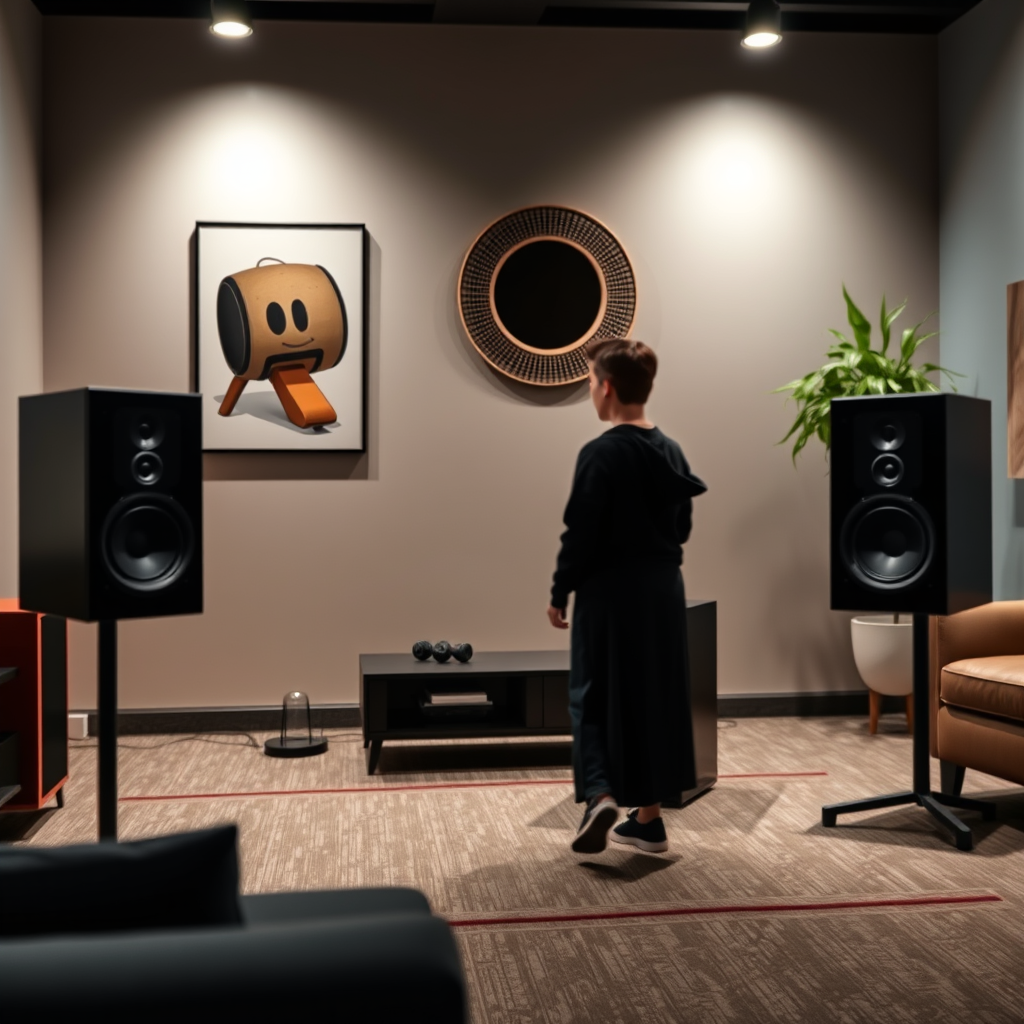
When it comes to speaker placement, a few fundamental rules can dramatically affect your audio experience. One of the most important aspects is the height at which your speakers are positioned. Ideally, the tweeters— the components responsible for high-frequency sounds—should be at ear level when you are seated in your primary listening spot. This alignment ensures optimal sound clarity and detail, allowing you to hear the nuances in your audio tracks.
Another crucial consideration is the proximity of your speakers to walls and corners. While it might seem convenient to place speakers in corners to save space, this can lead to a phenomenon known as “bass buildup,” which muddies the sound. Instead, aim to position your speakers at least a few feet away from walls and corners to allow for a more balanced bass response. A good rule of thumb is to start with a distance of around 2-3 feet from any boundary surfaces and adjust from there based on your listening experience.

Room Acoustics and Its Impact
Room acoustics play a significant role in how sound waves interact within your space. Soft furnishings like rugs, curtains, and upholstered furniture can absorb sound and minimize unwanted reflections, which is particularly beneficial for enhancing bass quality. For instance, thick carpets can help reduce sound wave reflections that might otherwise interfere with low-frequency sounds, resulting in a cleaner and more defined bass response.
On the other hand, hard surfaces such as large glass windows or concrete walls can reflect sound waves, leading to phase issues that distort the audio quality. If your room features many hard surfaces, consider adding acoustic panels or strategically placing soft items to help absorb excess sound reflections. By addressing these acoustic challenges, you can create a more favorable environment for your speakers, significantly improving their performance.
The Listening Position
To achieve the best sound quality, the arrangement of your speakers and listening position is crucial. A widely recommended approach is the “triangle setup,” where you position your speakers and listening area in an equilateral triangle formation. This setup allows for balanced sound distribution, ensuring that the audio reaches your ears evenly from both speakers.
Moreover, maintaining a proper distance from walls is vital. Ideally, your speakers should be placed at least 2 feet away from any wall to prevent reflections that can distort the bass frequencies. Testing different distances can help you find the sweet spot for your setup, optimizing your listening experience.
Impact of Speaker Placement on Bass Quality
| # | Placement Type | Bass Response | Sound Clarity | Overall Experience |
|---|---|---|---|---|
| 1 | Corner Placement | Poor | Muddy | Unsatisfactory |
| 2 | Wall Placement | Moderate | Average | Satisfactory |
| 3 | Free-Standing | Good | Clear | Very Good |
| 4 | Equilateral Triangle | Excellent | Crystal Clear | Outstanding |
| 5 | Optimal Placement | Best | Outstanding | Exceptional |
Experimenting with Speaker Placement
Finding the right speaker placement often requires experimentation. Don’t hesitate to move your speakers around to discover the optimal position for your specific room. Each space has unique acoustic properties, and slight adjustments can lead to significant improvements in sound quality.
If your setup includes a dedicated subwoofer, its placement is equally important. Unlike traditional speakers, subwoofers can benefit from being placed in various locations within a room. You may find that placing the subwoofer in a corner enhances bass performance, while other positions might yield better overall sound balance. Take the time to experiment and listen carefully to how each position affects the bass response.
Utilizing Measurement Tools
To further refine your speaker placement, consider using measurement tools designed for audio analysis. Room EQ and measurement software like REW (Room EQ Wizard) can provide valuable insights into your room’s acoustics. These tools allow you to visualize frequency response, identify resonances, and make necessary adjustments that enhance your audio experience.
In addition, smartphone apps are available that can assist you in measuring sound levels and frequencies. These user-friendly applications can help you fine-tune your speaker placement and ensure that you’re maximizing your system’s potential. By leveraging these technologies, you can achieve a more precise and tailored audio setup.
Effects of Speaker Placement on Bass Frequencies
Common Mistakes to Avoid
While positioning your speakers, there are several common pitfalls to avoid that can hinder your audio experience. One such mistake is neglecting speaker orientation. Ensure your speakers are angled slightly toward the listening area to achieve the best sound stage. Proper orientation allows the sound waves to converge at your listening position, enhancing clarity and spatial imaging.
Another frequent oversight is overlooking power source and cable management. Keep power sources and cables away from your speakers, as electromagnetic interference can introduce unwanted noise into your audio. Organizing cables and ensuring a clean setup can mitigate these issues, resulting in a more enjoyable listening experience.
Final Tips for Optimal Bass Response
Achieving optimal bass response is an ongoing process that may require regular reassessment of your speaker placement. As your room dynamics change—whether due to furniture rearrangement or acoustic modifications—so too should your speaker configuration. Periodically evaluate your setup to ensure you’re getting the best sound possible.
Ultimately, trust your ears. Your personal preferences should guide your final adjustments. Take the time to listen critically to various audio tracks, experimenting with placements until the sound feels just right for your environment.
By following these tips for positioning your speakers effectively, you can achieve a significant improvement in bass response and overall sound quality. Don’t hesitate to experiment with different placements and use measurement tools to get the best results. Enjoy the enhanced listening experience!
Frequently Asked Questions
What are the best speaker placement tips for achieving maximum bass response?
To achieve maximum bass response, place your speakers near walls but avoid corner placement, as this can lead to excessive boominess. Experiment with the distance from the wall; generally, 1 to 3 feet is ideal for balancing bass output without distortion. Additionally, angling the speakers slightly towards the listening position can enhance clarity and depth of sound.
How does the room’s acoustics affect speaker positioning for bass?
The acoustics of your room significantly influence how bass frequencies are perceived. Hard surfaces can reflect sound, enhancing certain frequencies, while soft furnishings can absorb them. To optimize bass, consider using rugs or curtains to dampen reflections and experiment with speaker placement to find the position that provides the best low-frequency response.
Why is it important to avoid placing speakers directly in corners for bass performance?
Placing speakers in corners can amplify bass frequencies too much, leading to a muddy and boomy sound. This is due to boundary reinforcement, which can create standing waves that distort the audio. For clearer bass response, keep speakers away from corners and use a well-balanced placement strategy to ensure an even distribution of sound throughout the room.
Which speaker positioning techniques can help minimize bass cancellation issues?
To minimize bass cancellation, use the “rule of thirds” by placing your speakers one-third of the way into the room rather than directly against walls or corners. Also, make sure the distance between your speakers and the listening position is equal to create a balanced soundstage. Utilizing subwoofers in conjunction with main speakers can further help manage bass response effectively.
What are some common mistakes to avoid when positioning speakers for bass?
Common mistakes include placing speakers too close to walls or corners, which can cause excessive bass resonance, and not accounting for room shape, which can lead to uneven sound distribution. Additionally, neglecting to adjust speaker height or angle can limit the listening experience. Always take the time to test different configurations to find the optimal setup for rich bass response.
References
- https://en.wikipedia.org/wiki/Speaker_(audio
https://en.wikipedia.org/wiki/Speaker_(audio - https://www.sciencedirect.com/topics/engineering/speaker-placement
https://www.sciencedirect.com/topics/engineering/speaker-placement - https://www.bbc.com/future/article/20201020-how-to-set-up-your-speakers-for-the-best-sound
https://www.bbc.com/future/article/20201020-how-to-set-up-your-speakers-for-the-best-sound - https://www.researchgate.net/publication/335091704_Speaker_placement_in_a_room_with_a_bass_trap
https://www.researchgate.net/publication/335091704_Speaker_placement_in_a_room_with_a_bass_trap - https://www.audioholics.com/audio-articles/how-to-position-your-speakers
https://www.audioholics.com/audio-articles/how-to-position-your-speakers - https://www.nature.com/articles/s41598-017-06862-9
https://www.nature.com/articles/s41598-017-06862-9 - https://pubmed.ncbi.nlm.nih.gov/19501484/
https://pubmed.ncbi.nlm.nih.gov/19501484/ - Google Scholar Google Scholar
https://scholar.google.com/scholar?q=proper+speaker+placement+bass+response - Google Scholar Google Scholar
https://scholar.google.com/scholar?q=speaker+positioning+bass+response - Google Scholar Google Scholar
https://scholar.google.com/scholar?q=speaker+placement+acoustics+research
