AI plays a crucial role in enhancing video watermarking techniques, making them more efficient and secure for copyright protection. By leveraging advanced algorithms and machine learning, content creators can better safeguard their intellectual property against unauthorized use. In this article, we’ll explore the mechanisms behind AI-driven watermarking, its advantages, and future trends that promise to further revolutionize the landscape of copyright protection.
Understanding Video Watermarking
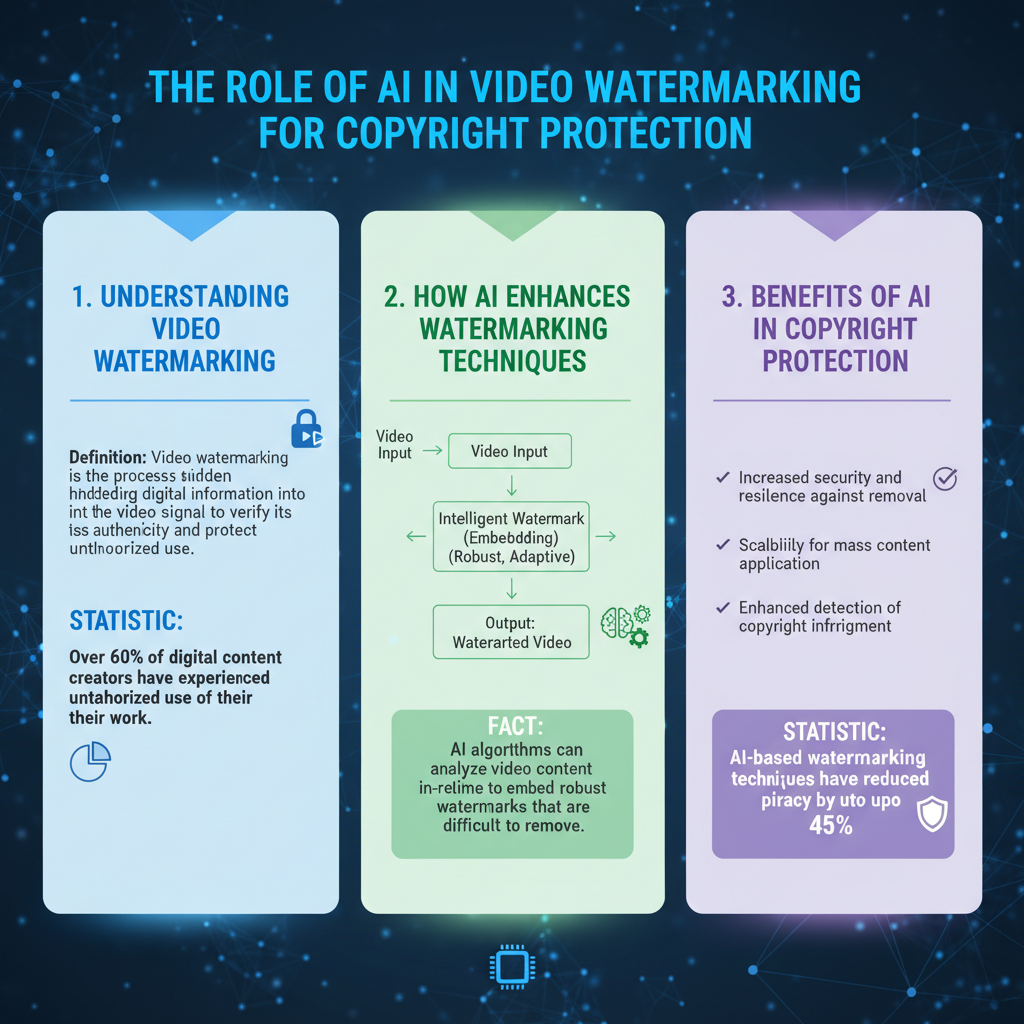
Video watermarking is a technique used to embed information into a video file to assert ownership or provide copyright protection. The primary purpose of video watermarking is to deter unauthorized use and reproduction of creative works, ensuring that creators can maintain control over their intellectual property.
There are two main types of watermarking: visible and invisible. Visible watermarks are overlaid on the video content and can be seen by viewers, often taking the form of logos or text that clearly indicate ownership. While effective in deterring casual theft, they can also detract from the viewing experience. Invisible watermarks, on the other hand, are embedded within the video data itself, making them undetectable to the naked eye. This method is generally preferred for professional content, as it allows for seamless viewing while still providing a means for tracking and identification.
How AI Enhances Watermarking Techniques
AI algorithms significantly improve both the robustness and invisibility of watermarks. Traditional watermarking methods can be susceptible to removal through various means, such as compression or cropping. However, AI-driven techniques utilize sophisticated algorithms that analyze the video content to create more resilient watermarks. These watermarks can adapt to changes in the video, ensuring that they remain intact even when the video undergoes modifications.
Machine learning models play a vital role in this process. By training on vast datasets of video content, these models learn to identify patterns and optimize watermark placement. This means that AI can create watermarks that blend seamlessly with the video while retaining their integrity. For instance, deep learning techniques can be employed to ensure that the watermark is embedded in a way that is impervious to common editing practices, thus increasing the chances of detection if the content is misappropriated.
Benefits of AI in Copyright Protection
The integration of AI in video watermarking offers numerous benefits for copyright protection. One of the key advantages is increased efficiency in detecting unauthorized use of video content. With AI, content owners can utilize automated systems that scan the web and various platforms for their videos. This not only saves time but also allows for quicker responses to copyright infringements.
Moreover, AI enhances security against watermark removal through advanced detection methods. Traditional detection may involve manual checks or simple algorithms that can be bypassed. In contrast, AI-driven systems can analyze large amounts of data to detect altered or removed watermarks, providing a more robust means of enforcement. For example, a content creator might use AI to monitor streaming platforms and social media for any unauthorized uploads, ensuring that they can act swiftly to protect their rights.
Case Studies: AI in Action
Several companies have successfully implemented AI-driven watermarking to protect their content. For example, major streaming services like Netflix and YouTube have adopted advanced watermarking techniques to deter piracy. Netflix utilizes a combination of visible and invisible watermarks to protect their original content, ensuring that any unauthorized copies can be traced back to the original source.
Another notable case is that of the BBC, which has integrated AI watermarking into its content distribution processes. By using machine learning to adapt their watermarking techniques, the BBC has reported a significant decrease in unauthorized content distribution. These case studies showcase the effectiveness of AI in watermarking and highlight the potential for broader application across various industries.
Future Trends in AI and Video Watermarking
As AI technology continues to advance, we can expect further improvements in video watermarking methods. Future trends may include the development of even more sophisticated algorithms that can create dynamic watermarks, which change based on the viewing context or user interactions. This adaptability could make it even more challenging for unauthorized users to remove or alter the watermark without detection.
However, with these advancements come potential challenges and ethical considerations. For instance, the use of AI in watermarking raises questions about privacy and consent, particularly in user-generated content. As AI technologies evolve, it will be essential for content creators and legal experts to navigate these complexities and ensure that copyright protection mechanisms do not infringe on individual rights.
Best Practices for Content Creators
For content creators looking to effectively implement AI watermarking in their video projects, there are several best practices to consider. First and foremost, it’s crucial to stay informed about the latest advancements in AI technology and watermarking techniques. Regularly updating your watermarking strategies can help you stay ahead of piracy and unauthorized use.
Additionally, consider using a combination of visible and invisible watermarks for added security. While invisible watermarks provide stealthy protection, a visible watermark can deter casual theft. Also, ensure that your watermarking process is integrated seamlessly into your production workflow, allowing for efficient application without disrupting the creative process.
Finally, engage with your audience about the importance of copyright protection. Educating viewers about the significance of respecting intellectual property can foster a more supportive environment for creators and encourage adherence to copyright laws.
In summary, AI is transforming video watermarking by making it more secure and efficient for copyright protection. Content creators are encouraged to adopt these technologies and stay informed about emerging trends to better safeguard their intellectual property. By integrating AI watermarking solutions into your video production workflow, you can protect your creative works and ensure their rightful recognition in an increasingly digital landscape.
Frequently Asked Questions
What is the role of AI in video watermarking for copyright protection?
AI plays a crucial role in video watermarking by enhancing the efficiency and effectiveness of embedding digital identifiers into video content. Through advanced algorithms, AI can create invisible watermarks that are robust against various manipulations, ensuring that copyright holders can track and authenticate their content. This technology not only deters unauthorized use but also aids in tracing the origin of pirated videos.
How does AI improve the effectiveness of traditional video watermarking techniques?
AI improves traditional video watermarking techniques by employing machine learning models that can analyze video frames and determine optimal placement for watermarks without compromising visual quality. These AI-driven methods can adapt to different video types and formats, making them more resilient to common attacks like cropping or compression. As a result, AI-enhanced watermarking provides a stronger layer of protection for copyrighted material.
Why is AI-based video watermarking considered more secure than manual methods?
AI-based video watermarking is considered more secure than manual methods due to its ability to dynamically adapt to the content and context of each video. Unlike static watermarking techniques, AI can generate complex watermarks that are harder to detect and remove, making them more resilient against attempts at unauthorized reproduction. Additionally, AI systems can continuously learn and improve, ensuring that watermarking techniques stay ahead of evolving threats.
Which industries benefit the most from AI-driven video watermarking solutions?
Several industries benefit significantly from AI-driven video watermarking solutions, including the entertainment, media, and advertising sectors. For filmmakers and content creators, robust watermarking ensures that their intellectual property is protected from piracy. Meanwhile, advertisers can safeguard their branded content from unauthorized use, maintaining the integrity of their campaigns. As digital content consumption grows, the need for effective copyright protection becomes increasingly critical across all media platforms.
What are the best practices for implementing AI video watermarking in content production?
Implementing AI video watermarking effectively involves several best practices, such as selecting a watermarking solution that uses advanced machine learning techniques tailored to your video content. It’s essential to test the watermarking process to ensure that it does not affect the viewer’s experience, maintaining visual quality. Regularly updating the watermarking algorithm can also help adapt to new threats, while educating content creators about the importance of watermarking can foster a culture of copyright protection.
References
- Digital watermarking
- https://www.nist.gov/news-events/news/2021/06/nist-research-explores-potential-watermarking-techniques-protect-copyright
- https://www.sciencedirect.com/science/article/pii/S1877050921000016
- https://www.researchgate.net/publication/331991587_A_Survey_on_Digital_Watermarking_Techniques_for_Copyright_Protection
- https://www.cio.com/article/3293385/how-ai-is-revolutionizing-copyright-protection.html
- https://www.bbc.com/news/technology-54220551