

Incorporating AI into augmented reality (AR) enhances interactive product demos by providing personalized experiences, real-time data analysis, and improved user engagement. This fusion of technologies allows businesses to create compelling demonstrations that captivate potential customers and streamline the buying process. In this article, we’ll explore how AI is transforming AR-powered product demos and the benefits it brings to both companies and consumers.
Understanding AI and AR Integration

The integration of AI into AR technologies marks a significant leap in how products are demonstrated and experienced. AI algorithms analyze user behavior—such as preferences, interactions, and feedback—to tailor AR experiences specifically for individual users. This means that no two experiences are the same; users receive content that resonates with them, whether they are browsing a furniture store or checking out the latest tech gadgets.
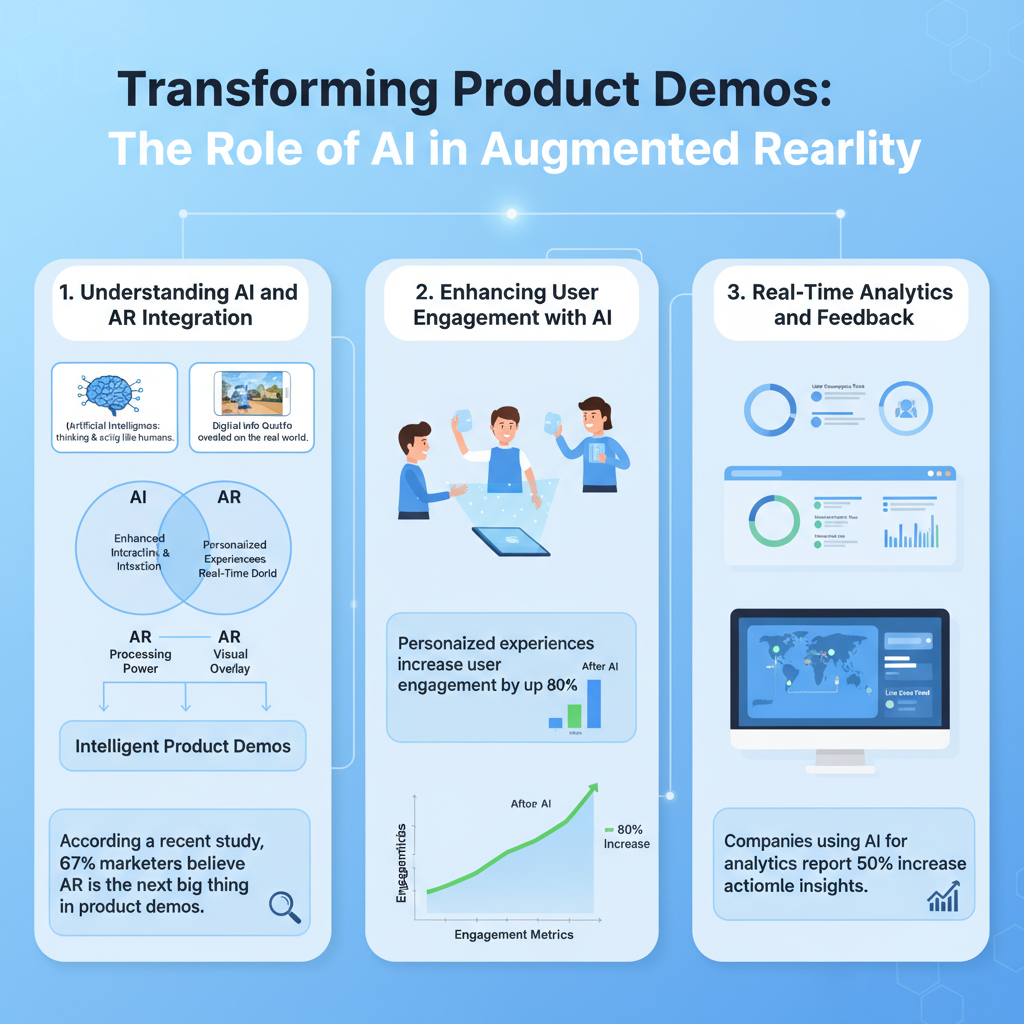
Moreover, AR utilizes AI to recognize objects and enhance interaction quality. Imagine a customer aiming their smartphone at a virtual couch; AI can identify the color scheme of their room and suggest complementary furniture. This level of detail creates a more immersive and relevant experience, making product demos not only visually engaging but also contextually meaningful.
Enhancing User Engagement with AI

User engagement is crucial in today’s fast-paced digital marketplace, and AI-driven recommendations take this to the next level. By analyzing user preferences and behaviors, AI can create personalized product suggestions that feel tailor-made for each individual. For example, if a user interacts with a specific category of products—like eco-friendly items—AI can highlight similar products that align with their values, fostering a deeper connection.
Interactive features powered by AI also keep users engaged longer. Consider the use of chatbots or virtual assistants within AR demos. These AI-driven entities can answer questions in real time, provide additional product information, or even guide users through complex features. This interactivity not only holds the user’s attention but also encourages exploration, leading to a more profound understanding of the product.
Real-Time Analytics and Feedback
One of the most powerful aspects of integrating AI with AR is the ability to collect and analyze user data during demos for instant insights. As users engage with the AR experience, AI algorithms track their interactions and gather data on what features they find most appealing. This information is invaluable for businesses, as it allows them to adapt their presentations based on user interactions and preferences.
For instance, if analytics show that users frequently skip over a particular feature, businesses can rethink their AR demonstration strategy, perhaps focusing more on the aspects that resonate with their audience. This real-time feedback loop ensures that product demos are continually refined, enhancing user satisfaction and driving better results.
Streamlining the Sales Process
AI significantly enhances AR demos by offering features like virtual try-ons, which have become increasingly popular in retail, especially in fashion and cosmetics. Imagine a customer able to visualize how a pair of shoes looks on their feet or how a lipstick shade complements their skin tone—all from the comfort of their home. This not only elevates the shopping experience but also increases the likelihood of purchase, as customers can make informed decisions without the need for physical trials.
Additionally, AR allows potential customers to experience products in their environment. For example, furniture retailers like IKEA have adopted AR applications that let users visualize how a piece of furniture would look in their living space. This visual and contextual understanding significantly enhances confidence in purchasing decisions, leading to higher conversion rates for businesses.
Case Studies: Successful Implementations
Several brands have successfully harnessed the power of AI in their AR demos to boost sales and customer satisfaction. For instance, L’Oreal has implemented AR technology in its mobile app, allowing users to virtually try on makeup products. The app uses AI to analyze users’ facial features and suggest shades that would suit them best. This innovative approach not only enhances customer engagement but has also led to increased sales conversions.
Another notable example is the furniture retailer Wayfair, which offers an AR feature that enables customers to visualize how furniture would fit in their homes. By integrating AI to analyze user preferences and browsing history, Wayfair can deliver personalized suggestions, improving customer satisfaction and engagement rates significantly.
Future Trends in AI and AR Product Demos
As technology continues to evolve, the future of AI and AR collaboration looks promising. Emerging technologies such as machine learning and advanced computer vision will further enhance interactivity in product demonstrations. For example, advancements in gesture recognition could allow users to interact with AR content in more natural ways, such as using hand movements to manipulate products in a virtual space.
In addition, the potential for increased personalization and automation in product demonstrations is exciting. Imagine an AR demo that not only adapts to a user’s behavior in real time but also predicts their needs based on past interactions. Businesses could leverage this data to offer customized experiences that feel truly unique, fostering stronger customer relationships and loyalty.
Challenges and Considerations
Despite the many benefits of integrating AI with AR, there are challenges that businesses must address. Technical hurdles, such as ensuring seamless integration between AI algorithms and AR platforms, can pose significant challenges. Companies must invest in the right technology and infrastructure to support these advanced systems, which can be resource-intensive.
Additionally, user privacy and data security are paramount when employing AI solutions. Businesses must ensure they are compliant with data protection regulations and transparent about how user data is collected and utilized. Building trust with customers around data security can enhance their willingness to engage with interactive demos.
By leveraging AI in AR-powered interactive product demos, businesses can create unique and engaging experiences that cater to individual customer needs. The synergy of these technologies not only enhances the demo experience but also drives sales and builds lasting customer relationships. Embrace this innovative approach to stay ahead in the competitive market—consider how you can implement AI into your next AR initiative.
Frequently Asked Questions
What is the role of AI in AR-powered interactive product demos?
The role of AI in AR-powered interactive product demos is to enhance user engagement and streamline the demonstration process. AI algorithms can analyze user interactions, customize experiences based on preferences, and provide real-time feedback, making the demo more interactive and tailored to individual needs. This integration not only improves user understanding of the product but also increases conversion rates by creating a more immersive experience.
How does AI improve the effectiveness of AR product demonstrations?
AI improves the effectiveness of AR product demonstrations by personalizing the user experience and providing intelligent insights. Through machine learning, AI can track user behavior and preferences, allowing it to adjust the demo to highlight features that matter most to the user. Additionally, AI can simulate real-world scenarios, enabling potential customers to visualize how the product fits into their lives, thus increasing retention and interest.
Why should businesses invest in AI for AR product demos?
Businesses should invest in AI for AR product demos because it significantly enhances customer engagement and satisfaction, leading to higher conversion rates. By utilizing AI, companies can create more interactive and personalized experiences that resonate with users, helping to differentiate their products in a competitive market. Moreover, AI can provide valuable analytics on user interactions, enabling businesses to refine their marketing strategies and improve future demos.
Which industries can benefit the most from AI-driven AR product demos?
Several industries can benefit from AI-driven AR product demos, including retail, real estate, automotive, and healthcare. Retailers can use AR demos to showcase products in a virtual environment, while real estate companies can offer virtual tours of properties. The automotive industry can provide interactive vehicle demonstrations, and healthcare can utilize AR to educate patients about medical devices. Each of these industries can leverage AI to create tailored, engaging experiences that enhance customer understanding and decision-making.
What are the best practices for implementing AI in AR product demos?
The best practices for implementing AI in AR product demos include understanding your target audience, utilizing high-quality AR technology, and ensuring seamless integration with AI tools. It’s crucial to gather data on user preferences to tailor experiences effectively. Additionally, maintaining user-friendly interfaces and providing clear instructions can enhance the overall experience. Regularly updating content and features based on user feedback ensures that the demos remain relevant and engaging, further optimizing the use of AI in AR applications.
References
- Augmented reality
- https://www.sciencedirect.com/science/article/pii/S0360132319300210
- https://www.bbc.com/news/technology-54151289
- https://www.forbes.com/sites/bernardmarr/2021/05/10/the-role-of-ar-and-ai-in-the-future-of-retail/?sh=49bce9c465fe
- https://www.nature.com/articles/s41599-021-00719-5
- https://www.gartner.com/en/information-technology/glossary/augmented-reality-ar
- https://www.techrepublic.com/article/how-ar-and-ai-are-revolutionizing-product-demos/
- https://www.weforum.org/agenda/2021/07/ai-ar-immersive-technologies/
- https://www.itu.int/en/ITU-T/focusgroups/ai4good/Pages/default.aspx