
Calibrating your surround sound system for movies is essential to achieve the best audio experience. By following a few simple steps, you can ensure that your sound system delivers immersive sound that enhances your viewing experience. In this guide, you’ll learn how to properly set up and calibrate your surround sound system for optimal performance.
Understanding Surround Sound Basics
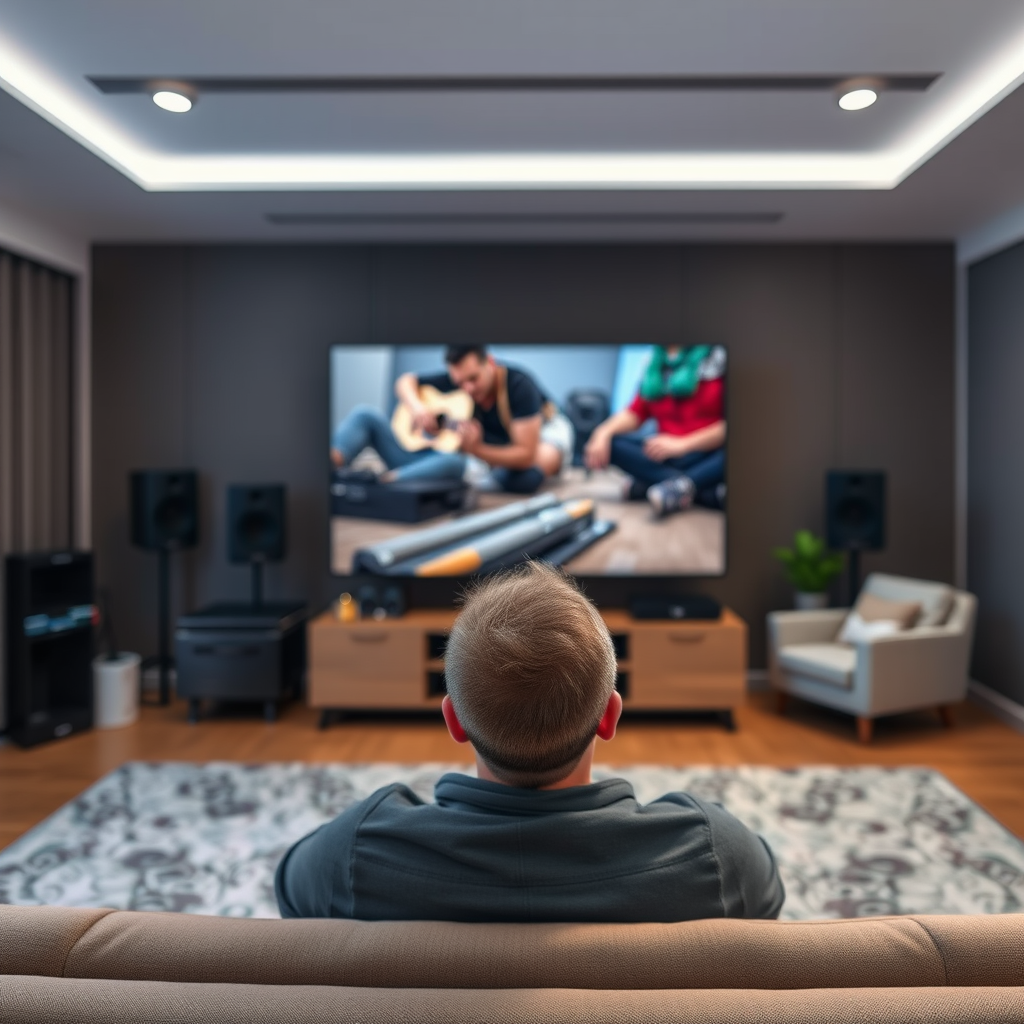
To effectively calibrate your surround sound system, it is crucial to understand the different types of surround sound formats available today. Formats such as Dolby Atmos and DTS:X are designed to create a more immersive audio experience by enabling sound to move freely around you in a three-dimensional space. Dolby Atmos, for instance, allows sound designers to place audio elements in a three-dimensional space, giving you a more realistic auditory experience.
Speaker placement is also a key factor in achieving optimal sound distribution. The arrangement of your speakers will determine how sound is projected throughout the room, influencing the clarity and directionality of sound effects and dialogue. Proper speaker placement follows an arrangement that includes front left, front right, center, surround left, surround right, and often subwoofers, which enhance lower frequencies for a fuller sound.Preparing for Calibration
Before diving into the calibration process, preparation is key. Gather the necessary tools for calibration, such as a sound level meter or a calibration app available on smartphones. These tools will help you measure sound levels accurately, ensuring your system is perfectly balanced.
Next, ensure your room is set up to minimize acoustic interference. This includes considering furniture placement, wall materials, and any potential sound reflections that may distort audio. Soft furnishings like carpets and curtains can absorb sound, while hard surfaces can reflect sound waves, potentially leading to an uneven audio experience. Aim for a balanced environment that facilitates clear sound transmission.
Speaker Placement and Configuration
Positioning your speakers correctly is vital for achieving the best sound quality. Ideally, speakers should be placed at ear level when seated, and distances from the viewing area should follow recommended guidelines. For instance, the front left and right speakers should create an equilateral triangle with the listening position, while the center speaker should be directly above or below the screen.
Your AV receiver settings also need proper configuration. Most modern receivers allow you to specify the number and type of speakers in your system. This information helps the receiver optimize audio output for your specific setup, ensuring that each speaker performs according to its capabilities.
Top Surround Sound Formats and Their Features
| # | Format | Speaker Configuration | 3D Audio Support | Ideal For |
|---|---|---|---|---|
| 1 | Dolby Atmos | 5.1.2, 7.1.4 | Yes | Movies, Gaming |
| 2 | DTS:X | 5.1, 7.1, 11.1 | Yes | Movies, Music |
| 3 | Dolby Digital Plus | 5.1 | No | Streaming Services |
| 4 | DTS-HD Master Audio | 7.1 | No | Blu-ray Discs |
| 5 | Dolby TrueHD | 7.1 | No | High-Definition Audio |
| 6 | PCM (Pulse Code Modulation) | Stereo, Multi-channel | No | General Audio |
| 7 | WAV (Waveform Audio) | Stereo | No | Lossless Audio |
Using Calibration Tools
Many modern AV receivers come equipped with automatic calibration features that make the setup process easier. These systems use built-in microphones to analyze the room’s acoustics and adjust the output levels for each speaker accordingly. Utilizing these features can significantly save time and effort, especially for those unfamiliar with audio calibration.
If manual adjustments are necessary, a sound level meter is an invaluable tool. This device helps you to measure sound levels from each speaker while playing a reference tone or pink noise. Aim to achieve a consistent decibel level across all channels, ensuring a balanced listening experience. Adjust the levels based on the readings from your sound level meter, making small changes until the output is evenly matched.
Fine-Tuning Your Settings
Once your speakers are positioned and calibrated, it’s time to fine-tune your settings. The equalizer settings on your AV receiver should be adjusted based on your room’s acoustics and your personal preferences. Factors such as room size, materials, and speaker characteristics will influence the required adjustments.
Testing audio levels with different movie scenes can provide insight into how well your calibration holds up across various sound mixes. This step is crucial for ensuring clarity and balance across channels. Pay attention to dialogue clarity, the immersion of sound effects, and the overall balance of bass and treble. You may find that certain genres require additional adjustments to achieve the desired audio experience.
Sound Levels Comparison Across Different Movie Genres
Testing and Making Adjustments
After making your initial adjustments, it’s time to put your calibrated system to the test. Play a variety of movie genres to assess the overall performance of your sound calibration. This is crucial, as different genres may highlight various aspects of your audio setup. Action movies, for example, will demand a robust bass response, while dialogue-heavy dramas will require clarity from the center channel.
Take note of any discrepancies you may notice. If certain sounds are too loud or too soft, don’t hesitate to make further fine-tuning adjustments. It may be beneficial to repeat the calibration process after testing with multiple genres to refine your settings continuously.
In summary, achieving the perfect surround sound calibration can significantly enhance your movie-watching experience. With patience and attention to detail, you can create a sound environment that is tailored to your preferences and room characteristics.
By following these steps, you can effectively calibrate your surround sound system for movies, ensuring an immersive audio experience. Remember to take your time and make adjustments as necessary to suit your personal taste. Enjoy your enhanced movie nights!
Frequently Asked Questions
How do I determine the best speaker placement for my surround sound system?
To achieve optimal sound quality, start by following the 5.1 speaker layout: place the center speaker above or below your TV, front left and right speakers at ear level, and surround speakers slightly above ear level, positioned to the side or behind your seating area. Use a tape measure to ensure distance consistency and adjust angles to create an immersive audio experience.
Why is it important to calibrate my surround sound system for movies?
Calibrating your surround sound system is crucial because it ensures that audio is balanced and that all speakers contribute effectively to the overall sound experience. Without proper calibration, you may experience uneven volume levels, poor sound localization, and an overall diminished movie-watching experience.
What tools do I need to calibrate my surround sound system effectively?
To calibrate your surround sound system, you will need an SPL (Sound Pressure Level) meter or a calibration microphone, which may come with some receivers. Additionally, utilizing a calibration software or built-in receiver setup tool can significantly simplify the process, allowing for precise adjustments tailored to your room’s acoustics.
Which audio settings should I adjust when calibrating my surround sound system?
When calibrating your surround sound system, focus on adjusting the speaker levels, distance settings, and crossover frequencies. Ensure that each speaker is set to the correct level relative to your listening position, and adjust the crossover frequency to match your subwoofer with the other speakers for a seamless audio experience.
How can I use test tones to calibrate my surround sound system?
Test tones can be used to calibrate your surround sound system by playing specific frequencies through each speaker to assess their performance and balance. Start by playing the test tones one by one, adjusting the volume of each speaker until they all sound equally loud at your primary listening position. This method helps achieve a cohesive sound field for an immersive movie experience.
References
- Surround sound
https://en.wikipedia.org/wiki/Surround_sound - https://www.audioholics.com/tutorials/surround-sound-calibration
https://www.audioholics.com/tutorials/surround-sound-calibration - https://www.researchgate.net/publication/332056325_Surround_Sound_Calibration
https://www.researchgate.net/publication/332056325_Surround_Sound_Calibration - https://www.sciencedirect.com/topics/engineering/surround-sound
https://www.sciencedirect.com/topics/engineering/surround-sound - Google Scholar Google Scholar
https://scholar.google.com/scholar?q=calibrate+surround+sound+system - Google Scholar Google Scholar
https://scholar.google.com/scholar?q=surround+sound+calibration+techniques - Google Scholar Google Scholar
https://scholar.google.com/scholar?q=surround+sound+for+movies - Google Scholar Google Scholar
https://scholar.google.com/scholar?q=How+to+Calibrate+Your+Surround+Sound+System+for+Movies - How to Calibrate Your Surround Sound System for Movies – Search results
https://en.wikipedia.org/wiki/Special:Search?search=How+to+Calibrate+Your+Surround+Sound+System+for+Movies - https://www.ncbi.nlm.nih.gov/search/research-articles/?term=How+to+Calibrate+Your+Surround+Sound+System+for+Movies
https://www.ncbi.nlm.nih.gov/search/research-articles/?term=How+to+Calibrate+Your+Surround+Sound+System+for+Movies