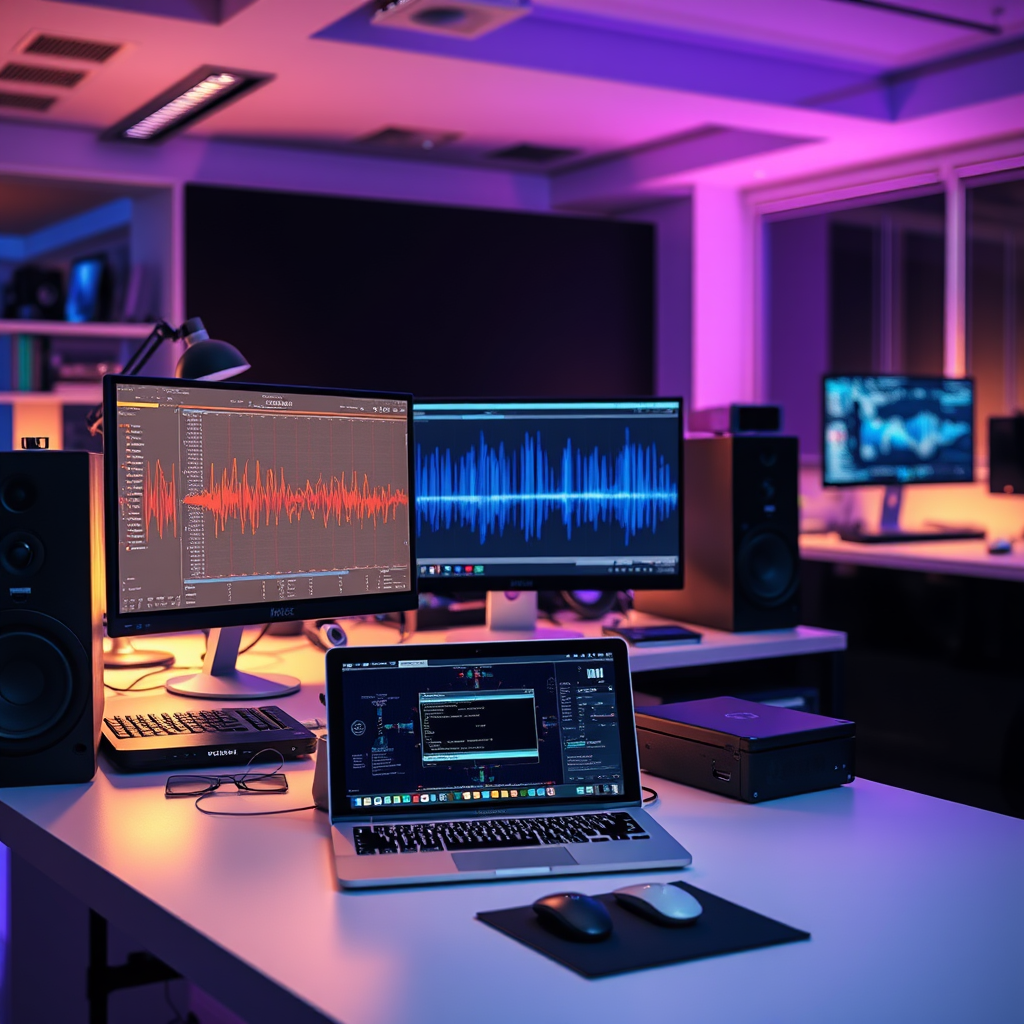

Digital Signal Processing (DSP) significantly enhances audio quality by allowing precise control over sound manipulation and improvement. Through techniques such as noise reduction, equalization, and dynamic range compression, DSP transforms raw audio into a clearer and more balanced listening experience. In this article, you’ll discover how DSP techniques work and their impacts on audio performance.
Understanding Digital Signal Processing
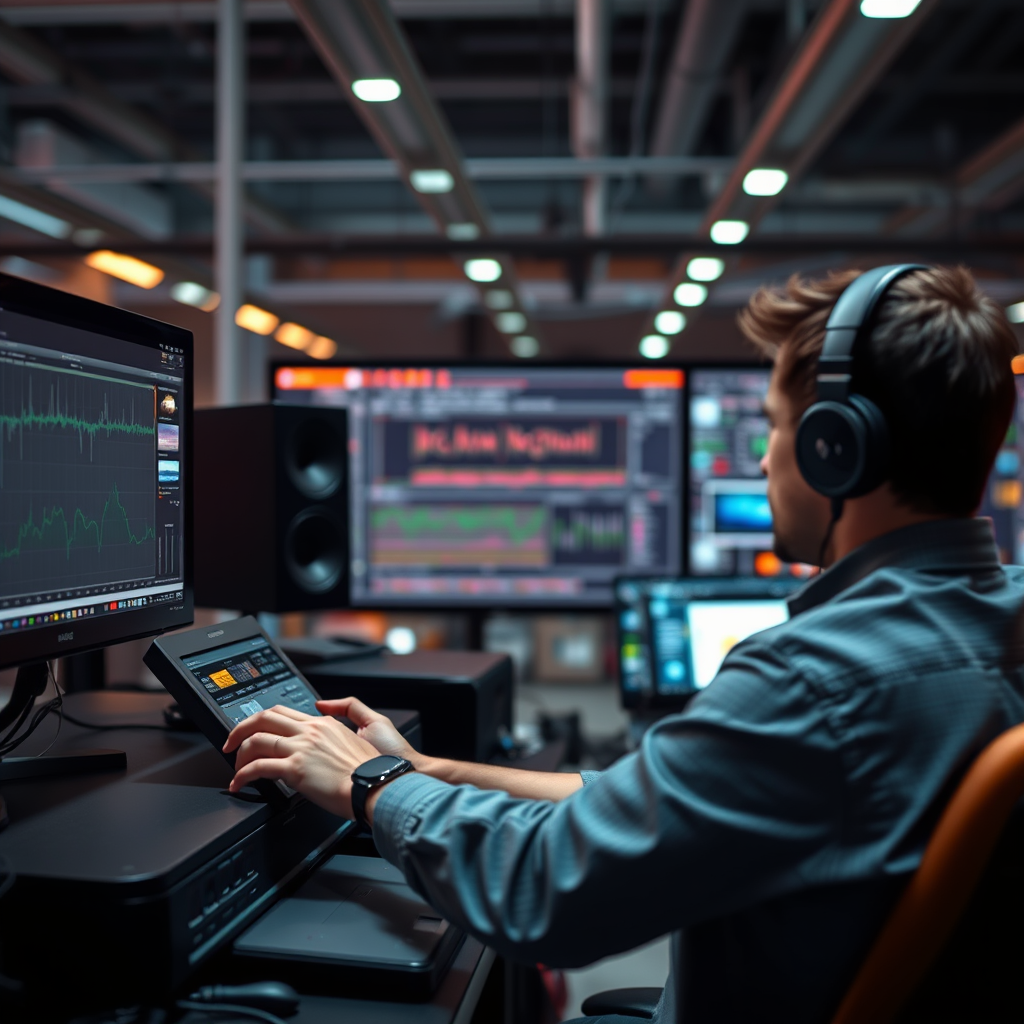
Digital Signal Processing, or DSP, refers to the manipulation of signals in a digital format to improve or modify audio quality. The role of DSP in audio technology is critical as it enables the conversion of analog signals, such as sound waves captured by microphones, into digital form that can be processed by computers and digital devices. This conversion involves sampling the audio signal at specific intervals and quantifying the amplitude of the sound wave at each sample point, allowing for advanced manipulation of the audio data.
The DSP process begins with an analog-to-digital converter (ADC), which captures the continuous sound wave and converts it into a series of discrete digital values. This digital representation of sound allows for various enhancements to be applied, such as filtering, mixing, and adjusting the overall sound quality. The resulting audio can be played back through digital devices with improved clarity and fidelity, making DSP indispensable in modern audio applications.
Key DSP Techniques for Audio Enhancement

One of the most significant advantages of DSP technology is the array of techniques available to enhance audio quality. Here are a couple of the key methods employed:
Noise Reduction
Noise reduction techniques are crucial in minimizing unwanted background noise that can detract from audio clarity. This is particularly important in environments where there are multiple sound sources or when recording in less-than-ideal conditions. Various algorithms, such as spectral subtraction and adaptive filtering, are used to identify and reduce noise components in audio signals.
For example, in a recording studio, DSP can analyze an audio track to detect frequencies that are predominantly noise and subtract them, allowing the primary audio signal to be heard more clearly. This results in a cleaner and more professional-sounding recording, which is essential for both music production and broadcasting.
Equalization
Equalization (EQ) is another essential DSP technique that involves adjusting the balance of different frequency components within an audio signal. By boosting or cutting specific frequency ranges, audio engineers can enhance the tonal quality of recordings, making them sound more balanced and pleasing to the ear.
For instance, a common use of EQ is to reduce muddiness in the lower frequencies, allowing vocals and higher-frequency instruments to shine through more clearly. This technique is vital in various applications, from live sound reinforcement to studio mixing, where achieving the right sound balance can significantly impact the listener’s experience.
The Importance of Sampling Rate and Bit Depth
The sampling rate and bit depth are fundamental parameters that play a crucial role in determining audio resolution and quality.
Sampling Rate
The sampling rate refers to the number of times audio is sampled per second, measured in Hertz (Hz). A higher sampling rate enables the capture of more detail and nuance in the audio signal, resulting in clearer sound reproduction. Common sampling rates include 44.1 kHz for CD audio and 48 kHz for film and video.
Higher sampling rates, such as 96 kHz or 192 kHz, are often used in professional audio environments, as they provide greater fidelity and allow for more extensive post-processing capabilities. However, it’s important to note that higher sampling rates also require more storage space and processing power.
Bit Depth
Bit depth indicates the number of bits used to represent each sample in a digital audio file, affecting the dynamic range of the audio signal. A greater bit depth allows for a wider range of amplitude values, resulting in better sound quality and reduced distortion. The standard bit depths are 16-bit for CD audio and 24-bit for professional recordings.
A 24-bit recording can capture over 16 million different amplitude levels, providing a much richer audio experience compared to 16-bit recordings, which can only capture 65,536 levels. This increased detail is particularly beneficial in capturing the subtleties of dynamic performances.
Comparison of Audio Formats by Sampling Rate and Bit Depth
| # | Audio Format | Sampling Rate | Bit Depth | Dynamic Range (dB) |
|---|---|---|---|---|
| 1 | CD Audio | 44.1 kHz | 16-bit | 96 dB |
| 2 | DVD Audio | 48 kHz | 24-bit | 144 dB |
| 3 | Blu-ray Audio | 192 kHz | 24-bit | 144 dB |
| 4 | MP3 | 44.1 kHz | 16-bit | 90 dB |
| 5 | WAV | 44.1 kHz | 16-bit | 96 dB |
| 6 | FLAC | 48 kHz | 24-bit | 144 dB |
| 7 | AAC | 48 kHz | 16-bit | 90 dB |
Applications of DSP in Consumer Electronics
DSP technology is widely utilized across various consumer electronics, enhancing audio experiences for everyday users.
Smartphones and Home Audio Systems
In smartphones, DSP plays a crucial role in audio playback and recording. Features such as voice recognition, noise-canceling during calls, and sound enhancements for music playback rely heavily on DSP algorithms. These features allow users to enjoy high-quality audio despite the compact size of the devices.
Home audio systems also benefit significantly from DSP. Many modern sound systems use DSP to provide surround sound simulation, equalization, and room correction, ensuring that listeners experience optimal sound quality regardless of their environment. The ability to adjust audio settings automatically based on the characteristics of the room is a compelling feature that enhances the overall listening experience.
DSP in Professional Audio Equipment for Studios
In professional audio studios, DSP is essential for music production, mixing, and mastering. High-end audio interfaces and mixing consoles incorporate DSP chips that allow for real-time processing of audio signals. This capability enables sound engineers to apply complex effects, such as reverb, delay, and compression, without introducing latency or sacrificing audio quality.
Moreover, DSP is instrumental in live sound applications, where it helps manage sound quality in dynamic environments, ensuring that performances are delivered with clarity and impact. The use of DSP in these settings allows for precise control over sound, making it an invaluable tool for audio professionals.
Real-Time Processing vs. Offline Processing
DSP applications can be categorized into two main types: real-time processing and offline processing, each with its advantages and disadvantages.
Real-Time Processing
Real-time DSP involves processing audio signals as they are being captured or played back. This method is essential in live sound situations, where delays or latency can significantly affect performance. Real-time processing allows for immediate audio adjustments, such as applying effects or mixing different sound sources on the fly.
However, real-time processing requires significant computational power to ensure that audio manipulation occurs without noticeable lag. This necessity can limit the complexity of the effects applied in real-time settings.
Offline Processing
In contrast, offline DSP refers to the processing of audio files after they have been recorded. This method allows for more complex and resource-intensive processing, as there is no need to maintain real-time performance. Offline processing is typically used in studio environments where audio tracks can be manipulated without the constraints of immediate playback.
While offline processing provides greater flexibility and precision, it lacks the immediacy of real-time adjustments, which can be a disadvantage during live performances or recordings.
Real-Time vs. Offline DSP Processing Methods
Future Trends in DSP for Audio Quality
As technology continues to evolve, the future of DSP in audio quality enhancement is poised for exciting developments. Emerging technologies such as artificial intelligence (AI) and machine learning (ML) are beginning to play significant roles in DSP applications.
Emerging Technologies
AI-driven DSP algorithms can analyze audio data more efficiently and effectively, allowing for dynamic adjustments based on real-time analysis of sound environments. These advancements could lead to smarter noise cancellation, personalized audio experiences, and automated mixing processes that adapt to listener preferences and environmental conditions.
Predictions for the Evolution of Audio Quality Enhancement through DSP
Looking ahead, we can anticipate a growing integration of DSP technology in various consumer and professional audio products. Innovations such as spatial audio and immersive sound experiences will likely become more prevalent, driven by advancements in DSP capabilities. Additionally, as internet speeds and computing power continue to increase, cloud-based DSP applications may emerge, allowing for even more sophisticated audio processing and delivery.
By embracing these trends, the audio industry can expect to deliver richer, more engaging audio experiences across all platforms, enhancing the way we connect with sound.
Improving audio quality through Digital Signal Processing is essential for both casual listeners and professional audio engineers. By understanding the techniques and applications of DSP, you can appreciate the rich soundscapes that technology enables. Explore the various aspects of DSP further, and consider how these innovations can enhance your own audio experiences.
Frequently Asked Questions
How does Digital Signal Processing (DSP) improve audio clarity in music?
Digital Signal Processing enhances audio clarity by using algorithms to filter out unwanted noise and distortions. These algorithms can adjust frequencies and dynamically manage sound levels, resulting in a cleaner and more defined audio experience. This is particularly beneficial in music production, where clarity and detail are crucial to the overall quality of the sound.
What are the key features of DSP technology that enhance audio quality?
Key features of DSP technology include noise reduction, dynamic range compression, and equalization. Noise reduction algorithms minimize background noise, while dynamic range compression helps balance loud and soft sounds. Equalization allows for precise frequency adjustments, enabling producers to enhance specific elements of the audio, resulting in a richer listening experience.
Why is DSP crucial for real-time audio processing in live performances?
DSP is crucial for real-time audio processing in live performances because it allows for immediate adjustments to sound quality based on the environment and audience feedback. By using DSP, sound engineers can quickly optimize audio levels, remove feedback, and ensure that every note is crisp and clear. This adaptability is essential for delivering high-quality sound in dynamic and unpredictable settings.
Which industries benefit most from advancements in DSP for audio quality?
Industries that benefit most from advancements in DSP for audio quality include music production, broadcasting, telecommunications, and film. In music production, DSP enhances recordings and live sound; in broadcasting, it ensures clear transmission of audio signals. Telecommunications rely on DSP for clearer voice communication, while the film industry uses it to create immersive soundscapes.
What is the best way to implement DSP in home audio systems for better sound quality?
The best way to implement DSP in home audio systems is to invest in a high-quality audio processor or receiver that supports advanced DSP features. Look for systems that offer customizable equalizers, room correction technology, and surround sound processing. Additionally, optimizing speaker placement and utilizing proper acoustic treatments can further enhance the effectiveness of DSP in achieving superior sound quality.
References
- Digital signal processing
https://en.wikipedia.org/wiki/Digital_signal_processing - https://www.sciencedirect.com/topics/engineering/digital-signal-processing
https://www.sciencedirect.com/topics/engineering/digital-signal-processing - https://www.nature.com/articles/s41598-020-68334-0
https://www.nature.com/articles/s41598-020-68334-0 - https://pubmed.ncbi.nlm.nih.gov/16263326/
https://pubmed.ncbi.nlm.nih.gov/16263326/ - https://www.bbc.com/future/article/20201020-how-digital-music-works
https://www.bbc.com/future/article/20201020-how-digital-music-works - https://www.researchgate.net/publication/316368116_The_Role_of_Digital_Signal_Processing_in_Audio_Quality_Enhancement
https://www.researchgate.net/publication/316368116_The_Role_of_Digital_Signal_Processing_in_Audio_Quality_Enhancement - https://www.jstor.org/stable/42620345
https://www.jstor.org/stable/42620345 - Google Scholar Google Scholar
https://scholar.google.com/scholar?q=How+Digital+Signal+Processing+DSP+Enhances+Audio+Quality - Google Scholar Google Scholar
https://scholar.google.com/scholar?q=Digital+Signal+Processing+and+Audio+Quality - Google Scholar Google Scholar
https://scholar.google.com/scholar?q=Digital+audio+quality+enhancement+through+DSP