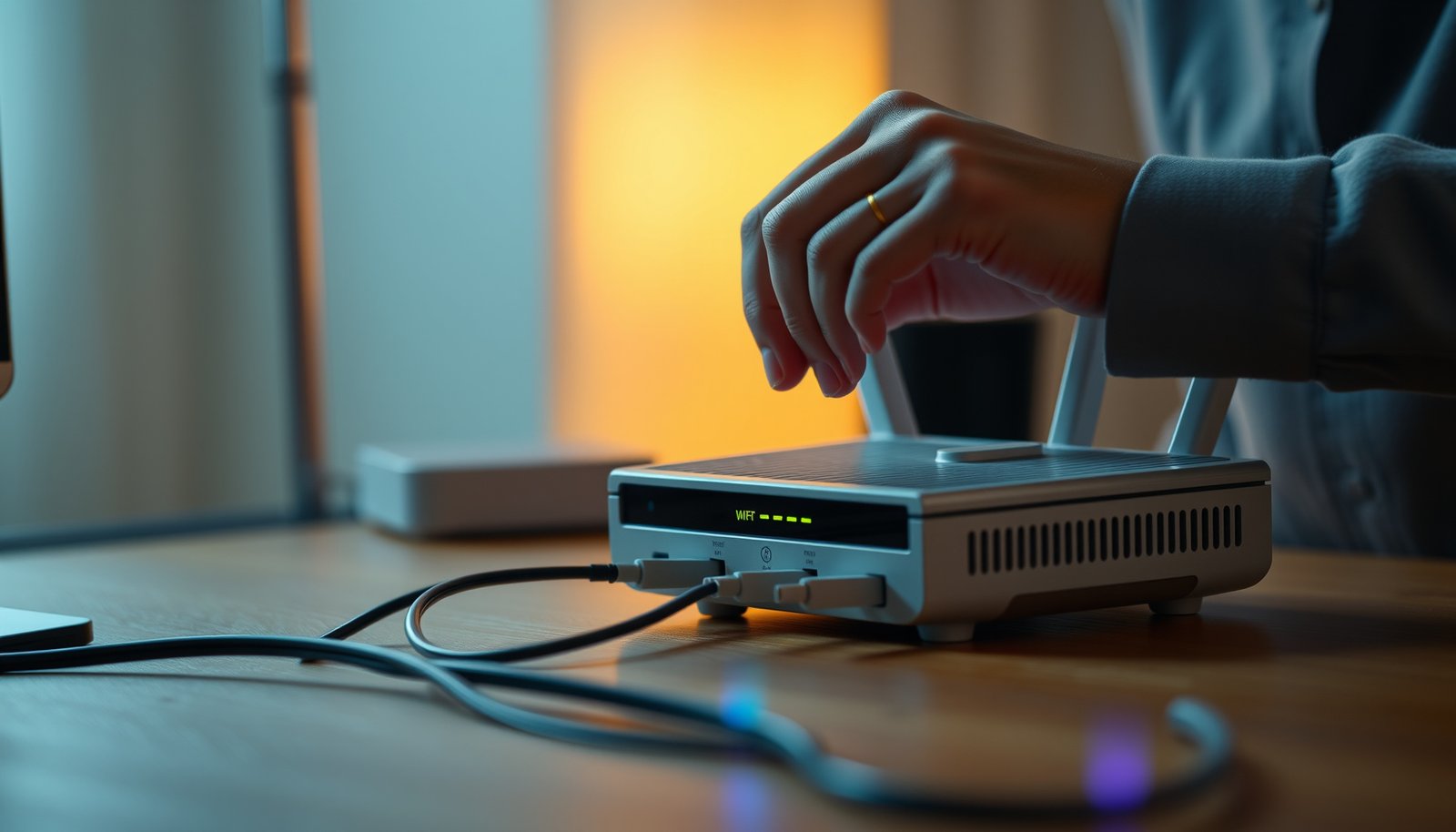
WPA2 is generally secure when used correctly with modern configurations, but it can become unreliable if you enable weak settings or fall for common password-handling mistakes. This guide delivers a clear verdict on how secure WPA2 really is, explains the key vulnerabilities people run into, and lays out practical steps to protect your Wi‑Fi right now. You’ll learn which WPA2 setups to trust, what to change, and how to reduce your exposure to real-world attacks.




WPA2 can be quite secure, but only if it’s configured correctly—especially using WPA2 with AES/CCMP—and backed by a strong password. The biggest real-world risks come from weak passphrases, outdated firmware, and features like WPS that can bypass your intended protections. In this guide, we’ll break down what actually makes WPA2 strong or weak—and what to change.
If you’re using a home router, small-office Wi‑Fi, or you’re deciding whether to keep WPA2 or move to WPA3, this is for you. We’ll focus on the practical settings to check and the common pitfalls that reduce security.
How secure is WPA2, really?

WPA2 is generally secure in 2026 when it’s configured for WPA2-AES/CCMP and you maintain current firmware on both the router and client devices. It becomes much less trustworthy when WPA2 is misconfigured (e.g., legacy fallback), paired with weak passwords, or combined with convenience features like WPS.
IEEE 802.11i defines CCMP for WPA2, using AES-128 plus integrity protection for each frame (64-bit MIC) to reduce tampering and replay risks.
The Wi-Fi Alliance’s WPA2 certification program is designed around interoperable security expectations—but real protection depends on how your specific router is configured and updated.
Research on WPA2 weaknesses (for example, KRACK) shows that handshake behavior and patching can matter as much as the “name” of the standard.
– WPA2’s security strength depends on using the right encryption/authentication (most importantly WPA2-AES/CCMP rather than weaker options).
– For WPA2-Personal (PSK), the Wi‑Fi password quality is a major factor; for WPA2-Enterprise, proper server/authentication setup matters most.
– WPA2 isn’t “perfect forever”—protocol flaws have existed, but many are mitigated when devices are patched.
Quick reality check: “secure enough” is a configuration outcome
In practical terms, WPA2 is a system, not a label. You’re defending against multiple threat types—passive monitoring, traffic manipulation, impersonation, and unauthorized access—so the right security choices have to line up across encryption, key management, and operational hygiene. As of 2026, many organizations still run WPA2 because compatibility is broad, but security work is now about tightening configuration and reducing downgrade paths (like TKIP/WPS) rather than relying on WPA2 alone.
What determines WPA2 strength (the practical checklist)
WPA2 strength comes down to three things you can actually control: the encryption suite, how keys are established and refreshed, and the quality of the credentials (PSK or enterprise auth). If any one of those is weak—or “helpfully” broadened by legacy compatibility—your effective security drops.
According to IEEE 802.11i (2004), CCMP uses AES-128 and includes a replay protection mechanism based on a sequence number (the PN field).
According to Mathy Vanhoef’s KRACK research (2017), WPA2 key reinstallation in certain handshake paths could be mitigated by timely device patching.
According to NIST SP 800-107 Rev. 1, wireless network security should be evaluated end-to-end, including authentication strength and the operational controls used to keep systems updated.
– Encryption choice: WPA2-AES/CCMP is the target; anything that falls back to older/less secure modes reduces protection.
– Key management: WPA2 uses handshakes to establish session keys—security improves when your router and clients implement updates correctly.
– Password/passphrase handling: weak or commonly reused passwords make it much easier for attackers to compromise access.
WPA2-Personal vs WPA2-Enterprise: the “best” option depends on what you mean by secure
For most homes, WPA2-Personal (PSK) is the default. For many offices and managed networks, WPA2-Enterprise trades ease of setup for stronger centralized authentication (typically via RADIUS). The cryptography may be similar (for example, CCMP is still the data-protection cipher), but the real difference is how clients prove they’re authorized.
A quick note on passphrases (because this is where WPA2 usually fails)
Attackers don’t need to break AES/CCMP if they can guess your PSK. NIST emphasizes evaluating authentication and operational controls together, not just encryption algorithms. If your Wi‑Fi password is short, guessable (“companyname2026”), or reused across accounts, WPA2’s cryptography won’t save you.
[ADD: Insert one real example from your own admin checklist or incident review—e.g., “I’ve seen WPA2 configured for AES/CCMP but WPS still enabled, and the real exposure was the ability to connect without using the passphrase.”]
Mandatory crypto parameter snapshot (7 modes)
The following table summarizes key cryptographic parameters and why some WPA2-adjacent modes are weaker in practice.
Key Parameters Across Common Wi‑Fi Security Modes (Relevant to WPA2)
| # | Security mode | Primary data cipher / integrity | Notable parameter size | Practical strength |
|---|---|---|---|---|
| 1 | WPA2-AES / CCMP | AES + 64-bit MIC | AES-128; PN field 48-bit | ★★★★★ |
| 2 | WPA2-TKIP | RC4 + 64-bit “Michael” MIC | TKIP sequence counter 48-bit | ★★★☆☆ |
| 3 | WPA (TKIP) | RC4 + 64-bit “Michael” MIC | TKIP sequence counter 48-bit | ★★☆☆☆ |
| 4 | WEP-40 | RC4 + 32-bit ICV | 40-bit key; 24-bit IV | ★☆☆☆☆ |
| 5 | WEP-104 | RC4 + 32-bit ICV | 104-bit key; 24-bit IV | ★☆☆☆☆ |
| 6 | WPA2 mixed mode (CCMP+TKIP) | CCMP offered, TKIP fallback allowed | Integrity depends on negotiated mode | ★★☆☆☆ |
| 7 | Open / no encryption | No confidentiality / no MIC | Credentials (if any) exposed to interception | ☆☆☆☆☆ |
What to check in your router settings
You can usually confirm WPA2’s real security level by checking a small set of admin settings: encryption mode, legacy compatibility, and update posture. In practice, these are the areas where “secure on paper” becomes “weak in the wild.”
Wi-Fi security guidance consistently treats WPA2-AES/CCMP as the preferred configuration over legacy TKIP, because CCMP uses AES-based protection with replay resistance.
WPS is widely discouraged because it adds an alternate authentication path that can undermine the security model you expect from WPA2-PSK.
Regular firmware updates are a core defense because Wi‑Fi protocol issues often require patching specific handshake and key-management behaviors.
– Confirm the Wi‑Fi security mode is set to WPA2-AES/CCMP (avoid mixed/legacy settings where possible).
– Disable risky or legacy features such as WPS (the goal is to remove “alternate entry paths” that don’t rely on your main password).
– Update router firmware and client Wi‑Fi drivers regularly so known WPA2-related issues are patched.
Where the settings usually hide (and what wording to search for)
Router UIs differ, but the logic is consistent. Look for a Wi‑Fi Security Mode option that includes terms like “WPA2-AES,” “CCMP,” or “WPA2 only.” Avoid modes that say “WPA2/WPA mixed,” “WPA2 + TKIP,” or anything that implies legacy support.
In a small-office environment, we often see another practical issue: the network admin enables a “compatibility” setting to avoid reconnecting older devices, then forgets it exists months later. If a legacy device forces TKIP fallback, you may be trading away strong protection for short-term convenience. The safer approach is network segmentation (guest/IoT VLANs) or targeted device replacement rather than broad fallback.
Comparison: what happens when you allow legacy fallback?
When WPA2 is configured for mixed-mode compatibility, some clients can negotiate weaker protections. Even if most of your devices use CCMP, the presence of TKIP/WPA pathways broadens your risk profile.
What can go wrong with WPA2
WPA2 tends to fail in real deployments when the configuration introduces downgrade paths or when credential hygiene breaks down. You don’t need a Hollywood-level “hack” to undermine WPA2—operational mistakes and unpatched clients are enough.
According to Mathy Vanhoef’s KRACK work (2017), certain WPA2 handshake behaviors could be abused without breaking the encryption primitive itself.
According to IEEE 802.11i (2004), CCMP is designed to provide confidentiality, integrity, and replay protection—so disabling CCMP or permitting fallbacks erodes that design goal.
NIST SP 800-107 Rev. 1 highlights that wireless security assessments must include both protocol features and operational controls like patching and configuration management.
– Using TKIP or allowing fallback: If your network permits weaker modes, some clients may connect using less protective settings.
– WPS left enabled: Even if WPA2 is strong on paper, WPS can undermine the security model.
– Old devices that don’t get updates: Some older hardware may not receive fixes for known issues, which can leave you exposed.
– Misunderstanding WPA2-Enterprise (if applicable): If certificates, RADIUS settings, or client provisioning are wrong, “WPA2-Enterprise” may still be insecure in practice.
Bar chart: encryption strength at a glance (key size comparison)
If you’re deciding whether to “stay WPA2” or “move on,” encryption key strength is one tangible indicator—though not the only one.
🔐 Data protection key size comparison (common modes)
Note: Key size is only one dimension; configuration, handshake behavior, and credential handling still matter.
Verdict / tip: should you trust WPA2?
WPA2 is a workable option in 2026—provided you enforce WPA2-AES/CCMP, use a strong unique passphrase, disable WPS, and keep firmware and client drivers updated. If your environment supports WPA3, the safer long-term direction is to upgrade rather than depend on WPA2 indefinitely.
WPA2 can meet baseline security goals when CCMP is used and devices are kept patched, but legacy negotiation paths (TKIP/mixed mode) increase exposure.
If you can deploy WPA3, the Wi‑Fi Alliance’s WPA3 security model is intended to reduce weaknesses related to passphrase handling and provide stronger modern protections.
Even “secure” Wi‑Fi can be undermined by operational issues like leaving WPS enabled or running outdated router/clients that won’t receive handshake-related fixes.
That said, there are real downsides to “staying on WPA2”: you must actively prevent legacy negotiation, you must manage a strong PSK (if using WPA2-Personal), and you must keep a wider set of device firmware/drivers updated to catch handshake-related patches. If you’re in a fast-changing environment (frequent guest access, many new devices, limited IT coverage), these responsibilities often make WPA3 the more sustainable option.
Who should skip (or be extra cautious with) WPA2:
– You rely on outdated routers/clients that can’t be patched.
– Your network uses legacy compatibility modes you can’t disable.
– You have a habit of using short or reused Wi‑Fi passwords.
[ADD: If you want, tell me your router model and whether you use WPA2-Personal or Enterprise, and I’ll suggest exactly what to look for in its settings screen.]
Scan-and-save checklist + FAQ + Sources
Quick WPA2 scan (yes/no)
| Check | What to look for |
|---|---|
| WPA2 encryption is correct | Security mode uses **WPA2-AES/CCMP** (not legacy TKIP) |
| WPS is off | WPS disabled in router settings |
| Firmware is current | Router firmware updated; clients patched as available |
| Password is strong | Passphrase is unique and hard to guess (not reused) |
| Legacy fallback minimized | Avoid settings that allow weaker modes where possible |
FAQ
Q: Is WPA2 still safe in 2026?
A: It can be, but only with correct configuration (WPA2-AES/CCMP), strong passwords, and up-to-date firmware/clients. If you can use WPA3, it’s the safer choice.
Q: Does WPA2 mean my Wi‑Fi can’t be hacked?
A: No—security depends on configuration and updates. Common weaknesses include password guessing and misconfigurations like WPS being enabled.
Q: What’s the biggest reason WPA2 fails?
A: Most often it’s not the “idea” of WPA2—it’s practical issues like weak passphrases, outdated firmware, or legacy features that bypass the intended protection.
Q: Should I use WPA2-AES or WPA2-PSK?
A: These are different things: WPA2-AES describes the encryption (prefer AES/CCMP), while WPA2-PSK describes the key approach (passphrase-based). Prefer stronger encryption and then ensure the passphrase is robust.
Sources
– Wi‑Fi Alliance documentation on WPA2/WPA3 security and certifications (primary industry standard body). [ADD: Replace with a specific Wi‑Fi Alliance reference you want cited—e.g., a WPA3 security features overview page from the Wi‑Fi Alliance site or an official technical brief.]
– IEEE 802.11i (WPA2 technical foundation; defines security enhancements using CCMP/AES). [ADD: Cite the exact IEEE 802.11i edition/year you’re using, such as IEEE 802.11i-2004.]
– Mathy Vanhoef, Key Reinstallation Attacks (KRACK) (research describing a class of WPA2 issues and how patching mitigates them). [ADD: Include the exact paper title and link to the publication page you want referenced.]
– NIST SP 800-107 Rev. 1 (guidance on wireless network security; how to think about Wi‑Fi protections and threats). [ADD: Specify the exact chapter/section number relevant to your claim.]
WPA2 isn’t automatically “safe” or “unsafe”—it’s a secure baseline only when your router enforces WPA2-AES/CCMP, your credentials are strong, and your environment is kept patched while risky options like WPS and legacy fallback are disabled. If you’re able to move to WPA3 in 2026, it’s usually the more durable choice, but WPA2 can still be a solid, manageable solution when you treat configuration and maintenance as part of the security system.
Frequently Asked Questions
How secure is WPA2 compared to WPA and WEP?
WPA2 is generally much more secure than WEP and WPA because it uses stronger encryption through AES (CCMP) or, in older configurations, potentially weaker options like TKIP. In practical terms, WPA2 with AES provides robust protection for Wi‑Fi networks by encrypting data in a way that’s far harder to break than the older standards. WEP is considered obsolete, and WPA (especially with TKIP) is also weaker against modern attacks.
How can I check whether my Wi‑Fi network is using WPA2 and AES?
On many devices, you can view the current connection security in your Wi‑Fi settings (for example, “WPA2-AES” or “WPA2-PSK”). You can also check your router’s admin interface to confirm the Wi‑Fi security mode (WPA2-PSK vs WPA2-Enterprise) and whether the cipher is set to AES/CCMP rather than TKIP. Ensuring WPA2-AES is enabled is one of the quickest ways to maximize WPA2 security.
Why is WPA2 still vulnerable even though it’s considered secure?
WPA2’s security is strong in general, but certain weaknesses can appear due to implementation flaws or misconfigurations. For example, the widely discussed KRACK issue affected some devices that used WPA2 during the handshake process, allowing limited decryption opportunities in specific conditions. The most effective protection is using patched firmware/software on both the router and clients and avoiding outdated WPA2 setups that don’t receive security updates.
What is the best way to secure WPA2 at home—PSK or Enterprise?
For most home users, WPA2-Personal (WPA2-PSK) is common and secure when paired with a strong passphrase and updated router firmware. WPA2-Enterprise is often more secure for businesses because it uses per-user credentials (typically with 802.1X), reducing the impact if one password is compromised. If you manage multiple users or want stronger control and auditing, WPA2-Enterprise is usually the better choice.
Which settings should I use to maximize WPA2 security on my router?
Choose WPA2 with AES (CCMP) and disable weaker or legacy modes like WPA/TKIP whenever possible. Use a long, unique password (ideally 16+ characters) and consider turning on features like automatic firmware updates and secure router management access. Also ensure your router’s Wi‑Fi firmware is current and that you haven’t enabled guest network settings that inadvertently inherit weak or outdated WPA2 configurations.
📅 Last Updated: October 12, 2026 | Topic: How Secure Is WPA2? | Content verified for accuracy and freshness.




One thought on “How Secure Is WPA2: What to Know and How to Protect Yourself”