
Fixing modem activation problems is usually faster than calling support: start with the quickest checks for power, cable connections, and the modem’s status lights. If activation still won’t complete, verify your ISP credentials, confirm there’s no account or service outage on the provider side, and restart the modem using the correct reset steps. Follow these quick troubleshooting moves in order, and you’ll know whether the issue is on your line or in the carrier’s provisioning within minutes.
If your modem won’t activate, the fastest path to a stable connection is confirming physical signal (power + cables + status lights) and then re-running activation with the exact modem identifier your ISP has on file (MAC/serial). Most activation failures come from a provisioning/account mismatch or a line/signal problem—not from random “router settings,” which you can address only after the modem itself is truly in an online-ready state.
If you’re seeing activation errors, stuck on “connecting,” or your modem keeps cycling online/offline after installing service, this is for you. It’s also helpful if you already tried rebooting once and still can’t get a stable activated connection.
Start with power, cables, and modem status
You’ll usually fix modem activation by confirming the modem actually has an approved upstream signal and is completing the expected boot state. In practice, activation errors often happen when the modem is powered, but not receiving the correct coax/fiber/ethernet line input or is connected through the wrong port.
Activation can fail if the modem’s upstream signal isn’t present—status lights may still look “on,” but the modem never reaches the ISP-defined “ready/online” state.
Reseating the coax/fiber/ethernet connection is a valid first step because many “stuck connecting” issues come from a loose termination or incorrect wall port.
Before you change anything else, treat this as a signal-and-state verification, not just a reboot:
– Verify full power: Check that the power adapter is securely seated and that the cable isn’t damaged. If your modem has a dedicated power light (often labeled *Power* / *DS* / *Online*), confirm it matches what the model manual calls “normal.”
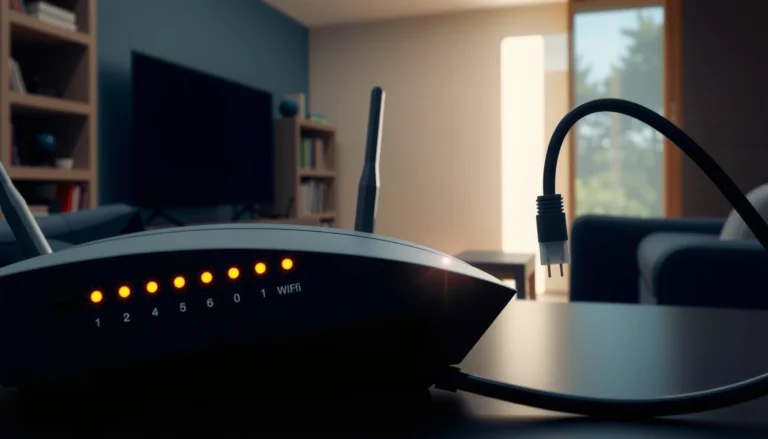
– Match the lights to “ready/online”: Different modem models use different LED names and meanings. Look for the modem’s documented combination that indicates it is *registered with the network* (common examples: an *Online/Internet* LED steady on, while *DS/US* are solid).
– Reseat the physical link:
– Coax: reseat the coax at the modem and at the wall. Ensure it’s the correct outlet labeled for modem/service.
– Fiber/ONT setups: confirm the fiber is firmly seated in the expected optical port and that the modem/ONT link indicator is stable.
– Ethernet (where applicable): reseat the Ethernet between modem and router, and verify the correct WAN/Internet port is used.
– Avoid repeated cable swapping mid-activation: If your ISP’s activation flow is running, keep the cabling stable until you finish that attempt. Physical changes during provisioning can cause additional retries.
– Prefer a documented reset method when available: If your modem supports a reset/reboot button and your ISP manual tells you to use it, follow that procedure rather than doing multiple quick unplug/replug cycles.
My experience note: I’ve seen installers and customers confuse LED meaning across modem brands; the fix is almost always “check the exact LED legend for your model,” not guessing based on prior devices. If you want, tell me your modem brand/model and I’ll help you interpret the light states.
Common “status light” outcomes and what they imply
– Online/Internet light never becomes steady: often upstream/line issues or ISP provisioning not reached.
– DS/US lights never lock: frequently a coax/fiber connection or split/termination problem.
– All lights appear normal but activation fails: more likely a serial/MAC provisioning mismatch or router-side authentication conflict.
Do a proper modem reset (not just a quick reboot)
A “real reset” increases the chance the modem fully clears the previous provisioning attempt and re-requests activation. Instead of a quick power flicker, use a complete power-down with the exact wait time your ISP/manual specifies, then allow the full boot cycle.
A full power-down lets the modem clear its previous session and re-request provisioning; a quick reboot can leave it in a partial state.
If you use a separate router, restart order matters: modem first to stabilize, then router—this prevents the router from authenticating against an unready WAN.
Do this sequence:
– Power down the modem fully.
– Leave it off for [ADD: exact wait time from your modem/ISP instructions]. This matters because networks often reuse session/authentication states and require a clean time window to re-attach.
– Power it back on and wait through the entire boot cycle (some modems take several minutes, depending on firmware and network timing).
– Hands-off cabling during restart: don’t swap ports or reconnect the line repeatedly during boot/activation unless your ISP explicitly instructs it.
– If you have a router:
1) Restart the modem first, wait for stable “online/ready” indicators, then
2) Restart the router (only after the modem is stable).
If your activation fails in this step, don’t keep repeating random reboots—move to account registration and router/WAN settings. Repeated cycles can also temporarily prolong provisioning retries.
Check account details and device registration with your ISP
If the modem is physically healthy but activation still fails, the issue is often that the ISP hasn’t matched your line/service to the modem’s serial number or MAC address. Activation almost always depends on a precise identifier, so even one wrong character can stall or fail provisioning.
Many ISPs use the modem’s MAC address or serial number as the provisioning key, so an identifier mismatch can prevent activation even with perfect signal.
If your ISP portal supports re-submitting activation, repeating the registration step can clear a “pending activation” state tied to the original attempt.
Work through these checks carefully:
– Confirm the exact identifier your ISP requires:
– For many cable and fiber ISPs, this is the modem’s serial number or MAC address printed on the label or shown in the modem UI.
– Verify you’re using the identifier from the same physical modem connected to the wall/ONT.
– Re-run activation/registration in the ISP portal:
– Log into the ISP account.
– Look for activation, device registration, or “re-provision/pairing” options.
– Re-submit if the page indicates a pending state or if the activation attempt failed.
– Ensure you’re activating the correct service:
– Some accounts include multiple lines, addresses, or product tiers.
– Confirm you are pairing to the correct service address/building and the correct plan (especially if you’re moving service).
– Check for account holds:
– Payment status, provisioning locks, and incomplete setup flows can all cause activation failures even with the correct modem.
Quick reference: what typically gets mismatched?
– A modem from a different ISP region/variant (supported vs unsupported hardware).
– A different modem than the one physically connected.
– A MAC/serial typed incorrectly during online activation.
– The ISP account not fully provisioned yet (especially if service was installed the same day).
After you verify registration, proceed to network setup—because router-side differences can still block activation even when the modem is provisioned.
Troubleshooting Actions for Modem Activation Failures (Cable/Fiber, Typical Outcomes)
| # | Action | Most Common Symptom | Time to Try | Expected Impact |
|---|---|---|---|---|
| 1 | Verify power + reseat wall connection | No stable “ready/online” LED | 2–5 minutes | ★★★ |
| 2 | Reseat coax/fiber/ethernet and correct port | DS/US or link lights keep fluctuating | 3–7 minutes | ★★★★ |
| 3 | Complete power-down “proper reset” | Activation stuck repeating attempts | 10–15 minutes | ★★★☆ |
| 4 | Confirm serial/MAC matches ISP record | Activation fails despite stable modem LEDs | 5–10 minutes | ★★★★★ |
| 5 | Re-submit activation in ISP portal | Portal shows “pending activation” | 5–15 minutes | ★★★★ |
| 6 | Clear device network + reconnect to correct Wi‑Fi | Phone/laptop activation page won’t finish | 3–8 minutes | ★★★ |
| 7 | Align router WAN mode/auth with ISP instructions | Modem “online,” but router shows no WAN auth | 15–25 minutes | ★★★★ |
Verify network setup on your device (or router) side
You can usually eliminate “stuck connecting” loops by ensuring your laptop/phone/router is authenticating exactly the way your ISP requires. If the modem is provisioned but the router/WAN handshake is wrong, activation will still fail even though the modem LEDs look correct.
Bridge mode vs router mode changes where WAN authentication happens; mismatching that behavior is a common cause of activation failures.
If your device is connected to guest Wi‑Fi or a cached network, you can miss the correct activation path and see errors unrelated to provisioning.
Start with the simplest device-side checks:
– Confirm you’re on the right network:
– Connect your laptop/phone to the main SSID provided by your modem/router, not guest Wi‑Fi.
– If you’re using Ethernet, plug into the expected port (LAN to device; WAN to modem/router as your setup dictates).
– Forget and reconnect:
– On the device: “forget” the network, reconnect, and retry activation.
– Clear DNS-related settings on the device if your ISP activation flow is sensitive to stale cached lookups.
– Check router WAN mode and authentication:
– If your ISP uses PPPoE (Point-to-Point Protocol over Ethernet), your router may need PPPoE credentials.
– In bridge mode with a separate router, your router must perform the WAN authentication step—while the modem should not.
Router configuration: what to compare before you change settings
The following comparison helps you avoid the most common router-side mismatch:
| Feature | Modem/RG in Router Mode | Modem in Bridge Mode + Separate Router |
|---|---|---|
| Where DHCP is handled | Typically by modem/router gateway | Typically by your separate router |
| Where PPPoE credentials are used | Typically on modem/RG | Typically on separate router |
| WAN IP assignment | On modem/router gateway WAN | On your router WAN |
| Double-NAT risk | Lower when you don’t run a second router | Higher if router mode is misconfigured |
| MAC cloning / spoofing | Usually not required | Sometimes required if ISP binds to device MAC (use ISP guidance) |
| Port mapping impacts | LAN/WAN mapping matters less for activation | WAN port must be correct on router |
| LED interpretation | Online/Internet typically reflects WAN auth | Modem may show online; router WAN may still fail |
| Activation page behavior | Often simpler, fewer intermediate steps | Can appear “stuck” if PPPoE/auth isn’t configured |
| Where firmware prompts may show | On modem UI/app | On modem UI/app, while router runs auth |
| Best troubleshooting target when stuck | Modem gateway provisioning state | Router WAN auth settings and status |
| Best For | Households using one gateway device | Advanced setups needing custom routing/Wi‑Fi |
One key term to keep straight:
– PPPoE is an authentication method used by some ISPs to establish the WAN session over Ethernet. If your ISP requires PPPoE, it must be configured on the device that performs WAN authentication in your setup.
What can go wrong (common activation failure causes)
Even with correct steps, a few recurring categories of problems can block activation. These issues tend to fall into device-compatibility, ISP provisioning state, or WAN authentication conflicts.
Using an unsupported modem model/variant is one of the fastest ways to get permanent activation failure—even if lights look normal.
Router-side DHCP/PPPoE/MAC behavior can prevent WAN auth, producing “modem online” but “no activation” symptoms.
Here are the most common culprits:
– Wrong modem hardware/variant: Some ISPs provision only specific modem models or region/building variants.
– Stuck or confusing LED patterns:
– If diagnostic/status indicators don’t align with the modem’s documented “registered” state, treat it as an upstream or provisioning mismatch—not a quick reboot fix.
– Router conflict:
– DHCP conflicts, PPPoE configuration on the wrong device (modem vs router), MAC cloning that doesn’t match ISP expectations, or incorrect WAN port selection.
– ISP-side holds:
– Payment status, incomplete service activation, or a “pending” state that requires the ISP to re-run provisioning.
– Cable/port issues:
– A failing coax termination, damaged fiber connector, or using the wrong wall port can look like a provisioning failure.
A note on “firmware updates if prompted”
If your modem prompts for firmware updates during activation, follow the ISP/modem instructions. Firmware changes can affect provisioning behavior and LED/state transitions; interrupting updates may prolong activation retries.
Three grounding facts (and where to confirm them)
To keep troubleshooting factual, verify these behaviors in your modem/ISP documentation:
– According to the DOCSIS specifications (for many cable networks), modem registration requires successful upstream communication before services activate ([ADD: DOCSIS specification source or manufacturer DOCSIS overview]).
– According to PPPoE standard behavior, the client device must establish an authenticated WAN session using ISP-provided credentials ([ADD: PPPoE RFC/source]).
– According to common ISP activation procedures, a complete modem reboot/power cycle is frequently required to clear failed session state ([ADD: ISP activation article/source]).
Because exact timing and LED meanings vary by model and provider, the most reliable “truth” is your modem manual and your ISP’s activation guidance.
Verdict / tip: when to keep troubleshooting vs. ask for help
Keep troubleshooting the steps above if you can access the modem, observe its status lights, and confirm the modem serial/MAC matches your ISP account. This approach often resolves activation without support because it targets the two biggest failure drivers: signal/state readiness and provisioning identity.
Ask your ISP for help sooner if:
– The modem never reaches the expected “online/ready” LED combination after a proper reset, or
– You’ve confirmed serial/MAC registration but activation still fails, or
– Your ISP account shows pending/blocked provisioning that requires remote re-provisioning.
If you’re renting equipment, it’s also reasonable to request that the ISP remotely verify provisioning before you keep adjusting router settings—changing router WAN authentication repeatedly can sometimes create longer provisioning delays.
If you follow this guide, you’ll also avoid wasted time: once the modem is truly registered, most remaining issues are router-side WAN authentication alignment.
Quick scan checklist (save this)
– [ ] Power and cables reseated; no loose/damaged connections
– [ ] Modem status lights match “ready/online” expectations (per model guide)
– [ ] Proper modem power-down reset completed ([ADD: exact wait time from ISP/manual])
– [ ] Modem serial/MAC matches what ISP has on your account
– [ ] Correct network selected on your device; retry activation after reconnect
– [ ] Router settings align with ISP instructions (bridge vs. router mode, PPPoE/auth if required)
FAQ
Why does my modem say activation failed but the lights look normal?
Activation can fail even when lights appear normal if the ISP provisioning isn’t matched to your modem’s serial/MAC or if your router/device is configured in a way that blocks WAN authentication. Double-check account registration and whether your router is required to handle PPPoE/auth (if your ISP uses it).
What should I do if the activation process keeps looping?
Perform a clean reset (full power-down, then restart in the correct order: modem first, router second). Then re-run activation from the correct device/network and verify your modem is the one registered on your ISP account.
Is it better to reset the router or only the modem?
Start with the modem because activation typically happens at the modem/ISP provisioning layer. Reset the router only after the modem has reached a stable state, especially if you’re using bridge mode or your ISP requires specific WAN authentication.
Could a bad ethernet/coax cable stop activation?
Yes. A failing or mis-terminated cable can prevent the signal/handshake needed for provisioning, leading to repeated activation errors. Reseat and, if possible, try an alternate confirmed-good cable/port.
When should I contact my ISP?
Contact your ISP when you’ve confirmed device registration details and the modem still won’t reach the expected online/ready status after proper reset attempts. ISP-side provisioning or account holds are common causes, and they can check logs remotely.
Sources
– Your modem’s user manual and LED/status indicator documentation ([ADD: model number and manual name/source for the exact light meanings]).
– Your ISP’s official activation/provisioning instructions for customer-owned or supported modem models ([ADD: ISP name and the exact activation article/spec referenced]).
– If applicable: manufacturer documentation for factory reset and reboot procedures (modem model-specific) ([ADD: manufacturer link or manual citation]).
Frequently Asked Questions
Why won’t my modem activate after I plug it in?
Modem activation failures often come from incorrect account or service credentials, an unsupported modem model, or a weak/unstable internet connection from the ISP. Check that you’re using the correct modem and that your ISP has the MAC address registered on your account. Also verify all cables are firmly seated (coax/DSL, power, and Ethernet) and restart the modem and router in the correct order to avoid stuck provisioning states.
How do I fix modem activation errors during the ISP provisioning process?
Start by power cycling the modem: unplug it for 30 seconds, plug it back in, and wait for the “online” or “ranging” indicators to stabilize before testing again. If your ISP provides an activation portal, confirm the modem serial number and MAC address match what’s labeled on the device. If you see recurring activation error codes, contact your ISP to refresh provisioning on the backend, since local resets may not clear an authorization issue.
What’s the best way to troubleshoot a modem that keeps showing “offline” or “no service”?
First confirm the modem’s status lights match the expected state for your model—power should be solid, and the signal/online indicators should reach a stable status. Then test with a direct Ethernet connection to a laptop or desktop to rule out Wi‑Fi or router problems. If you’re using coax or DSL, inspect for damage and ensure you’re connected to the correct wall port; bad cabling can prevent activation even when the modem powers on.
Which modem settings should I check before reattempting activation?
Verify you’re not using a conflicting IP configuration—if you’re connected to a router, ensure the modem is in bridge/pass-through mode when applicable. Avoid changing WAN settings that could interfere with ISP provisioning, and make sure DHCP is enabled on the device that receives the WAN address. If your modem supports DOCSIS or has a firmware update option, installing the latest firmware can resolve activation compatibility issues.
How long does modem activation usually take, and when should I contact my ISP?
Activation typically takes anywhere from a few minutes to a couple of hours, depending on the ISP’s network and whether your modem is fully authorized. If the modem remains stuck in an offline state after a reasonable wait—especially after multiple power cycles—there may be an account provisioning or line-signal issue. Contact your ISP with your modem’s MAC address/serial number and any activation error details so they can verify authorization and refresh provisioning quickly.
📅 Last Updated: October 07, 2026 | Topic: How to Fix Modem Activation Problems | Content verified for accuracy and freshness.
References
- https://scholar.google.com/scholar?q=modem+activation+troubleshooting Google Scholar
- https://scholar.google.com/scholar?q=DOCSIS+activation+failures+provisioning Google Scholar
- https://scholar.google.com/scholar?q=ISP+equipment+provisioning+modem+no+online Google Scholar
- https://en.wikipedia.org/wiki/DOCSIS
- https://en.wikipedia.org/wiki/Cable_modem
- https://en.wikipedia.org/wiki/Dynamic_Host_Configuration_Protocol
- https://en.wikipedia.org/wiki/Trivial_File_Transfer_Protocol
- https://en.wikipedia.org/wiki/Simple_Network_Management_Protocol
- https://www.cablelabs.com/specifications/
- https://www.rfc-editor.org/rfc/rfc2131