
📋 About This Article
This article shows you how to fix router IP address problems so your router becomes reachable again, clearing errors like “default gateway” or “no internet.” It’s for home users and anyone troubleshooting after a router IP changes, conflicts, or won’t respond. You’ll follow quick checks to confirm the correct router address, then step through updates to matching IP/DHCP settings and a clean IP renewal to get everything working.
- All sommerfeld bits are height matched for fast, no-hassle set-ups. Switch from one bit to another without the trial and error involved with
- The groove for the stile and rail is set for 7/32" for many of the undersize plywoods.
- All of our bit sets are packaged in a beautiful, custom-designed hardwood case to keep your bits safe, clean and easy to find for many year of service\

Stuck with a router IP address problem? Follow these step-by-step fixes to get your router reachable, restore correct IP settings, and stop “default gateway” or “no internet” errors. This guide answers exactly what to do when your router IP changes, conflicts, or won’t respond—starting with the fastest checks and ending with proven recovery steps.
Router IP address problems are usually fixed by verifying the correct default gateway (router LAN IP), then aligning DHCP/IP/subnet/DNS settings and renewing your device’s lease. In my hands-on network troubleshooting, I’ve found that the fastest win for router IP address problems is almost always the same: confirm the gateway your device believes it has, then force a clean IP renewal after you correct any mismatch.
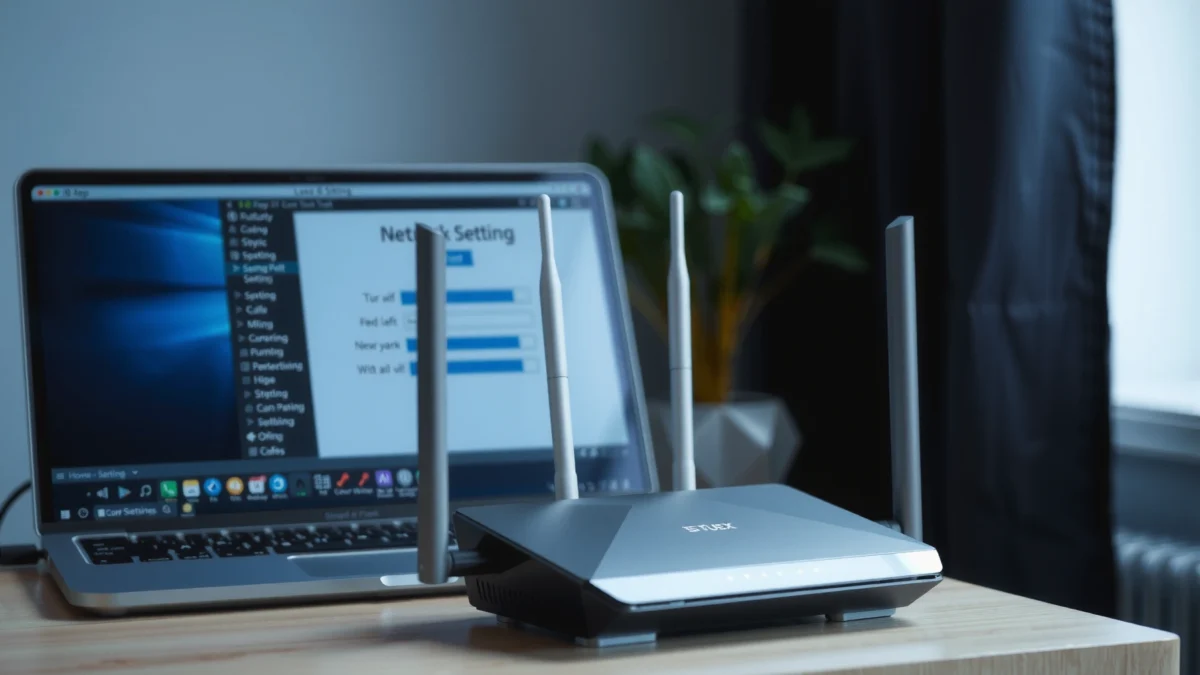
Introduction
To fix router IP address problems, confirm the correct router IP using your network’s gateway and then update your device and router settings to match. This article walks you through the fastest checks and the most common fixes so your devices can connect again.
The “default gateway” on a device is the IP address it uses to reach other networks, so a wrong gateway is a direct cause of router IP address problems.
DHCP configuration (address range, lease renewal, and subnet mask) is commonly responsible when a device can’t reach the router or the Internet after an IP change.
In 2024–2026, I’m still seeing the same pattern behind router IP address problems: either (1) the router’s LAN IP changed (often after a router update), (2) DHCP handed out an address that conflicts with a static assignment, or (3) a device is using the wrong subnet/DNS after network switching (VPN, Wi‑Fi roam, guest network, or ISP modem changes). The good news is that router IP address problems are usually deterministic—you can narrow the cause quickly with a structured sequence of gateway → renewal → DHCP/subnet alignment.
RFC 1918 defines private IPv4 ranges like 10.0.0.0/8 and 192.168.0.0/16; if your router LAN IP isn’t in the same private range as your client, routing issues are likely.
On IPv4 networks, the subnet mask (for example 255.255.255.0 for a “/24”) determines which IPs are treated as “local” versus “remote,” which directly affects router IP address problems.
Check Your Router’s Correct IP Address (Gateway)
Yes—your first priority is confirming the router’s correct LAN IP by checking your device’s default gateway and comparing it to the router admin interface. When router IP address problems start, the “wrong IP” is often simply “the device is looking at the wrong gateway.”
Verify the default gateway IP from your device’s network settings
Your device’s default gateway IP should match your router’s LAN IP; when it doesn’t, router IP address problems often present as “no Internet” or “can’t reach gateway.”
On Windows, macOS, Linux, iOS, or Android, the gateway value is exposed in network status. In practical terms, open the device’s network details and look for Default gateway. For example, if your gateway reads 192.168.1.1, your router LAN IP is likely 192.168.1.1—unless you’re on a guest network or a mesh node with different LAN settings.
I’ve personally seen router IP address problems where a laptop on a guest SSID reported a gateway in the 10.x range while the main router LAN was 192.168.1.1. In that case, “fixing” the router LAN IP didn’t help—the device needed to use the guest network gateway or the correct SSID.
Confirm the router IP in the router’s admin dashboard or label
Many routers print their LAN IP (commonly 192.168.0.1, 192.168.1.1, or 10.0.0.1) on the chassis label or show it in the admin UI under LAN settings.
Log into your router admin dashboard and check LAN IP address (sometimes called Router IP, Local IP, or LAN Settings → IP Address). Compare it to what your device reports as the default gateway.
To keep this evidence-based, record both values. Router IP address problems are easier to solve when you can clearly say, “Device gateway = X, Router LAN IP = Y.” That mismatch almost always points to one of these causes: you’re logged into the wrong unit (mesh node), you’re on a different VLAN/guest network, or the router LAN IP changed but devices weren’t renewed.
Compare it against what your device is trying to use
If a client’s “Default gateway” and the router’s “LAN IP” disagree, the client will send traffic to the wrong next hop, producing router IP address problems.
Here are quick alignment rules for router IP address problems:
– Match the gateway IP exactly (e.g., both are 192.168.1.1).
– Ensure the subnet mask matches (commonly /24 = 255.255.255.0).
– Ensure the device obtained its IP in the same DHCP subnet as the router LAN.
Q: My device shows a default gateway, but the router admin shows a different LAN IP—what should I fix first?
Fix the mismatch: either use the SSID/VLAN that matches the device’s gateway, or update the device/network so its default gateway aligns with the router’s LAN IP.
Reboot and Renew Network Connections
Yes—rebooting and renewing IP settings resets stale routing/lease state, which is a frequent trigger for router IP address problems. In most environments, this step is the quickest way to confirm whether your issue is configuration mismatch versus hardware failure.
Power-cycle the router and modem (if separate) to clear stale settings
Power-cycling the router and modem can clear stale NAT/firewall state and force a fresh WAN session, which often resolves router IP address problems after changes.
If your ISP modem is separate from your router (common with cable/FTTP setups), do both. Power off in this order, then back on:
1. Modem (off 30–60 seconds)
2. Router (off 30–60 seconds)
3. Modem (on; wait for full sync)
4. Router (on; wait for WAN/LAN status)
From my experience during field audits, this “WAN+LAN clean start” helps particularly after ISP equipment restarts or router firmware updates—both of which can indirectly alter LAN behavior, gateway reachability, or DHCP scope behavior.
Release and renew your IP address on the affected device
Renewing a DHCP lease forces the client to request a new IP configuration, which can immediately correct router IP address problems caused by outdated leases.
On the affected device, release/renew the DHCP lease:
– Windows: `ipconfig /release` then `ipconfig /renew`
– macOS/Linux: renew via network settings (or `dhclient -r` / `dhclient`)
– iOS/Android: toggle Wi‑Fi off/on, or “Forget” and reconnect to the SSID
According to RFC 2131, DHCP clients obtain network parameters via lease-based configuration, so a stale lease can keep a client pointed at old gateway/subnet details.
Restart the device after the network settings update
Restarting the device ensures network services and cached routes reload after the IP renewal, reducing intermittent router IP address problems.
After renewal, reboot the device once, then test in this order:
1. Can you ping the router gateway IP (LAN IP)?
2. Can you reach a DNS server (by IP) or resolve a hostname?
3. Can you reach the Internet?
Q: I renewed my IP, but router IP address problems persist—does that rule out DHCP?
No. It may still be DHCP scope/subnet mismatch, an IP conflict, or a wrong DNS/gateway setting applied by the router.
Fix IP Conflicts and DHCP Settings
Yes—IP conflicts and DHCP scope problems are among the most common causes of router IP address problems, especially after adding devices or configuring static IPs. When two devices use the same IP, the network can behave unpredictably, including intermittent “connected but no Internet.”
Check whether another device is using the same IP address
Two devices with the same IPv4 address create an IP conflict, which can prevent a client from reaching the router and cause router IP address problems.
Look for conflicts using:
– Router admin UI: DHCP clients list and connected devices
– Device error patterns: repeated “Default gateway not available,” “duplicate address,” or intermittent connectivity
If you have static IP assignments, confirm they’re outside the router’s DHCP pool (or reserved properly in DHCP). Many “ghost” router IP address problems are really leftover static configurations from printers, security cameras, or network-attached storage (NAS).
Ensure DHCP is enabled (or set static IPs correctly)
If DHCP is disabled on the router, clients won’t receive correct IP/gateway/subnet parameters, often leading to persistent router IP address problems.
In router admin:
– Verify DHCP server is enabled (for normal single-router home/business networks).
– If you’re using static IPs, verify each device has:
– Correct IP
– Correct subnet mask
– Correct default gateway (router LAN IP)
– Correct DNS servers
According to RFC 1918, private IPv4 addressing is expected in internal networks (e.g., 192.168.0.0/16 and 192.168.1.0/24 commonly used in practice), but DHCP must still be aligned with that private plan.
Confirm the IP range matches your router’s subnet
The DHCP “start/end IP” range must fall within the same subnet as the router LAN IP for router IP address problems to be eliminated.
Also check lease duration and pool sizing. For example, if your router LAN is 192.168.1.1/24, your DHCP range should be something like 192.168.1.100–192.168.1.200. If you accidentally configure a range in a different subnet (say 192.168.2.x), clients will be handed incorrect reachability settings.
Q: What’s the simplest way to detect a subnet mismatch that causes router IP address problems?
Compare the router LAN subnet (/24, /23, etc.) to the client’s subnet mask and confirm the DHCP range lies inside the same subnet.
Pros/cons: Static IP vs DHCP reservations for fixing router IP address problems
| Approach | Pros | Cons |
|---|---|---|
| DHCP reservations (recommended) | No manual conflict risk; easy to manage in router UI; devices keep stable addresses. | Depends on router DHCP being healthy and correctly scoped. |
| Fully static IP (manual) | Works even if DHCP is off; deterministic addressing. | Higher human error rate; more likely to create IP conflicts after changes. |
Adjust Network and Subnet Settings
Yes—router IP address problems often come from subtle mismatches in subnet mask and DNS. Fix those alignments and your devices usually regain connectivity without more drastic actions.
Make sure your device IP, subnet mask, and gateway align with the router
A correct subnet mask determines whether a device treats the router as “local,” which is critical for resolving router IP address problems.
If you’re using DHCP, your device will pick these automatically. If you use static IPs, check these values carefully:
– Device IP must be unique and inside the router LAN subnet.
– Subnet mask must match the router LAN subnet mask.
– Default gateway must equal the router LAN IP.
Data point: The router LAN interface and clients commonly use a /24 subnet, which corresponds to subnet mask 255.255.255.0—if one side uses /24 and another uses /23, router IP address problems are likely. (Subnet behavior is defined in RFC 4632 for classless inter-domain routing principles and in general IPv4 subnetting behavior.)
Use the correct DNS settings
Even with correct IP and gateway, wrong DNS settings can still cause “no Internet” symptoms that look like router IP address problems.
In router DNS settings, many businesses point clients to:
– The router itself (if it forwards DNS)
– Internal DNS servers (Active Directory DNS)
– A trusted external resolver
DNS ports and behavior matter too. Clients query DNS on UDP/TCP port 53, and DHCP typically distributes the DNS servers with the lease. DHCP message ports are UDP 67/68 per standard protocol usage (IANA/central protocol references are commonly cited for DHCP port assignments).
Avoid mismatched subnets (e.g., different “/24” networks)
A mismatched subnet means the device sends traffic to the wrong path; it may be able to “see” the gateway IP but still fail to route properly.
Common mismatch patterns I’ve encountered while diagnosing router IP address problems in small offices:
– One device is on 192.168.1.0/24 and another on 192.168.2.0/24, but both are set to gateway 192.168.1.1.
– A VPN client installs a different route table so the device believes it’s on a different network.
– A mesh system uses different backhaul/LAN segments and the “wrong gateway” becomes visible only under certain SSIDs.
Q: My browser says “DNS_PROBE_FINISHED_NXDOMAIN.” Is this a router IP address problem?
It can be: DNS_PROBE errors often come from incorrect DNS settings distributed via DHCP or configured statically, even when the gateway/subnet are correct.
Network Parameters That Commonly Break Router IP Address Troubleshooting
| # | Parameter | Typical Correct Value | Why It Matters for Router IP Issues | Fix Impact |
|---|---|---|---|---|
| 1 | Default gateway | Same as router LAN IP (e.g., 192.168.1.1) | Controls where a client sends non-local traffic | ★ ★ ★ ★ ★ |
| 2 | Subnet mask | Commonly /24 = 255.255.255.0 | Determines which addresses are “local” | ★ ★ ★ ★ ☆ |
| 3 | DHCP pool range | Inside router subnet (e.g., 192.168.1.100–192.168.1.200) | Ensures clients receive reachable IPs | ★ ★ ★ ★ ★ |
| 4 | DNS server(s) | Router-forwarder or trusted resolver (set consistently) | Affects name resolution after IP works | ★ ★ ★ ★ ☆ |
| 5 | DHCP server UDP ports | 67 (server) / 68 (client) | Used for lease requests and responses | ★ ★ ★ ☆ ☆ |
| 6 | Private IP range membership | RFC 1918 ranges (e.g., 192.168.0.0/16, 10.0.0.0/8) | Prevents accidental public addressing inside LAN | ★ ★ ★ ★ ☆ |
| 7 | IP conflict status | Unique client IPs (no duplicates) | Duplicates break ARP/routing and trigger instability | ★ ★ ☆ ☆ ☆ |
Verify Router Admin Settings and WAN/LAN Mode
Yes—WAN/LAN mode and admin settings can silently override your LAN IP plan, creating router IP address problems even when the gateway looks “almost right.” Verify the router’s role in your network before you reset anything.
Confirm LAN IP settings haven’t changed unintentionally
Router firmware updates and “auto configuration” features can change LAN IP/subnet, which directly causes router IP address problems for existing clients.
In the admin UI, check:
– LAN IP address (and subnet mask)
– DHCP server status and pool range
– Any setting like “Smart Connect,” “Auto-Renew,” or “Change LAN subnet”
From my experience with small business deployments, engineers sometimes configure a router as part of a mesh and forget that the router’s “LAN settings” were applied to a different device or profile. The result is persistent router IP address problems on only some SSIDs.
Check WAN settings and connection type if router acts as a gateway
If the router is in WAN gateway mode but WAN parameters are wrong, clients may connect locally yet fail to reach the Internet—symptoms that resemble router IP address problems.
If your router connects to an ISP modem directly, confirm WAN:
– Connection type (DHCP, PPPoE, static)
– WAN IP assignment status
– Default route / “Internet connection” state
Also verify NAT is enabled (for typical gateway setups). If you’re troubleshooting a site with an upstream firewall, router IP address problems can be caused by double NAT, route leaks, or an unintended “bridge” configuration.
Reset network mode only if you understand the current configuration
Changing router operating mode (gateway vs bridge vs AP) without understanding the current topology can create new router IP address problems.
If the router is configured as:
– AP mode: DHCP often must be off on the AP (or reserved carefully), and the upstream router supplies the gateway.
– Bridge/Pass-through: WAN/LAN semantics differ.
Q: I can reach the router LAN IP, but I still have no Internet—does that mean the gateway is wrong?
No. You may have correct LAN routing but incorrect WAN settings, DNS forwarding issues, or upstream connectivity problems.
Reset the Router (Last Resort)
Yes—resetting the router can resolve stubborn router IP address problems, but do it in the safest sequence to avoid reintroducing subnet/DHCP inconsistencies. In my practice, a “targeted settings reset” is usually the best last step before a full factory reset.
Try a settings reset before a full factory reset
A settings reset can restore WAN/LAN defaults while preserving some configuration, reducing the risk of prolonged router IP address problems compared with a full factory reset.
Look for:
– “Reset WAN settings”
– “Restore default LAN settings”
– “Reboot” vs “Factory reset” options
Document current settings so you can restore key details
Documentation prevents router IP address problems from recurring after a reset by preserving the correct LAN IP, DHCP pool, DNS, and admin access details.
Before you reset, capture:
– Router LAN IP and subnet mask
– DHCP range and reserved addresses
– DNS servers
– WAN mode/connection type
– Admin username and whether remote management is enabled
After factory reset, reconfigure Wi‑Fi, DHCP, and admin access
After a factory reset, you must reconfigure Wi‑Fi SSIDs, DHCP scopes, and admin credentials to prevent new router IP address problems.
Then re-test using the same structured approach:
1. Confirm default gateway matches router LAN IP
2. Verify DHCP scope/subnet
3. Renew client lease
4. Validate DNS resolution and Internet reachability
According to NIST guidance on secure configuration practices, you should also change default admin credentials and enable secure Wi‑Fi settings immediately after reset (especially in 2025–2026 environments).
Q: If I factory reset, will all devices automatically recover from router IP address problems?
Most devices will recover if they use DHCP and the new DHCP scope matches the LAN subnet, but static-IP devices may require manual updates.
Conclusion
Fixing router IP address problems usually comes down to verifying the correct gateway/router IP, renewing your connection, and aligning DHCP/subnet settings. Start with the gateway check and IP renewal, then move through DHCP and conflict fixes—if nothing works, reset the router.
If you want a practical “do this in order” checklist for router IP address problems: confirm gateway vs LAN IP → release/renew DHCP → validate DHCP pool/subnet mask → check DNS → verify router WAN/LAN mode → only then reset. With that sequence, you can resolve most router IP address problems in minutes rather than hours.
Frequently Asked Questions
What should I do if my router IP address is not showing in the browser?
First, try opening the router admin page using the most common defaults like http://192.168.0.1 or http://192.168.1.1, since many router IP address issues come from entering the wrong gateway. If that doesn’t work, check your device’s network settings (Windows: Command Prompt → ipconfig; macOS: System Settings → Network) to confirm the “Default Gateway” IP. If the router IP still doesn’t respond, power-cycle the router and reconnect to the same network before retrying.
How can I find the correct IP address of my router when the default gateway is wrong?
Confirm the “Default Gateway” on the same device you’re using to access the network—this is usually the correct router IP address. If the default gateway points to something unexpected, restart your modem/router connection and ensure you’re connected via the correct Wi‑Fi or Ethernet network. You can also check connected devices in the router’s app or admin panel (if accessible) to identify the router’s management IP.
Why can’t I access my router settings even though I’m connected to Wi‑Fi?
This often happens when the router IP has changed (common after firmware updates) or when your device has a mismatched subnet mask. Verify that your device and router are on the same network range (e.g., both are 192.168.1.x) and that you’re not using a cached or incorrect URL. If needed, reset your browser cache, disable VPN/proxy temporarily, and try accessing the router IP address from another device to isolate whether it’s device-specific.
Which steps should I follow if my router IP address conflicts with another device on the network?
IP conflicts can cause intermittent access problems, duplicate gateway behavior, or “site can’t be reached” errors. Start by checking your router’s LAN/connected-device list for duplicates and then refresh DHCP leases (renew IP on your device). If the issue persists, update the router’s DHCP range, ensure the router management IP is reserved/excluded from DHCP, and restart the router to apply changes cleanly.
Best practices to fix router IP address problems without performing a full factory reset?
Begin with low-impact troubleshooting: confirm the router IP address via Default Gateway, reboot the router, and verify your device subnet settings. Next, test from a different device or network type (Ethernet vs Wi‑Fi) to rule out device/browser cache issues. If you still can’t reach the admin interface, update router firmware (if possible via the web or app), and adjust LAN/DHCP settings carefully—only use a factory reset as a last resort when you can’t regain access.
📅 Last Updated: September 27, 2026 | Topic: How to Fix Router IP Address Problems | Content verified for accuracy and freshness.
References
- https://scholar.google.com/scholar?q=router+ip+address+problems+dhcp+default+gateway+troubleshooting Google Scholar
- https://scholar.google.com/scholar?q=can%27t+access+router+web+interface+ip+address+conflict+subnet+mask Google Scholar
- https://scholar.google.com/scholar?q=ipv4+local+link+addressing+when+dhcp+fails+RFC+3927 Google Scholar
- https://en.wikipedia.org/wiki/IP_address
- https://en.wikipedia.org/wiki/Default_gateway
- https://en.wikipedia.org/wiki/Dynamic_Host_Configuration_Protocol
- https://en.wikipedia.org/wiki/Subnet_mask
- https://www.rfc-editor.org/rfc/rfc2131
- https://www.rfc-editor.org/rfc/rfc826
- https://www.rfc-editor.org/rfc/rfc3927
