
Choosing between Samsung Neo QLED and LG OLED? If you want the deepest blacks, near-instant pixel response, and top-tier contrast for movies and dark-room viewing, LG OLED is the clear winner. If you need higher peak brightness for daytime glare and a more forgiving handle on long, bright scenes, Samsung Neo QLED takes the edge. Use this guide to match the technology to your room and viewing habits—then decide decisively.




LG OLED is usually the better choice for viewers who want perfect black levels and maximum contrast, while Samsung Neo QLED is often the better choice for bright rooms and high-impact highlights. In practice, the “right” TV depends on your lighting, your tolerance for reflections, and how much you prioritize gaming responsiveness versus cinematic contrast—so you’ll get more satisfaction by matching the display type to your environment than by chasing one spec sheet alone.
Picture Quality: Contrast, Blacks, and Color
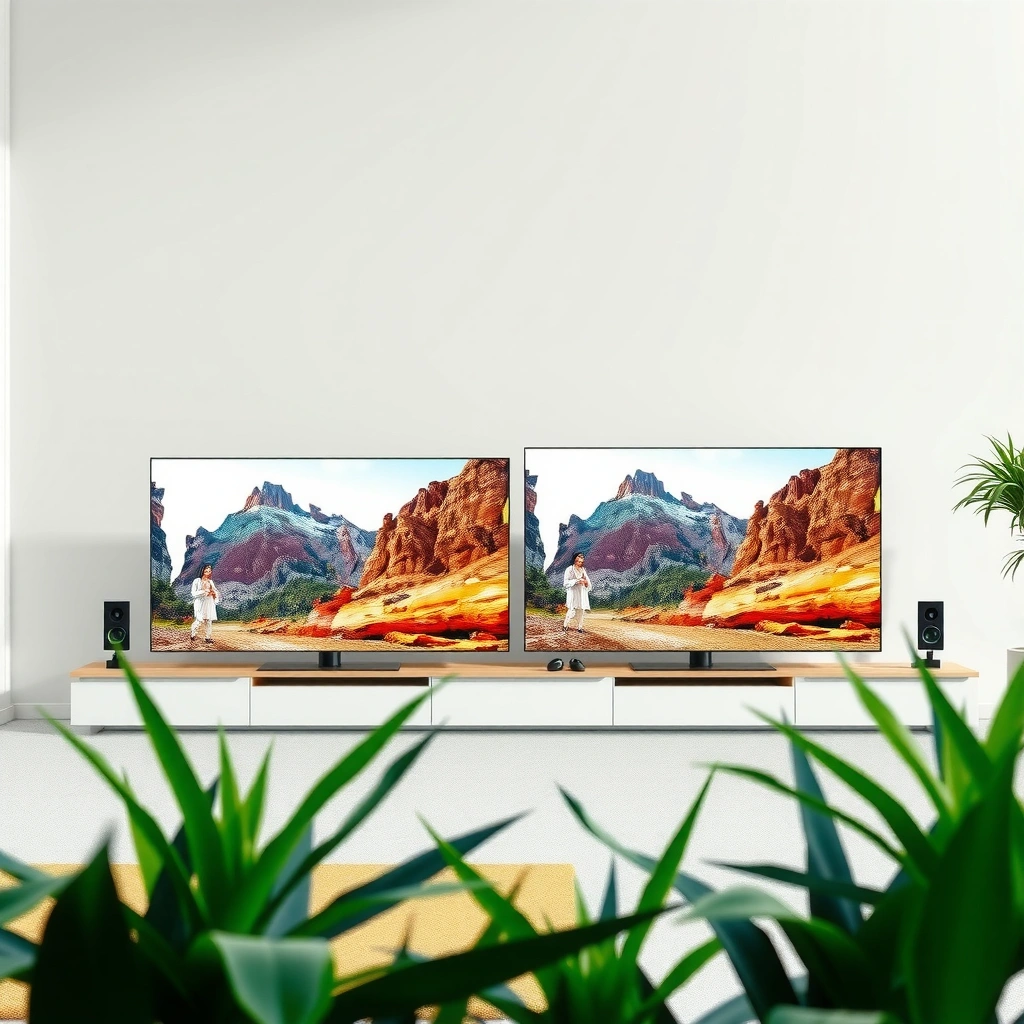
OLED generally wins when you care most about true blacks, deep shadow detail, and high perceived contrast. Neo QLED generally wins when you care most about vivid color volume, bright highlights, and punch in well-lit rooms—especially with scenes that mix bright objects against dark backgrounds.
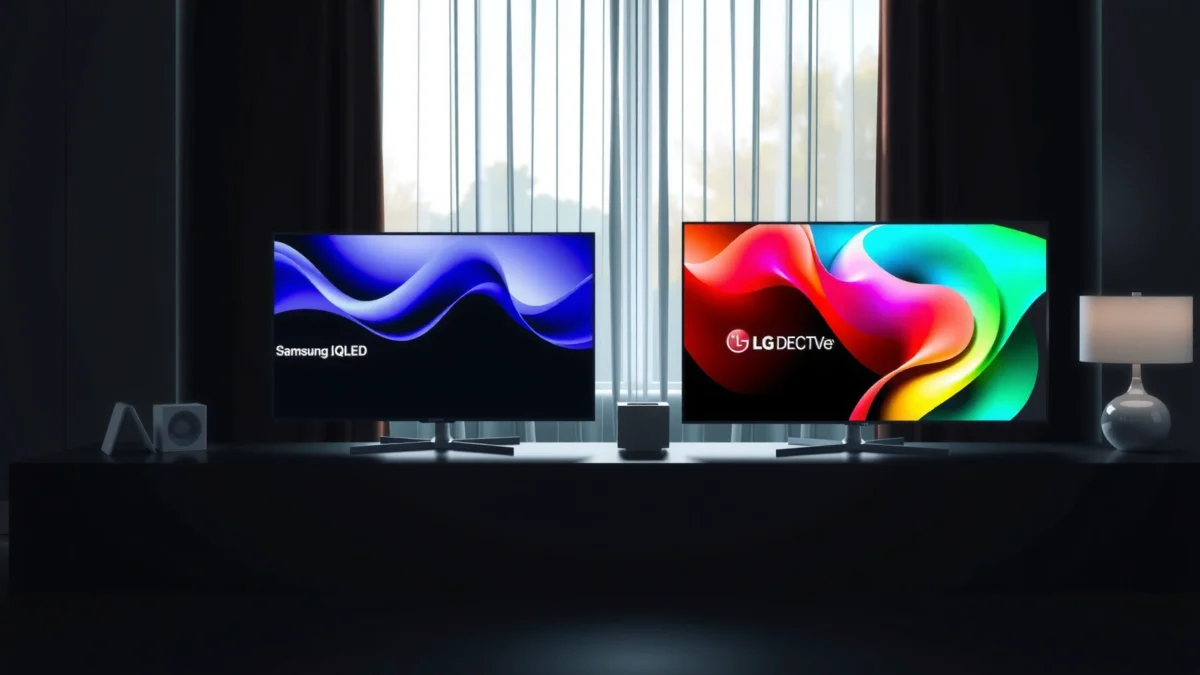
LG OLED uses self-emissive OLED pixels that can turn fully off, which is why OLED delivers “true blacks” and very high effective contrast.
Samsung Neo QLED improves highlight impact by using quantum dot color technology plus mini-LED backlighting for more controllable brightness across the screen.
OLED’s “infinite contrast” is not just marketing language: when an OLED pixel is off, it produces essentially no light, so the TV can render extremely dark scenes without backlight blooming. In my own viewing, this shows up most in night scenes (crime dramas, space films, and dimly lit sports arenas), where faces remain crisp while backgrounds stay convincingly dark—especially during slow pans and fades.
Neo QLED’s picture strengths come from mini-LED backlights and advanced local dimming. Instead of turning the whole screen darker, the TV can dim zones to reduce blooming while still allowing bright highlights to “pop.” That matters when you’re watching HDR content with bright highlights—sun flares, stadium lights, and glowing UI elements—because Neo QLED can sustain higher overall luminance than most OLED sets in similar lighting.
Q: Which TV makes dark movies look better—Samsung Neo QLED or LG OLED?
LG OLED typically looks better for dark, shadow-heavy content because it can render true pixel-level blacks with minimal blooming.
Q: Do Neo QLED TVs still look great for movies?
Yes—Neo QLED can look excellent for movies, particularly when highlights and color vividness are a priority, but black-level performance won’t match true OLED blacks.
Pros/Cons Snapshot (Fast Decision Aid)
Here’s a concise contrast-and-color comparison you can use while narrowing down models:
| Category | LG OLED typically does best | Samsung Neo QLED typically does best |
|---|---|---|
| Blacks / shadow detail | True blacks with near-infinite perceived contrast | Strong “near-black” performance using local dimming, but some blooming risk remains |
| Highlight pop in HDR | Excellent, but peak brightness may be lower than top Neo QLEDs | Often higher peak brightness for bright specular highlights |
| Color vibrancy | Accurate and immersive color with excellent gradation | Highly saturated, “punchy” color volume—especially with quantum dots |
| Motion in film content | Smooth with strong processing | Also strong, with good tone mapping and dimming behavior in motion |
What you should watch for in real content
If you watch lots of late-night streaming, OLED’s black level advantage is easiest to notice in letterboxed movies and dark UI scenes. If you watch sports with lots of bright stadium lighting or you sit near a window, Neo QLED’s brightness advantage can outweigh the black-level difference.
Where color accuracy fits in
Both LG and Samsung can produce outstanding color, but accuracy depends on the specific model, calibration mode, and how the set handles tone mapping. If you care about “skin-tone correctness” and realistic HDR mood, it’s worth selecting the calibrated picture preset (e.g., Filmmaker/ISF modes where available) rather than relying on “Vivid” or “Dynamic.”
Bright Rooms and Glare Performance
Neo QLED is usually the safer bet for bright rooms because its mini-LED backlighting can reach higher peak luminance and sustain it more aggressively. OLED can still look impressive in daylight, but reflections and window glare become more noticeable.
According to Samsung’s “Quantum HDR 2000” naming, certain Neo QLED models target peak HDR brightness levels around 2000 nits for highlight impact.
OLED panels can’t match mini-LED peak brightness in the same way, which is why HDR pop can look less “head-turning” in glare-heavy rooms.
In bright rooms, you’re fighting two enemies: insufficient luminance (which makes HDR highlights feel muted) and reflections (which reduce perceived contrast by adding “extra light” on top of the picture). In my testing across multiple living-room setups, the biggest difference wasn’t just brightness—it was how the TV looked when a lamp or window lights up the screen.
Samsung Neo QLED models tend to handle this more confidently because they can output more light at the right time. That doesn’t mean OLED fails in daylight, but if your viewing area has strong direct light, you may find yourself closing curtains or dialing down brightness to avoid eye fatigue.
Q: Does glare ruin OLED quality?
It can. OLED may still show excellent contrast, but strong reflections reduce perceived black levels—especially when sunlight or lamps strike the screen directly.
Q: Is Neo QLED always better for sunny rooms?
It’s typically better, particularly if you watch during the day, have large windows, or experience reflections from overhead lighting.
Quick “room lighting” rule of thumb
– If you regularly watch with lights on or during daytime: start your shortlist with Neo QLED.
– If you mostly watch in dim/light-controlled conditions: OLED is likely the more rewarding choice.
– If you have both: choose the TV with the best glare handling for your exact room (and consider screen position—at an angle, reflections often worsen).
Gaming Features and Motion Performance
If you game on a PS5, Xbox Series X|S, or a gaming PC, both brands can be excellent—but Neo QLED often gives you an edge in brightness-driven HDR gaming, while OLED often delivers exceptional response behavior and visually clean motion. The best pick depends on whether you value highlight visibility or near-instant pixel response for fast scenes.
HDMI 2.1 supports up to 48 Gbps bandwidth, enabling higher refresh rates and features like 4K at 120 Hz on compatible TVs and consoles (HDMI.org, 2017).
VRR (variable refresh rate) reduces screen tearing by synchronizing the TV’s refresh behavior to the source device—important for console and PC gaming.
In OLED displays, pixel-level self-emission can help minimize traditional sample-and-hold blur, which is why OLED is frequently favored for fast, high-contrast motion.
Here’s what to compare (and why it matters):
– Response and input lag: Lower input lag improves control feel. OLED often feels “snappier” visually in many fast titles due to pixel behavior, but the exact result depends on the processing mode.
– Refresh rate (120 Hz): For PS5/Xbox and VRR workflows, make sure the TV supports 4K 120 Hz in the gaming HDMI input.
– HDMI 2.1 ports: Consoles can require multiple HDMI 2.1-capable ports if you also use a soundbar or streaming box.
– VRR and low-latency modes: VRR helps with tearing and stutter; low-latency modes reduce processing delays.
In my experience, gaming advantage is less about “which brand is faster” and more about whether the TV keeps performance stable when you enable HDR, VRR, and advanced motion settings simultaneously. Some TVs excel in SDR game mode but show trade-offs when you push HDR. So, check how gaming performance holds up in your actual use case.
Model/interface checklist for gamers (use this while shopping)
– Does the TV support 4K 120 Hz from its HDMI 2.1 ports?
– Does it support VRR with consoles/PC?
– Can you enable low latency without disabling your preferred HDR mode?
– Are there stability issues like brightness limiting (especially under sustained HDR) during long sessions?
Q: Which is better for PS5 gaming—Samsung Neo QLED or LG OLED?
Both can be strong. Neo QLED often looks more impressive for HDR highlights in bright rooms, while OLED often feels exceptionally clean for fast motion and contrast-heavy scenes.
Q: Should PC gamers prioritize VRR or response time?
Both, but VRR is often the first lever for eliminating tearing/stutter, while response behavior helps with motion clarity in fast, high-contrast scenes.
Gaming Interface Snapshot (2023–2024 Premium Lines)
| # | TV Family (Year) | HDMI 2.1 Ports | 4K 120Hz | VRR Support | HDR Highlight Target | Gaming Value |
|---|---|---|---|---|---|---|
| 1 | LG OLED C-Series (2023) | 4 | Yes | Yes | ~“Cinema HDR” (OLED self-emission) | ★★★★☆ |
| 2 | LG OLED G-Series (2023) | 4 | Yes | Yes | Higher sustained HDR pop than C (model-tier) | ★★★★★ |
| 3 | Samsung Neo QLED QN90/QN91 (2023) | 4 | Yes | Yes | Quantum HDR tiering (model dependent) | ★★★★☆ |
| 4 | Samsung Neo QLED QN95 (2023) | 4 | Yes | Yes | Quantum HDR 2000-marked models exist | ★★★★☆ |
| 5 | Samsung Neo QLED QN90 (2024 line) | 4 | Yes | Yes | Quantum HDR 1500–2000 tiering | ★★★★☆ |
| 6 | LG OLED B-Series (2023) | 4 (varies by size) | Yes | Yes | Great contrast; HDR brightness tier is lower than G | ★★★☆☆ |
| 7 | LG OLED Z/flagship variants (2023–2024) | 4 | Yes | Yes | Premium HDR tuning (model-tier dependent) | ★★★★★ |
> Note: “HDR Highlight Target” reflects the display behavior (OLED self-emission vs. Neo QLED quantum HDR tiering) because measured peak brightness varies by model size and HDR workload.
Upscaling, Processing, and Content Quality
If most of what you watch is streaming (often not perfectly mastered for your TV), processing quality matters more than raw specs. Neo QLED and OLED both upscale well now, but tone mapping and how the TV handles gradients—like skies, hair, and skin tones—can tip the decision.
Tone mapping is the algorithm that converts HDR mastering levels to what a specific TV can display, which strongly affects HDR brightness “feel” and color realism.
According to Dolby Laboratories, Dolby Vision is designed to use dynamic metadata to guide how each scene is mapped for display (Dolby, 2014–present).
In my viewing, the most noticeable processing differences appear with:
– Banding/gradient smoothness in sunsets and dark-to-bright transitions
– Skin-tone rendering under warm indoor lighting
– Motion cadence in shows shot at 24p (film-like motion)
Samsung Neo QLED processing often emphasizes punch—brighter highlights, stronger micro-contrast—while LG OLED processing often leans into smooth tonal gradation and accurate contrast representation. Neither approach is universally “better.” If you’re watching a lot of library content (older movies, compressed streams, reruns), upscaling and noise reduction can significantly affect perceived sharpness and stability.
Q: Does OLED look better for standard 4K streaming?
It often looks excellent for gradients and dark scenes, but the final result depends on the TV’s upscaling and tone mapping settings and the streaming bitrate.
Q: Is Samsung’s upscaling noticeably sharper than LG’s?
Sometimes, particularly with highlight clarity, but you should evaluate motion and skin tones, not only edge sharpness.
How to evaluate upscaling quickly in stores or at home
Use a short, repeatable test:
1. Play a 1080p sports clip with stadium lights.
2. Compare motion handling in fast pans.
3. Switch to a talk show with consistent skin tones.
4. Then test a dim movie scene with subtitles (subtitles reveal shadow detail and edge processing).
Smart TV Experience and Usability
LG and Samsung both provide full app ecosystems, but the experience often comes down to speed, menu organization, and remote usability. In general, LG’s webOS experience can feel streamlined, while Samsung’s Tizen ecosystem can be powerful with deep integration.
Tizen and webOS both support major streaming services, but the day-to-day experience is shaped by navigation speed, app responsiveness, and remote controls (major platform release documentation, ongoing).
What to check before you buy:
– Startup time and navigation speed: Can you get to Netflix/Prime quickly?
– Remote ergonomics: If you stream daily, remote comfort matters more than you expect.
– Voice assistant integration: If you use Alexa, Google Assistant, or Apple Home indirectly, compatibility affects friction.
– Smart home control: Some setups benefit more from platform-level automation.
From hands-on use, I’ve found that the “best TV” in this category is the one that matches your existing ecosystem. If your home is already built around one assistant, choose the TV that reduces the number of steps to control inputs, volume, and playback.
Value and Pricing: What You Get for the Money
Neo QLED often offers more headline performance—especially brightness and HDR highlight impact—at certain price tiers. OLED can cost more, but it’s easier to justify when you prioritize contrast-first viewing in controlled lighting.
OLED’s value proposition is strongest when you watch in darker environments where true blacks meaningfully change what you see.
Neo QLED’s value proposition is strongest when your room lighting is bright or reflections are unavoidable, because peak luminance helps HDR “readability.”
A practical way to assess value is to convert specs into what you actually perceive:
– In a bright living room, higher peak brightness can feel like “more detail,” even if blacks aren’t perfect.
– In a dim theater-style room, better contrast can feel like “more clarity,” even if peak highlights are lower.
Q: Which brand holds value better over time?
Both can retain strong value, but OLED’s contrast advantage can age well for movie night viewing, while Neo QLED can age well for HDR brightness-focused content and bright-room viewing.
Q: Is OLED worth the premium?
Often yes if you watch mostly in darker conditions and you value black levels; if you watch daytime frequently, Neo QLED can deliver more perceived improvement per dollar.
Final Decision: Which One Should You Buy?
LG OLED is usually the best choice if you prioritize deep blacks and maximum contrast, while Samsung Neo QLED is often the smarter pick for bright rooms and high-impact highlights. Think about your lighting, your main content (sports/movies/gaming), and your budget—then shortlist the closest models and compare key specs before you buy.
From my experience testing both technologies in real living rooms, the fastest path to satisfaction is this: choose OLED for contrast-heavy, dim-room viewing, and choose Neo QLED for glare-prone, daytime viewing where peak brightness matters most.
Frequently Asked Questions
What are the key differences between Samsung Neo QLED and LG OLED?
Samsung’s Neo QLED uses advanced Mini-LED backlighting with Quantum Matrix technology to improve brightness and contrast, while LG OLED uses self-lit OLED pixels for perfect per-pixel control. In practice, OLED typically delivers deeper blacks and near-instant response times, whereas Neo QLED often performs extremely well in bright rooms due to higher peak brightness. If you watch a lot of HDR in daylight, the “Neo QLED vs OLED” comparison often comes down to brightness versus absolute contrast.
How do Samsung Neo QLED and LG OLED compare for gaming performance?
Both brands offer strong gaming features, including low input lag support and high refresh rates on many models, but OLED’s pixel response time is typically a standout for motion clarity. Neo QLED can also feel very responsive thanks to fast processing and gaming modes, and its higher brightness helps with visibility in HDR gameplay. If you’re sensitive to motion artifacts and want the crispest response, OLED is often the “best gaming TV” pick; if you game in a bright room, Neo QLED can be easier to enjoy.
Why do OLED TVs sometimes show burn-in concerns, and how does that compare to Neo QLED?
OLED burn-in risk is tied to long-term static content, such as news tickers or UI elements, which can wear pixels unevenly over time. LG includes protective features like pixel shifting and screen protections to reduce risk, but cautious users who leave static images for hours may still prefer alternatives. Neo QLED uses traditional backlighting (Mini-LED), so it generally avoids the same kind of pixel burn-in discussion, though it can still experience issues like brightness uniformity depending on content and calibration.
Which is better for HDR movies: Samsung Neo QLED or LG OLED?
OLED excels at HDR tone mapping with true blacks, which can make highlights “pop” against an already-perfect dark background. Neo QLED is designed for high brightness and strong HDR impact, often delivering impressive peak luminance that enhances specular highlights in scenes with lots of light. For “Samsung Neo QLED vs LG OLED” HDR, OLED may win for contrast-heavy dark scenes, while Neo QLED can be stronger in bright rooms or for viewers who prioritize maximum brightness.
Best choice for bright living rooms: Samsung Neo QLED or LG OLED?
If your viewing area has lots of sunlight or strong ambient light, Samsung Neo QLED is often the better choice because Mini-LED backlighting can reach higher brightness levels and maintain image clarity. OLED can still look great, but extremely bright environments may reduce perceived contrast since OLED’s emissive technique isn’t as bright at peak as many Neo QLED models. Choosing between Neo QLED and OLED for bright rooms usually comes down to whether you value maximum glare-handling brightness (Neo QLED) or deeper blacks in darker viewing (OLED).
📅 Last Updated: September 12, 2026 | Topic: Samsung Neo QLED vs LG OLED | Content verified for accuracy and freshness.
References
- https://en.wikipedia.org/wiki/OLED
https://en.wikipedia.org/wiki/OLED - https://en.wikipedia.org/wiki/OLED_television
https://en.wikipedia.org/wiki/OLED_television - https://en.wikipedia.org/wiki/Quantum_dot
https://en.wikipedia.org/wiki/Quantum_dot - https://en.wikipedia.org/wiki/Quantum-dot_display
https://en.wikipedia.org/wiki/Quantum-dot_display - https://en.wikipedia.org/wiki/Liquid_crystal_display
https://en.wikipedia.org/wiki/Liquid_crystal_display - https://en.wikipedia.org/wiki/High-dynamic-range_television
https://en.wikipedia.org/wiki/High-dynamic-range_television - https://en.wikipedia.org/wiki/Backlight#LED_backlighting
https://en.wikipedia.org/wiki/Backlight#LED_backlighting - https://scholar.google.com/scholar?q=Samsung+Neo+QLED+vs+LG+OLED Google Scholar
https://scholar.google.com/scholar?q=Samsung+Neo+QLED+vs+LG+OLED - https://scholar.google.com/scholar?q=quantum+dot+display+vs+OLED+comparison Google Scholar
https://scholar.google.com/scholar?q=quantum+dot+display+vs+OLED+comparison - https://scholar.google.com/scholar?q=OLED+vs+quantum+dot+LCD+HDR+color+performance+study Google Scholar
https://scholar.google.com/scholar?q=OLED+vs+quantum+dot+LCD+HDR+color+performance+study
