

The integration of AI in augmented reality (AR) enhances the live event broadcasting experience by providing personalized content and real-time interactions. This powerful combination transforms how audiences engage with events, making them more immersive and accessible than ever before. As we explore the intersection of AI and AR in live broadcasting, you’ll discover how these innovative technologies not only elevate viewer engagement but also streamline production processes and improve accessibility for diverse audiences.
The Intersection of AI and AR
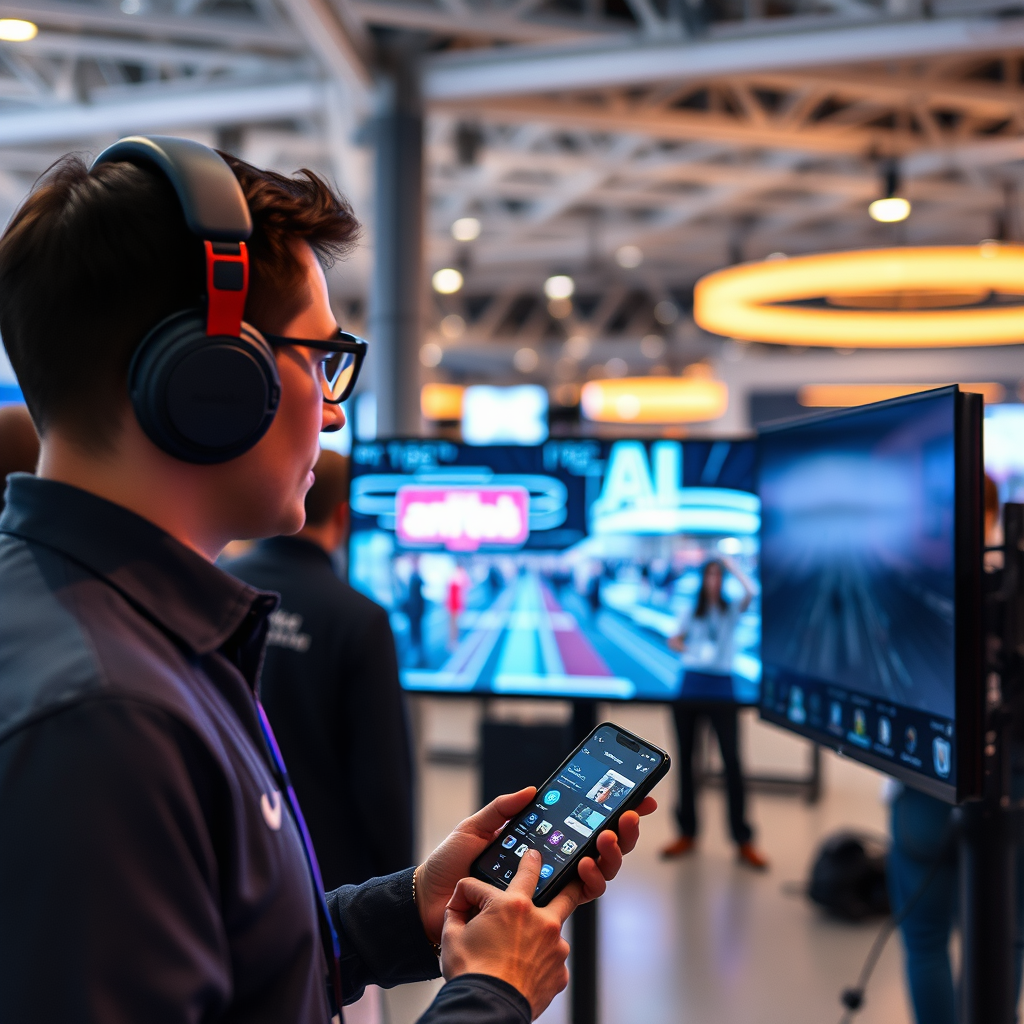
At the core of the symbiotic relationship between AI and AR lies the ability of AI algorithms to analyze viewer preferences and tailor AR experiences accordingly. By leveraging data collected from social media interactions, past viewing behaviors, and demographic insights, AI can create a more customized experience for each viewer. For instance, during live sports events, AI can identify which players or statistics a viewer is most interested in and deliver real-time augmented overlays that highlight this information.
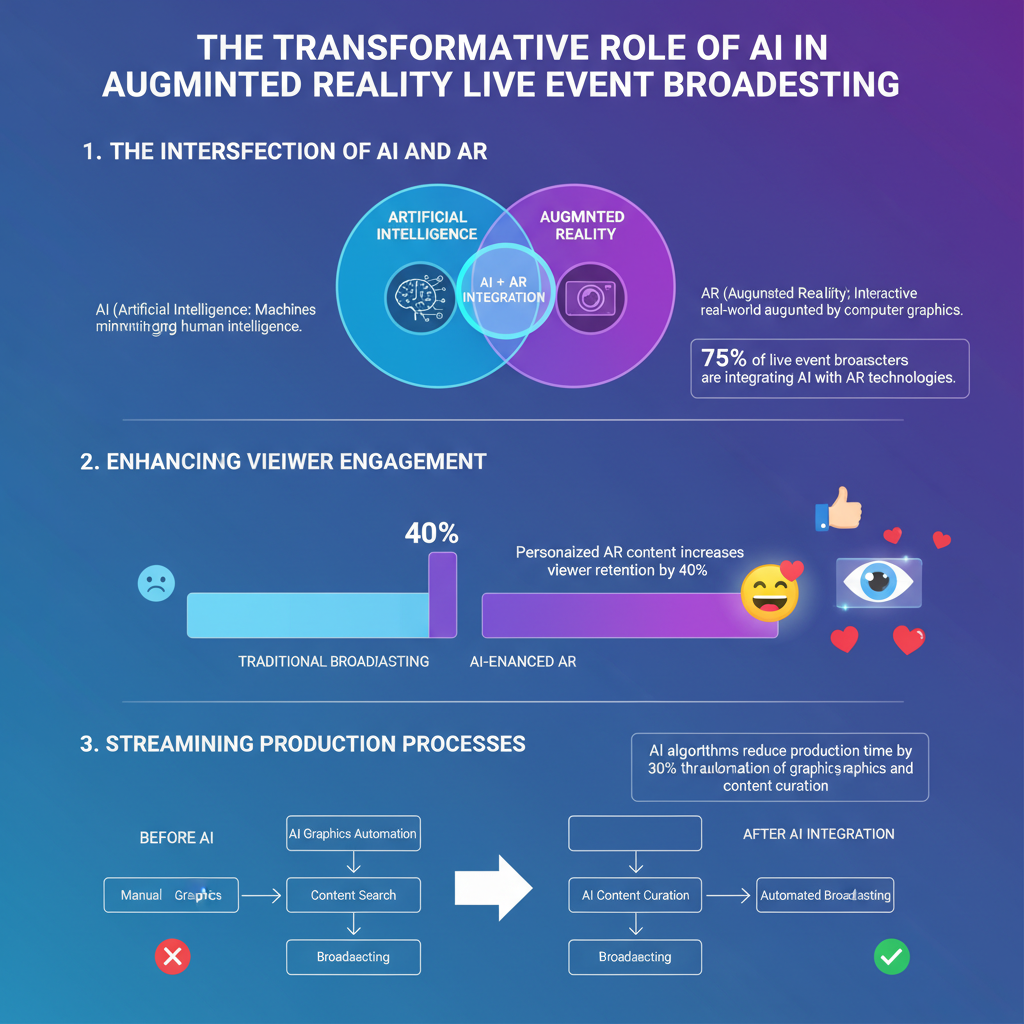
Additionally, real-time data processing allows for dynamic content updates during events, ensuring that viewers receive the most relevant information as it happens. Imagine watching a concert where the AR experience changes based on audience reactions captured through sentiment analysis. This capability enables event organizers to adapt their broadcasting in real time, ensuring that every viewer feels engaged and connected to the event’s unfolding narrative.
Enhancing Viewer Engagement
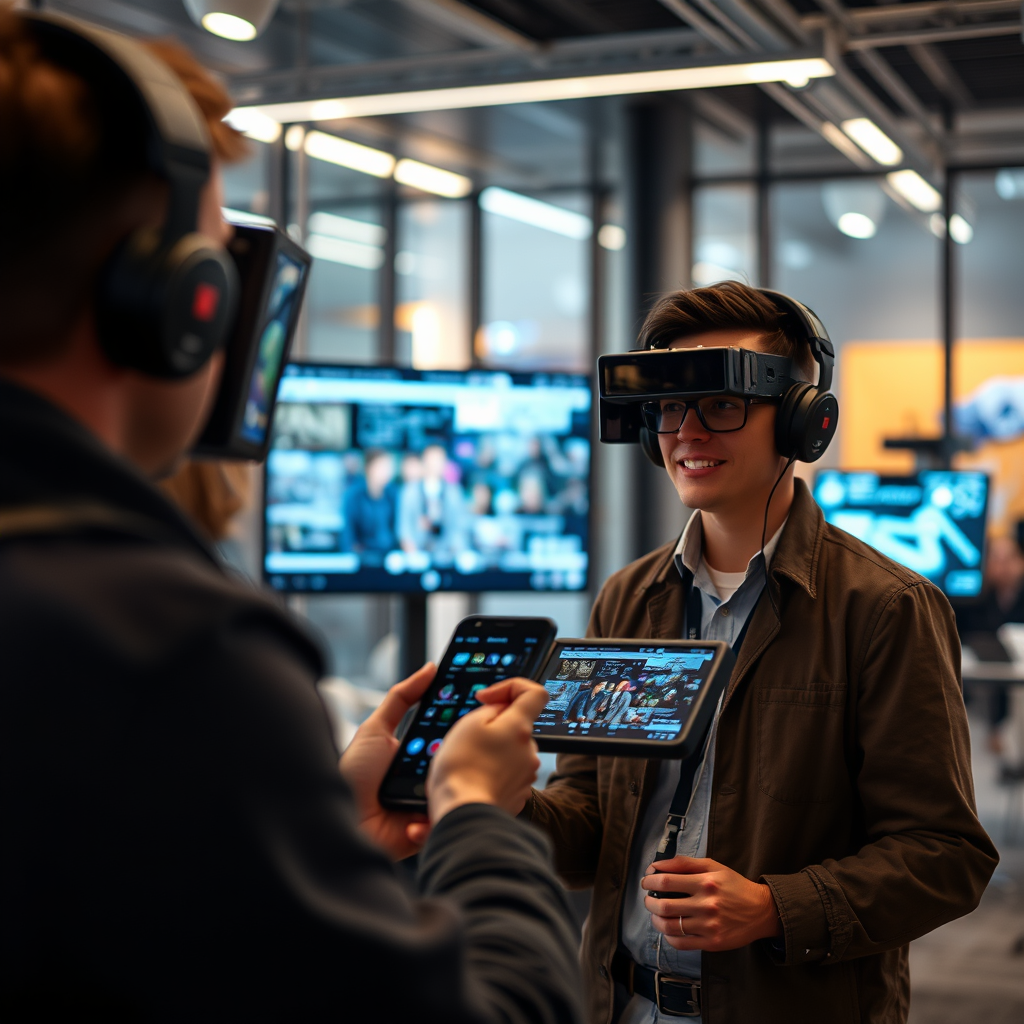
One of the most exciting aspects of AI in AR live event broadcasting is its potential to enhance viewer engagement significantly. AI-driven chatbots can interact with viewers in real time, answering questions and providing additional information about the event. For example, during a live-streamed fashion show, a chatbot could offer viewers insights into the designers, models, and clothing being showcased, creating a more interactive experience.
Furthermore, personalized AR overlays can highlight key moments during broadcasts, improving viewer retention and satisfaction. For instance, during a concert, AR technology can create immersive visuals that draw attention to the lead singer during a pivotal moment in the performance, enhancing the emotional impact and keeping viewers glued to their screens. This level of engagement not only keeps viewers entertained but also fosters a connection between them and the event, making them more likely to return for future broadcasts.
Streamlining Production Processes
The integration of AI tools into live event broadcasting is also streamlining production processes, making it easier for teams to deliver high-quality content. AI can automate camera operations, ensuring optimal angles and shots during live broadcasts. By using machine learning algorithms, AI can track moving subjects and adjust camera positions accordingly, reducing the need for human operators to constantly manage camera angles. This not only saves time but also enhances the overall production quality.
Moreover, predictive analytics is becoming an indispensable tool for producers. By analyzing historical data and viewer trends, AI can help producers anticipate what content will resonate with audiences. If analytics show that viewers typically engage more with certain types of performances or segments, producers can adjust their content strategy in real time to align with audience preferences. This adaptability is crucial in a fast-paced broadcasting environment, allowing teams to pivot and enhance viewer experiences as the event unfolds.
Improving Accessibility
AI technologies are also playing a significant role in improving accessibility for live events, making them more inclusive for diverse audiences. For instance, AI can provide live translations and subtitles during broadcasts, allowing non-native speakers or those with hearing impairments to engage fully with the event. This feature is especially important in global events where audiences span multiple countries and languages.
Additionally, AR applications can create virtual experiences for those unable to attend in person. For example, a virtual reality option could allow viewers to experience a concert as if they were in the front row, complete with a 360-degree view of the stage. This not only broadens the audience reach but also ensures that everyone has access to the excitement of live events, regardless of their physical location.
Case Studies of Successful Implementations
Several notable events have successfully integrated AI and AR to enhance their live broadcasting experience. One prime example is the NBA, which has utilized AR to provide viewers with real-time statistics and player information during games. By analyzing audience feedback and engagement metrics, the NBA has seen increased viewer interaction and satisfaction levels, showcasing the power of combining AI and AR in sports broadcasting.
Similarly, the 2020 iHeartRadio Music Awards employed AI-powered AR elements to create a unique viewing experience. Fans could interact with the broadcast through AR filters that allowed them to become part of the show virtually. Audience feedback indicated that this innovative approach significantly enhanced viewer satisfaction, proving that AI and AR can transform the traditional broadcasting landscape.
Future Trends in AI and AR Broadcasting
Looking ahead, the future of AI and AR in live event broadcasting is incredibly promising. Upcoming advancements in AI, such as improved machine learning algorithms and enhanced natural language processing capabilities, could further elevate AR experiences. We can expect to see more sophisticated AI applications that can predict viewer preferences with even greater accuracy, leading to increasingly personalized content recommendations.
Moreover, as AR technology continues to evolve, we can anticipate the integration of virtual and augmented reality experiences that blur the lines between physical and digital interactions. Imagine attending a live concert where holographic performances enhance the experience, or participating in an interactive sports event where you can join virtually from anywhere in the world. These trends indicate a transformative shift in how live events will be experienced, making them more engaging, inclusive, and accessible than ever before.
The integration of AI in AR-based live event broadcasting is revolutionizing how audiences experience events. By focusing on personalized engagement, streamlining production, and improving accessibility, these technologies are set to redefine the future of live entertainment. Embrace this evolution and explore how you can leverage AI and AR in your next event broadcasting project!
Frequently Asked Questions
What are the key benefits of using AI in AR-based live event broadcasting?
The integration of AI in AR-based live event broadcasting enhances viewer engagement and experience by providing personalized content, real-time analytics, and enhanced visual effects. AI algorithms can analyze audience behavior and preferences, allowing broadcasters to tailor their AR overlays and interactions, making events more immersive and appealing. Furthermore, AI can automate production processes, reducing costs and improving efficiency, which is crucial for delivering high-quality live broadcasts.
How does AI improve audience interaction during AR live events?
AI enhances audience interaction in AR live events by enabling features like real-time polling, chatbots, and interactive overlays that respond to viewer input. For instance, AI systems can analyze viewer comments and reactions to generate on-screen content that reflects audience sentiment, fostering a two-way dialogue between the host and participants. This level of engagement not only keeps viewers entertained but also encourages them to participate more actively, ultimately leading to a more memorable event experience.
Why is AI essential for the future of live streaming and augmented reality?
AI is essential for the future of live streaming and augmented reality because it enables smarter content delivery and enhances user experience. As events become increasingly virtual and hybrid, AI can optimize streaming quality by adjusting settings based on viewer bandwidth and device capabilities. Additionally, AI-driven analytics provide valuable insights into audience behavior, helping event organizers to refine their strategies and create more impactful experiences that resonate with viewers.
Which AI technologies are most commonly used in AR live event broadcasting?
Several AI technologies are commonly utilized in AR live event broadcasting, including machine learning for predictive analytics, natural language processing for audience engagement, and computer vision for real-time object recognition and tracking. These technologies work together to enhance interactive elements, such as enabling AR graphics to adapt to the physical environment and interact with live elements seamlessly, creating a more immersive viewing experience for audiences.
What are the challenges of integrating AI into AR-based live event broadcasting?
Integrating AI into AR-based live event broadcasting poses several challenges, including technical complexity, high initial costs, and the need for robust data management. Ensuring that AI algorithms function effectively in real-time scenarios is crucial, as any delays or errors can disrupt the viewer experience. Additionally, maintaining user privacy while collecting and analyzing data for personalization is a significant concern that broadcasters must address to build trust and comply with regulations.
References
- Augmented reality
- https://www.bbc.com/news/technology-56853257
- https://www.sciencedirect.com/science/article/pii/S1877050920301803
- https://www.nature.com/articles/s41599-020-0425-3
- https://www.forbes.com/sites/bernardmarr/2021/06/14/how-ai-is-transforming-the-event-industry/
- https://www.researchgate.net/publication/339177004_The_Role_of_Augmented_Reality_in_Enhancing_Live_Events
- https://www.itu.int/en/ITU-T/focusgroups/ai/Pages/default.aspx
- https://www.npr.org/sections/alltechconsidered/2021/09/02/1033464016/how-augmented-reality-is-changing-sports-viewing