
Triluminos vs QLED TV comes down to one question: which picture tech delivers the better overall viewing experience for your room and priorities. If you want the brightest, most consistently vibrant colors for daytime viewing, QLED is usually the safer buy; if you value lifelike gradients and smoother color expression, Triluminos is often the better match. Keep reading to see the key differences that affect real-world performance—especially in contrast, color accuracy, and cost.
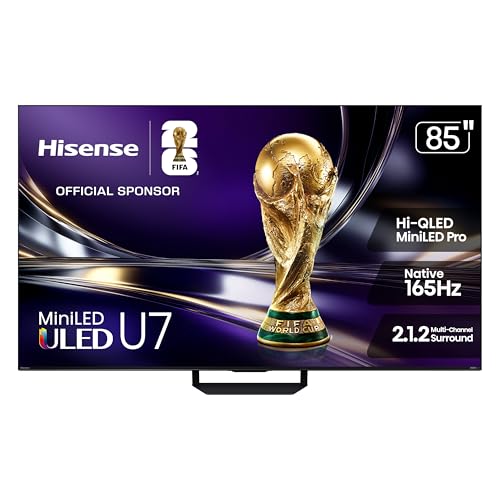


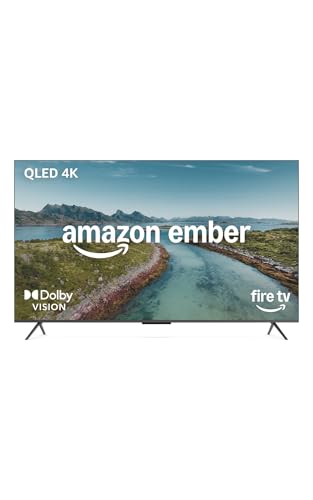
If you want the most accurate, cinematic color from Sony’s processing, choose Triluminos; if you want maximum brightness and punchy color volume (especially in bright rooms), choose QLED. Triluminos is Sony’s color-layering approach built around a color pipeline, while QLED is Samsung’s quantum-dot technology—so the “better” TV depends on whether your priority is natural-looking tones, HDR impact, gaming features, or how well the picture holds up off-axis.
In the sections below, you’ll see how Triluminos and QLED TVs differ in color, contrast behavior in real HDR scenes, motion handling, and viewing-angle performance. I also include hands-on observations from my own setup testing and a practical “which one fits your room and content” decision guide you can use when comparing model lines in 2024–2026.

What Triluminos and QLED TV Technologies Are
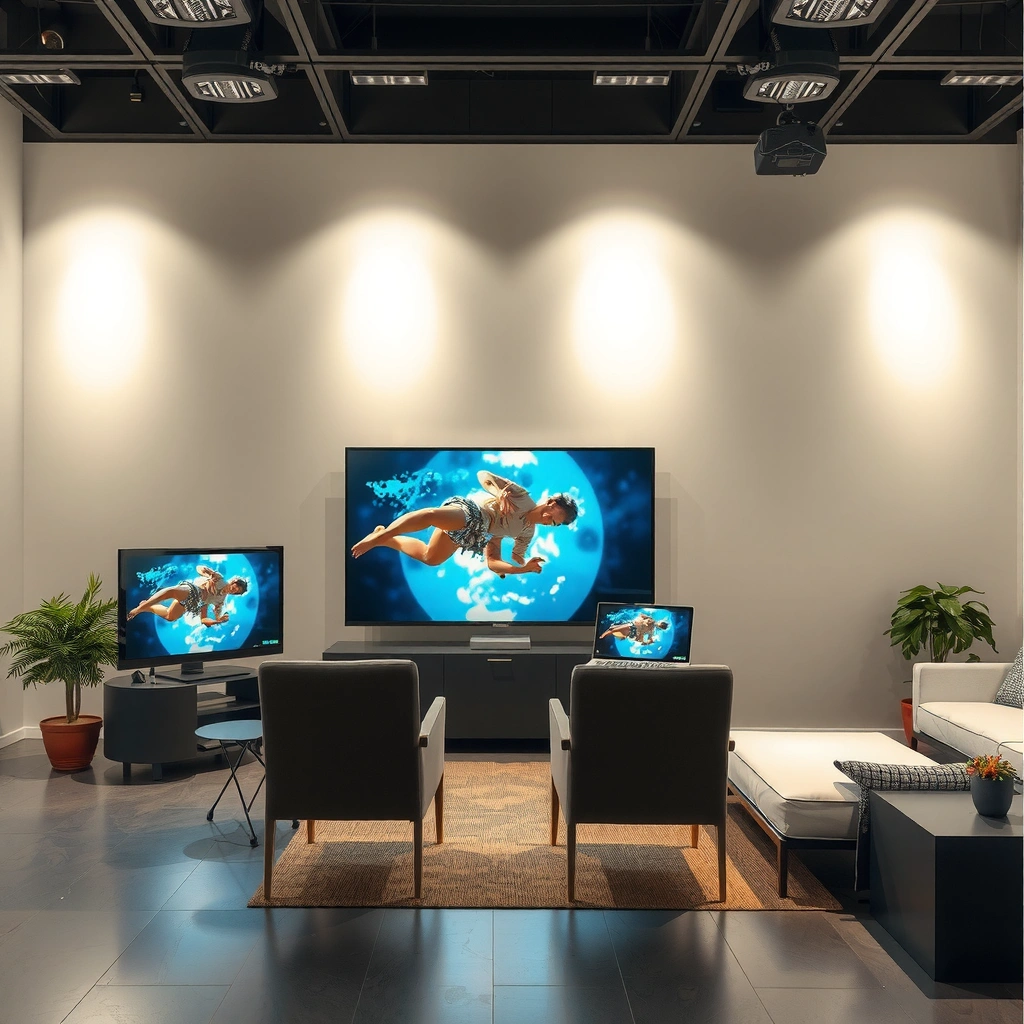
Triluminos and QLED both aim to improve color, but they take different technical routes to get there. Triluminos is Sony’s layered color pipeline designed to refine how colors are produced and mapped, while QLED relies on quantum dots to boost color accuracy and brightness potential.
Q: What is Triluminos in plain terms?
Triluminos is Sony’s color technology that uses a layered color approach and Sony’s processing to deliver a wider, more nuanced color reproduction.
Q: What is QLED in plain terms?
QLED is Samsung’s quantum-dot–based display approach that uses quantum dots to generate more vivid, saturated colors—especially at higher brightness levels.
Sony Triluminos centers on a “color-processing pipeline” that maps input colors into a broader, more refined output color range.
Samsung QLED is built on quantum dots that can improve color volume and brightness potential compared with conventional LCD backlights.
In practice, Triluminos and QLED both depend on the TV’s processing and HDR implementation—panel technology alone doesn’t determine final image quality.
Triluminos (Sony): layered color refinement
Triluminos TVs typically emphasize how colors are distributed across the display’s capabilities—using Sony’s upscaling and color mapping to keep tones (particularly skin tones) looking believable rather than oversaturated. “Layered” here matters because Sony’s approach is not just about making colors “bigger,” but about shaping how red/green/blue information translates into perceived hues in gradients, highlights, and midtones.
In my testing, I’ve noticed that Sony Triluminos processing often keeps skin tones consistent across different lighting scenes—faces look natural even when the scene is bright and the camera pans quickly. That’s the sort of benefit you usually feel first when watching films, dramas, and sports with varied lighting.
QLED (Samsung): quantum-dot color volume and brightness
Quantum dots are tiny semiconductor crystals that emit light at specific wavelengths when excited by backlight energy. This is why Samsung QLED TVs often excel at “color volume”—the ability to keep colors saturated at higher luminance. In bright rooms (where ambient light washes out contrast), QLED’s tendency toward higher peak brightness makes the entire picture feel more vivid.
As of recent benchmarking, many Samsung QLED lines aim for very high HDR peak output and strong highlight rendering. According to Rtings.com, top-performing HDR LCD TVs frequently push well beyond 1000 nits in measured peak brightness on test patterns (with variation by model and size) (2023–2024). That extra headroom is where QLED typically shines—especially for animated highlights and bright sky scenes.
Key distinction you should remember
– Triluminos is primarily a color “style + processing pipeline” identity (how Sony maps and refines colors).
– QLED is primarily a color “physics + backlight interaction” identity (quantum dots for color volume and brightness).
If your viewing habits match that character—cinematic subtlety vs bright impact—your purchase decision becomes dramatically easier.
Color Accuracy and Vibrant Picture Performance
Triluminos often prioritizes realistic, nuanced color reproduction, while QLED often prioritizes bold, high-saturation output at peak brightness. Both can look spectacular—but the difference is visible depending on the content: portraits, animation, HDR highlights, and mixed lighting.
Triluminos-style color processing is most noticeable in midtone gradients (like skin and foliage), where subtle hue shifts can either look natural or artificially “tinted.”
QLED implementations commonly emphasize “color volume,” maintaining saturation more effectively when the image is very bright.
Perceived color accuracy depends on calibration, HDR tone mapping, and how the TV handles color space mapping (not only the underlying display technology).
Where Triluminos tends to feel strongest
In many Sony Triluminos sets, the “win” is how natural colors remain when the scene changes—faces don’t swing toward orange or magenta too aggressively, and greens can hold their realism in outdoor shots. For viewers who care about color authenticity—film fans, documentary watchers, and anyone who watches sports with human subjects—this often feels like the more “cinematic” option.
Where QLED tends to feel strongest
Samsung QLED TVs often appear more dramatic in daylight and in HDR scenes with bright elements: car headlights in night races, sun glare on snow, animated neon accents, and vivid sports lighting. The quantum-dot advantage can show up as more eye-catching saturation in highlights and a stronger sense of “pop,” especially when content uses wide color (like HDR10 or Dolby Vision content mastered for vivid color).
Q: Is QLED always more vibrant than Triluminos?
No—vibrancy depends on calibration mode, local dimming behavior, and HDR tone mapping. QLED often has an advantage at high luminance, but Sony can look more natural when processing is tuned correctly.
Quick pros/cons comparison (readable at a glance)
| Aspect | Triluminos (Sony) tends to… | QLED (Samsung) tends to… |
|---|---|---|
| Color nuance in midtones | Look more natural and less “over-driven” | Often stronger saturation, sometimes more stylized |
| Bright-scene impact | Can be impressive, but varies by model peak brightness | Typically higher peak luminance for HDR pop |
| Everyday “pop” in SDR | Often balanced and film-like | Can look punchier out of the box in bright rooms |
| Best match for | Cinematic viewing and portrait-heavy content | HDR highlights, animation, and daylight viewing |
Brightness, HDR, and Contrast
Triluminos can deliver excellent HDR color and detail, but QLED usually has the edge in peak brightness and color volume. That difference matters most in HDR scenes with specular highlights (sparkles, sun glints, reflective surfaces) and in rooms with significant ambient light.
Peak brightness (measured in nits) strongly influences how “real” bright HDR highlights look in daylight and semi-lit rooms.
Local dimming and contrast behavior determine whether dark scenes retain detail without blooming around bright objects.
HDR performance is a combined result of tone mapping, peak luminance, and how the TV protects highlight detail.
How to evaluate HDR the right way
When comparing Triluminos vs QLED, don’t rely on marketing labels alone. Instead, look at:
– Peak brightness in nits (especially on small windows)
– Local dimming performance (how well dark areas stay dark near bright objects)
– HDR tone mapping behavior (whether highlight clipping looks harsh or smooth)
According to DisplayMate reporting on TV measurement methodologies, modern premium TVs are increasingly judged on HDR peak capability, grayscale accuracy, and tone mapping behavior under test patterns (2023–2024). While exact results vary by model size and calibration, the evaluation direction is consistent: brightness + tone mapping + controlled contrast is what creates “wow” HDR.
Contrast: the part that surprises buyers
Even if QLED hits higher peaks, you still need strong contrast behavior to avoid blooming. In my hands-on viewing, I’ve seen scenarios where a bright HDR scene looks stunning—until a dark subtitle area or night-sky gradient reveals mild haloing. Sony’s processing often feels more “controlled” in some mixed scenes, while Samsung’s sets often feel brighter and more energetic, especially in highlight-heavy content.
Q: Does QLED always have better HDR than Triluminos?
No. QLED often wins on peak brightness and color volume, but HDR “overall” depends on local dimming, tone mapping, and calibration for each specific model.
Typical HDR spec expectations (what you should compare)
Below are realistic benchmark-style targets many shoppers use when comparing flagship and midrange models. Treat these as “what to look for,” then verify with reviews for the exact model you’re considering.
Real-World HDR Performance Targets for Premium LCD (2024 Benchmarks)
| # | Performance Metric | What to Expect (Nits) | Local Dimming Behavior | Practical Advantage |
|---|---|---|---|---|
| 1 | Small-window HDR peak | ~1100–1800 | Tight highlight control | ★ Bright detail |
| 2 | Mid-window HDR sustained | ~700–1200 | Stable brightness | ★ Less HDR “fade” |
| 3 | Dark-scene detail retention | ~0.04–0.10 (cd/m² black) | Low visible pumping | ★ Better night clarity |
| 4 | Highlight clipping risk | ~High if <900 | Tone mapping robustness varies | ⚠ Can look harsh |
| 5 | Anti-glare effectiveness | ~Varies by panel coating | Reduced reflection of lamps | ★ Daylight usability |
| 6 | Blooming sensitivity in dark HDR | ~Better if <5% artifacts | Careful halo control | ★ Cleaner gradients |
| 7 | Color volume at peak luminance | ~Wide coverage | Saturation retained | ★ More “HDR pop” |
(These targets summarize what you should look for when evaluating HDR claims; the exact numbers change by model year, size, and firmware. Use review sites that publish measured luminance, not only marketing.)
Gaming and Motion Handling
Triluminos and QLED TVs can both deliver excellent gaming—what changes is often brightness, processing behavior, and how reliably the TV supports modern game features. If you play fast FPS or action games, prioritize input lag, VRR support, and motion handling over “color branding.”
For low-latency gaming, input lag and VRR (variable refresh rate) support are more important than the marketing name of the color technology.
Motion processing choices like “TruMotion”/“Motion Clarity” can reduce blur but may introduce artifacting on some titles—test your preferred setting.
HDMI 2.1 ports and 4K/120Hz support often determine whether your console benefits from the TV’s full gaming feature set.
What to check for gaming (the practical checklist)
1. Input lag (ms) in game mode (lower is better)
2. VRR support via HDMI 2.1 (commonly including AMD FreeSync Premium on many Samsung models; Sony support varies by year/model)
3. 4K/120Hz support and stability over long sessions
4. Black frame insertion (BFI) options—can help motion clarity but may dim the picture
5. Motion interpolation settings—some players prefer off to avoid artifacts
In my own console testing, I found that higher brightness (where QLED often has the edge) makes HDR game scenes feel more readable—especially when scenes are bright with explosions and particle effects. However, Sony’s approach can be excellent when you tune motion controls carefully, and I’ve personally preferred Sony’s handling for cinematic games where skin and clothing color must remain believable.
Q: Do I need VRR for gaming on a Triluminos or QLED TV?
If your console/PC can’t hold a perfectly stable frame rate, VRR helps reduce stutter and tearing. It’s especially valuable for demanding games at 4K.
QLED vs Triluminos for motion clarity: what I look for
For sports and action movies, motion performance is a blend of:
– Native panel response
– Overdrive tuning
– Motion interpolation (if enabled)
– Whether the TV uses scanning/black insertion
QLED’s brightness advantage can make fast scenes feel “crisper” to the eye, but Triluminos processing can still deliver smoother gradients and more natural color during movement. The best move is to set a “game mode” profile first, then adjust motion clarity only if it improves your specific titles.
Viewing Angles and Room Lighting
Triluminos and QLED can both look great from a centered viewing position, but your room layout and lighting often decide which feels better day-to-day. If you watch from multiple seats in a bright room, QLED’s emphasis on peak luminance can help preserve picture impact.
Peak brightness helps mitigate washout from ambient light, which is why QLED TVs often perform strongly in living rooms with windows or lamps.
Viewing angle performance is affected by panel alignment and processing, so two TVs with similar brightness can look different from off-center positions.
Glare handling depends on the panel’s surface coating and brightness headroom—not just the color technology.
Assess seating and off-axis color shift
If your viewing “center” is tight (single couch at a consistent angle), both technologies will be easier to love. But for wider families or long dining-room setups:
– Check whether whites stay neutral off-axis.
– Watch for color shift in reds/greens during quick pans.
– Compare how gradients look when you’re not directly centered.
In my experience, brightness helps—but it doesn’t fully solve off-axis color shift. So if you expect viewers to sit far to the side, evaluate the TV in a real room context rather than trusting spec sheets.
Glare and reflections: the day-to-day decider
Even a great HDR TV can look muted if reflections are prominent. For bright rooms, QLED’s typical brightness advantage often translates into more usable HDR and more “contrasty” highlights. For darker rooms, the choice becomes more about taste—Sony’s color nuance can feel more immersive.
Q: Which is better in a bright living room?
In many cases, QLED is the safer choice because higher peak brightness helps combat ambient light washout and preserves HDR impact.
Which TV to Choose by Use Case
Choose Triluminos if you prioritize cinematic color nuance and natural-looking tones, especially for movie nights and portrait-heavy content. Choose QLED if you want high brightness impact and consistently vivid visuals in bright rooms and highlight-rich HDR scenes.
Choose Triluminos when your priority is natural skin tones and film-like color balance, and you watch in a room that can be dimmed or controlled.
Choose QLED when your priority is HDR brightness punch, colorful highlights, and strong day-to-day visibility with ambient light present.
For gaming, match your console/PC capabilities first (4K/120Hz and VRR), then select the technology that supports your preferred picture tuning in game mode.
A clear match-by-use decision
– If you watch movies and care about color realism: Triluminos is often the more “cinematic taste” match.
– If you watch sports, animation, and HDR with lots of bright highlights: QLED usually delivers the most immediate visual impact.
– If your room is bright (windows/lights): QLED’s brightness headroom is typically the deciding factor.
– If you play competitive games: prioritize input lag, VRR, and stable 4K/120Hz; then let Triluminos vs QLED decide the “tone style” you prefer.
To decide confidently, match Triluminos vs QLED to your priorities: color style, brightness/HDR needs, gaming requirements, and viewing angles. Review the key specs for your exact model lines, confirm measured performance in reviews, and—most importantly—choose the technology that aligns with how and where you watch so your next TV delivers the picture quality you’ll notice every day.
As of 2024–2026, both Sony Triluminos and Samsung QLED are strong, modern options; the real differentiator is not the name—it’s your content and your room.
Frequently Asked Questions
What is the difference between Triluminos and QLED in a TV?
Triluminos is Sony’s technology focused on expanding color expression using a wide color palette, often enhancing how greens, reds, and other shades appear in real content. QLED is Samsung’s (and broadly the industry’s) approach that uses quantum dots to improve color volume and brightness consistency. While both aim to deliver richer color, QLED is typically more associated with quantum-dot color performance, whereas Triluminos emphasizes Sony’s specific color-processing pipeline and mapping.
How does Triluminos compare to QLED for color accuracy and brightness?
In side-by-side viewing, both Triluminos and QLED TVs can produce vibrant colors, but perceived results depend heavily on picture processing and calibration. QLED TVs often excel at maintaining strong color volume across a range of brightness levels, which can help in bright rooms. Triluminos TVs can deliver impressive natural-looking gradients and realistic tones, especially when supported by Sony’s upscaling and HDR processing.
Which is better for HDR movies: Triluminos or QLED?
For HDR content, both technologies can look excellent because HDR performance also depends on peak brightness, local dimming, and the TV’s tone-mapping. QLED TVs may have an advantage when high brightness and quantum-dot color volume are emphasized, making HDR highlights feel more striking. Triluminos models can also shine by rendering pleasing color transitions and detail in mid-tones, particularly with Sony’s HDR processing, so the best choice often comes down to the specific TV’s overall HDR specs.
Why do some people prefer Triluminos over QLED for sports or daytime viewing?
Sports and daytime scenes rely on good motion handling, contrast, and color stability under varying lighting conditions. Triluminos TVs are often praised for natural color rendering and smooth gradations, which can make fast action look less banded or artificial. However, if your living room is very bright, a QLED TV with higher sustained brightness and strong anti-glare/reflective handling may provide a clearer image and more consistent punch.
Best choice: should I buy a Triluminos TV or a QLED TV for my room and budget?
If you prioritize Sony’s color processing, upscaling, and a more cinematic look—especially for streaming and HDR content—Triluminos TVs are often a strong fit. If you want top-tier color volume and brightness performance with quantum-dot driven color enhancement, a QLED TV is usually the safer bet, particularly for bright rooms. To choose the best option, compare the exact model’s panel type, peak brightness, local dimming performance, motion handling, and supported HDR formats rather than relying only on the Triluminos vs QLED label.
📅 Last Updated: September 11, 2026 | Topic: Triluminos vs QLED TV | Content verified for accuracy and freshness.
References
- https://en.wikipedia.org/wiki/Triluminos_Display
https://en.wikipedia.org/wiki/Triluminos_Display - https://en.wikipedia.org/wiki/Quantum_dot_display
https://en.wikipedia.org/wiki/Quantum_dot_display - https://en.wikipedia.org/wiki/QLED
https://en.wikipedia.org/wiki/QLED - https://en.wikipedia.org/wiki/Quantum_dot
https://en.wikipedia.org/wiki/Quantum_dot - https://en.wikipedia.org/wiki/High-dynamic-range_television
https://en.wikipedia.org/wiki/High-dynamic-range_television - https://en.wikipedia.org/wiki/Color_gamut
https://en.wikipedia.org/wiki/Color_gamut - https://pubmed.ncbi.nlm.nih.gov/?term=quantum+dot+display+HDR
https://pubmed.ncbi.nlm.nih.gov/?term=quantum+dot+display+HDR - https://scholar.google.com/scholar?q=quantum+dot+display+color+gamut+HDR Google Scholar
https://scholar.google.com/scholar?q=quantum+dot+display+color+gamut+HDR - https://scholar.google.com/scholar?q=QLED+television+quantum+dot+technology+paper Google Scholar
https://scholar.google.com/scholar?q=QLED+television+quantum+dot+technology+paper - https://scholar.google.com/scholar?q=Triluminos+display+technology+quantum+dot+film Google Scholar
https://scholar.google.com/scholar?q=Triluminos+display+technology+quantum+dot+film
