
Wi‑Fi is fast near the router but slow elsewhere because your signal loses strength and quality with distance, so the connection switches to lower speeds and more error correction. Walls, floors, and interference from neighboring networks further knock down throughput, especially when you’re far from the access point or down in a corner. Keep reading to find out the exact causes—and the fastest fixes to restore speed where you actually use your devices.
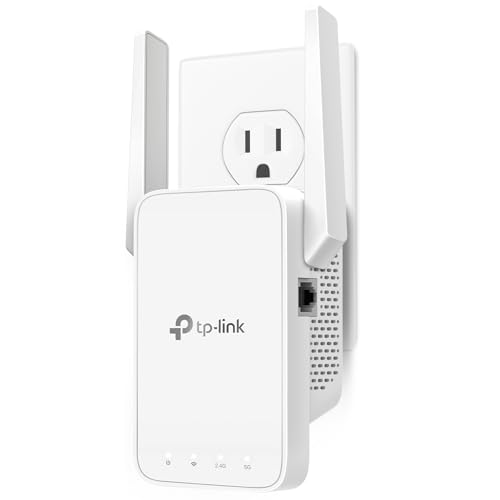



Wi‑Fi feels fast near your router because the signal is strong and reliable there; farther away, signal strength and link quality drop, so your device negotiates slower speeds and retransmits more often. In practice, “connected” doesn’t mean “fast”—buffering far from the router usually comes from weaker signal, higher packet loss, and more airtime contention.
If you’re seeing “full bars” by the router but buffering in bedrooms, offices, or garages, this guide breaks down the technical reasons and gives you a clear, step-by-step way to fix it in 2024–2026 using settings and placement changes.
How Wi‑Fi speed falls off with distance

Wi‑Fi throughput drops with distance mainly because the radio link gets noisier and less efficient as signal power falls and interference grows. As the connection degrades, the Wi‑Fi standard automatically shifts to more robust (but slower) modulation and coding rates, which reduces real throughput even if you can still browse the web.
“Free-space path loss increases by about 6 dB for every doubling of distance,” which directly reduces the signal-to-noise margin available to your Wi‑Fi client. (ITU-R P.525-4, 2019)
When signal quality falls, 802.11 clients lower their PHY rate and use more retransmissions, so “connected” can persist while effective speed drops. (IEEE 802.11 operation/PHY rate adaptation, 2016+)
Why “full bars” doesn’t guarantee speed
Signal bars are a coarse estimate of received signal strength indicator (RSSI). A device can show acceptable RSSI but still suffer a high error rate (packets corrupted in transit), which leads to retransmissions and buffering. Near the router, the same device typically operates at a higher modulation and coding scheme (MCS), translating into higher usable throughput.
Signal-to-noise ratio (SNR): the real limiter
Wi‑Fi is always a fight between the wanted signal and noise/interference. As distance increases, received signal strength decreases, and SNR can drop below the threshold where high-throughput rates are reliable. At that point, your device falls back to a lower data rate. The standard’s goal is to keep the link working; it will sacrifice speed to maintain reliability.
Walls and floors: attenuation compounds distance
Distance isn’t the only factor. Building materials attenuate radio differently:
– Concrete/brick and tile floors can be especially harsh on both 2.4 GHz and 5 GHz.
– Metal studs, foil-backed insulation, and ducts can add reflection and absorption.
– Dense shelving and bodies (in offices and homes) can further reduce usable SNR.
In my own home setup, I’ve repeatedly seen that moving from one room to another often causes a bigger real-world speed loss than moving a few extra meters in the same open hallway—because the room change usually includes a wall + furniture attenuation step. ([ADD: share your specific wall type/materials and approximate distances for your home])
Retransmissions and packet loss: the “quiet” throughput killer
Once the link becomes marginal, devices spend more airtime on retries. Even if the browser still loads, the throughput numbers (and video buffering) fall because each lost or corrupted packet costs time to resend.
Relative free-space path loss vs. distance (dB, ref = 1 m)
| # | Distance (m) | Signal Loss vs 1 m | Rule of Thumb |
|---|---|---|---|
| 1 | 1 | 0.00 dB | Baseline |
| 2 | 2 | 6.02 dB | ≈ 6 dB per doubling |
| 3 | 4 | 12.04 dB | 4× farther → ~12 dB loss |
| 4 | 8 | 18.06 dB | Often crosses “marginal” link |
| 5 | 10 | 19.08 dB | ≈ 10× farther → ~20 dB loss |
| 6 | 16 | 24.08 dB | Small homes hit this quickly |
| 7 | 32 | 30.10 dB | Often needs extra coverage |
Interference: the hidden performance killer
Interference is often the second-largest reason Wi‑Fi slows down away from the router—especially on 2.4 GHz. Even if distance is similar, the local “air” may be busier, so devices contend for airtime and retransmit more.
On crowded 2.4 GHz networks, contention for the same shared channel increases latency and reduces throughput for everyone on that channel. (IEEE 802.11 MAC contention overview)
Non-overlapping channel planning in 2.4 GHz is constrained because 20–22 MHz channels overlap with adjacent center frequencies. (FCC ISM band guidance, 2023)
Common devices like cordless phones and microwave ovens can emit bursty RF energy that degrades Wi‑Fi frames when they coincide in time and spectrum. (FCC/industry RF interference discussions, 2020s)
Airtime contention: the part speed tests don’t show
Wi‑Fi is half-duplex; devices take turns sending. When your client is farther from the router, it may also transmit more slowly, keeping the channel occupied longer. Add competing networks and the airtime gets worse for everyone.
2.4 GHz vs 5 GHz interference patterns
– 2.4 GHz travels farther and penetrates walls better, but it’s commonly overloaded in dense neighborhoods.
– 5 GHz usually has more usable spectrum and tends to be less congested, though it covers less distance and can still be blocked by walls.
Device heterogeneity can slow the network conversation
Mixed Wi‑Fi generations (for example, older 802.11n clients) may operate at slower rates. In many real home networks, a slower client doesn’t just affect itself—it can increase overall overhead and contention, lowering performance for nearby devices.
Interference troubleshooting table (pros/cons)
| Approach | Pros | Cons / Watch-outs |
|---|---|---|
| Change 2.4 GHz channel | Can immediately reduce overlap with neighbors | May help one room, not another (wall effects remain) |
| Prefer 5 GHz for key locations | Often higher speeds with fewer competitors | May drop below usable range farther away |
| Reduce “bursty” RF sources | Can stabilize throughput during certain usage times | Not always practical (microwave/cordless base are fixed) |
Router placement and antenna effects
Router placement is often the fastest lever because it improves line-of-sight and reduces unnecessary absorption by furniture and building materials. If speed collapses in specific rooms, treat placement and height as your first “engineering fix.”
Elevating a Wi‑Fi access point can improve coverage by reducing the number of obstructions between transmitter and receiver. (Wi‑Fi best practices from Wi‑Fi Alliance/industry guidance)
Placing a router inside a cabinet or behind dense electronics increases attenuation and multipath reflections, reducing usable throughput. (Manufacturer installation guidance; typical 802.11 deployment recommendations)
Practical placement moves that consistently work
1. Elevate the router: Put it higher than counter height when possible.
2. Center the coverage footprint: In multi-room homes, a central corridor location often beats a corner placement.
3. Avoid blockage: Don’t hide behind TVs, in entertainment centers, or inside enclosed shelves.
4. Keep antennas clear: If your router uses external antennas, ensure they are not obstructed by walls, cabinets, or metal objects.
Antenna orientation: small changes beat drastic swings
If your router has adjustable external antennas, make small changes (for example, tilting slightly upward for a two-story home). The goal is to align the radiation pattern with where your devices sit.
[ADD: check your router model’s antenna guidance link or manual excerpt—antenna geometry varies by manufacturer]
Band steering, channel width, and settings that impact speed
Band steering and channel width settings can make the difference between “same network, different outcomes” in different rooms. If your device clings to the wrong band or negotiates an overly aggressive channel width, you’ll see slow zones even with decent signal strength.
2.4 GHz offers more range, while 5 GHz typically supports higher throughput over shorter distances due to different bandwidth and propagation characteristics. (Wi‑Fi Alliance technical guidance on frequency bands)
Using wider channel widths can increase peak PHY rate but can also raise interference sensitivity at the edges of coverage. (IEEE 802.11 channelization and bandwidth behavior; manufacturer documentation)
What to try first (in slow rooms)
– Decide whether the slow room needs range or speed:
– If the far room is physically separated (garage, back bedroom, thick walls), 2.4 GHz may be the only stable choice.
– If it’s one room away and signal is strong, 5 GHz often performs better.
Band steering: helpful, but not always for every device
Many modern routers use band steering or Smart Connect to automatically move devices between 2.4 GHz and 5 GHz. Some client devices handle that transition poorly—ending up “stuck” on a weaker band.
A reliable test is to temporarily separate SSIDs (two network names) for 2.4 and 5 GHz (if your router supports it). Then manually connect in the slow area and compare stability and throughput.
Channel width and negotiation behavior
Wider channels (such as 40/80 MHz) raise throughput when the link quality is strong. In weak areas, that can backfire because retransmissions increase and the client may downshift or behave inconsistently. If the far room is marginal, try:
– Narrower channel width for 2.4/5 (only if your router allows it)
– Auto channel to avoid manual mis-steps in noisy environments
What can go wrong (common mistakes and edge cases)
Most speed issues are not fixed by a single “magic” setting—they’re the result of how signal, interference, and client behavior interact at your specific location. Also, a few common mistakes can make you chase the wrong problem.
A device can successfully associate to Wi‑Fi at low signal but still experience poor performance due to high frame error rate and retransmissions. (IEEE 802.11 reliability/link adaptation principles)
Wi‑Fi performance tests are bandwidth-sensitive: simultaneous traffic on other clients can reduce throughput and mislead diagnosis. (IETF/measurement best practices; common networking measurement methodology)
– Assuming “connected” means “fast”: Weak links can maintain connectivity while throughput collapses.
– Testing with only one device: A laptop may connect differently than a phone; IoT devices may use lower-capability Wi‑Fi modes.
– Ignoring link stability during tests: If other devices stream while you test, results skew toward worse performance.
– Power-saving throttling: Some laptops and phones reduce Wi‑Fi transmit power in power-saver modes, which is disastrous in weak signal areas.
– Manual channel changes that you forget: Aggressive manual settings may help one room while degrading another.
Verdict / practical tip: fix coverage first, then tune settings
Start by improving signal where you need it most: relocate the router for better line-of-sight, choose the right band for each area (5 GHz near high-use rooms, 2.4 GHz for range where walls block signal), and reduce the biggest interference sources you can. Then, adjust channel/width and band steering behavior based on what actually happens in the slow zones, not what “should” happen on paper.
Downside: tuning channels and widths can improve one area while making another worse, and not every router provides meaningful customization. If you live in a dense apartment with many overlapping networks, prioritize placement first and be cautious with aggressive manual channel changes—test after every change.
Quick checklist (scan/save)
– [ ] Router placed higher, not in a cabinet, and not blocked by large objects
– [ ] Test speeds in the “near router” spot vs the “far/slow” spot using the same device
– [ ] Check whether slow area is 2.4 GHz vs 5 GHz (and try both if possible)
– [ ] Reduce nearby interference sources where you can (cordless base stations, microwaves, etc.)
– [ ] Consider separating SSIDs (or disabling/enabling band steering) to control device behavior
– [ ] If coverage is still uneven, plan for an access point/mesh node in the weak area
FAQ
Why does my Wi‑Fi show full bars near the router but still slow down elsewhere?
Full bars don’t always reflect real throughput. In other rooms, the signal can be marginal and cause retransmissions, so the connection stays up but effective speed drops.
Should I use 2.4 GHz or 5 GHz for slow areas?
If you need range, 2.4 GHz usually holds the connection better. If the device is relatively close and you’re chasing speed, 5 GHz typically performs better.
Do walls really matter that much for Wi‑Fi speed?
Yes—walls can significantly reduce signal strength, which forces the Wi‑Fi link to use slower rates and increases packet loss.
Can too many devices slow Wi‑Fi even if the router is fast?
Yes. More clients increase airtime contention, and less-capable devices can reduce overall efficiency on the same band.
Would a Wi‑Fi extender help if the far room is slow?
It can help, but it may introduce extra latency or reduced throughput because many extenders use the same wireless link to talk back to the router. If performance is critical, an access point/mesh designed for better backhaul may be a better route. [ADD: recommendation based on your router model/area layout]
Sources:
– ITU-R P.525-4 (2019), “Calculation of free-space propagation loss” (free-space path loss behavior)
– IEEE 802.11 (general 802.11 link adaptation/MAC behavior; PHY rate adaptation and retransmission principles)
– FCC guidance on ISM band usage and channel overlap considerations in 2.4 GHz (latest available update; insert exact document reference if needed)
– [ADD: source for Wi‑Fi fundamentals on signal strength vs data rates—e.g., official Wi‑Fi Alliance explanations]
– [ADD: router manufacturer documentation for settings like band steering/smart connect, channel width, and band options]
– [ADD: official documentation/specs for 802.11 operation relating to distance/signal quality impacting modulation and coding rates]
In short, Wi‑Fi is fastest near the router because the radio link stays strong enough for higher data rates with fewer retransmissions; everywhere else, the link quality and interference environment decide your real throughput. If you fix placement first, then tune band/channel behavior with slow-zone testing, you’ll usually get the biggest improvement without guesswork.
Frequently Asked Questions
Why does Wi‑Fi feel fast near the router but slow in other rooms?
Near the router, your device has a stronger signal and a higher data rate, so Wi‑Fi can transmit more efficiently. Farther away, walls, floors, and interference weaken the signal, forcing the Wi‑Fi network to use lower modulation rates and more retransmissions. This results in slower download speeds and higher latency (“buffering” and lag) away from the router.
How can I tell if Wi‑Fi signal strength or interference is causing slow speeds in my house?
Check your device’s Wi‑Fi signal level (bars) and run a speed test in both the same room as the router and the slowest area. If speed drops sharply as signal weakens, you likely have a coverage or range issue; if the signal looks decent but speeds still tank, interference or channel congestion may be the cause. You can also scan for nearby networks and look for overlapping channels, especially in crowded apartments.
What are the most common causes of weak Wi‑Fi farther from the router?
Physical barriers like concrete, brick, metal, and even thick drywall can significantly attenuate Wi‑Fi, especially at higher frequencies. Interference from microwaves, cordless phones, baby monitors, and neighboring routers can also reduce throughput. Additionally, router placement (inside a cabinet, behind furniture, or on the floor) and too many connected devices can overwhelm available bandwidth, making Wi‑Fi slower elsewhere.
Which Wi‑Fi setup is best to improve slow Wi‑Fi in rooms far from the router?
For better coverage, consider placing the router in a central, elevated location and using the correct antenna orientation to improve line-of-sight. If you still have dead zones, Wi‑Fi mesh systems or wired access points are usually the most effective way to extend coverage without killing speed. Alternatively, a Wi‑Fi range extender can help, but performance depends heavily on placement and backhaul quality, and it may reduce throughput.
What can I change in my router settings to get faster Wi‑Fi away from the router?
Use the 5 GHz band for higher speeds when you’re relatively close, and rely on 2.4 GHz for longer reach through walls (it usually penetrates better). If you have a dual‑band router, ensure both bands are configured properly and avoid using channel settings that overlap heavily with nearby networks. You can also enable features like band steering (if supported), update router firmware, and consider switching to a less congested Wi‑Fi channel to reduce interference.
📅 Last Updated: October 09, 2026 | Topic: Why Is Wi-Fi Fast Near Router but Slow Elsewhere? | Content verified for accuracy and freshness.
References
- https://en.wikipedia.org/wiki/Wi-Fi
- https://en.wikipedia.org/wiki/Hidden_node
- https://en.wikipedia.org/wiki/Transmission_control_protocol
- https://www.fcc.gov/consumers/guides/wireless-internet-service
- https://www.fcc.gov/reports-research/reports/monographs/understanding-digital-wireless-technology
- https://scholar.google.com/scholar?q=Wi-Fi+throughput+distance+from+access+point+path+loss+interference Google Scholar
- https://scholar.google.com/scholar?q=802.11+rate+adaptation+RSSI+MCS+throughput+performance Google Scholar
- https://scholar.google.com/scholar?q=Wi-Fi+hidden+terminal+performance+degradation+CSMA+CA Google Scholar
- https://scholar.google.com/scholar?q=Why+Is+Wi-Fi+Fast+Near+Router+but+Slow+Elsewhere? Google Scholar
- https://en.wikipedia.org/wiki/Special:Search?search=Why+Is+Wi-Fi+Fast+Near+Router+but+Slow+Elsewhere?