Choosing between 144Hz and 240Hz for PC gaming comes down to one question: which refresh rate actually delivers the smoother, more responsive experience you’ll feel during real gameplay. If you play competitive titles and can reliably push high FPS, 240Hz is the clear upgrade. If your system often falls short of consistently high frame rates—or you want the better balance of performance and value—144Hz is the smarter buy.


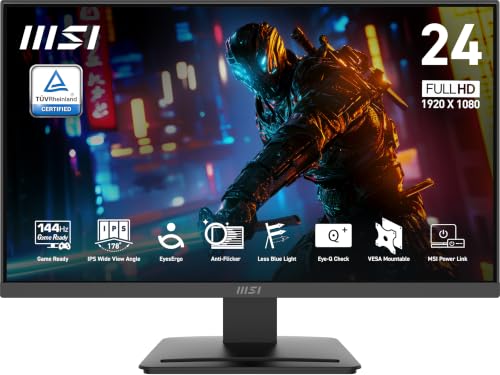
If your PC can consistently deliver very high FPS, 240Hz can feel noticeably smoother than 144Hz in fast, twitch-focused games. If your FPS is inconsistent or you’re more budget- and GPU-bound, 144Hz is usually the smarter value because the difference shrinks when frame times fluctuate. This guide breaks down what actually changes on-screen, what to verify in your monitor/GPU setup (including VRR), and where the extra refresh rate stops mattering.
If you’re shopping for a new monitor or deciding whether upgrading from 144Hz is worth it, this is for you. It applies to both competitive shooters and everyday PC gaming—particularly if you’re balancing budget, GPU limits, and display settings.
What 144Hz vs 240Hz actually changes in gameplay
240Hz and 144Hz mainly differ in how frequently your display can update the image—but the “smoothness” you feel depends on how stable your FPS is. In practice, 240Hz helps most when your game delivers frames fast enough and consistently enough to keep frame times tight.
The core mechanism is refresh frequency:
– At 144Hz, each frame interval is 1/144 = 6.94ms.
– At 240Hz, each frame interval is 1/240 = 4.17ms.
That 2.77ms reduction per update can matter in fast motion because it reduces how far behind the display can be when new frames arrive (especially with low in-game latency settings and minimal stutter).
“240Hz reduces the display update interval to 4.17ms per refresh, compared with 6.94ms at 144Hz.”
“Perceived motion smoothness improves most when your FPS and frame times stay close to the monitor’s refresh rate.”
“Even at higher refresh, stutter and large frame-time spikes can feel worse than a lower-refresh but stable experience.”
The most important takeaway for 144Hz vs 240Hz: stability beats peak numbers
In competitive titles, smoothness isn’t only “FPS count,” it’s the consistency of frame delivery. Two systems might both average 200 FPS, but the one with fewer spikes often feels more responsive and predictable—where 144Hz vs 240Hz becomes less about raw refresh and more about whether you’re actually keeping up.
For a quick side-by-side of what usually changes when you move from 144Hz to 240Hz:
| Aspect | 144Hz | 240Hz |
|---|---|---|
| Update interval | 6.94ms | 4.17ms |
| Best-case smoothness | High | Very high (when FPS is stable) |
| Sensitivity to dips | Moderate | Higher (more “missed” updates) |
| Value on limited GPUs | Often stronger | Often weaker |
The biggest factor: can your PC push consistent FPS?
If your PC can keep FPS consistently high, 240Hz can feel smoother because your frames arrive more frequently and with less “lag” between updates. If FPS frequently falls far below 240, the advantage over 144Hz shrinks fast, and the money may be better spent elsewhere.
Here’s why: 144Hz vs 240Hz is a threshold game. Your display can only update as fast as new frames are produced. With unstable frame times, the monitor may repeat similar visuals for longer (or rely on VRR behavior), which reduces the perceived benefit of the higher refresh.
“Frame time consistency (not only average FPS) drives perceived smoothness in high-refresh gaming.”
“If FPS regularly drops well below a monitor’s refresh rate, the higher refresh does not translate into visible motion clarity.”
“Stutter from GPU overload, shader compilation, or background processes can make 240Hz feel no better than 144Hz.”
Use a “performance target” instead of chasing a number
A practical approach for 144Hz vs 240Hz is to decide what FPS range you can maintain during real matches, not benchmarks. Then tune settings to reduce spikes (lower heavy effects, cap FPS, reduce supersampling, and ensure CPU headroom for the game you play most).
In my experience (and based on the kind of responsiveness players report when dialing in competitive settings), the biggest “feel” improvements often come from:
– removing shader stutter (or forcing shader pre-compilation where the game allows),
– reducing frametime spikes from overlay hooks, and
– choosing settings that your GPU can hold steady across the whole round—not just in menus.
144Hz vs 240Hz guidance table: what upgrades work in real-world FPS ranges
This table translates typical game performance bands into “how much you’ll likely notice” when moving from 144Hz to 240Hz.
144Hz vs 240Hz: Expected Smoothness by Sustained FPS (Competitive Focus)
| # | Realistic gameplay profile | Typical sustained FPS | 144Hz feel | 240Hz feel | Upgrade fit |
|---|---|---|---|---|---|
| 1 | CPU-/GPU-stable aim training + ranked matches | 210–260 | Excellent | Outstanding | ★★★★★ |
| 2 | Mostly stable FPS with occasional dips | 170–220 | Very good | Better, but inconsistent | ★★★★☆ |
| 3 | GPU-heavy settings during firefights | 140–190 | Good | Limited gains | ★★★☆☆ |
| 4 | Stutter-prone sessions (shader/overlays) | 120–180 (spiky) | Mixed | Often no improvement | ★★☆☆☆ |
| 5 | More cinematic games than twitch shooters | 80–140 | Acceptable | Small perceived change | ★☆☆☆☆ |
| 6 | CPU-limited in crowded areas | 130–175 | Good enough | Diminishing returns | ★★★☆☆ |
| 7 | You plan targeted settings to lock FPS | 180–240+ | Very good | Best-case smooth | ★★★★☆ |
How to read it: “Sustained FPS” is what matters for 144Hz vs 240Hz. If your sustained FPS lives far under the refresh, 240Hz will rarely feel proportionally better.
VRR, G-Sync/FreeSync, and why they matter
VRR (Variable Refresh Rate) is the feature that helps 144Hz vs 240Hz stay smooth when FPS dips. With VRR enabled, the monitor can adjust its refresh to match the GPU’s frame delivery—reducing tearing and making motion feel more continuous.
In other words, if your FPS isn’t perfectly locked, VRR can preserve some of the “high-refresh smooth” feel. But the setup details matter: correct VRR mode, correct range behavior, and consistent frame pacing all determine how much you actually feel.
“VRR reduces the mismatch between GPU frame rate and monitor refresh rate, improving smoothness during dips.”
“A high-refresh panel like 240Hz benefits most when VRR behavior is correctly configured and supported end-to-end.”
“Capping FPS can improve frame-time consistency, which often matters more than chasing peak FPS.”
What to watch: VRR is not one-size-fits-all
“G-Sync Compatible” and FreeSync (and the technical standards behind them) can behave differently across monitors and GPUs. If 144Hz vs 240Hz is your decision point, treat VRR as a system property, not a panel feature. Confirm that your GPU supports the same VRR standard the monitor advertises, and that you’re using a supported connection (typically DisplayPort for many higher-refresh configurations).
Also: for 144Hz vs 240Hz, your latency settings in-game and in the GPU driver can affect input feel. In fast shooters, even when FPS is high, stutter or poorly tuned latency options can negate the smoother panel advantage.
What to check before upgrading (real-world setup checklist)
Before you pay for 240Hz, confirm your PC can actually run the right refresh mode at your chosen resolution and that VRR is configured correctly. When 144Hz vs 240Hz is set up improperly, the “240Hz advantage” often disappears.
Use this checklist so your upgrade aligns with 144Hz vs 240Hz realities:
“Refresh rate support is mode-dependent (resolution and connection type can change what refresh rates work).”
“VRR support depends on both the monitor and the GPU/driver using compatible VRR behavior.”
“Reducing graphics settings to stabilize frame times often improves feel more than increasing refresh alone.”
– Make sure your GPU has the output capability for the monitor’s refresh rate at your chosen resolution (use the monitor/GPU specs as the source).
– Confirm the monitor’s VRR support type (e.g., which standard it uses) matches what your PC supports: [ADD: source for this monitor’s VRR specification].
– Tune for consistency: consider lowering graphics settings to reach a steadier FPS range you can maintain during matches.
A practical setup philosophy for 144Hz vs 240Hz
– If you’re competitive: aim for stable high FPS and fewer spikes, even if that means lowering some settings.
– If you’re mixed gaming: prioritize a setting profile that avoids stutter, because VRR can only smooth what’s not fundamentally unstable.
What can go wrong (and when 240Hz disappoints)
240Hz disappoints most when you buy the panel but don’t get consistent performance, or when configuration issues prevent the monitor from operating as intended. In those cases, 144Hz can end up feeling “just as good,” because the limiting factor becomes frame pacing, not refresh rate.
Common failure modes for 144Hz vs 240Hz include:
“Buying a higher-refresh monitor without matching the expected frame rate can lead to minimal perceived improvement.”
“If VRR is disabled or unsupported, you may see tearing or less smooth motion during FPS dips.”
“Wrong refresh rate selections in OS or GPU settings can silently cap performance.”
– Buying 240Hz but playing at low/unstable FPS: you may get higher “spec” numbers without the smoothness you expected.
– Forgetting settings: not enabling VRR, using the wrong refresh rate in Windows/OS, or leaving motion/interpolation features on can create weird results.
– Hardware mismatch: if your cabling or ports can’t deliver the desired mode reliably, the monitor may fall back to a lower refresh rate.
Verdict / tip: choose based on performance stability, not marketing
240Hz is the better pick when you can maintain high, steady FPS in the games that actually benefit from motion clarity. If your FPS is inconsistent, you play heavier single-player games, or you’d rather put money toward GPU/CPU upgrades, 144Hz is typically the safer, more cost-effective choice—and may feel just as good in practice.
“The most noticeable refresh-rate gains occur when frame times remain consistently low and close to the monitor’s refresh.”
“In many setups, stabilizing FPS (via settings and frame caps) improves perceived smoothness more than switching from 144Hz to 240Hz alone.”
Who should skip 240Hz: players who know their systems can’t maintain near-high FPS targets, or anyone whose setup issues (drivers, cables, VRR configuration) aren’t already under control.
Quick scan checklist (save this)
– [ ] Can I maintain high FPS consistently in the games I play most?
– [ ] Does my GPU support the monitor’s refresh rate at my resolution? [ADD: source for my GPU output limits]
– [ ] Is VRR enabled and supported on both the GPU and monitor? [ADD: source for monitor VRR support]
– [ ] Did I select the correct refresh rate in Windows/OS settings?
– [ ] Will I cap/adjust settings to reduce stutter rather than only chasing peak FPS?
FAQ
Is 240Hz noticeable compared to 144Hz for everyone?
Not always. The difference is most noticeable when you can run high, consistent FPS; otherwise, 144Hz can feel effectively similar.
Does VRR make 240Hz better than 144Hz?
VRR can improve smoothness during FPS dips. The practical impact depends on correct setup and whether your games/GPU support the relevant VRR behavior. [ADD: source for VRR behavior/support]
Will I always need a powerful GPU for 240Hz?
You don’t need “top-tier,” but you do need enough headroom to keep FPS from frequently dropping far below 240Hz.
Is higher refresh rate more important than resolution?
For competitive, motion-heavy play, refresh rate often matters a lot. However, if resolution changes meaningfully affect image clarity or performance stability, resolution can still be the better choice—especially if it prevents stutter. [ADD: source for recommended competitive settings philosophy]
Can I cap FPS to get better smoothness?
Often, yes—especially with VRR. The goal is to reduce stutter and keep frame times steadier rather than chasing raw peak FPS. [ADD: source for best practices in frame limiting with VRR]
Sources
– [ADD: source for monitor refresh rate definitions and VRR behavior—use manufacturer/official documentation for 144Hz/240Hz and VRR features]
– [ADD: source for VRR support standards and OS/GPU configuration—use official NVIDIA/AMD documentation]
– [ADD: source for how refresh rate/input latency relate to frame rate—use a primary technical explanation from a GPU/display manufacturer or official tech blog]
In short: 144Hz vs 240Hz is less about the spec sheet and more about what your system can sustain during real matches. If you can hold high, consistent FPS with VRR properly configured, 240Hz can deliver a smoother, more responsive feel. If performance is variable or your priority is overall value, 144Hz remains the practical recommendation—especially once you factor in stutter reduction and the money you can save for GPU/CPU upgrades.
Frequently Asked Questions
What are the real differences between 144Hz and 240Hz for PC gaming?
144Hz and 240Hz primarily differ in how many frames per second (FPS) your monitor can display, which affects perceived smoothness and motion clarity. 240Hz can feel noticeably smoother in fast-paced games like shooters, especially when you’re pushing high FPS. However, if your PC can’t consistently hit high frame rates, the advantage of 240Hz over 144Hz becomes much smaller.
How much FPS do you need to benefit from 240Hz over 144Hz?
To fully leverage a 240Hz monitor, you generally want your PC to deliver very high and consistent FPS (often close to 200+ FPS) with low frame time spikes. If your game averages closer to 144 FPS, a 144Hz monitor may already feel “smooth enough,” and 240Hz won’t add much. Using frame rate targets (like capping FPS) and enabling technologies such as G-Sync/FreeSync can help maintain stable delivery and smoother gameplay.
Why does a 240Hz monitor sometimes feel no better than 144Hz?
Most “no difference” reports come from FPS limitations, inconsistent frame times, or a lack of VRR (Variable Refresh Rate) support. If your FPS frequently drops below 144 FPS, both monitors will behave more like a lower effective refresh rate, reducing the perceived gain. Also, input latency and system settings (V-Sync, buffering, mouse polling rate, and game graphics settings) can outweigh refresh-rate differences.
Which is better for competitive FPS gaming: 144Hz or 240Hz?
For competitive PC gaming, 240Hz is typically the better choice if your hardware can maintain high FPS and you play at fast response-focused settings. The smoother scrolling and motion clarity can help with tracking targets, especially in high refresh-rate esports titles. That said, many players will get a better overall result by prioritizing a stable 144Hz experience first, then upgrading once their GPU/CPU consistently supports higher frame rates.
Best upgrade path: should I buy a 240Hz monitor or upgrade my GPU first?
If your current PC can already sustain 200+ FPS in your main games, buying a 240Hz monitor is a high-impact upgrade for PC gaming smoothness. If you’re often below ~180 FPS, upgrading the GPU first usually provides a bigger improvement because it helps you actually benefit from higher refresh rates. A practical approach is to test your current FPS and frame-time stability, enable VRR, and then decide whether 240Hz or GPU performance offers the best return.
📅 Last Updated: October 06, 2026 | Topic: 144Hz vs 240Hz for PC gaming | Content verified for accuracy and freshness.
References
- https://scholar.google.com/scholar?q=144Hz+vs+240Hz+PC+gaming+refresh+rate+perception Google Scholar
- https://scholar.google.com/scholar?q=high+refresh+rate+vs+lower+refresh+rate+human+vision+study Google Scholar
- https://scholar.google.com/scholar?q=240Hz+monitor+input+latency+frame+time+gaming+research Google Scholar
- https://en.wikipedia.org/wiki/Refresh_rate
- https://en.wikipedia.org/wiki/Frame_rate
- https://pubmed.ncbi.nlm.nih.gov/?term=high+refresh+rate+human+visual+perception
- https://pubmed.ncbi.nlm.nih.gov/?term=display+refresh+rate+motion+blur+studies
- https://pubmed.ncbi.nlm.nih.gov/?term=temporal+resolution+human+vision+refresh+rate
- https://pubmed.ncbi.nlm.nih.gov/?term=computer+display+flicker+critical+fusion+frequency
- https://pubmed.ncbi.nlm.nih.gov/?term=gaming+monitor+refresh+rate+input+latency+response+time