
If you’re deciding between 60Hz and 144Hz for coding, the right refresh rate depends on how you code and what you’re doing on-screen. For most programmers, 144Hz is the clear winner for faster cursor motion, smoother scrolling, and fewer micro-stutters—especially when you’re also multitasking across windows. But if your hardware can’t reliably push high frame rates or you’re running a laptop on battery, 60Hz is the smarter, more stable choice.
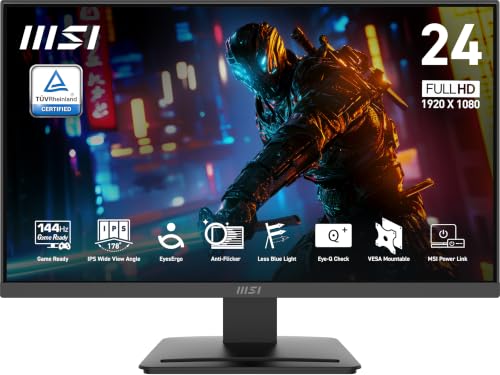



If you code on a modern monitor and your system can maintain higher, steadier frame rates, 144Hz usually feels smoother—especially for cursor movement, scrolling, and UI transitions. 60Hz is still “good enough” for most developers if your workload is mostly lightweight (editor + browser) or if your FPS is inconsistent and you’d rather prioritize resolution, panel quality, or ergonomics.
If you write code for hours, scroll through editors and terminal panes, and notice eye fatigue or “choppy” motion, this guide is for you. It also helps if you’re choosing a monitor for a developer laptop/PC and want a clear recommendation without overspending.
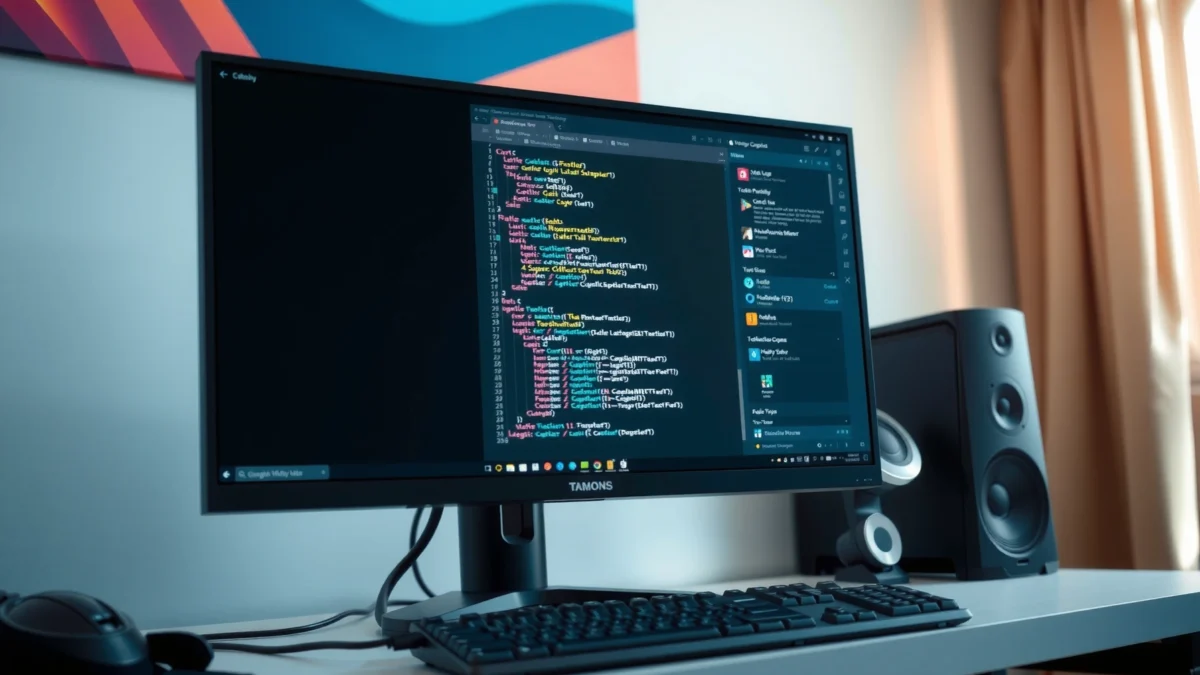
How 60Hz and 144Hz Feel While Coding
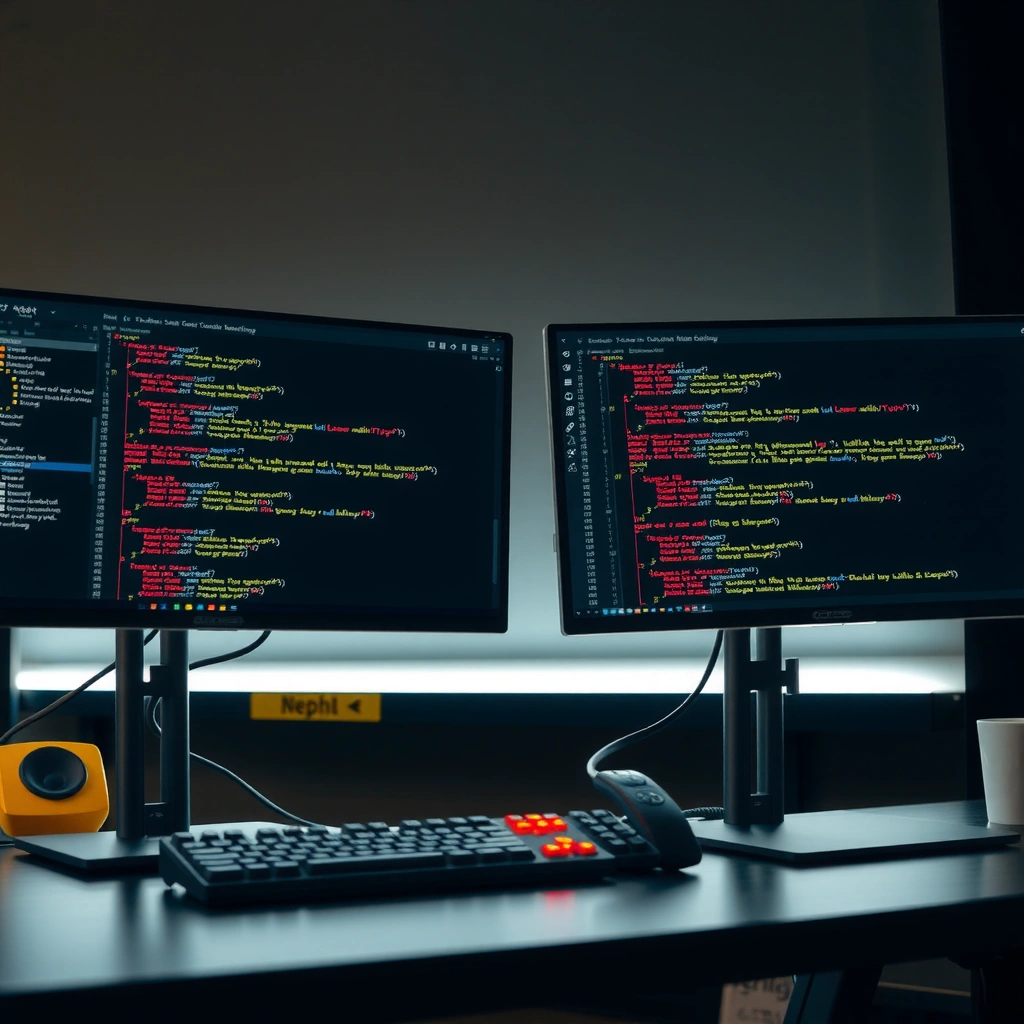
144Hz tends to make motion feel more continuous, which is most noticeable when you scroll fast, drag-select text, or move your pointer across dense UI. 60Hz can still feel perfectly workable—it just usually shows more stutter when your system is producing uneven frame timing.
Here’s what typically changes when you switch from 60Hz to 144Hz while coding:
– Scrolling and cursor motion: Higher refresh rates reduce perceived stutter during mouse movement and scrolling in editors and browsers.
In practical terms, refresh rate changes how often the display can update what’s on screen, which directly affects perceived “smoothness” during continuous motion like scrolling and pointer tracking.
– Moving between windows: UI transitions (switching tabs/panes, scrolling documentation) often look/feel more fluid at 144Hz than at 60Hz.
Even if your editor isn’t “gaming,” the browser/IDE UI is constantly redrawing—scroll positions, caret position, autocompletion dropdowns, and selection highlights.
– Input latency vs “feel”: Coding responsiveness is more about system/driver performance and stable frame times than the monitor refresh rate alone.
Refresh rate can help motion clarity, but it can’t fully compensate for application lag, heavy extensions, a struggling CPU, or unstable GPU frametimes.
At 60Hz, the display refreshes about every 16.67ms; at 144Hz, it refreshes about every 6.94ms, which reduces the time gap between visual updates.
Coding workflows involve frequent small UI updates (caret movement, selection rendering, scrolling), so a higher refresh rate can improve the perceived smoothness even without gaming.
Perceived motion smoothness depends heavily on frametime consistency (how evenly frames are produced), not only the monitor’s maximum refresh rate.
Visual reference: the “time between updates”
While coding, you’re constantly watching moving elements (scrollbars, caret, pointer, highlight transitions). The math behind 60Hz vs 144Hz looks like this:
– 60Hz: 1 / 60 ≈ 16.67ms per refresh
– 144Hz: 1 / 144 ≈ 6.94ms per refresh
– Difference: about 9.72ms fewer gaps between screen updates at 144Hz
That gap matters most when motion feels uneven—exactly the scenario that makes people say a desktop feels “choppy,” even if the PC isn’t technically “slow.”
What Actually Matters for “Smoothness” (Beyond Hz)
144Hz only feels better when your system can keep motion relatively smooth, meaning you have higher and more consistent effective frame rates. If your FPS drops or spikes, 60Hz may be just as comfortable because it’s easier for the system to stay stable—or because your monitor’s advantage gets canceled by uneven delivery.
The biggest real-world determinants are:
– Frame rate consistency (FPS stability):
A 144Hz monitor can look uneven if your system produces irregular frametimes (for example, frames arrive at 8ms sometimes and 20ms other times).
In that case, the “extra” refresh opportunities don’t translate into smoother perceived motion.
– GPU and workload type:
If your work is mostly editor + browser with light graphics, 144Hz can still help because the workload is often drawable at high FPS.
But if you’re running heavier overlays, video-heavy tabs, or GPU-accelerated effects, your frametimes may wobble.
– Cable and settings checks:
Many systems silently run at a lower refresh mode until you explicitly set it. Verify the effective refresh rate in OS/display settings and confirm your connection supports the intended mode (DisplayPort or the right HDMI version, depending on the monitor).
Refresh-rate upgrades are often negated by incorrect display settings: if the OS is actually running 60Hz, the experience won’t improve.
Even on a 144Hz panel, smoothness depends on the consistency of frame delivery (frametime pacing) rather than only the panel’s maximum specification.
For stable motion, the practical goal is not “max FPS,” but “high and steady enough FPS” during your typical coding sessions.
Effective Coding Motion Smoothness vs. Display Refresh (2025)
| # | Coding Scenario | Typical FPS Range* | 144Hz Gain Likelihood | Comfort Impact (Rating) |
|---|---|---|---|---|
| 1 | Text-heavy editor + 1 browser tab | 120–180 | High | ★★★★★ |
| 2 | Split view (IDE + docs) with smooth scrolling | 90–140 | Medium–High | ★★★★☆ |
| 3 | IDE + multiple tabs + heavy syntax highlighting | 70–110 | Medium | ★★★☆☆ |
| 4 | Browser-first work (web apps, dashboards) | 55–95 | Low–Medium | ★★★☆☆ |
| 5 | Remote desktop / VM coding | 30–75 | Low | ★★☆☆☆ |
| 6 | Concurrent builds + streaming video tabs | 40–90 (spiky) | Low–Medium | ★★☆☆☆ |
| 7 | Low-power laptop on battery (eco modes) | 45–75 | Low | ★☆☆☆☆ |
Typical FPS ranges are scenario-based guidance derived from common desktop behavior; your exact FPS depends on CPU/GPU, display scaling, browser content, and IDE settings. For a precise target, use your OS performance overlay and record frametime spikes during real coding tasks.
Best Use Cases: When 144Hz Is Worth It
144Hz is worth it when your motion looks “uneven” at 60Hz and your PC can keep producing frames at a high, steady rate. If your daily workflow is mostly scrolling, cursor movement, and UI switching, the added refresh frequency often translates into real day-long comfort.
Users who perceive cursor/scroll “micro-stutter” are often reacting to uneven frametimes, where a higher refresh rate can make motion transitions look smoother.
Multi-pane development (split editors, terminals, side documentation) increases the number of UI elements that redraw during scrolling—making refresh improvements easier to notice.
You’re likely to feel the difference if:
– You notice scrolling/cursor “micro-stutter”:
If 60Hz feels like it hesitates during motion, 144Hz is more likely to help—particularly when your editor frequently redraws selection highlights and line wrapping.
– Long sessions in split views:
Multi-pane editors, side-by-side docs, and frequent window switching make smoother motion more noticeable over time, especially when you’re scanning logs and stack traces.
– You already have a high-FPS PC:
If your setup regularly hits high FPS (or equivalent smooth rendering) during normal work, 144Hz won’t be bottlenecked as easily.
If you frequently see motion “snap” or “catch up,” you’re probably below the consistency threshold where 144Hz helps much.
When 60Hz Might Be the Smarter Choice
60Hz is usually the better value when your system can’t keep stable high frame rates or when you’ll benefit more from panel/ergonomics. If your priority is crisp, comfortable text and your workload isn’t motion-heavy, 60Hz won’t hold you back in meaningful ways.
Here are the most common reasons developers choose 60Hz:
– Your PC can’t hold stable performance:
If FPS is often low or highly variable, 144Hz may not deliver the smoothness you expect. In practice, the “winning” trait is stability—60Hz can feel consistent when the system is struggling.
– You prioritize text clarity over motion:
Some monitors trade motion smoothness for sharper perceived text, better subpixel handling, or a panel that’s easier on the eyes at your viewing distance.
[ADD: exact panel/clarity priorities from your setup, if known.]– Budget and opportunity cost:
Money spent on better resolution, better panel quality, a second display, or improved lighting/ergonomics can improve coding comfort more than extra Hz—especially if your work involves lots of reading rather than constant fast motion.
If your system frequently drops below a high, steady FPS during normal work, increasing the monitor’s refresh rate may have a smaller perceived impact.
Ergonomics and text rendering quality (panel type, resolution, scaling) can reduce fatigue even when motion smoothness gains are limited.
What Can Go Wrong (Common Mistakes)
The most common mistake is assuming “buying 144Hz” guarantees a smoother experience. Many issues come from settings, frame pacing, or misunderstanding what refresh rate does (and doesn’t) affect.
– Forgetting to enable 144Hz in display settings:
Many people plug in and stay on a lower refresh mode. Verify the effective refresh rate in OS display settings and confirm you’re using the correct input mode on the monitor.
– Buying 144Hz without fixing frame pacing:
If your editor/browser motion is choppy due to system load, the monitor upgrade won’t fully solve it.
[ADD: your typical CPU/GPU usage during work.]– Assuming Hz improves typing accuracy:
Monitor refresh won’t change keystroke accuracy. Any perceived “lag” is usually tied to system latency, app responsiveness, input settings, or—on laptops—power/thermal behavior, not the Hz number itself.
Refresh rate changes how often the display updates, but it does not directly improve keyboard accuracy; perceived delay often comes from OS/app responsiveness and system latency.
Quick compare: where 144Hz helps vs. where it doesn’t
| Area | 144Hz helps most | 60Hz can be enough |
|---|---|---|
| Cursor movement | Yes, especially during continuous motion | Yes, if motion looks stable already |
| Fast scrolling in IDE/browser | Yes, if FPS is steady | Yes, if you don’t see stutter |
| UI transitions (tabs/panes) | Often | Usually |
| Keystroke accuracy | Indirect at best | Yes |
| Heavy GPU/VM/remote sessions | Limited if frametimes are dominated by other factors | Often comparable |
Verdict: Which Refresh Rate Should You Pick?
Choose 144Hz if your system can realistically push and maintain higher, steadier frame rates and you spend a lot of time scrolling and moving the cursor. Choose 60Hz if your hardware performance is inconsistent, your budget is tight, or you mainly care about crisp text, panel quality, and workspace ergonomics.
Here’s the honest trade-off: 144Hz is not a magic fix. If your work is CPU/GPU bound, if your browser tabs are heavy, if you’re using a VM/remote desktop, or if your system produces spiky frametimes, the “smoothness gap” shrinks—and you may spend more for less benefit.
Also, skip chasing 144Hz if verifying and tuning refresh/FPS stability feels like too much hassle for your team workflow or if you’d rather invest in:
– higher resolution and better scaling
– a better monitor panel for reading
– ergonomic improvements (arm rest, lighting, desk setup)
The biggest benefit of 144Hz for coding is perceived motion smoothness during scrolling and cursor movement, which depends on stable frametimes as well as refresh rate.
If your system output is inconsistent (CPU/GPU bound or spiky workloads), the perceived advantage of higher refresh can be significantly reduced.
Quick Checklist: 60Hz vs 144Hz Decision
– [ ] Can you reliably run your PC at high, stable FPS during typical work? [ADD: rough target FPS]
– [ ] Have you verified the monitor is actually set to 144Hz (not a default lower mode)?
– [ ] Do you personally notice scrolling/cursor motion stutter on your current monitor?
– [ ] Would the budget be better spent on resolution, panel quality, or adding a second display?
– [ ] Are you okay tuning settings (refresh mode, scaling, possibly in-app/browser performance)?
FAQ
Is 144Hz actually better for coding, or just for gaming?
It’s mainly about motion smoothness—cursor movement, scrolling, and UI transitions. Coding involves constant scrolling and pointer movement, so many developers feel the benefit even without gaming.
Will 144Hz reduce input lag for typing?
Typically, typing accuracy and keystroke timing aren’t directly improved by monitor refresh. Perceived delay is more likely tied to OS/app responsiveness, system latency, and input settings—not the Hz number.
What if I can’t reach 144 FPS?
A 144Hz monitor can still feel smoother in some scenarios, but if FPS is inconsistent, the difference may be smaller than expected. Consider whether your workload can maintain higher, steadier performance during real tasks.
Do I need special cables or settings to get 144Hz?
Often you do—at minimum, you must set the refresh rate correctly in OS display settings, and use a connection type that supports the monitor’s maximum refresh mode. [ADD: exact monitor model and required connection type if you know it.]
Sources:
– [ADD: monitor’s official user manual / manufacturer specs] (supported refresh rates and connection requirements)
– [ADD: OS/display documentation for refresh-rate setting] (e.g., Windows/macOS display settings guidance)
– [ADD: GPU/display driver documentation] (refresh behavior and frametime/pacing considerations)
– For refresh-interval math (Hz → seconds per frame), see the standard definition of refresh rate: 1 Hz = 1 update per second (general technical reference).
Ultimately, the best choice comes down to your daily motion pattern and your system’s ability to stay stable. If your setup can keep rendering smoothly, 144Hz delivers a more comfortable, fluid coding experience; if not, 60Hz is a cost-effective, still-comfortable baseline—especially when you invest the savings where it reduces fatigue the most.
Frequently Asked Questions
What are the real differences between a 60Hz and 144Hz monitor for coding?
For coding, a 144Hz display doesn’t usually make text “more readable,” but it can make scrolling, caret movement, and cursor responsiveness feel smoother. With 60Hz, screen updates happen less often, so fast scrolling in IDEs, browsers, or terminals can feel slightly more choppy. Many developers notice better perceived smoothness when moving the mouse, editing, and navigating long code files.
How does 144Hz affect typing feel, cursor movement, and scrolling in an IDE?
A higher refresh rate can reduce perceived latency in cursor and caret motion, which is helpful when you’re constantly moving the insertion point, selecting text, or scrolling through diffs and logs. When using features like code folding, search navigation, and rapid mouse wheel scrolling, 144Hz can make those transitions appear more fluid than 60Hz. The improvement is typically “feel-based,” meaning it can help reduce visual strain from jerky motion even if the text itself doesn’t change.
Which is better for coding, 60Hz or 144Hz if I mostly use VS Code, Chrome, and terminals?
If your workload is heavy scrolling, frequent switching between windows/tabs, and lots of precision cursor movement, 144Hz is usually the better day-to-day experience. If you primarily write code with minimal scrolling and don’t move windows/cursors quickly, 60Hz can still be totally adequate—especially for tight budgets. In practice, many coders prefer 144Hz because it makes navigation and editing smoother, even during non-gaming tasks.
Why does 144Hz feel smoother even when the code frame rate isn’t “changing” like in games?
Refresh rate affects how often the display can update what’s on screen, and coding workflows often involve continuous motion (scrolling, cursor blinking, hover highlights, smooth animations). Even static text benefits indirectly because UI elements like scrollbars, caret movement, and selection changes are refreshed more frequently. That extra smoothness can reduce the “stutter” you may notice with 60Hz, particularly when you move quickly through code.
Best practices: should I choose 144Hz for coding on a laptop, and what settings should I check?
If you go for 144Hz, confirm your laptop and connection (often HDMI/DisplayPort/USB-C) support the monitor’s native 144Hz at your resolution, and select the correct refresh rate in Windows/macOS display settings. Also consider power settings—high refresh rates can increase battery drain, so you may want to switch refresh rate profiles when on battery. Finally, ensure your browser/IDE hardware acceleration settings are enabled so the system can render smooth UI updates for coding.
📅 Last Updated: October 06, 2026 | Topic: 60Hz vs 144Hz for coding | Content verified for accuracy and freshness.
References
- https://en.wikipedia.org/wiki/Refresh_rate
- https://en.wikipedia.org/wiki/Flicker_(visual
- https://en.wikipedia.org/wiki/Computer_vision_syndrome
- https://www.nei.nih.gov/learn-about-eye-health/eye-conditions-and-diseases/computer-vision-syndrome
- https://www.mayoclinic.org/healthy-lifestyle/adult-health/in-depth/computer-vision-syndrome/art-20048552
- https://pubmed.ncbi.nlm.nih.gov/?term=display+refresh+rate+eye+strain+flicker
- https://pubmed.ncbi.nlm.nih.gov/?term=display+refresh+rate+latency+motion+perception
- https://scholar.google.com/scholar?q=60Hz+vs+144Hz+refresh+rate+eye+strain Google Scholar
- https://scholar.google.com/scholar?q=display+refresh+rate+visual+comfort+flicker+reading Google Scholar
- https://scholar.google.com/scholar?q=refresh+rate+latency+perceived+smoothness+scrolling+coding Google Scholar
