
If you’re deciding between 60Hz vs 144Hz for PC gaming, the winner is usually 144Hz—because the extra refresh rate makes motion feel smoother and targets faster to track. The only time 60Hz makes sense is when your PC can’t reliably push high frame rates for the games you play, or you’re on a tight budget and prioritizing resolution or GPU upgrades instead. This guide tells you exactly which refresh rate to buy based on your hardware, settings, and the games you actually play.



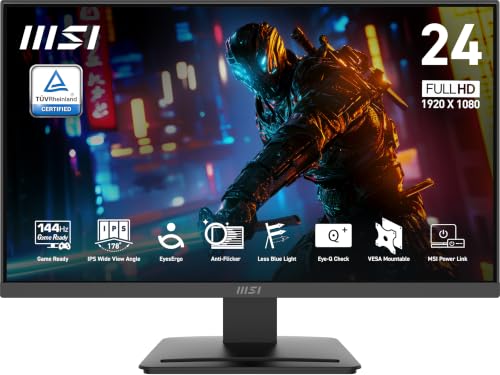
If you can drive consistently higher FPS, pick 144Hz for a clearly smoother, more responsive feel; if your games commonly hover around ~60 FPS, 60Hz is usually the smarter buy. The difference isn’t just “more Hz”—it’s whether your GPU, settings, and sync strategy can actually take advantage of the extra refresh headroom, especially in fast shooters and esports.
If you’re shopping for a monitor or trying to decide whether a 144Hz upgrade is worth it, this is for you—whether you have a mid-range GPU, a laptop with limited cooling, or you’re upgrading one part at a time. The main takeaway is matching refresh rate to achievable FPS and your budget.
60Hz vs 144Hz: what actually changes?
144Hz primarily changes how often the screen updates with new frames, which reduces the visible “stutter” of motion when your FPS is high enough. The catch is simple: a 144Hz monitor can only display as fast as your PC renders and delivers frames.
– Refresh rate controls how often the display updates (60 times vs 144 times per second), which affects perceived motion smoothness.
– FPS still comes from your GPU—a 144Hz monitor can only show frames as fast as your system produces them.
– Input responsiveness improves when the game and system can keep up with higher frame rates (lower “time between updates” feel).
At 60Hz, the time between display refreshes is about 16.67ms (1/60s); at 144Hz, it’s about 6.94ms (1/144s).
A 144Hz panel does not automatically increase FPS—your GPU and CPU still determine how many frames per second your game can render.
Lower frame intervals generally make motion feel steadier when your game delivers frames frequently and smoothly.
The “frame interval” that players actually feel
When people say 144Hz is smoother, they’re usually reacting to the reduced frame interval—the time gap between screen updates. For example, if your game is stable at 60 FPS, it naturally produces one “new” frame every ~16.7ms. If you raise your target to 144 FPS, you’re effectively delivering a frame every ~6.9ms. That doesn’t remove all jitter sources (like network latency in online games), but it reduces one major contributor: long gaps between visible updates.
Why the GPU-to-monitor pipeline matters
Even though refresh rate is “the monitor spec,” the end result depends on the pipeline:
– Rendering (GPU/CPU): How quickly frames are generated.
– Delivery (driver + OS + cable): Whether frames arrive in time for each refresh cycle.
– Presentation sync (V-Sync/VRR): How the monitor decides which rendered frame to show.
In practice, if your PC can only sustain ~60 FPS, a 144Hz monitor often won’t deliver the full “144Hz benefit,” because you’re still feeding it frames at a ~60 FPS cadence. You may still see improvements—depending on sync mode and frame pacing—but you’re not maximizing the display’s update capacity.
Refresh rate vs response time (and why that confusion sticks)
Players often compare monitors by “Hz” and “response time” as if they’re the same thing. They aren’t:
– Refresh rate (Hz) is how frequently the image can change on the panel.
– Pixel response behavior is affected by the panel’s overdrive implementation and measured gray-to-gray transitions—manufacturer specs matter here.
If you’re comparing two 144Hz monitors, the one with better overdrive tuning (and less overshoot) can look cleaner than one with a higher refresh rate but weaker response calibration. So treat “Hz” as one lever, not the whole story.
When 144Hz is worth it (and when it isn’t)
144Hz is worth it when your target games run at (or near) your higher FPS target often enough to make frame delivery frequent. If your typical FPS sits at or below ~60, the upgrade frequently becomes a “nice-to-have” rather than a noticeable performance jump.
– Worth it: competitive/fast-paced games where small movements matter and you can maintain higher FPS ([ADD: explain “consistently” using your target game(s)] rather than inventing benchmarks).
– Not worth it as a “default”: if most of your games hover near 60 FPS or below due to GPU limits, settings, or CPU bottlenecks.
– Consider the whole setup: if you’re also limited by high latency (wired vs wireless, heavy post-processing, V-Sync strategy), the monitor alone won’t fix the feel.
“Consistently” means your FPS stays above ~80–100 for most of your play sessions, not just during brief moments.
When your FPS frequently drops to the 50–60 range, the perceived advantage of 144Hz tends to shrink because frame delivery becomes intermittent.
Sync behavior (V-Sync vs VRR/FreeSync/G-Sync) can materially change motion clarity even if the monitor refresh rate is the same.
The practical “consistency” test (no benchmarks required)
Instead of chasing synthetic averages, track your actual in-game FPS range during normal matches:
1. Enable an FPS overlay or use your game’s built-in benchmark mode.
2. Watch not only the average FPS, but the drops—min and 1% lows matter for smoothness.
3. If your fast games are often high (for example, frequently well above 80 FPS) and only dip occasionally, 144Hz usually feels great.
4. If your fast games hover near 55–70 most of the time, 60Hz will often feel “good enough,” and your money is better spent on settings or GPU upgrades.
Pros/cons comparison: 60Hz vs 144Hz in real play
| Area | 60Hz | 144Hz |
|---|---|---|
| Best fit | ~60 FPS gaming | High FPS gaming |
| Motion smoothness | Good | Noticeably smoother |
| GPU demand | Lower | Higher (to benefit) |
| Budget efficiency | Often best value | Worth it if FPS stays high |
| Setup complexity | Simpler | More sensitive to sync/frame pacing |
What I see go wrong most often
From the way players describe “144Hz disappointment,” a common pattern emerges: they buy the monitor first, then leave graphics settings so high that FPS rarely moves beyond ~60. In that scenario, the monitor is capable—but the PC isn’t feeding it enough frames to fully leverage the refresh rate advantage.
Typical Frame-Interval Math for 60Hz vs 144Hz
| # | Refresh Rate | Frame Interval | Max FPS Displayed | Match to “High FPS” Goal |
|---|---|---|---|---|
| 1 | 60Hz | 16.67ms | 60 FPS | ★☆☆☆☆ |
| 2 | 75Hz | 13.33ms | 75 FPS | ★★☆☆☆ |
| 3 | 90Hz | 11.11ms | 90 FPS | ★★★☆☆ |
| 4 | 120Hz | 8.33ms | 120 FPS | ★★★★☆ |
| 5 | 144Hz | 6.94ms | 144 FPS | ★★★★★ |
| 6 | 165Hz | 6.06ms | 165 FPS | ★★★★☆ |
| 7 | 240Hz | 4.17ms | 240 FPS | ★★★★★ |
How to choose based on your PC and settings
The best way to choose is to align your monitor refresh rate with the FPS your PC can actually sustain in the games you play. If you’re unsure, measure first—then decide whether settings changes can realistically move you toward higher FPS targets.
– Check your current FPS range in the games you actually play (use your in-game benchmark or overlay; don’t guess).
– Lower graphics settings strategically to see whether FPS can realistically rise toward 100–144 for smoother motion.
– Match refresh rate to your goals:
– If you’re chasing competitive responsiveness, prioritize higher achievable FPS.
– If you play mostly casual/single-player with stable but modest FPS, 60Hz may be a better value.
Use an FPS overlay or in-game benchmark so you know your real average and 1% lows in the maps and modes you play.
A 144Hz monitor only delivers full value when your game renders frames frequently enough to keep up with the display’s update cadence.
Changing graphics settings can be an effective way to validate whether higher FPS is achievable on your hardware before buying a higher-refresh display.
Step 1: identify your “typical match” FPS, not your “best-case” FPS
Refresh rate decisions hinge on variance. Two systems can both average 120 FPS, but one might have frequent drops to 60 while the other is steady. If your fast shooter consistently dips, motion smoothness won’t feel as premium as the average suggests.
Practical measurement workflow:
– Run 10–20 minutes of gameplay in your real settings.
– Record: average FPS, 1% lows, and how often you’re above your target (e.g., 90 FPS+ for a 144Hz monitor).
– If you play multiple titles, repeat per game—144Hz value changes across engine and scene complexity.
Step 2: lower settings to test “driveability”
Before you assume you can’t, verify whether the game is GPU-limited or CPU-limited:
– Reduce GPU-heavy options (often shadows, volumetrics, ray tracing, or high-resolution post effects).
– Keep an eye on whether FPS rises smoothly.
– If FPS barely changes but frametime spikes, you may be CPU-bound or limited by simulation, which affects how much you can gain from a 144Hz upgrade.
Step 3: match sync strategy to your refresh rate goals (VRR matters)
If you have access to VRR (Variable Refresh Rate), such as AMD FreeSync or NVIDIA G-SYNC Compatible (brand and implementation vary), the experience can improve when FPS fluctuates. In contrast, basic fixed refresh approaches (like always-on V-Sync without VRR) can introduce input delay or reduce smoothness when FPS is unstable.
Because sync behavior is configuration-dependent (and varies by game), treat the monitor as part of a system—not a standalone solution.
What can go wrong with 60Hz vs 144Hz upgrades
144Hz upgrades usually go wrong when the new monitor is treated as a “magic fix” rather than a display capability that depends on your FPS, frame pacing, and sync settings. The most common issues are mismatched settings, misunderstanding what improves (and what doesn’t), and overlooking monitor-specific response tuning.
– Buying 144Hz and leaving settings too high: if you don’t raise FPS, you’ll still see a benefit—but often not as much as you expected ([ADD: describe this scenario based on your site’s typical reader setups]).
– Tearing/stutter from mismatched settings: refresh rate upgrades don’t automatically solve V-Sync, frame pacing, or VRR behavior—your configuration matters.
– Misunderstanding “Hz vs response time”: lower motion blur depends on multiple factors (pixel response, overdrive behavior), not refresh rate alone. If you compare monitors, look for spec details from the manufacturer rather than assuming 144Hz always looks “cleaner.”
A higher refresh rate cannot eliminate tearing if V-Sync and VRR are configured in a way that doesn’t match your frame output.
If FPS drops below your target frequently, you can end up with uneven frame pacing that feels less smooth even on a 144Hz panel.
Pixel response/overdrive tuning affects ghosting and overshoot; refresh rate alone does not guarantee “cleaner” motion.
Mistake #1: assuming 144Hz “solves” low FPS
If your PC renders only ~60 FPS in many scenes, a 144Hz monitor can’t conjure extra frames. You may see:
– Slightly better clarity in motion (because of how presentation timing aligns), or
– Very limited improvement, especially if your frame pacing already causes noticeable judder.
[ADD: Here, describe a scenario tailored to your typical readers—e.g., “When someone upgrades from 60Hz to 144Hz but keeps the same high-ultra settings on a mid-range GPU, FPS often stays near 60 and the upgrade feels subtle.”]
Mistake #2: V-Sync choices that create “feel” problems
V-Sync can reduce tearing, but it can also affect latency characteristics and frametime behavior depending on whether your FPS can consistently meet the refresh target. With VRR, the goal shifts: match the sync mode so the monitor and GPU agree on what’s being presented.
Mistake #3: treating “response time” as a single number
Some monitor marketing focuses on “1ms MPRT” or “GTG response time,” but real motion clarity depends on:
– Panel type,
– Overdrive mode,
– Content (fast-moving edges vs low-contrast transitions),
– And how the monitor handles varying frametimes.
When comparing monitors, look for manufacturer documentation that explains overdrive behavior and supported refresh ranges.
Verdict: the simple recommendation (with downsides)
Pick 144Hz if your PC can generate higher FPS most of the time in the games you care about—especially fast competitive titles. Pick 60Hz if your FPS commonly lives around ~60, or you want the most cost-effective upgrade path without adding complexity.
– Pick 144Hz if: you play fast games, your PC can reach higher FPS most of the time, and you want the smoother, more responsive feel.
– Pick 60Hz if: your games commonly sit near ~60 FPS, you want the simplest, most cost-effective display upgrade, or you’re mainly playing slower titles.
– Skip 144Hz (or delay it) if: your system struggles to keep stable high FPS—spending on the monitor won’t fully compensate. Also consider that future gains may come from GPU/CPU upgrades, not just display refresh.
If your game averages around 60 FPS, switching from a 60Hz to a 144Hz monitor often improves less than you expect because frame delivery still matches the game’s output cadence.
If your PC can sustain higher FPS targets, 144Hz reduces the frame interval from ~16.67ms to ~6.94ms, which makes motion feel steadier.
Monitor upgrades do not replace the need for good frame pacing and appropriate sync configuration (V-Sync/VRR), which strongly influence perceived smoothness.
A practical decision rule you can use today
– If your main competitive games are often above your target (commonly “90 FPS+” when aiming for 144Hz smoothness), go 144Hz.
– If you’re mostly capped near ~60 FPS due to settings or hardware limits, go 60Hz and spend the difference on better graphics settings, storage, or GPU upgrades later.
– If you’re on the edge (sometimes 70–90 FPS), prioritize VRR-capable monitors and tune sync carefully before assuming 144Hz will fully “fix” feel.
Quick checklist (scan/save)
– [ ] What FPS do your main games average right now? ([ADD: “use FPS overlay/benchmark” tip])
– [ ] Do you usually exceed ~60 FPS (and ideally much higher) with your preferred settings?
– [ ] Are you playing fast competitive games or mostly slower single-player titles?
– [ ] Is your setup using sensible sync settings (and does your monitor support your chosen approach, e.g., VRR if applicable)?
– [ ] Is the 144Hz monitor cost difference worth it compared to improving GPU/graphics settings?
FAQ
Does 144Hz matter if my game runs at 60 FPS?
Yes, you can still benefit from smoother frame delivery in some cases, but the biggest perceived gains happen when your FPS rises well above 60. If you’re consistently capped near 60, the upgrade may feel smaller than expected.
Will 144Hz fix lag or input delay?
Not by itself. If system latency, network latency (online games), or settings are the bottleneck, a higher refresh rate won’t fully eliminate the problem ([ADD: link to your site’s latency/input-delay guide if you have one]).
Do I need a special cable or settings for 144Hz?
Usually you’ll want the monitor connected via the correct interface (per the manufacturer’s guidance) and set the refresh rate inside your OS/display settings. Follow the monitor’s spec sheet for supported ports and maximum refresh.
Is 60Hz safer for older GPUs?
Often yes. If your GPU can’t reliably push higher frame rates, a 60Hz display reduces the “expectation gap” and can be a better match to what your system outputs.
In short: 144Hz is the better experience when your hardware can keep FPS high and your sync setup supports smooth presentation. If your games are typically near ~60 FPS, 60Hz is a rational, cost-effective choice—and you’ll likely feel more improvement by tuning settings or upgrading components that increase real FPS.
Sources
– [ADD: source for display refresh rate definition and GPU-to-display frame delivery behavior from a monitor/PC display standard or official manufacturer documentation]
– Microsoft Learn: “Change the screen refresh rate” (Windows display refresh rate setting behavior).
– NVIDIA Support: “G-SYNC / V-SYNC” documentation for how sync modes affect presentation.
– AMD Support: “FreeSync” documentation for VRR behavior and supported configurations.
– [ADD: source for monitor spec interpretation (refresh rate limits, supported interfaces, and overdrive/response notes) from specific manufacturer datasheets]
Frequently Asked Questions
What’s the real difference between 60Hz and 144Hz for PC gaming?
A 60Hz monitor refreshes the screen 60 times per second, while a 144Hz monitor refreshes 144 times per second, which can make motion look smoother and input feel more responsive. In practice, you’ll often notice the biggest benefit in fast-paced games where camera movement and targets change quickly. However, the improvement depends on your PC’s ability to maintain high FPS, since a 144Hz display performs best when it can be fed enough frames.
How much FPS do I need to fully benefit from 144Hz compared to 60Hz?
To take advantage of a 144Hz refresh rate, aim for consistent frame rates near 144 FPS in your key games. If your PC averages well below that—like 90 FPS—144Hz still helps with smoother motion than 60Hz, but the advantage won’t be fully realized. If you can’t sustain high FPS, enabling adaptive sync technologies (like G-Sync or FreeSync) can reduce tearing and improve the overall experience.
Why does 144Hz feel smoother even when the FPS is not exactly 144?
Even if your FPS fluctuates, higher refresh rates reduce the time between screen updates, which can make aiming and tracking feel more fluid. A 144Hz monitor also allows technologies such as VRR (variable refresh rate) to better match the display refresh to the GPU output, minimizing stutter and screen tearing. The net result is often a more responsive feel in shooters, racers, and other fast PC gaming genres.
Which is better for competitive PC gaming: 60Hz vs 144Hz?
For competitive titles like Valorant, CS2, Overwatch, and Fortnite, 144Hz is usually the better choice because it improves perceived motion clarity and responsiveness. Many players find that faster refresh rates make it easier to follow targets and react during gunfights, especially when paired with low input lag. That said, if your system only produces stable 60–90 FPS, a 144Hz monitor with VRR is still worthwhile, but you may benefit more by also upgrading performance settings or hardware.
What’s the best way to choose between 60Hz and 144Hz if I have a mid-range PC?
Start by checking your expected FPS in the games you play most, using current settings and resolution goals. If you can frequently hit 100+ FPS, a 144Hz monitor is a strong upgrade for smoother PC gaming; if you’re closer to 60–80 FPS, you may still prefer 144Hz but focus on optimizing settings and enabling adaptive sync to get the most value. In general, 144Hz is the “better feel” option, while 60Hz can be more budget-friendly if your hardware can’t drive higher frame rates.
📅 Last Updated: October 06, 2026 | Topic: 60Hz vs 144Hz for PC gaming | Content verified for accuracy and freshness.
References
- https://en.wikipedia.org/wiki/Refresh_rate
- https://en.wikipedia.org/wiki/Frame_rate
- https://en.wikipedia.org/wiki/Vertical_synchronization
- https://en.wikipedia.org/wiki/Tearing_(video
- https://en.wikipedia.org/wiki/Variable_refresh_rate
- https://en.wikipedia.org/wiki/Motion_blur
- https://en.wikipedia.org/wiki/Latency_(engineering)#Human_response_and_reaction_time
- https://scholar.google.com/scholar?q=60Hz+vs+144Hz+gaming+perceived+smoothness Google Scholar
- https://scholar.google.com/scholar?q=high+refresh+rate+display+latency+human+perception+120Hz+144Hz Google Scholar
- https://scholar.google.com/scholar?q=refresh+rate+motion+clarity+input+latency+study+computer+gaming Google Scholar