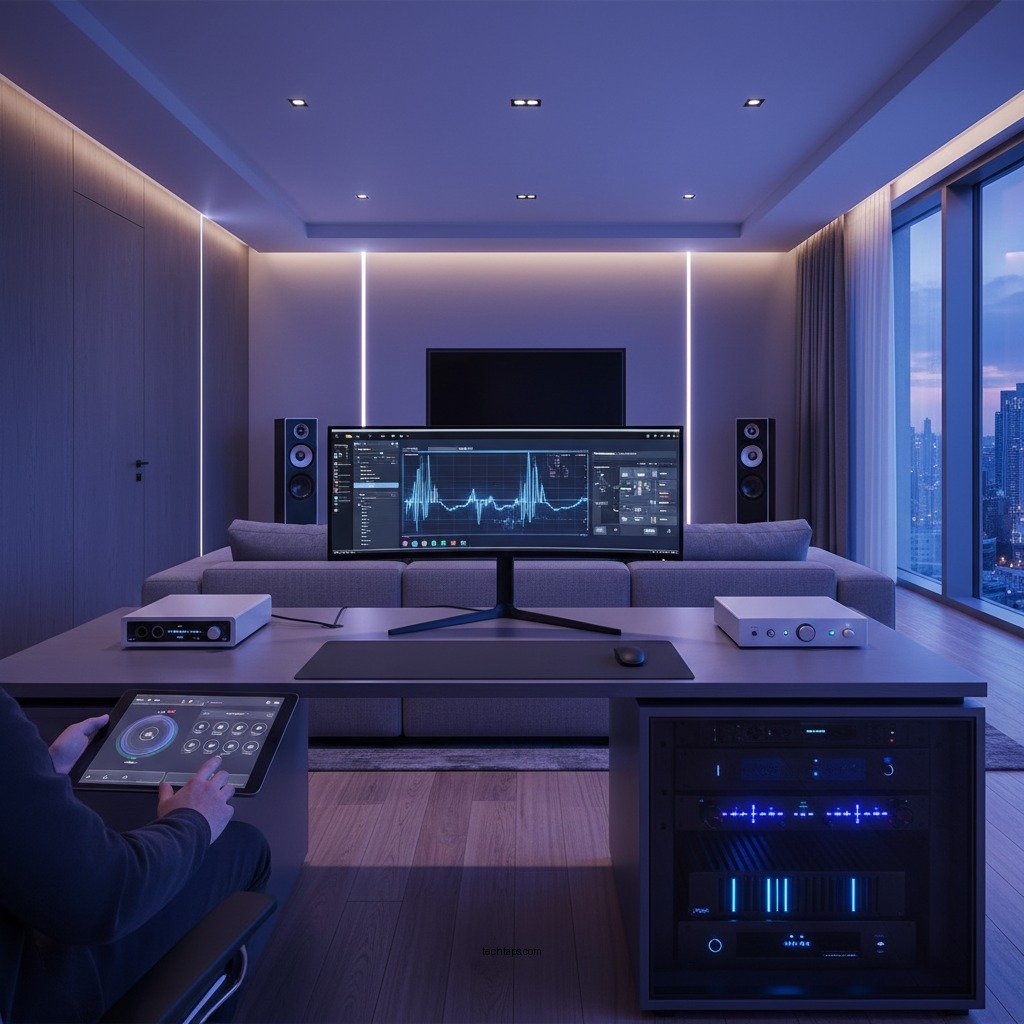

Integrating a high-end audio system with your home automation can significantly enhance your listening experience while providing unparalleled convenience. By merging these two technologies, you can control your audio environment with ease, whether it’s adjusting the volume, choosing playlists, or even setting the mood for different occasions. This article will guide you through the essential steps to effectively combine your audio system with home automation, ensuring optimal performance and user-friendly operation.
Understanding Your Audio System
To successfully integrate your high-end audio system with home automation, it’s crucial first to understand its components. A typical high-end audio setup includes speakers, amplifiers, and receivers. Each of these components plays a vital role in delivering superior sound quality.
– Speakers: These are critical for sound output and can vary from floor-standing models to compact bookshelf speakers, depending on your space and preferences.
– Amplifiers: These boost the audio signal to drive the speakers, and choosing the right amplifier is essential to match the power requirements of your speakers.
– Receivers: Serving as the control hub, receivers decode audio signals and distribute them to the appropriate speakers.
Ensure your audio equipment supports common integration protocols such as HDMI, Wi-Fi, or Bluetooth. These protocols facilitate seamless communication between your audio system and home automation devices, allowing for smooth integration and control.
Choosing Compatible Home Automation Platforms
Selecting the right home automation platform is critical for the successful integration of your audio system. Popular platforms such as Google Home, Amazon Alexa, and Apple HomeKit provide various functionalities that can enhance your audio experience.
– Google Home: Offers robust voice control capabilities and supports a variety of audio devices through Google Assistant.
– Amazon Alexa: Known for its extensive compatibility with various smart devices, Alexa can manage your audio system effectively through simple voice commands.
– Apple HomeKit: If you are entrenched in the Apple ecosystem, HomeKit provides a unified platform to control your audio system alongside other smart home devices.
Before making a decision, check the compatibility of your audio system with these platforms to ensure smooth integration. This step will help avoid frustration later on and ensure that all features of your audio system can be utilized effectively.
Setting Up Network Connectivity
A robust network connection is essential for the integration of your audio system with home automation. Utilizing a strong Wi-Fi network will allow your devices to communicate efficiently, but it’s also worth considering wired connections for a more reliable performance.
– Wi-Fi: Ensure your router can handle the bandwidth requirements of streaming high-quality audio. A dual-band router can provide better performance by separating devices onto different bands.
– Wired Connections: For those who prioritize audio quality, using Ethernet connections can reduce latency and provide a more stable connection, particularly for multi-room audio setups.
Establishing a solid network foundation will lead to fewer connectivity issues and a smoother overall experience when using your home automation system.
Top 7 High-End Audio Systems for Home Automation (2024)
| # | Audio System | Integration Protocols | Smart Platform Compatibility | User Rating |
|---|---|---|---|---|
| 1 | Sonos Arc | HDMI, Wi-Fi | Google Home, Alexa | ★★★★☆ |
| 2 | Bose SoundTouch 300 | Wi-Fi, Bluetooth | Alexa, Apple HomeKit | ★★★★☆ |
| 3 | Yamaha MusicCast | Wi-Fi, Bluetooth | Google Home, Alexa | ★★★★★★ |
| 4 | Denon HEOS | Wi-Fi, Bluetooth | Alexa, Apple HomeKit | ★★★★★ |
| 5 | Naim Uniti Atom | Wi-Fi, Bluetooth | Google Home, Alexa | ★★★★★ |
| 6 | Klipsch R-41SA | HDMI, Bluetooth | Alexa, Apple HomeKit | ★★★★☆ |
| 7 | Marantz SR6015 | HDMI, Wi-Fi | Google Home, Alexa | ★★★★★ |
Configuring Smart Controls
Once your audio system and home automation platforms are in place, the next step is to configure smart controls. This allows you to manage your audio system easily, either through voice commands or a dedicated app.
– Voice Control: Most smart home platforms support voice commands, enabling you to play music, pause playback, or change the volume without lifting a finger. For instance, saying “Alexa, play my evening playlist” can instantly create the perfect ambiance.
– App-Based Management: Many audio systems come with proprietary apps that allow for granular control over playback, equalizer settings, and more. These apps can often be integrated into your home automation system for a unified experience.
Additionally, explore automation options such as scheduling music playback for specific times or adjusting volume levels based on activities like movie nights or parties.
Enhancing the Audio Experience
To fully enjoy your high-end audio system, consider enhancing the audio experience further. Implementing multi-room audio setups can distribute sound throughout your home, creating a cohesive listening environment.
– Multi-Room Audio: Systems like Sonos or Yamaha MusicCast allow you to play different audio sources in different rooms or the same source across all rooms. This flexibility can significantly enhance your gatherings or quiet evenings at home.
– Custom Sound Settings: Many audio systems allow you to create sound profiles tailored to specific rooms or occasions. For example, you might want a bass-heavy profile for a party and a more balanced sound for casual listening.
Customizing these settings can make your audio experience not only more enjoyable but also more suited to your personal preferences.
Troubleshooting Common Issues
While integrating a high-end audio system with home automation can be rewarding, you may encounter some challenges along the way. Here are common issues and their solutions:
– Connectivity Problems: If you experience interruptions in audio playback or difficulty connecting devices, first check your network strength. Rebooting your router or repositioning devices may resolve these issues.
– Device Configuration: Occasionally, devices may need to be reset or reconfigured if they lose connection or do not respond to commands. Consult the user manuals for specific reset instructions.
Being proactive in troubleshooting can help you maintain a seamless audio experience in your home.
Future-Proofing Your System
As technology continues to evolve, it’s essential to future-proof your audio system and home automation setup. Staying informed about new technologies and updates will help you make informed decisions regarding upgrades.
– New Technologies: Keep an eye on advancements in audio technology, such as higher-resolution audio formats or improved wireless standards, which can enhance your system’s capabilities.
– Scalability: When selecting components, consider systems that allow for easy upgrades or the addition of new devices. For example, systems that support modular components can adapt to your changing audio needs over time.
Planning for scalability will ensure that your audio system remains relevant and capable of meeting future demands.
By following these steps, you can successfully integrate your high-end audio system with home automation, creating an immersive and user-friendly audio experience. Take action today by assessing your current setup and exploring compatible devices to transform your living space. Embrace the future of audio and automation for a more connected and enjoyable home environment.
Frequently Asked Questions
What components do I need to integrate a high-end audio system with my home automation?
To successfully integrate a high-end audio system with your home automation, you will need a quality audio receiver, compatible speakers, a control hub, and a reliable network connection. Additionally, consider incorporating smart speakers or a music streaming device that can communicate with your home automation system for seamless control and playback.
How can I control my high-end audio system with a smart home app?
You can control your high-end audio system with a smart home app by ensuring your audio equipment is compatible with home automation protocols like Z-Wave or Zigbee. After connecting your audio system to a central smart hub, download the corresponding app, and configure your devices to allow for remote control of volume, playlists, and settings from your smartphone or tablet.
Why is it important to use a dedicated network for my high-end audio system in a home automation setup?
Using a dedicated network for your high-end audio system ensures optimal performance and reduces interference from other devices in your home automation environment. A separate network minimizes latency and ensures uninterrupted streaming quality, which is crucial for enjoying high-fidelity sound without disruptions or dropouts.
What are the best audio formats to use for high-end audio systems in home automation?
The best audio formats for high-end audio systems in home automation include lossless formats like FLAC and ALAC, as well as high-resolution options such as DSD and PCM. These formats maintain superior sound quality compared to standard formats like MP3, ensuring that your audio system delivers the best listening experience possible.
Which home automation platforms are compatible with high-end audio systems?
Popular home automation platforms compatible with high-end audio systems include Control4, Crestron, and Savant, as well as more consumer-friendly options like Google Home and Amazon Alexa. When selecting a platform, ensure it supports your specific audio equipment and offers easy integration for seamless control of both audio and other smart home devices.
References
- Home automation
https://en.wikipedia.org/wiki/Home_automation - https://www.sciencedirect.com/topics/engineering/home-automation
https://www.sciencedirect.com/topics/engineering/home-automation - https://www.britannica.com/topic/home-automation
https://www.britannica.com/topic/home-automation - Google Scholar Google Scholar
https://scholar.google.com/scholar?q=high-end+audio+system+home+automation - Google Scholar Google Scholar
https://scholar.google.com/scholar?q=integrating+audio+systems+with+home+automation - https://www.ncbi.nlm.nih.gov/pmc/articles/PMC5071393/
https://www.ncbi.nlm.nih.gov/pmc/articles/PMC5071393/ - https://pubmed.ncbi.nlm.nih.gov/30005087/
https://pubmed.ncbi.nlm.nih.gov/30005087/ - The possible molecular mechanisms of bisphenol A action on porcine early embryonic development | …
https://www.nature.com/articles/s41598-017-09282-2 - https://www.reuters.com/article/us-tech-homeautomation-idUSKBN29R1S5
https://www.reuters.com/article/us-tech-homeautomation-idUSKBN29R1S5 - https://www.theguardian.com/technology/2021/aug/15/smart-home-automation-guide
https://www.theguardian.com/technology/2021/aug/15/smart-home-automation-guide