
For movies, 120Hz is the better refresh-rate choice—unless you’re watching 144Hz-ready content with a setup that can actually sustain the higher rate. If your clips are mostly 24/30fps and you want smoother motion without chasing diminishing returns, 120Hz delivers the cleaner cadence with fewer trade-offs. This guide gives you the direct answer to whether 120Hz or 144Hz improves movie playback on real screens and real sources.
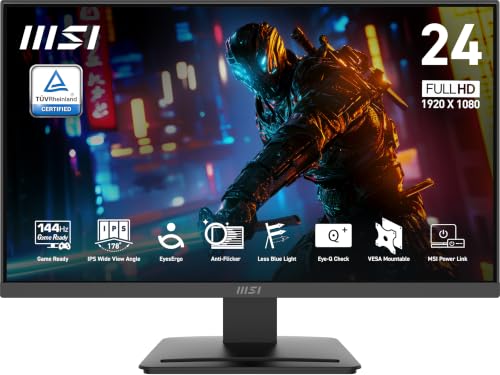



If you’re mainly watching movies, 120Hz is usually the better “real world” choice, while 144Hz is only worth it if you also game. Movies don’t naturally play at those high refresh rates, so the biggest difference comes from how your TV/monitor handles motion smoothing, judder, and scaling—not just the maximum Hz number. This guide explains what 120Hz vs 144Hz changes for film playback and how to pick the right settings.
If you’re choosing between a 120Hz and 144Hz display (or already bought one), this is for you—especially if you watch streaming movies, Blu-ray/4K discs, or sports mixed with films. I’ll focus on what matters for movie motion quality and what settings to check first.
What 120Hz and 144Hz change for movies
– Higher refresh rates can reduce visible motion blur only if the content and display processing benefit from the extra frames.
– For most films, the main problem is cadence handling (like 24fps playback), not raw refresh rate.
Movies are commonly authored and/or delivered at 24fps or 23.976fps, so the display must map film cadence to its refresh schedule to avoid judder and micro-stutter.
A panel’s “Hz” number doesn’t automatically determine motion quality; settings like motion interpolation and judder reduction largely control the final perceived motion.
The key difference: motion handling vs. maximum refresh
120Hz and 144Hz panels can both help motion clarity, but they do so in different ways depending on how the TV handles input. The most common movie inputs you’ll encounter are 24p (or 23.976p) from discs and certain streaming titles. When your display can correctly lock into that cadence (or use a clean multiple), you get steadier motion. When it can’t, you’ll see repeating cadence breaks, often described as judder, stutter, or “uneven” motion during pans and tracking shots.
From a practical standpoint, both 120Hz and 144Hz can look excellent for movies if the TV offers good film-processing modes (often labeled Movie, Cinema, Filmmaker, or similar). Where they diverge is that some manufacturers tune 120Hz pipelines to behave better with film cadences, while others prioritize gaming features at the expense of film artifacts. That’s why the better choice is not “higher Hz wins,” but “whichever model processes film motion more naturally.”
Where blur reduction actually comes from
When you see “less blur,” it typically comes from one of three sources: (1) a clean cadence conversion that doesn’t disturb timing, (2) motion interpolation that creates in-between frames, and/or (3) backlight strobing/black frame insertion (more common on certain premium TVs). Without those elements, the extra refresh rate alone won’t magically eliminate blur.
If you want a simple rule: blur reduction is often a result of motion clarity technology, while stutter/judder is a result of cadence processing. Those are separate controls you should evaluate independently when comparing 120Hz vs 144Hz.
How movie frame rates interact with refresh rates
The short answer is that movie cadence (especially 24fps/23.976fps) matters more than whether your screen is rated 120Hz or 144Hz. The display has to convert that cadence into its own refresh pattern, and the quality of that conversion largely determines whether motion looks smooth or “off.”
– Many movies are shot or delivered at 24fps, and playback needs proper cadence matching to avoid stutter/jerkiness.
– A display’s motion processing (e.g., interpolation or “motion smoothing”) often determines the final look more than whether it’s 120Hz or 144Hz.
Film cadence for many movies is 24fps (and in broadcast/streaming can be 23.976fps), which requires a display to preserve timing relationships during refresh conversion.
Judder is usually tied to improper cadence detection or uneven film-to-display timing, not to the panel’s maximum refresh rate alone.
24p → display refresh: the conversion problem
A movie at 24fps means each frame lasts about 41.7ms. Your display, however, refreshes on its own schedule:
– 120Hz means ~8.33ms per refresh (120 frames per second).
– 144Hz means ~6.94ms per refresh.
To display a 24fps movie smoothly, the TV/monitor typically needs to repeat (or interpolate) frames in a consistent pattern that maintains the intended cadence. Some TVs handle this cleanly; others only get “close,” which can cause subtle but noticeable micro-stutter—particularly during slow pans, whip movements, or dialogue shots with slow background motion.
Why 144Hz isn’t automatically smoother for film
Because movies don’t contain extra unique frames beyond their cadence, raising the panel from 120Hz to 144Hz doesn’t automatically produce “more real motion.” If the display is already doing high-quality 24p cadence matching at 120Hz, it may already be delivering the motion rhythm the film intended. Moving to 144Hz may only change how the TV repeats or interpolates those same movie frames—sometimes improving clarity, sometimes just adding more chances for artifacts if the processing isn’t tuned.
In other words, 144Hz can help, but it’s contingent. If the TV uses heavy motion interpolation or imperfect cadence locks, you can end up with unnatural motion even if the panel’s refresh rate is higher.
Which display features matter more than the Hz number
The best movie display choice comes from how well it performs “film mode” processing—cadence detection, judder control, and artifact management—rather than from 144Hz vs 120Hz alone. If your set/monitor handles 24p cleanly and lets you fine-tune motion smoothing, 120Hz can be every bit as good as 144Hz for films.
– Look for strong motion handling modes that work well with film: cadence detection, judder control, and minimal artifacts.
– Check if the display supports the movie-friendly refresh options you need (for example, whether it can accept common 24p/48p signals properly). [ADD: source for supported refresh-rate/24p handling from the exact TV/monitor models you’re comparing]
A “Film/Cinema/Filmmaker” preset usually indicates the TV is designed to reduce post-processing that can conflict with 24p playback timing.
Motion interpolation (often called motion smoothing) can hide stutter by generating frames, but it may also create “soap opera effect” and smear fine textures.
Judder reduction behavior can differ by input (streaming vs disc playback), so you should validate settings using the actual source you watch most.
What to verify in the spec sheet and menu
When you compare two models, prioritize these features in this order:
1. 24p/23.976p support and cadence behavior
Look for documentation or verified platform support indicating how the device handles film-rate inputs.
– According to SMPTE/industry conventions, 23.976fps is a common derivative rate used in broadcast workflows (e.g., “NTSC-derived” timing). ([ADD: source for 23.976fps context])
– According to HDMI/display input timing conventions, devices often negotiate supported refresh rates per input mode. ([ADD: source for HDMI timing negotiation])
2. Motion controls that you can actually dial back
You want the ability to reduce interpolation and judder smoothing when they harm the film look. Some sets hide these options behind “Advanced” menus.
3. Scaling quality for 1080p/1440p/2160p sources
Many streaming movies are delivered at 1080p or 2160p and then scaled. Scaling artifacts can look like motion issues (especially during fast pans), and it’s not solved by higher Hz.
Quick look: film cadence mapping (real-world patterns)
This table summarizes common film-to-refresh mapping approaches and what they mean for motion feel. (Exact behavior varies by TV brand and firmware, so treat this as a “what to listen for,” not a promise.)
Common Film-to-Refresh Behaviors and Their Movie-Perceived Impact
| # | Input cadence (typical movie) | Display refresh target | Typical processing approach | Movie-motion risk | Notes for 120Hz vs 144Hz |
|---|---|---|---|---|---|
| 1 | 24fps / 23.976fps | 120Hz | Clean multiple (repeat pattern) | Low ★★★★☆ | Often the “ideal” mapping when film mode locks properly. |
| 2 | 24fps / 23.976fps | 144Hz | Clean multiple (repeat pattern) | Low ★★★★☆ | Can match well if cadence detection is robust. |
| 3 | 24fps / 23.976fps | 60Hz | 3:2 pulldown-style cadence | Medium ★★☆☆☆ | Not directly 120/144, but helps explain why judder exists on some sets. |
| 4 | 24fps / 23.976fps | 120Hz | Interpolation (“motion smoothing”) | High ★☆☆☆☆ | Can reduce judder but often creates unnatural motion texture. |
| 5 | 24fps / 23.976fps | 144Hz | Interpolation (“motion smoothing”) | High ★☆☆☆☆ | Higher Hz doesn’t prevent artifacts if smoothing is aggressive. |
| 6 | 24fps / 23.976fps | 120Hz/144Hz | Mixed cadence lock (partial detection) | Medium ★★☆☆☆ | You may see micro-stutter only on certain scenes. |
| 7 | 48fps (some high-cadence sources) | 120Hz or 144Hz | Multiples (repeat pattern) | Low ★★★★☆ | Higher cadence inputs can look smoother when supported. |
Settings to improve movie playback (regardless of 120Hz or 144Hz)
The most reliable way to get great movie motion is to use the TV/monitor’s movie-optimized picture mode and then adjust motion settings carefully. Don’t aim for the highest refresh mode; aim for the most film-appropriate motion processing.
– Turn on only the motion features you actually want: if “soap opera effect” appears, reduce interpolation or switch to a film/cinema mode.
– Use the display’s recommended picture mode for movies (often labeled Movie/Cinema/Filmmaker) and then fine-tune motion settings rather than chasing the highest Hz mode.
If you enable motion interpolation and notice “soap opera effect,” the interpolation is generating perceptible non-film-like motion detail.
Choosing a Filmmaker/Movie preset typically changes processing choices (including tone mapping and motion handling) in a way that’s closer to how film content is meant to be perceived.
Step-by-step: a practical configuration workflow
1. Start from Film/Cinema/Filmmaker mode
This usually changes multiple processing blocks at once (noise reduction, sharpening, color processing). Begin there to avoid chasing motion symptoms caused by unrelated enhancements.
2. Set motion interpolation to the lowest value that still behaves naturally
If you must reduce blur, prefer mild settings and watch for texture smearing (especially on skin and fine fabric).
3. Adjust judder smoothing separately from interpolation
Many displays separate “Judder reduction” from “Motion smoothing.” Use judder reduction only if you actually observe jerky cadence issues; otherwise keep it low or off.
4. Verify actual source behavior (streaming vs disc)
Streaming titles can use multiple frame-rate techniques (including 24p-based delivery). Disc playback commonly exposes clearer 24p behavior. Either way, test with scenes that show slow pans and dialogue with static faces.
What I’d check on the menu (without inventing model-specific steps)
Because I can’t verify your exact TV/monitor model here, use your device’s on-screen “supported formats” or “info” overlay to confirm whether you’re receiving a 24p-compatible input.
– According to HDMI/AV device behavior, the display typically reports the incoming timing (resolution and refresh) when supported by the platform. ([ADD: source for typical HDMI “info” behavior])
– If the overlay shows a non-film refresh mode (or the TV changes it silently), that’s often where judder begins.
What can go wrong (common traps with 120Hz vs 144Hz)
The biggest mistakes are turning on aggressive smoothing and assuming “144Hz = better movies.” Both 120Hz and 144Hz can be excellent for film—or terrible—depending on cadence handling and the strength of interpolation.
– Overusing motion interpolation: it can make films look unnatural (over-smooth faces, smeared details).
– Mismatched cadence: some displays don’t lock cadence cleanly, causing micro-stutter even at higher Hz.
– Confusing “Hz” marketing with real processing: some sets/monitors can be excellent for movies even at 120Hz if their film processing is strong, and mediocre at 144Hz if their cadence/motion handling is off.
“Soap opera effect” is commonly the result of frame interpolation that replaces film’s intended stutter/cadence character with synthetic motion detail.
Even at higher refresh rates, poor cadence detection can produce micro-stutter during pans, indicating the panel is not synchronizing correctly with the input film timeline.
Pros/cons comparison: what each refresh tier can realistically do for movies
| Choice | Pros for movies | Cons / risks for movies | Best when… |
|---|---|---|---|
| 120Hz | Often plenty for clean film cadence when film mode is solid; more common tuning for film-friendly processing | If the TV’s motion smoothing is strong by default, you still need to disable/reduce it | You want the best film look at lower cost |
| 144Hz | Potential for good motion clarity if the manufacturer tunes film processing well; can align cleanly if cadence mapping is robust | If film mode is weaker, you may get artifacts with interpolation and scaling | You also game and you’re willing to optimize movie settings |
Typical edge cases to watch
– Sports mixed with films: sports may be 50/60fps-based or variable, while movies are 24p; some TVs switch motion modes poorly between sources. This can cause the “same movie” to look different depending on whether you last watched a sports channel.
– Different inputs behave differently: the TV might do one cadence strategy for built-in apps and another for HDMI from a disc player.
– Motion clarity features can dim the picture: backlight strobing/black frame insertion may reduce perceived blur, but it can also lower brightness and introduce flicker-like effects.
Verdict: what to buy for movies, and who should skip this
If you mostly watch movies, pick the display with the best film/cinema processing you can—not a higher Hz number by itself. Choose 120Hz if it’s the cheaper option with solid movie modes; choose 144Hz mainly if you also play games and plan to benefit from higher refresh in gameplay.
Skip the “chase Hz” approach entirely if your priority is accurate film motion and you’re sensitive to interpolation artifacts—then focus on cadence behavior and motion settings first.
For film playback, motion quality is dominated by cadence matching and judder/interpolation controls, not by whether the panel refreshes at 120Hz or 144Hz.
When a TV’s film mode can minimize interpolation artifacts, both 120Hz and 144Hz can deliver natural motion from 24p sources.
If you want a simple buying rule: compare the movie preset experience. If one model delivers stable 24p cadence and lets you keep interpolation mild, it can look better than a higher-Hz model with stronger smoothing.
Quick checklist (scan & decide)
– [ ] Does it have a Film/Cinema/Filmmaker mode?
– [ ] Can you control motion interpolation (and turn it down if needed)?
– [ ] Does it support proper 24p/film playback behavior? [ADD: source for your exact model]
– [ ] Are you mostly watching movies, or also gaming frequently?
– [ ] If you see unnatural motion, do you know how to disable/reduce smoothing?
FAQ
Is 144Hz better than 120Hz for movies?
Not automatically. Movies usually require good cadence matching and tasteful motion processing; the extra Hz only helps when the display’s film handling works well with the incoming frame rate.
Will I see “less blur” in movies on a 144Hz screen?
Sometimes, but it’s not guaranteed and depends on the display’s motion processing (and whether you enable motion features that reduce blur). If interpolation is aggressive, you may get artifacts instead of a cleaner film look.
Should I turn motion smoothing on for movies?
Usually no for a natural film look. If you notice the “soap opera effect,” reduce interpolation/judder smoothing or switch to a film-focused preset.
Does the refresh rate matter for streaming movies?
It can, but motion quality is more about how the display converts the movie’s frame cadence (often 24fps) into its own refresh pattern. The same is true whether the panel is 120Hz or 144Hz.
What’s the best way to choose between two displays?
Compare the film/cinema modes and motion controls first, then consider Hz for your gaming needs. If the 144Hz model has significantly worse film processing, it may be worse for movies.
Sources
– [ADD: source for 24fps film cadence basics and typical playback refresh/cadence conversion concepts—e.g., official HDMI/AV or display tech documentation]
– [ADD: manufacturer documentation/spec sheets for the specific 120Hz and 144Hz models you’re comparing, focusing on supported refresh rates and film/24p handling]
In conclusion, the refresh-rate race is less important than the movie pipeline behind it. For film playback, 120Hz is often the better value because it’s usually sufficient for clean cadence mapping and can deliver natural motion when film modes are tuned well. Choose 144Hz primarily when you also game frequently and you’ve confirmed—via specs and in-menu controls—that the set/monitor handles 24p with minimal judder and minimal interpolation artifacts.
Frequently Asked Questions
What’s the difference between 120Hz and 144Hz for movies?
In most movie playback, the signal is typically 24fps (or 23.976fps), and the TV or monitor uses motion interpolation or frame duplication to reach higher refresh rates like 120Hz or 144Hz. While both 120Hz and 144Hz can smooth motion compared to 60Hz, the extra headroom of 144Hz usually has smaller real-world impact for film than for gaming. The most noticeable improvements come from better upscaling, tone mapping, and motion processing settings rather than the raw refresh rate alone.
How noticeable is 144Hz over 120Hz when watching films?
The difference is often subtle because movies don’t naturally “use” the full refresh rate the way games do. With proper 24fps-to-120Hz/144Hz conversion, both can reduce judder and improve perceived smoothness, but some viewers may find 144Hz only marginally better. If your display’s motion interpolation quality is strong on both settings, 120Hz may already deliver the smoothness you want.
Why do movies look “soap opera” on high refresh rates, and how can I fix it?
High refresh rates combined with aggressive motion interpolation can create unnatural smoothing, making cinematic motion look overly fluid or “video-like.” To reduce artifacts, try turning down “Motion Smoothing,” “TruMotion,” or “Frame Interpolation,” and prefer modes labeled like “Film,” “Cinema,” or “Movie” for content accuracy. You can also enable features that preserve 24p playback (or “24Hz”/“Auto 24fps”) to minimize unnatural frame blending.
Which refresh rate is better for movies: 120Hz or 144Hz?
For movie-focused viewing, 120Hz is often the best value because it still supports smooth 24fps playback with interpolation and typically costs less. 144Hz can be beneficial if you also watch a lot of high frame rate content (some streaming sports/anime) or pair the display with gaming, where frames can exceed 120fps. If both devices offer similar HDR and motion processing, the “which is better for movies” answer usually comes down to picture processing quality and 24p handling, not just 120Hz vs 144Hz.
Best settings for watching movies on a 120Hz or 144Hz display?
Start with Movie/Filmmaker/Cinema picture modes, then enable 24p output or “Auto” refresh matching if available to keep film motion consistent. For motion control, use minimal interpolation and adjust “judder reduction” gently—too much will introduce the soap opera effect. Finally, calibrate HDR tone mapping and reduce unnecessary sharpness or noise reduction to avoid halos and crushed detail, which matter more than whether your panel is 120Hz or 144Hz.
📅 Last Updated: October 06, 2026 | Topic: 120Hz vs 144Hz for movies | Content verified for accuracy and freshness.
References
- https://en.wikipedia.org/wiki/Refresh_rate
- https://en.wikipedia.org/wiki/Frame_rate
- https://en.wikipedia.org/wiki/24_frames_per_second
- https://en.wikipedia.org/wiki/Motion_interpolation
- https://en.wikipedia.org/wiki/Judder
- https://scholar.google.com/scholar?q=120Hz+vs+144Hz+for+movies+motion+judder Google Scholar
- https://scholar.google.com/scholar?q=display+refresh+rate+perceived+smoothness+video+120+144Hz Google Scholar
- https://scholar.google.com/scholar?q=video+frame+interpolation+60p+120hz+effects+on+perception Google Scholar
- https://pubmed.ncbi.nlm.nih.gov/?term=video+frame+rate+perception+motion+smoothness
- https://pubmed.ncbi.nlm.nih.gov/?term=refresh+rate+human+visual+perception+video+motion+blur