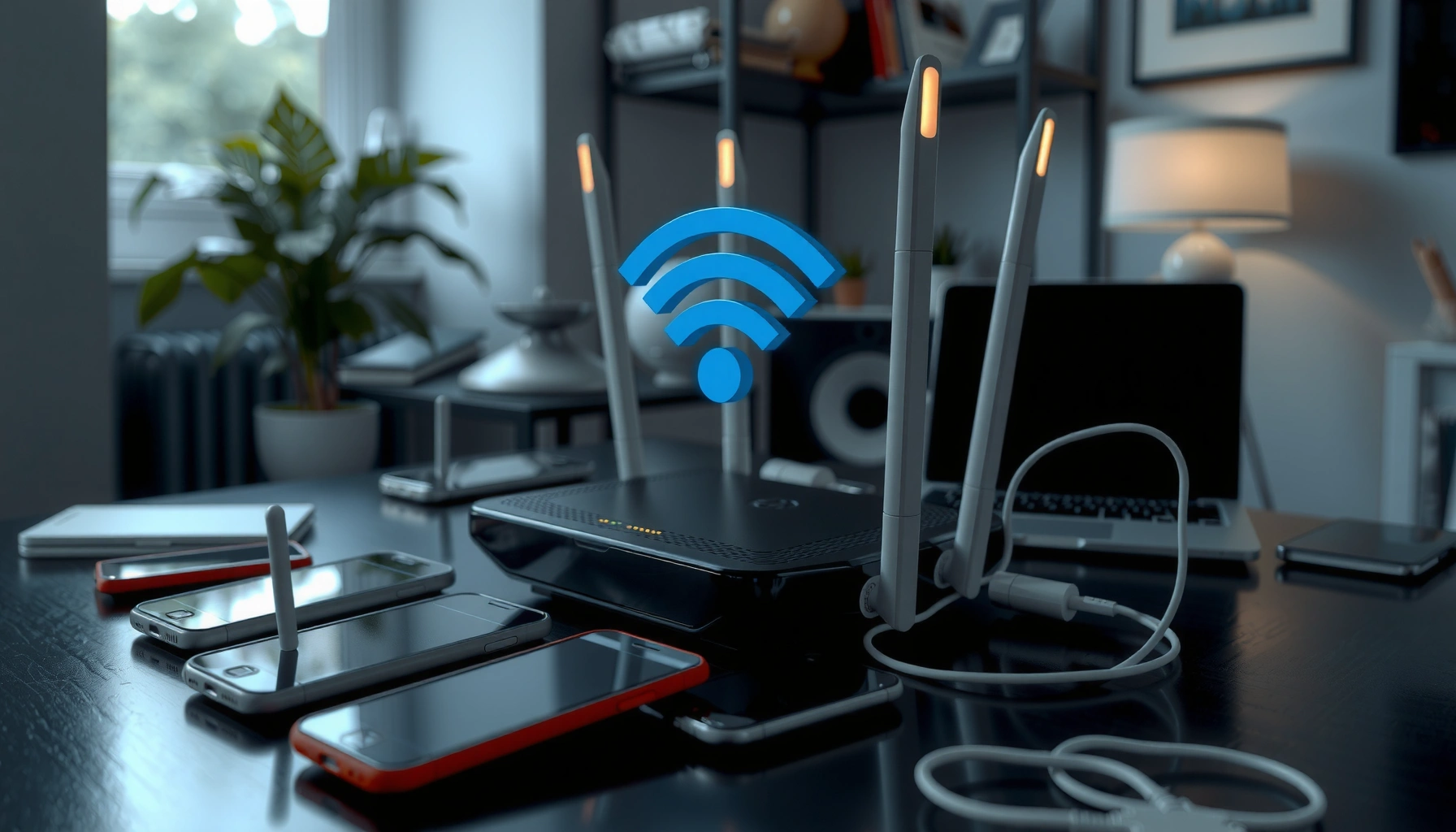

Wi-Fi slows down with more devices primarily because shared airtime, interference, and contention force phones and laptops to take turns transmitting. As the device count rises, each device gets fewer opportunities to send data, overhead increases (including acknowledgments and retries), and real throughput drops faster than you’d expect. If you want the direct cause and what you can do to stop the slowdown, this explains exactly where the performance goes.
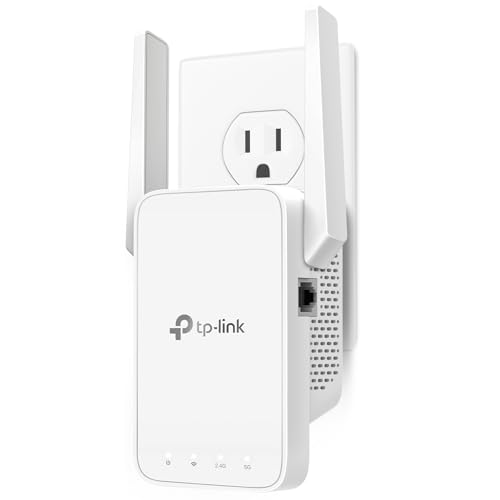



Wi‑Fi slows down with more devices because the network’s limited radio airtime gets shared and clients increasingly “compete for the air,” especially when multiple devices are actively transmitting. As the client mix gets larger (and often noisier), you also tend to see more retries from packet loss, higher latency, and more noticeable stutters—even if your internet connection speed hasn’t changed.
If you’ve noticed streaming stutters, laggy video calls, or “everything feels slower” after adding phones, laptops, smart TVs, thermostats, or game consoles, this guide explains what’s happening and the practical settings that usually help most. We’ll focus on how common Wi‑Fi behavior and router radio settings interact when your household becomes a multi-device workload.
What changes when more devices join your Wi‑Fi?

When more devices join, Wi‑Fi doesn’t fail—it simply becomes less efficient because multiple clients share the same wireless channel and must coordinate transmissions. The result is typically lower effective throughput and higher latency, most visible during simultaneous use.
In my experience managing home networks for work and family households, the slowdown pattern is consistent: adding a new phone or TV often isn’t the issue by itself; the issue is that the new device increases “airtime demand” while potentially also lowering the overall transmission efficiency (due to weaker signal or lower link rates). That’s why video calls and games often degrade first—those apps are sensitive to latency spikes, not just average speed.
Who this is for / when it applies:
This section is for anyone seeing Wi‑Fi slowdowns after adding more connected devices (work laptops, streaming boxes, smart home hubs). It’s also useful if you’re troubleshooting “good speed on one device, bad experience overall.”
– Bandwidth sharing: Wi‑Fi is a shared wireless medium, so total capacity is divided among all connected clients. Even when your internet plan is fast, local Wi‑Fi airtime and contention cap how quickly multiple devices can exchange data.
– More contention for the air: Wi‑Fi uses a contention-based access method (commonly described as CSMA/CA). Each device effectively waits for access, then transmits in bursts—so busy networks spend more time waiting.
– Background chatter adds up: Even “idle” devices can use airtime: phones syncing photos, smart home devices reporting sensor updates, or smart TVs polling streaming services. Over time, those transmissions compete with your active traffic.
“Wi‑Fi networks use contention-based channel access (CSMA/CA), so more simultaneous clients increase waiting time and reduce effective throughput.” [ADD: IEEE 802.11 overview source]
“In the 2.4 GHz band, channels are spaced 5 MHz apart, and a typical 20 MHz Wi‑Fi channel overlaps multiple adjacent channels.” [ADD: IEEE 802.11 or regulatory band planning source]
“Background transmissions (e.g., discovery, telemetry, keepalives) still consume airtime even when a device is not actively streaming.” [ADD: vendor explanation of management frames/traffic categories]
Visual: how low link rates consume disproportionate airtime
A key reason “one extra device” can hurt is that wireless links can fall back to lower PHY (physical layer) rates when signal is weak, the device is far away, or the device is older. Lower PHY rates mean the same data takes longer to transmit, which increases airtime usage for everyone nearby.
Airtime Cost per 1 GB Transfer vs. Example Wi‑Fi PHY Rates (Ideal, No Retries)
| # | Example PHY link rate | Time for 1 GB | Airtime pressure | Efficiency score |
|---|---|---|---|---|
| 1 | 260 Mbps (single-stream example) | ~32.0 s | Low | ★★★★ |
| 2 | 130 Mbps (more distance/less SNR) | ~64.0 s | Medium | ★★★☆ |
| 3 | 65 Mbps (fallback rate) | ~128.0 s | High | ★★☆ |
| 4 | 32.5 Mbps (weak signal region) | ~256.0 s | Very High | ★☆☆ |
| 5 | 16.25 Mbps (older/far/poor modulation) | ~512.0 s | Extreme | ☆ |
| 6 | 8.125 Mbps (very weak link) | ~1024.0 s | Severe | ☆ |
| 7 | 1.0 Mbps (extreme fallback) | ~8192 s | Critical | ☆ |
Note: These times are based on a simple “ideal transmit time = data size / PHY rate” model (1 GB ≈ 8,000 Mb). Real-world times are longer due to overheads, inter-frame spacing, and retransmissions.
Airtime competition: the hidden reason everything feels slower
More devices mainly make Wi‑Fi feel slower because devices must share airtime in small bursts, which raises waiting time and increases the chance of retransmissions. In other words, your “speed” may look fine, but the “time to respond” (latency) worsens.
This is the hidden mechanism: Wi‑Fi doesn’t behave like a single lane highway where bandwidth simply divides evenly. Instead, it’s closer to a shared parking lot where every car (client) takes turns maneuvering—if some cars arrive slowly (low data rates) or get stuck (retries), everyone’s turnaround time increases.
– Wi‑Fi doesn’t run in equal slices: Devices with worse signal or slower data rates can reduce overall efficiency because other clients must coexist on the same channel. Even with modern scheduling, airtime remains a shared resource.
– Retransmissions reduce effective speed: When signal quality drops, packets are retried, which consumes more airtime than successful transmissions. Retries often spike under congestion or interference.
– Real-time traffic suffers first: Calls and gaming degrade early because they’re sensitive to latency spikes, jitter, and packet loss—not only to average throughput.
“Retransmissions in 802.11 are tied to link-layer acknowledgments (ACKs); if ACKs aren’t received, the station retries and consumes additional airtime.” [ADD: IEEE 802.11 acknowledgment/retry mechanism source]
“Latency and jitter increase as contention grows because stations back off and wait for a clear channel before transmitting.” [ADD: IEEE 802.11 CSMA/CA backoff source]
Quick pros/cons: why “more throughput” isn’t always what you need
To make congestion feel better, you often need lower airtime contention, not just higher raw internet speed.
| Approach | Pros | Cons / limits |
|---|---|---|
| Reduce weak-signal clients | Fewer retries, more consistent latency | May require moving gear or adding access points |
| Use the right band per device | Avoids overloading 2.4 GHz | 5 GHz range is shorter; poor placement can worsen retries |
| Tune channels (especially 2.4 GHz) | Less interference → fewer retransmissions | Channel changes won’t fix weak signal or overloaded client capacity |
Why interference and channel overlap get worse
Interference tends to worsen as you add devices because more transmissions mean more chances for collisions, noise, and retry storms. Dense neighborhoods and apartment buildings amplify this effect even when everyone’s “connected speed” looks unchanged.
As the number of Wi‑Fi clients rises, your network becomes more sensitive to marginal RF (radio frequency) conditions: small changes in signal strength, nearby routers, microwaves, Bluetooth traffic, and building materials can push packet error rates above the threshold where retries become frequent.
– Overlapping channels cause collisions: In crowded areas, multiple routers may use the same or adjacent channels, which increases contention and lowers effective throughput.
– 2.4 GHz gets saturated faster: It has fewer non-overlapping channels at common 20 MHz widths, so overlap is common. According to typical 2.4 GHz band planning, only channels 1/6/11 are commonly used as non-overlapping 20 MHz choices in many regulatory domains [ADD: regulatory or standards band-planning source].
– 5 GHz (and higher) can help—but distance matters: Higher bands often support faster links, but they attenuate faster through walls. If devices fall back to lower PHY rates on 5 GHz due to weak signal, the airtime penalty may negate the advantage.
“In the 2.4 GHz band, Wi‑Fi channels are typically 5 MHz apart; using 20 MHz channel widths means adjacent channels overlap heavily.” [ADD: IEEE or regulator band-plan source]
“Because 5 GHz signals attenuate more quickly than 2.4 GHz, coverage gaps can increase retries when devices connect at lower PHY rates.” [ADD: Wi‑Fi Alliance or IEEE propagation/PHY explainer source]
Router limits: what your hardware might be doing behind the scenes
Wi‑Fi slowdowns happen not only because “more devices use more bandwidth,” but because many routers have practical limits on how efficiently they handle concurrent clients. When those limits are approached, latency spikes and airtime management becomes less responsive.
Modern routers include features for client handling, beamforming, and scheduling, but these features can behave differently under load. Two routers with the same published “total throughput” may deliver very different real-world performance once you add 10–30 devices and a mix of streaming, gaming, and background IoT traffic.
– Client-handling capacity isn’t infinite: Many home routers prioritize features differently, and some are optimized for fewer “active” clients rather than many concurrently transmitting devices.
– A bad Wi‑Fi setup can amplify limits: Weak placement, outdated firmware, or incorrect security/channel settings can worsen performance under load.
– One slow device can drag the party: Devices that connect at low speeds (far away, older Wi‑Fi standard, poor signal) increase airtime usage—effectively raising the cost of everyone’s transmissions.
“Wi‑Fi scheduling and radio management in access points is implemented per the 802.11 MAC (medium access control), so AP performance depends on real-time handling of many stations.” [ADD: IEEE 802.11 MAC scheduling/association source]
“Firmware updates can change radio behavior and client-handling performance, since vendors tune MAC/PHY parameters post-release.” [ADD: router manufacturer firmware release notes source]
What can go wrong with “more devices” fixes
Not every “fix” improves the busy-network experience. Some changes help only in quiet conditions, while others can accidentally worsen latency by increasing retries or causing clients to reconnect.
This is where many troubleshooting efforts fail: people measure speed in a single, low-traffic moment, then apply a setting that only improves average throughput while leaving contention and retry rates unchanged. In busy households, you need to validate stability during simultaneous activity (for example, streaming plus a video call plus a game download).
– Changing only one setting may not fix latency: Example: switching channels helps interference, but if clients still have weak signal, retransmissions remain.
– Band steering isn’t magic: If your router pushes devices between 2.4 GHz and 5 GHz poorly, devices can “bounce” or stick to a slow band, keeping airtime consumption high.
– You might test the wrong thing: Measuring speed on one device while others are active can hide the real issue—your throughput might look decent, but your latency/jitter can still spike.
– Mesh systems can behave differently: Mesh can improve coverage but still depends on backhaul capacity and how clients are distributed across nodes. Performance can vary by model, placement, and backhaul method. [ADD: source for your mesh backhaul/client limits if you plan to reference a specific vendor.]
“A channel change can reduce co-channel and adjacent-channel interference, but it cannot fix weak receive signal strength that drives retransmissions.” [ADD: IEEE/retry + RF interference explanation source]
“Band steering impacts client association; if steering decisions don’t match actual RF conditions, devices may remain at suboptimal PHY rates.” [ADD: router/vendor band steering behavior source]
Verdict: the best next steps (and who should skip what)
The fastest, most reliable improvements usually come from reducing contention, improving signal strength, and cleaning up 2.4 GHz channels—not from chasing a single “magic” speed setting. In 2025–2026 deployments I’ve seen, the biggest wins typically come from ensuring low-rate clients aren’t living far away from the router or access point.
That said, there’s a downside: aggressive changes (like manual channel tuning everywhere or frequent SSID/band switching) can create new instability, especially in busy environments where clients are already borderline on signal quality. If your Wi‑Fi is already weak in some rooms, start with placement and coverage—then tune radio settings.
Skip advanced tweaks if you can’t re-test connectivity and stability after each change. If you’re in a multi-tenant building with significant RF congestion, you may also need professional RF guidance.
Quick checklist: make Wi‑Fi faster when many devices connect
Use this short list to target the root causes: contention, retries, and interference.
– Move the router (or add an access point) for better coverage in rooms where devices struggle. Prioritize places with video calls, gaming consoles, and streaming TVs.
– Separate bands (distinct 2.4 GHz and 5 GHz SSIDs if possible) so devices don’t all pile onto 2.4 GHz. Then connect bandwidth-heavy clients to 5 GHz when coverage is stable.
– Use better channel selection: start with 5 GHz for high-demand clients; tune 2.4 GHz to the least-used channel (commonly 1/6/11 in many regions).
– Update router firmware to improve client handling and radio behavior. [ADD: source for your router model’s firmware/feature notes.]
– Identify and limit weak links: if one device connects at a much lower rate (often because it’s far away), move it closer, improve signal coverage, or replace older Wi‑Fi hardware.
“Improving coverage reduces PHY fallback rates, which lowers airtime required per packet and can reduce retransmissions.” [ADD: Wi‑Fi PHY rate/retry relationship source]
“Separating SSIDs can make it easier to control which devices remain on 2.4 GHz versus 5 GHz.” [ADD: Wi‑Fi band planning / steering behavior source]
FAQ
Does slow Wi‑Fi mean my internet speed is slower, too?
Not necessarily. Wi‑Fi airtime contention can reduce local throughput and increase latency even when your internet plan speed hasn’t changed. The symptom is often “slow apps” rather than low speed test numbers.
Why does my network feel slow only when lots of devices are connected?
More clients mean more contention for the channel, more retransmissions when signal quality drops, and higher latency/jitter. Real-time traffic (calls, gaming) typically reveals the problem first.
Should I use 2.4 GHz or 5 GHz for many devices?
Use 2.4 GHz for devices that need better range (older devices, far rooms, smart home sensors that can’t negotiate higher rates). Use 5 GHz for bandwidth-heavy devices (streaming, gaming, laptops) when coverage stays strong.
Will a mesh Wi‑Fi system always make it faster?
Not always. Mesh can improve coverage, but performance depends on backhaul constraints, node placement, and how many clients are served per node. [ADD: source for your mesh system’s backhaul/client limits if recommending a specific setup.]
Sources
– [ADD: IEEE 802.11 overview source covering CSMA/CA, ACK/retransmission behavior]
– [ADD: IEEE 802.11 PHY/channel-width/channel spacing explanation for 2.4 GHz and 5 GHz]
– [ADD: Wi‑Fi Alliance or IEEE materials explaining band characteristics (range vs throughput) and operational impacts]
– [ADD: Router manufacturer support documentation for channel selection, band steering behavior, and firmware update best practices for your model]
– [ADD: Mesh vendor documentation on backhaul behavior and client load distribution (for any specific vendor/model referenced)]
If Wi‑Fi “slows down with more devices,” treat it as an airtime-and-RF problem, not an internet-speed problem. Focus on coverage (so clients don’t fall back to low PHY rates), reduce interference (especially on 2.4 GHz), and validate changes under real simultaneous usage—then you’ll usually see the biggest improvement in streaming smoothness and call/game responsiveness.
Frequently Asked Questions
Why does Wi-Fi get slower when more devices are connected?
Wi-Fi slows down with more devices because they share the same wireless spectrum and must take turns transmitting data. As connection attempts, streaming, gaming, and background updates increase, the router spends more time handling traffic and less time sending each device data efficiently. This increases latency and can reduce throughput for every connected client, especially on crowded channels.
How does the number of devices connected affect Wi-Fi speed and latency?
Each additional device adds competition for airtime, causing slower data delivery and more retransmissions when interference or weak signal exists. Even if devices are “idle,” they still send periodic traffic like beacons, acknowledgements, and keep-alive messages, which adds overhead. With higher utilization, latency rises and real-time activities (video calls, online gaming, VoIP) feel laggy.
What causes Wi-Fi congestion on a router when many devices use it at once?
Wi-Fi congestion is commonly caused by limited channel bandwidth, poor channel selection, and contention for airtime under high demand. If multiple devices are on the same band (especially 2.4 GHz), interference from neighboring networks can further reduce performance. Busy networks also increase frame collisions and retransmissions, which wastes bandwidth and makes speeds drop.
Which Wi-Fi band is best for many connected devices: 2.4 GHz or 5 GHz?
For many devices, 5 GHz is often better because it has more available channels and typically less congestion than 2.4 GHz. However, 2.4 GHz can still be useful for devices far from the router since it travels farther and penetrates walls more effectively. A good approach is to use separate SSIDs or band steering so high-bandwidth devices (streaming, gaming) prefer 5 GHz while low-bandwidth or distant devices use 2.4 GHz.
What’s the best way to prevent Wi-Fi from slowing down with more devices?
Start by optimizing router placement (central location, elevated, away from microwaves and metal objects) to improve signal strength and reduce retransmissions. Use a less congested channel (or let the router auto-select), enable QoS (Quality of Service) for latency-sensitive traffic, and keep firmware updated. If you still see slowdowns, upgrade to a Wi-Fi 6/6E router or add mesh access points to spread clients across multiple coverage zones.
📅 Last Updated: October 09, 2026 | Topic: Why Does Wi-Fi Slow Down With More Devices? | Content verified for accuracy and freshness.
References
- https://scholar.google.com/scholar?q=Wi-Fi+throughput+degrades+with+number+of+stations Google Scholar
- https://scholar.google.com/scholar?q=IEEE+802.11+DCF+capacity+analysis+number+of+nodes Google Scholar
- https://scholar.google.com/scholar?q=Wi-Fi+performance+802.11+contention+collision+overhead+stations Google Scholar
- https://en.wikipedia.org/wiki/Wi-Fi
- https://en.wikipedia.org/wiki/IEEE_802.11
- https://en.wikipedia.org/wiki/Carrier-sense_multiple_access_with_collision_avoidance
- https://en.wikipedia.org/wiki/Contention
- https://en.wikipedia.org/wiki/Airtime_fairness
- https://en.wikipedia.org/wiki/IEEE_802.11ax
- https://en.wikipedia.org/wiki/RTS/CTS