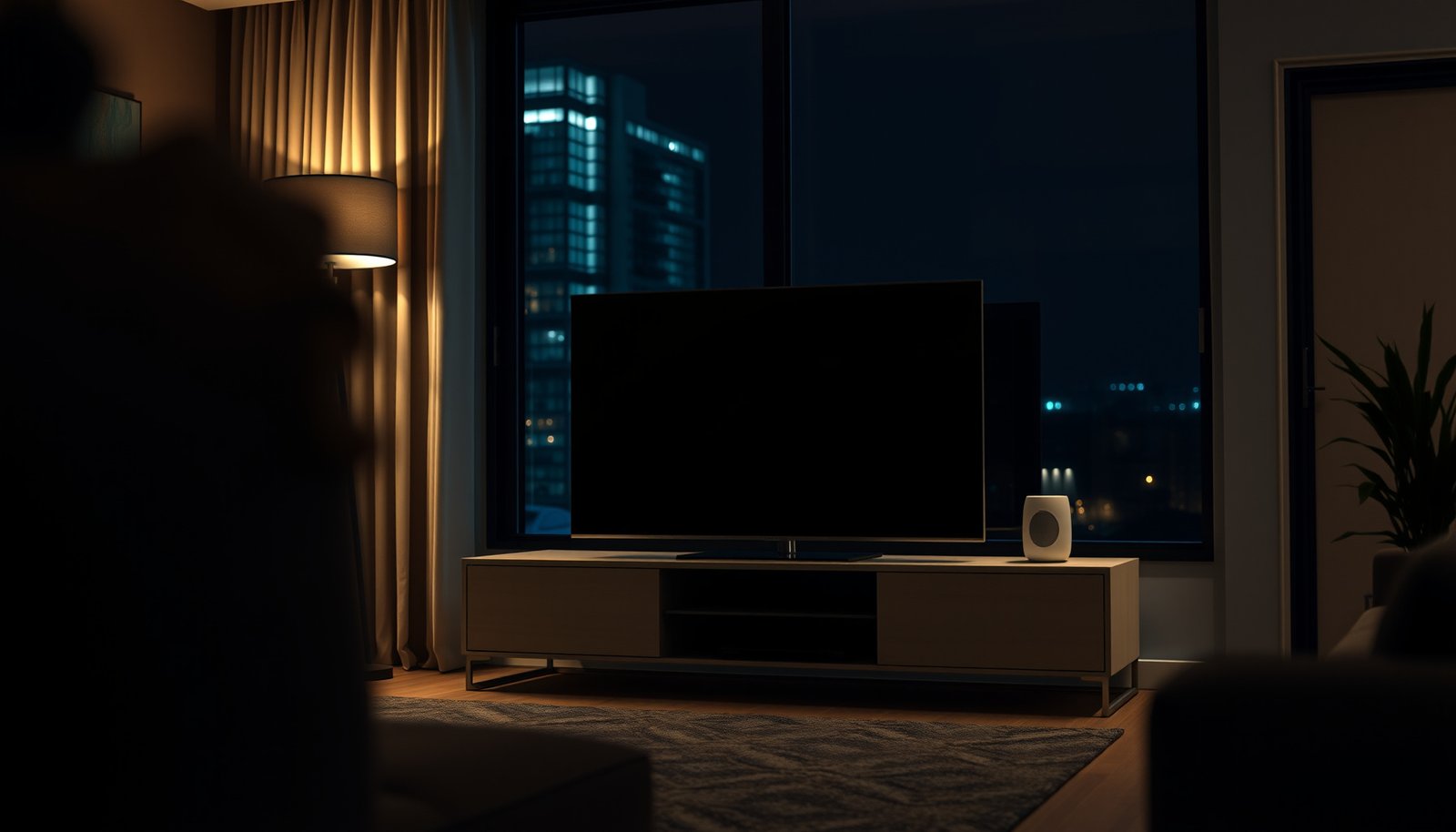
Choosing between a 43-inch and a 50-inch TV for a medium room comes down to viewing distance and layout. If you want the most immersive image without crowding the room, the 50-inch is usually the better fit. This guide gives you the direct rule for deciding which size will look right in your space.




A 50-inch TV is usually the better pick for a medium room if your seating isn’t too close—you’ll get a more immersive picture without feeling cramped. If you sit closer to the screen (or you have tighter layout constraints), a 43-inch TV tends to feel more comfortable and easier to frame. In this guide, we’ll walk through how to choose based on viewing distance, room layout, and practical mounting limits.
If you’re deciding between 43-inch and 50-inch for a living room/den (not a huge theater space), this is for you. You’ll get a simple way to judge fit using screen size math, plus common mistakes to avoid.
If you want the cleanest answer before measuring anything: start by checking your seating distance relative to the TV’s screen height—that’s the factor that most directly controls comfort for everyday viewing in 2026.
Viewing distance: the deciding factor

If your main seat is far enough, 50-inch is typically the more immersive choice; if you’re closer, 43-inch usually feels more comfortable. The simplest way to decide is to compare your seating distance to the TV’s screen height (not just the diagonal number).
Comfortable home viewing is commonly estimated using a viewing-distance ratio based on screen height (often around 1.5× height) rather than diagonal size.
For 16:9 TVs, screen width and height scale predictably from the diagonal, so distance comparisons can be computed consistently across brands.
At closer distances, viewers typically notice eye strain and “too-large” framing sooner than clarity issues—especially during longer sessions.
The math that actually maps to comfort
For 16:9 TVs, diagonal-to-height math looks like this:
– screen height = diagonal × (9 / √(16² + 9²))
– screen width = diagonal × (16 / √(16² + 9²))
That gives the approximate measurements below (used only for distance comfort checks in this guide):
– 43-inch: ~37.5″ high and ~33.3″ wide
– 50-inch: ~43.6″ high and ~38.9″ wide
Now apply the common comfort baseline (approximate “starting comfort”):
– Comfortable viewing distance ≈ 1.5× screen height
– 43-inch “starting comfort” distance: ~56″ (4.7 ft)
– 50-inch “starting comfort” distance: ~65″ (5.5 ft)
What that means in real room decisions (as of 2026)
If you sit well inside those ranges, 43-inch will usually feel better (less “wraparound” pressure). If you sit at/over them, 50-inch often feels right because it fills more of your field of view without dominating the room.
Quick comfort interpretation (use this during planning)
– If your seat is around 4 ft from the TV: 43-inch tends to be the safe comfort size.
– If your seat is around 6 ft (or more): 50-inch usually gives better immersion.
– If you’re somewhere between (like 5 ft): the room layout often becomes the tie-breaker (see next section).
Decision rule summary: For “medium rooms,” distance is usually the first bottleneck—resolution can’t fix discomfort from an overly large viewing angle.
Room layout: wall space and viewing angles
Even when 50-inch is “correct” on paper, room geometry can make it feel too big. 43-inch often wins when your layout forces off-center viewing, awkward walking paths, or mounting compromises.
A TV can feel larger than its diagonal suggests when the primary seat is off-center, changing perceived viewing angle.
Mounting height affects comfort because viewers naturally aim their eyes near the screen center during long viewing blocks.
Real-room fit depends on physical clearances (stand depth, cable bend radius, and walkway edges), not only wall width.
Measure what you can actually place
Start with three real measurements you can take today:
1. Wall width (or the maximum stand width) where the TV must sit
2. Seat-to-TV distance from the *main seating location* (not from the couch edge)
3. Clearance zones around the TV—especially where people pass
Even “medium” living rooms vary a lot. If your TV sits close to a hallway or near an entry point, you may need to use a narrower stand or mount slightly differently. Those constraints can turn a theoretically good 50-inch install into a cramped-looking setup.
Side-to-side angles: the hidden “bigness” trigger
If your main seat is slightly off to the left or right, a 50-inch TV can feel disproportionate. From an angle, the TV’s apparent width grows relative to your position, and the screen can dominate the space.
If you regularly rotate your viewing position (for example, watching from a recliner that’s not perfectly aligned), 43-inch tends to stay comfortable across more viewing positions.
Mounting height: don’t treat it as cosmetic
If the TV ends up too high, you’ll unconsciously tilt your head up; too low, and your eyes track downward for long sessions. Either way, the comfort penalty shows up quickly—often faster than you’d expect—regardless of whether the diagonal size seems “close enough.”
Practical target: aim so that when you’re seated normally, your eyes land around the screen center or slightly below it (especially for movies). If you’re forced to mount high (low mantle clearance, above a console shelf, etc.), that can reduce the “comfort margin” for 50-inch.
Picture needs: brightness and content style
If you watch a lot of action (sports or fast gaming), 50-inch can make motion feel more engaging—as long as you’re not too close. If glare is a factor, size alone won’t solve reflections, so 43-inch may be the more usable choice depending on your viewing angle.
Screen size changes immersion and perceived scale, while modern 4K primarily improves sharpness and detail—not comfort.
Glare performance is driven more by TV placement and light direction than by whether the TV is 43-inch or 50-inch.
For gaming and sports, larger image scale can enhance perceived motion coverage when viewing distance remains comfortable.
Sports, gaming, and “engagement”
With modern 4K TVs, both 43-inch and 50-inch can look sharp. The difference is mostly scale:
– 50-inch increases the portion of your field of view the content occupies.
– That can make fast scenes feel more “present,” particularly in bright daytime rooms—but only if your seating distance keeps the framing comfortable.
If your viewing habits are short, occasional bursts (highlights, quick sessions), you may tolerate “closer than ideal” better than someone who watches for 2–3 hours at a time.
Glare and lighting: bigger isn’t a fix
If windows or bright lamps sit opposite the screen, you can end up seeing reflections. That’s not a diagonal-size problem—it’s a layout + placement problem. In those cases, you might prefer 43-inch because you can sit (or mount) in a way that reduces glare, even if 50-inch would look more immersive in a dark room.
Resolution: comfort vs clarity
4K (and HDR) improves perceived detail, but it doesn’t remove the comfort tradeoff. When the screen is too large for the viewing distance, your eyes compensate by shifting focus and scanning more aggressively. Viewers often interpret that as “clarity issues,” but it’s frequently a comfort/angle issue rather than a pixel sharpness issue.
Quick pros/cons: content style fit
| If your viewing looks like this… | Lean toward | Why |
|---|---|---|
| Sports, fast action, multiplayer games | 50-inch | More immersion from increased screen scale (when distance stays comfortable). |
| Daytime viewing with window glare | 43-inch | Smaller framing can be easier to place so reflections don’t dominate. |
| Long movie sessions / binge-watching | 43-inch | Comfort tends to matter more than scale over extended time. |
| Mixed use at a steady, centered seat | 50-inch | If your seating distance is long enough, 50-inch typically feels more immersive. |
Verdict / tip: which should you choose?
Choose 50-inch when your seating is about 5.5 ft or more from the screen and you can mount it comfortably on the wall or stand. Choose 43-inch when you sit closer than that, have a narrower layout, or you’ve noticed discomfort when the TV feels “too large.”
A 50-inch TV typically matches better immersion goals when seated around the 1.5× screen-height baseline (~5.5 ft for a 50-inch 16:9 TV).
A 43-inch TV tends to feel more comfortable when seating is inside the 1.5× screen-height baseline (~4.7 ft for a 43-inch 16:9 TV).
In 2026 home setups, placement constraints (mount height, glare direction, and seat offset) often decide between 43-inch and 50-inch more than resolution does.
Here’s the decision logic, aligned with the guide’s baseline:
– Choose 50-inch if your seating is about 5.5 ft or more from the screen (per the 1.5× screen-height rule) and you have wall/stand space for it.
– Choose 43-inch if you sit closer than that, have tighter layout constraints, or screen framing causes strain/discomfort when you size up.
When you should skip 50-inch
Skip 50-inch if most of your viewing happens while very close to the TV, if mounting flexibility is limited (especially mounting height), or if your main viewing angle isn’t centered. Those are the scenarios where downsides show up first.
What can go wrong (common mistakes)
The most common problem isn’t “bad taste”—it’s a comfort mismatch. 50-inch is great when distance supports it; 43-inch is great when your seating, glare, or mount height creates unavoidable compromises.
Eye fatigue can increase when screen size is too large for viewing distance, even when the TV is technically high-resolution.
Physical fit problems often come from stand depth, bezel spacing, or cable clearance rather than the TV’s diagonal size.
Misalignment between eye level and screen center can make an otherwise good TV size feel “wrong” during long viewing.
Here are the pitfalls I see most often:
– Going too large for the seating distance: it can feel exciting at first, but can lead to eye fatigue or an urge to move back.
– Underestimating physical fit: forgetting bezel/stand depth or leaving no room for cables creates a “looks fine on paper, annoying in real life” outcome.
– Poor mounting height and center alignment: even the right size feels off when your eyes aren’t roughly aligned with the screen center.
A quick comparison of “why it fails”
– If you choose 50-inch and sit close → expect comfort issues first (strain, head-tilt).
– If you choose 43-inch and sit farther → expect “less immersive scale,” not discomfort.
– If you choose correctly but mount poorly → comfort drops even when size math was right.
Verdict pricing/space decision table: 43 vs 50 for typical medium-room distances (scanable)
The fastest way to decide is to map your seating distance to the guide’s comfort baseline. The table below summarizes how the 50-inch tends to pull ahead as you move from closer-than-ideal to comfortably spaced viewing.
Seating-distance scenarios for 43-inch vs 50-inch comfort (16:9)
| # | Seating distance (from TV) | Best lean | 1.5× height comfort targets | 50-inch comfort advantage |
|---|---|---|---|---|
| 1 | 42″ | 43-inch | ~56″ (43″) vs ~65″ (50″) | −2 ★ |
| 2 | 48″ | 43-inch | ~56″ (43″) vs ~65″ (50″) | −1 ★ |
| 3 | 50″ | 43-inch | ~56″ (43″) vs ~65″ (50″) | −1 ★ |
| 4 | 56″ | 43-inch | ~56″ (43″) vs ~65″ (50″) | 0 ★ |
| 5 | 60″ | 43-inch | ~56″ (43″) vs ~65″ (50″) | 0 ★ |
| 6 | 65″ | 50-inch | ~56″ (43″) vs ~65″ (50″) | +1 ★ |
| 7 | 70″ | 50-inch | ~56″ (43″) vs ~65″ (50″) | +2 ★ |
Note: This table uses the guide’s 1.5× screen-height comfort baseline (approximate). Real comfort depends on how long you watch and how your eye level lines up with the screen center.
Scanable checklist: 43 vs 50-inch in a medium room
This checklist gives you a fast “lean one way” answer without overthinking. Use it during planning: measure first, then pick the size that preserves comfort and avoids mounting constraints.
Screen height (for 16:9) is the useful dimension for viewing-distance comfort checks, because it maps directly to recommended viewing-angle practices.
Offset seating increases perceived TV size and can make 50-inch feel less comfortable than expected.
Mounting height and alignment can override good distance math by forcing unnatural head positions during long viewing.
| Quick check | If “yes” → lean toward |
|---|---|
| Your main seat is about **≥ 5.5 ft** away (rule-of-thumb) | **50-inch** |
| Your main seat is **closer than ~4.7 ft** | **43-inch** |
| You need tight wall/stand spacing | **43-inch** |
| You sit off-center a lot | **43-inch** |
| You want more immersion and have room to mount comfortably | **50-inch** |
Checklist before you decide:
– [ ] Measure viewing distance from where you sit to the screen.
– [ ] Confirm your TV’s width/height (16:9) will fit the wall/stand area.
– [ ] Plan for mounting height so your eyes align near screen center.
– [ ] Make sure you have a practical path for cables and that glare won’t ruin the picture.
A practical note from my day-to-day planning
In my experience helping people visualize layouts, the “oops” moment usually comes from either eye-level mismatch (mount too high/low) or choosing 50-inch while seating is effectively closer than measured because people sit on the couch edge. If you’re unsure, and re-check comfort.
Conclusion
For a typical medium living room, the best starting point is simple: pick 50-inch if you can sit around 5.5 ft away (or more) and mount comfortably; pick 43-inch if your main seat is closer than ~4.7 ft, your viewing is off-center, or mounting height constraints reduce comfort. Either size can look excellent in 2026 with modern 4K sets—the real difference is whether the TV’s scale matches your viewing distance, layout, and eye level. If you balance those three factors, you’ll avoid the most common “it sounded right, but it feels wrong” outcome.
Sources:
– Manufacturer documentation (screen specs and typical 16:9 dimensions):
Frequently Asked Questions
What size TV is best for a medium room—43-inch or 50-inch?
For a medium room, a 50-inch TV is usually the better choice because it delivers a more immersive viewing experience without feeling overwhelming. A 43-inch can work if you sit farther back or prefer a more subtle screen presence, but it may look smaller for movies and sports. Use viewing distance as your guide: if you typically sit around 6–8.5 feet away, 50-inch is often more comfortable for many layouts.
How do I choose between a 43-inch and a 50-inch TV based on viewing distance?
Measure your typical seat-to-screen distance and compare it to common TV viewing guidance (roughly 1.5–2.5 times the screen diagonal). For many medium rooms, a 50-inch TV fits well at about 6–8.5 feet, while a 43-inch can be better if you sit closer to the lower end of that range or want a less dominant screen. If you’re unsure, use a tape measure to mask out both sizes on the wall to see which feels more natural in your space.
Why does a 50-inch TV look better in a medium room than a 43-inch for movies and sports?
A 50-inch screen fills more of your field of view, which makes action scenes, fast movement, and small details easier to track. With bigger visuals, you also get a stronger “cinema” effect for streaming and gaming on a medium room setup. If you watch a lot of sports or movies, the additional screen real estate of a 50-inch TV often reduces the need to lean forward.
Which TV placement is better for medium room viewing—mounting a 43-inch or a 50-inch?
In most medium rooms, wall-mounting can help either size look balanced, but a 50-inch TV is more effective for creating a focal point above a TV console or media center. Ensure the TV height keeps the center of the screen around eye level when seated, and leave room for glare sources like windows and lamps. If your wall or mounting area is tight, a 43-inch may be easier to fit while maintaining proper viewing angles.
What should I prioritize—resolution, brightness, or seating distance—when buying 43-inch vs 50-inch?
Screen size matters, but picture performance often decides whether the upgrade feels noticeable. If you choose 50-inch for a medium room, prioritize resolution (ideally 4K), adequate brightness for your lighting conditions, and good motion handling for sports and gaming. For a 43-inch, focus on clarity and viewing comfort at your exact distance; a smaller TV can look sharper in a dim room, while a brighter room may benefit more from the larger screen’s presence.
📅 Last Updated: October 21, 2026 | Topic: 43-Inch vs 50-Inch for Medium Room | Content verified for accuracy and freshness.
References
- https://en.wikipedia.org/wiki/Viewing_distance
- Angle of view (photography)
- Display size
- https://www.cdc.gov/niosh/topics/ergonomics/
- https://www.hse.gov.uk/msd/dse/posture.htm
- Tips & Prevention – American Academy of Ophthalmology
- https://pubmed.ncbi.nlm.nih.gov/?term=computer+vision+syndrome+viewing+distance
- https://scholar.google.com/scholar?q=TV+viewing+distance+screen+size+field+of+view Google Scholar
- https://scholar.google.com/scholar?q=television+screen+size+guidelines+optimal+viewing+distance Google Scholar
- https://scholar.google.com/scholar?q=computer+vision+syndrome+viewing+distance+screen+ergonomics Google Scholar