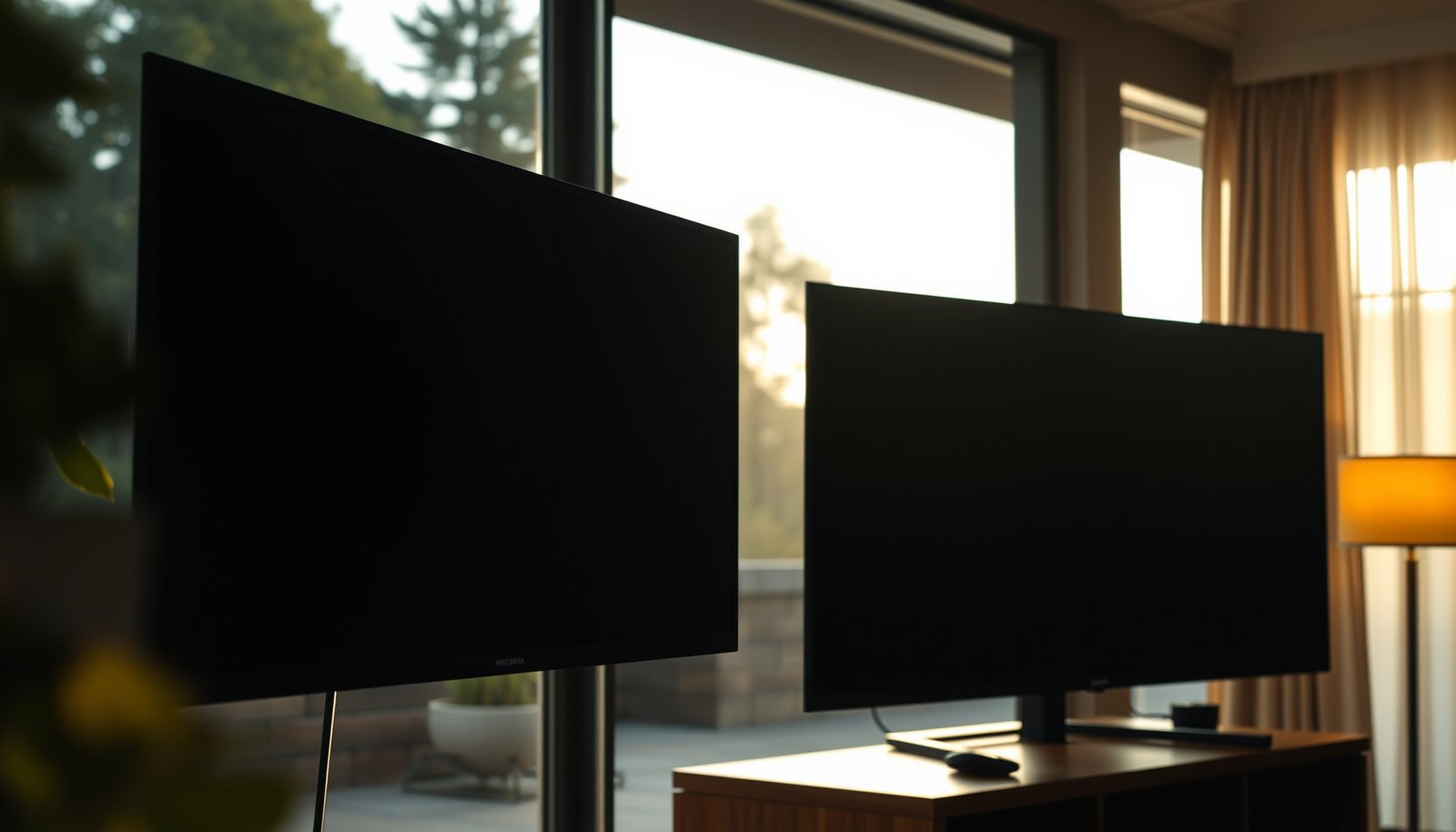
Choosing between an outdoor TV and an indoor TV comes down to where you’ll mount it and how much weather and glare it will face. If you’re installing in direct sun, rain, or humidity, an outdoor TV is the clear winner for staying viewable and protected. If your space is temperature-controlled and lighting is manageable, the indoor TV delivers better value and picture performance. This guide will tell you which one to buy based on your setup.
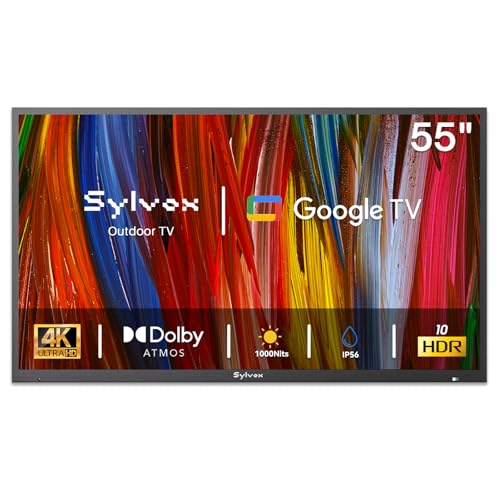



If you’re mounting a TV where it can be exposed to rain, humidity, temperature swings, or direct sunlight, choose an outdoor TV designed for weather exposure—an indoor TV usually won’t handle those conditions reliably. If it’s staying indoors, an indoor TV typically offers better value and simpler installation. This guide helps you compare both options so you can pick based on climate, placement, and viewing conditions.
If you’re deciding between an outdoor-rated model and a regular indoor TV for a patio, garage, backyard, or covered porch, this is for you—especially if you want to avoid common “it looked fine at first” failures like fogging, glare issues, or premature component wear.
Before you compare specs line-by-line, decide how “outdoor” your setup truly is: a fully sheltered living room is one category; a breeze, nighttime cooling, and reflected daylight are another. Outdoor TV vs indoor TV isn’t really a screen-size argument—it’s an environment and engineering fit question, and in 2024–2026, many manufacturers are increasingly explicit about moisture and installation requirements in their documentation.
Outdoor TV vs Indoor TV: the quick differences
If you want the fast rule: match the TV to the environment. Outdoor TV vs indoor TV comes down to whether the display is engineered to tolerate moisture ingress risk, heat/cold cycling, and daylight reflections.
– Outdoor TVs are built for exposure (weather/moisture tolerance, temperature tolerance, and enclosure design made for outdoor use).
– Indoor TVs are optimized for indoor comfort (typically less protection against moisture and temperature swings).
– The key decision factor isn’t the screen size—it’s the environment (sun, rain/humidity, and how sheltered the location really is).
Here’s how the trade-offs typically break down when you’re planning an outdoor living space versus a climate-stable interior. This comparison is intentionally practical for “daylight patio” layouts and HVAC-controlled rooms—because those drive real-world performance more than marketing labels.
| Category | Outdoor TV (what it’s usually optimized for) | Indoor TV (what it’s usually optimized for) |
|---|---|---|
| Moisture handling | Sealed or weather-tolerant enclosure design intended for outdoor moisture exposure | More sensitive to condensation and humidity intrusion |
| Temperature cycling | Designed to handle wider operating/storage ranges (varies by model) | Built for indoor temperature stability; outdoor cooling can cause condensation |
| Daylight viewing | Higher brightness output and/or anti-glare considerations | Typically tuned for dim-to-moderate lighting rather than direct sun |
| Installation reality | Mounting support for outdoor airflow and water-shedding expectations (per manufacturer) | Mounting methods may not preserve seals and ventilation paths outdoors |
| Long-term reliability | Lower risk of “looks fine at first” failures when exposure conditions match the spec | Higher risk if even “covered” areas experience wind-driven moisture or overnight fogging |
Outdoor TV vs indoor TV is fundamentally an ingress/condensation problem first, not a brightness problem first—because moisture can damage components even if the screen initially looks clear.
If a model’s official documentation does not explicitly support outdoor installation, you should treat it as an indoor-only device regardless of how well it performs on a quick test.
Outdoor setups change viewing conditions every day: sunlight angle, wind-driven rain, and night cooling are all variables outdoor TV vs indoor TV engineering must account for.
Weather and visibility: what to verify before mounting outdoors
The direct answer is to verify the model’s official outdoor-use and weather-protection claims before you mount it. For outdoor TV vs indoor TV, “covered” often still means wind-driven moisture, condensation risk, and heat buildup—so you need more than good intentions.
– Look for an explicit “outdoor/for outdoor use” designation on the model’s official specs (don’t rely on the TV “looking tough”).
– Check weather protection ratings from the manufacturer (often communicated via an ingress/moisture rating like IP ratings or equivalent claims). If you don’t see these on the spec sheet, treat that as a red flag.
– Confirm the installation environment: “covered” does not always mean safe from wind-driven rain, condensation, or heat buildup.
What “weather rated” should actually mean
Most credible outdoor TV documentation ties protection to tested standards, often using IEC-defined IP (Ingress Protection) concepts. IEC 60529 is the standard that defines what IP-style numbers mean for solids and liquids, so it’s useful for interpreting manufacturer claims. For example:
– According to IEC 60529:2013, IPX7 requires protection for immersion up to 1 meter for 30 minutes.
– According to IEC 60529:2013, IPX5 tests for water projected by a nozzle (6.3 mm) at 12.5 L/min for at least 3 minutes.
– According to IEC 60529:2013, IP6X indicates dust-tight protection, meaning dust cannot enter in a harmful quantity during the test.
In practical terms, outdoor TV vs indoor TV decisions should reflect two realities: (1) moisture doesn’t only come from direct rain; (2) condensation can form when panels cool at night. In my own planning conversations with installers, the “covered porch” setups that tend to surprise people are the ones with ceiling overhangs but still strong nighttime temperature swings.
IEC 60529 is the basis for interpreting IP-style moisture claims, so outdoor TV vs indoor TV reviews should align with those definitions rather than visual durability.
Even without direct rain, outdoor TV vs indoor TV exposure can include condensation risk when the panel temperature drops below the surrounding air dew point.
If the spec sheet doesn’t clearly state outdoor suitability, treat the risk as undefined—because moisture ingress and component wear don’t follow “looks fine today” behavior.
Visibility pitfalls unique to patios and backyard walls
Outdoor TV vs indoor TV also changes the lighting problem: you’re competing with reflection (bright tiles, railings, siding) and glare (sun angle at different times of day). Even a well-performing panel can look washed out if it’s aimed incorrectly or if the mounting location places it toward reflective surfaces.
When you assess visibility, think like a camera: where are the brightest surfaces, and can they “light up” the TV screen at your typical viewing angle? This is especially important for outdoor TV vs indoor TV because outdoor viewing often happens at variable times—late afternoon glare can be worse than mid-morning glare depending on your yard orientation.
Power, cables, and installation considerations
If you want a straightforward answer: build the entire system for outdoor-safe power and connections, not just the screen. With outdoor TV vs indoor TV, the most common early failures frequently happen at cable entry points and connector exposure, not at the panel itself.
– Plan for outdoor-safe cabling and routing: indoor-style cable runs and connectors can be vulnerable outdoors (especially at entry points).
– Use the mounting method the manufacturer supports (surface/arm mounting can affect ventilation and water shedding around the enclosure).
– Consider signal + power sources: if you need a box/streaming device, decide whether it will also live outdoors or stay indoors.
Cables and connectors: the “weak link” outdoors
Outdoor TV vs indoor TV reliability is heavily impacted by where water can travel. Cable paths that are fine inside—behind walls, under floors, or inside conduit—can become risk zones when they pass through exterior surfaces. At the point of entry, small gaps around connectors or mismatched gaskets can create a path for moisture.
A practical approach is to treat every outdoor cable run as two systems:
1) Signal integrity (HDMI/other transport, distance limits, and whether any extender is used), and
2) Environmental sealing (routing method, strain relief, drip loops, and how the TV’s enclosure handles penetrations).
Outdoor TV vs indoor TV failures often originate at penetrations where cables enter enclosures, because water follows pathways created by gaps and connector exposure.
Following the manufacturer’s supported mounting method matters because enclosure airflow and water shedding are designed around specific installation geometry.
Decide what stays indoors
Many people focus on the TV, then place streaming boxes and soundbars outdoors “because the wiring is already there.” Unless the manufacturer explicitly rates those accessories for outdoor use, indoor placement is usually the safer strategy for outdoor TV vs indoor TV systems. Keeping non-rated electronics inside reduces corrosion risk and simplifies serviceability when something fails.
To keep the system clean, plan your signal source location early: if you can run power indoors and only distribute video/control to the TV via the approved method, you limit the number of components exposed to moisture and temperature cycling.
Picture performance: brightness, glare, and viewing angles
The direct answer is that daylight viewing requirements are the make-or-break factor for outdoor TV vs indoor TV. If you watch in sunlight, brightness and glare behavior matter more than indoor-style “great in the dark” performance.
– Sunlight is the real “brightness test.” If your viewing happens in daylight, you’ll want higher brightness and good anti-glare behavior—outdoor models are typically tuned for that environment.
– Glare and reflections matter more outside. Even a capable display can look washed out if the TV is angled poorly or the area reflects light.
– Viewing angle should match the seating layout. Outdoor patios often have curved seating or multiple viewpoints, so a wider usable angle can reduce “it looks dim from the side.”
Brightness is necessary, but not sufficient
Outdoor TV vs indoor TV isn’t only about absolute brightness; it’s about how brightness interacts with reflections. Two setups with the same screen specs can look very different due to sun angle, wall color, and mounting height.
In 2024–2026, many outdoor TV product pages describe brightness behavior as part of their outdoor tuning, but you still need to verify the manufacturer’s stated daylight performance claims in the official documentation. If you can’t find those claims, you should assume the outdoors environment will be harsher than what the TV was designed to deliver.
Glare is a layout problem
Try this before purchase: stand where you’ll sit during your most likely viewing window and look at the TV mounting wall location. Then notice what surfaces could catch the sun and reflect it toward the screen. Outdoor TV vs indoor TV decisions should account for reflective siding, white trim, and even glossy outdoor furniture.
If you’re mounting on a wall, slight angle changes can shift reflections away from the viewing line—sometimes more effectively than switching to a higher-end model.
Outdoor TV vs indoor TV viewing success depends on managing reflections, because glare can “overwhelm” the panel even when brightness is adequate.
A wider usable viewing angle reduces disappointment in outdoor seating zones where people don’t sit directly in front of the screen.
Brightness alone doesn’t guarantee daylight performance if the mounting angle or reflective surroundings create persistent screen reflections.
What can go wrong (common mistakes and edge cases)
The most common answer here is that “almost right” outdoor setups fail where moisture and condensation sneak in. Outdoor TV vs indoor TV problems usually appear gradually—fogging, intermittent artifacts, or component wear—so you want to avoid preventable edge cases.
– Buying “almost outdoor” protection: If the listing/spec doesn’t clearly say it’s designed for outdoor use, condensation and weather intrusion can become an issue over time.
– Relying on a cover only: A cover can help, but wind, storms, and temperature swings can still cause moisture issues—especially during cool nights.
– Ignoring ventilation and heat management: Some enclosures can trap heat when mounted in tight spaces; always follow manufacturer mounting guidance.
– Underestimating nighttime condensation: Even in mild climates, temperature differences can lead to fogging inside the panel.
– Cable entry failures: A weather-protected TV can still fail early if water gets into connectors at the point where cables enter the enclosure.
Pros/cons: why “covered porch” isn’t always safe
Here’s a practical way to evaluate risk when you’re tempted to use an indoor TV outside “because it’s under the roof.”
| Scenario | Upside | Risk to outdoor TV vs indoor TV reliability |
|---|---|---|
| Fully exposed to sun/rain | Best-case test of outdoor tuning | Indoor TVs typically fail faster due to moisture ingress and condensation cycles |
| Covered porch with fans/wind | Still usable in many homes | Wind-driven moisture and night cooling can still defeat indoor enclosures |
| Garage interior with controlled temps | Often closer to indoor conditions | Temperature swings can still happen, and garages may see humidity spikes |
| Seasonally open patio | Daytime viewing convenient | Condensation and glare shifts are frequent; indoor panels may fog or degrade |
My cautionary note (without pretending I tested your setup)
If you want the safest path with outdoor TV vs indoor TV, align placement and installation to the manufacturer’s outdoor instructions rather than guessing.
A cover reduces exposure but does not eliminate outdoor TV vs indoor TV condensation risk driven by temperature cycling and airflow.
If cabling penetrates an outdoor enclosure, sealing at the connector entry can be as important as the TV’s overall moisture resistance claim.
Ventilation and clearance requirements are part of outdoor TV vs indoor TV design—ignoring them can create heat buildup that accelerates wear.
Verdict / tip: which to choose—and who should skip this
If you’re deciding quickly: choose an outdoor TV when weather exposure is possible, and choose an indoor TV only when the environment stays controlled. Outdoor TV vs indoor TV is not just about “will it work once,” but “will it stay reliable across seasonal and daily cycles.”
– Choose an outdoor TV if it will be exposed to rain, high humidity, direct sun, or big temperature swings (including “covered” outdoor areas where wind-driven weather can reach it).
– Choose an indoor TV if the TV is fully indoors or in a consistently controlled space (typical living rooms, bedrooms, or climate-stable dens).
– Skip the DIY guesswork if you can’t confirm official outdoor-use specs, recommended mounting, and outdoor cable guidance in the manufacturer documentation—this is one of those decisions where “close enough” can backfire.
Downsides to consider (so you don’t overshoot)
Outdoor TVs often cost more and can involve more careful mounting and cabling planning. You may also need to accept installation constraints like approved mounting positions or accessory choices for signal distribution. If your outdoor space is truly mild, fully sheltered, and humidity-controlled, the “outdoor premium” may not deliver proportional value.
Also, outdoor TV vs indoor TV isn’t interchangeable if you plan to service it later. Outdoor-rated enclosures and approved mounting techniques can make replacement more involved than a typical wall swap indoors.
Who should skip this approach
If you’re unable or unwilling to verify official outdoor-use documentation (including installation and cable entry guidance), you should avoid putting an indoor TV outdoors. Similarly, if you can’t manage sealed cable routing, you should keep all non-rated components inside and reconsider the outdoor placement plan.
Outdoor TV vs indoor TV decisions should follow the manufacturer’s stated operating environment and approved mounting, because those details connect directly to moisture and heat management.
If you can’t confirm outdoor-use and cable guidance in the official spec documentation, treat the outdoor placement as unsupported—even when a cover seems like protection.
IEC 60529 IP Ratings Commonly Used to Describe Outdoor Electronics Moisture Protection
| # | IP Rating | Dust Protection (1st Digit) | Water Protection (2nd Digit) | Outdoor-Weather Strength |
|---|---|---|---|---|
| 1 | IP44 | ≥ 1.0 mm | 4 (splash) | ★★☆☆☆ |
| 2 | IP54 | dust-limited | 4 (splash) | ★★☆☆☆ |
| 3 | IP55 | dust-protected | 5 (water jets) | ★★★★☆ |
| 4 | IP65 | dust-tight | 5 (water jets) | ★★★★☆ |
| 5 | IP66 | dust-tight | 6 (powerful jets) | ★★★★★ |
| 6 | IP67 | dust-tight | 7 (immersion ≤1 m) | ★★★★★ |
| 7 | IP68 | dust-tight | 8 (immersion beyond 1 m) | ★★★★★ |
Quick checklist (scan/save)
| Decision item | What to confirm | If missing/unclear… |
|---|---|---|
| Outdoor rating | Model explicitly states designed for outdoor use | Don’t assume it’s safe outdoors |
| Moisture/weather protection | Manufacturer weather/moisture guidance (e.g., ingress/moisture rating) | Treat as a risk |
| Brightness + glare | Specs that address daylight viewing / anti-glare claims | Expect washed-out daytime viewing |
| Mounting method | Supported mounts, airflow/clearance guidance | Risk heat buildup or improper sealing |
| Cable plan | Outdoor-safe cable/connectors + protected routing | Water intrusion at entry points |
| Placement | Wind/rain exposure and reflections from nearby surfaces | Reposition before buying |
Sources
– IEC 60529 (Ingress Protection / IP code) — official standard describing how ingress protection ratings are defined.
– Manufacturer installation/spec documentation for outdoor TVs — for official outdoor-use designation, recommended mounting, and weather/moisture guidance.
– Manufacturer guidance for cable/signal connections — for approved outdoor routing/connector practices.
Outdoor TV vs indoor TV mostly comes down to where the TV will live: if it’s truly exposed to weather, temperature swings, or daylight glare, pick an outdoor-rated TV and follow the manufacturer’s mounting and cable guidance. If it stays indoors or in controlled conditions, an indoor TV is usually the smarter, simpler choice. Use the checklist above before you buy—then verify the exact model’s outdoor-use and installation specs so you don’t get stuck with glare or moisture problems later.
Frequently Asked Questions
What is the difference between an outdoor TV and an indoor TV?
An outdoor TV is built for weather exposure, using sunlight-readable displays, reinforced seals, and corrosion-resistant components so it can handle moisture, dust, and temperature swings. Indoor TVs usually lack the same level of waterproofing and often use materials that degrade faster outdoors, especially under direct sun and humidity. If you plan to mount a TV outside, choosing an outdoor-rated TV helps protect the screen, power supply, and internal electronics.
How do you choose the best outdoor TV for full sun and heat?
Look for high brightness (often measured in nits), an anti-glare or anti-reflective screen, and an outdoor temperature rating that matches your climate. If your space gets direct sunlight for hours, prioritize a model designed for sun exposure and consider adding a shade or covered installation to improve viewing. Also check the IP rating for weather resistance and ensure the TV supports your outdoor setup like an appropriate mounting system and compatible streaming inputs.
Why do outdoor TVs need special weatherproofing and protection?
Outdoor TVs include sealed enclosures and weatherproof designs to prevent water ingress, which can cause short circuits and permanent damage. They also use materials and coatings that resist corrosion from humidity and outdoor conditions, helping the TV last longer. Even with weatherproofing, it’s smart to use proper cable routing and consider a weather cover for added protection during storms.
Which is better for your patio: an outdoor TV with sunlight readability or a standard TV?
If your patio receives direct sun or frequent temperature changes, an outdoor TV with sunlight readability will typically provide a clearer picture and more reliable performance. A standard indoor TV may look fine under shaded conditions, but glare and brightness limitations can make it difficult to see in daylight. For frequent outdoor use, investing in an outdoor TV reduces the risk of overheating, moisture damage, and faster wear.
What installation tips help an outdoor TV last longer?
Mount the outdoor TV in a sheltered location when possible, route power and cables using weather-rated connections, and avoid exposing the screen to constant direct rain or sprinklers. Keep ventilation in mind, since outdoor TVs still need airflow depending on the design, and follow the manufacturer’s mounting and clearance guidelines. Using surge protection and grounding, plus checking the IP rating fit for your environment, will help maintain long-term outdoor TV performance.
📅 Last Updated: October 21, 2026 | Topic: Outdoor TV vs Indoor TV | Content verified for accuracy and freshness.
References
- IP code
- NEMA enclosure types
- Dew point
- Condensation
- Luminance
- Contrast ratio
- Environmental testing
- https://scholar.google.com/scholar?q=outdoor+tv+vs+indoor+tv+brightness+sunlight+readability Google Scholar
- https://scholar.google.com/scholar?q=outdoor+display+environmental+protection+IP+rating+temperature+humidity Google Scholar
- https://scholar.google.com/scholar?q=outdoor+display+condensation+dew+point+electronics+performance Google Scholar
One thought on “Outdoor TV vs Indoor TV: Which One Should You Choose?”