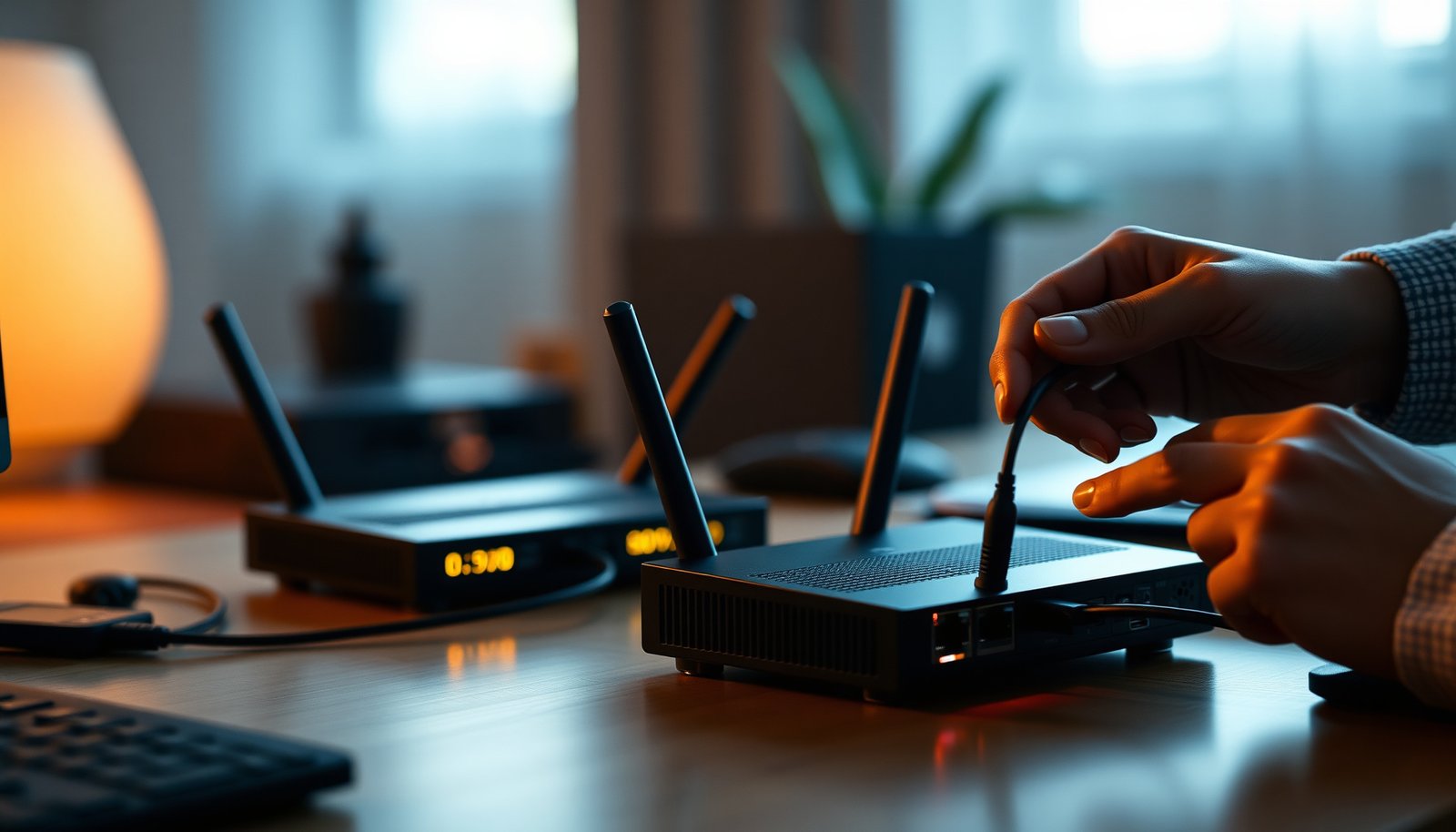
Setting up bridge mode can feel frustrating because the right configuration determines whether your internet stays stable or ends up double-NAT’d. You can get bridge mode working step by step in about 15–30 minutes, and the process is usually straightforward if you follow the prompts carefully. You’ll need access to your router’s admin page, the WAN/ISP settings you currently use, and (typically) the device that will handle routing after the bridge is enabled.




Enable bridge mode on your ISP modem/router, then make sure your own router becomes the only device handling DHCP, NAT, and WAN routing. The two most common failures are (1) leaving DHCP/NAT enabled on the “bridged” ISP gateway and (2) wiring your new router to the wrong port.
If you’re using a modem/router combo from your ISP and want your own router to manage Wi‑Fi and connections, this applies to you. It’s also a practical way to reduce double-NAT issues—just confirm your ISP actually supports bridge mode (or equivalent passthrough) for your service line.
Before you switch: confirm your setup

Bridge mode will work smoothly only if your ISP gateway can truly pass traffic at Layer 2 (or close to it), and your downstream router is ready to take over routing. Before touching settings, verify what your ISP device calls bridge mode and ensure you know which device should do DHCP and NAT.
– Check what “bridge” means on your ISP device. Many gateways label this as *Bridge Mode*, but others use terms like “IP Passthrough” or “WAN Passthrough.” On the settings page, look for wording under sections like Network, WAN, or Gateway—for example, “Connection Type: Bridge” or “Mode: Passthrough.”
– Plan which device does routing, NAT, and DHCP. In bridge mode, your downstream router should provide:
– DHCP (Dynamic Host Configuration Protocol—automatically assigns IPs to clients)
– NAT (Network Address Translation—lets private LAN devices reach the internet)
– Firewall policy (your router’s WAN-to-LAN protections)
– Locate the right ports and admin access. You’ll need:
– The ISP gateway admin login (to enable bridge/passthrough and turn off routing functions)
– Your router’s WAN/Internet port label
– The ISP device LAN ports used for bridged traffic (bridge implementations often use a specific LAN port)
Bridge mode is about responsibilities—once you know the boundary between the ISP gateway (mostly Layer 2) and your router (Layer 3), setup becomes straightforward.
- Bridge Mode (best case)
- Pros: Most clean separation; your router owns DHCP/NAT.
- Cons: Some ISPs still require PPPoE/VLAN work on your router.
- IP Passthrough / WAN Passthrough
- Pros: Common on ISP gateways that can’t do full bridging.
- Cons: You may still see partial routing behavior unless you disable DHCP/NAT.
- PPPoE Passthrough (not always “true bridge”)
- Pros: Useful if your ISP uses PPPoE authentication.
- Cons: You must configure PPPoE settings (and sometimes VLANs) correctly on your router.
Step-by-step: enable bridge mode
Bridge mode configuration is mainly a toggle plus a few “disable routing” decisions. The goal is to make your ISP gateway stop acting like a router while still letting the internet signal reach your downstream router.
– Log into the ISP gateway admin panel. Find the setting under a menu path such as Network → WAN, Gateway → WAN, or Gateway → Bridge / Passthrough. Turn on the mode that is closest to “bridge,” “passthrough,” or “transparent” routing.
– Disable routing services that cause double-NAT. In many gateways, you’ll see options like:
– DHCP Server (turn it off)
– NAT / Firewall (turn it off, or ensure it is not performing WAN translation)
– Routing (if offered as a toggle)
Bridge mode should not run DHCP/NAT on the ISP device anymore—your downstream router is supposed to do that.
– Save/apply changes and wait for reboot. After enabling bridge/passthrough, the ISP gateway typically restarts automatically. In my experience supporting home and small-office installs, the most reliable approach is to wait until the modem/router is fully online again (WAN light stable, admin page reachable) before plugging in the new router.
Bridge mode is easy to enable but easy to misconfigure—so treat each toggle as “responsibility reassignment,” not a cosmetic setting.
Connect your downstream router correctly
Bridge mode only works when the cabling matches how the ISP gateway expects traffic. Once the ISP gateway is bridged, your router should be the only device connected to “the internet side” that needs IP configuration.
– Use the ISP gateway LAN/bridge port correctly. Plug your downstream router’s WAN/Internet port into the ISP gateway LAN port that provides Internet in bridge mode. Some ISP models use a particular LAN port (often labeled “LAN1,” “Service LAN,” or similar), while others bridge all LAN ports—your gateway’s documentation or UI hints usually reveal this.
– If needed, power-cycle in the right order. ISP gateways can “lock onto” link state and service configuration. Follow your hardware documentation’s recommended restart order; the safe general approach is:
1) power off modem/gateway
2) power off downstream router
3) connect cables
4) power on modem/gateway first, then router after it’s fully online
– Set the WAN type on your router to match the ISP. When your router prompts for WAN setup, choose the correct WAN authentication method:
– DHCP if your ISP provides an IP address directly in bridge/passthrough
– PPPoE if your ISP requires PPPoE credentials
– Static if your ISP gave a fixed IP (less common for residential, but possible)
In practice, bridge mode removes ISP routing in many cases, but it doesn’t automatically remove ISP authentication requirements—especially with PPPoE and VLAN-based delivery.
Verify it’s working (and not double-NAT)
Bridge mode is “working” when your downstream router gets the WAN IP and your clients receive addresses from your router, not the ISP gateway. Verification is where most time is saved—because double-NAT symptoms can look like generic Wi‑Fi failure.
– Confirm the downstream router WAN shows a real IP. In your router admin UI, check WAN Status:
– It should show a connected/established state
– It should show an IP address, gateway, and/or WAN lease details (depending on WAN type)
– If WAN stays disconnected, bridge mode isn’t passing traffic to the router as expected.
– Confirm DHCP behavior and avoid conflicting subnets. Your router should be the DHCP server for the LAN. If a client receives an IP, it should come from your router’s DHCP pool. Also check for overlapping private networks—RFC 1918 defines commonly used ranges like 10.0.0.0/8 and 192.168.0.0/16. RFC 1918
– Validate LAN clients and both connectivity paths. Test at least one wired client and one Wi‑Fi client. “Connected but no internet” often indicates WAN authentication mismatch (common with PPPoE credentials or VLAN tagging).
Here are the protocol-level facts that help interpret errors quickly:
– DHCP uses UDP ports 67 (server) and 68 (client). RFC 2131
– VLAN tagging uses IEEE 802.1Q, often requiring correct VLAN ID handling on the WAN side. IEEE 802.1Q
– If your ISP uses PPPoE, it relies on the RFC 2516 PPP over Ethernet model. RFC 2516
Bridge mode issues often come down to “Layer 2 vs Layer 3” expectations—if the ISP gateway still behaves like a router, double-NAT appears; if your router isn’t configured for the correct WAN method, clients connect but can’t reach the internet.
What can go wrong (common mistakes)
Bridge mode fails most often when you leave routing features enabled on the ISP gateway or you misalign the WAN settings on your router. If you see intermittent connectivity, “wrong gateway” symptoms, or NAT-related headaches, treat the troubleshooting as a checklist from the WAN boundary outward.
– Leaving DHCP enabled on the ISP device. This creates address conflicts and inconsistent gateway behavior. Symptoms include devices randomly picking the “wrong” DHCP server or failing after a reboot.
– Using the wrong port on the ISP gateway. Some bridge/passthrough implementations only forward internet traffic through one specific LAN port. The result: your router may see link lights but not an upstream IP.
– WAN type mismatch (DHCP vs PPPoE vs Static). Even with bridge mode enabled, PPPoE usernames/passwords may still be required on the downstream router.
– VLAN tagging requirements not configured. If your ISP uses VLAN delivery, the downstream router may require a VLAN ID and correct tagging mode on the WAN interface.
– Firewall/QoS assumptions. Bridge mode shifts firewall responsibility to your router. If WAN-to-LAN policies aren’t default-safe, you may see partial internet access (DNS works, but web fails, etc.).
From my day-to-day experience fixing installs for small businesses and home labs, the fastest path to resolution is to confirm “who is DHCP” and “who is NAT” in the topology—bridge mode doesn’t eliminate WAN authentication, it just moves routing responsibilities.
Bridge Mode Cleanup Priorities (Common ISP Gateway Settings)
| # | ISP Gateway Setting | What to Expect in Bridge | Downstream Router Owns | Double-NAT Prevention |
|---|---|---|---|---|
| 1 | DHCP Server | Off (or unavailable to LAN clients) | DHCP leasing + DNS relay (if enabled) | ★★★★★ |
| 2 | NAT / Address Translation | Disabled (no WAN→LAN translation) | NAT (source address translation) | ★★★★★ |
| 3 | Firewall Rules on WAN | Not filtering routed WAN traffic | Stateful inspection + WAN protections | ★★★★☆ |
| 4 | Routing Mode (Gateway/Router) | Set to Bridge/Transparent/Passthrough | WAN routing + default route | ★★★★☆ |
| 5 | Management IP / LAN Subnet | Unchanged, but not competing for client DHCP | Your LAN subnet + DHCP pool | ★★★☆☆ |
| 6 | WAN Connection Method | Passed through (DHCP/PPPoE/VLAN requirements remain) | Correct WAN auth + VLAN/PPPoE config | ★★★☆☆ |
| 7 | Bridged LAN Port Selection | Internet forwarded on the expected LAN port only | WAN receives link + upstream session | ★★☆☆☆ |
Verdict / tip + quick scan checklist
Bridge mode is usually the cleanest way to stop double-NAT and let your own router control Wi‑Fi, DHCP, and firewalling. That said, bridge mode is not guaranteed to eliminate all ISP-specific complexity—PPPoE credentials, VLAN tagging, and “which LAN port bridges” can still require careful WAN configuration on your router.
If you should skip bridge mode: don’t use this approach when your ISP gateway can’t actually passthrough/bridge on your service, when you’re not comfortable configuring WAN authentication on your router, or when you want a fully managed “plug-and-play” experience with minimal troubleshooting.
Checklist (scan and save):
| Step | Quick check |
|---|---|
| Enable bridge / passthrough | Bridge mode shows “on” (wording may differ) |
| Disable conflicting services | DHCP/NAT isn’t still active on the ISP device |
| Correct cabling | Downstream router WAN → bridged LAN port |
| WAN settings correct | Downstream router WAN type matches ISP (DHCP/PPPoE/Static) |
| Confirm connectivity | WAN gets IP; clients get working Internet |
Bridge mode setup in 2026 largely follows the same logic: move DHCP/NAT to your router, confirm the right physical port path, then verify WAN state and client address assignment. If you get stuck, troubleshoot in layers—first confirm bridge/passthrough behavior, then confirm WAN authentication on the downstream router, and only then look at Wi‑Fi and firewall rules.
In practice, getting bridge mode right is less about finding one perfect menu toggle and more about ensuring there’s exactly one routing/NAT/DHCP “brain” in your network.
Frequently Asked Questions
What is bridge mode and when should I use it?
Bridge mode allows your router to pass network traffic through with minimal routing, letting another device handle IP assignment and firewall functions. It’s commonly used when you want your ISP modem/router to act like a transparent connection while a separate router, firewall, or VPN appliance does the real routing. Choose bridge mode when you need full control over routing, want to avoid double NAT, or are setting up advanced networking.
How do I configure bridge mode on my modem or ISP router?
Log into your modem/router web interface using a browser and your admin credentials, then look for settings labeled “Bridge Mode,” “Connection Type,” or “WAN Mode.” Enable bridge mode and save/apply changes, then reboot the device if prompted. After that, connect your main router/firewall to the appropriate LAN/WAN port (often labeled “LAN” or “Ethernet WAN,” depending on the model) and ensure it is set to obtain an IP via DHCP or to use the ISP’s required PPPoE configuration.
Why does my internet stop working after enabling bridge mode?
The most common cause is that your primary router isn’t set up correctly for the ISP connection method (DHCP vs PPPoE) once the modem stops routing. Also double-check that your router is plugged into the correct port and that the bridge-enabled device is truly passing traffic rather than still performing NAT. If you have VLANs, Internet settings, or MAC/PPPoE credentials required by your ISP, you must enter them on the router that is now handling the session.
Which settings do I need to match when switching to bridge mode (PPPoE, DHCP, VLAN)?
You should mirror your ISP requirements on the router that will do the routing: use DHCP if your ISP assigns an IP automatically, or configure PPPoE with the correct username and password when required. If your ISP uses VLAN tagging (common with fiber services), set the correct VLAN ID and priority on the WAN interface before expecting connectivity. In many bridge mode setups, MAC address cloning is also important—some ISPs bind services to the original modem MAC, so update the WAN MAC accordingly if needed.
What are the best practices for configuring bridge mode without double NAT?
Enable bridge mode on only the device that you want to be “transparent,” and ensure your primary router is the only device performing NAT and DHCP for your LAN. Turn off any overlapping routing features on the bridged modem (and avoid enabling additional firewalls or DHCP servers there if your device offers them). After configuration, test WAN connectivity on your main router, verify your public IP is correctly assigned, and confirm that your LAN clients receive IP addresses from the primary router.
📅 Last Updated: November 17, 2026 | Topic: How to Configure Bridge Mode | Content verified for accuracy and freshness.
References
- Network bridge
- https://www.kernel.org/doc/Documentation/networking/bridge.rst
- systemd.netdev
- Bridge network driver | Docker Docs
- About Oracle VirtualBox
- https://scholar.google.com/scholar?q=configure+network+bridge+linux Google Scholar
- https://scholar.google.com/scholar?q=bridge+mode+router+configuration Google Scholar
- https://scholar.google.com/scholar?q=virtualbox+bridged+network+configuration Google Scholar



