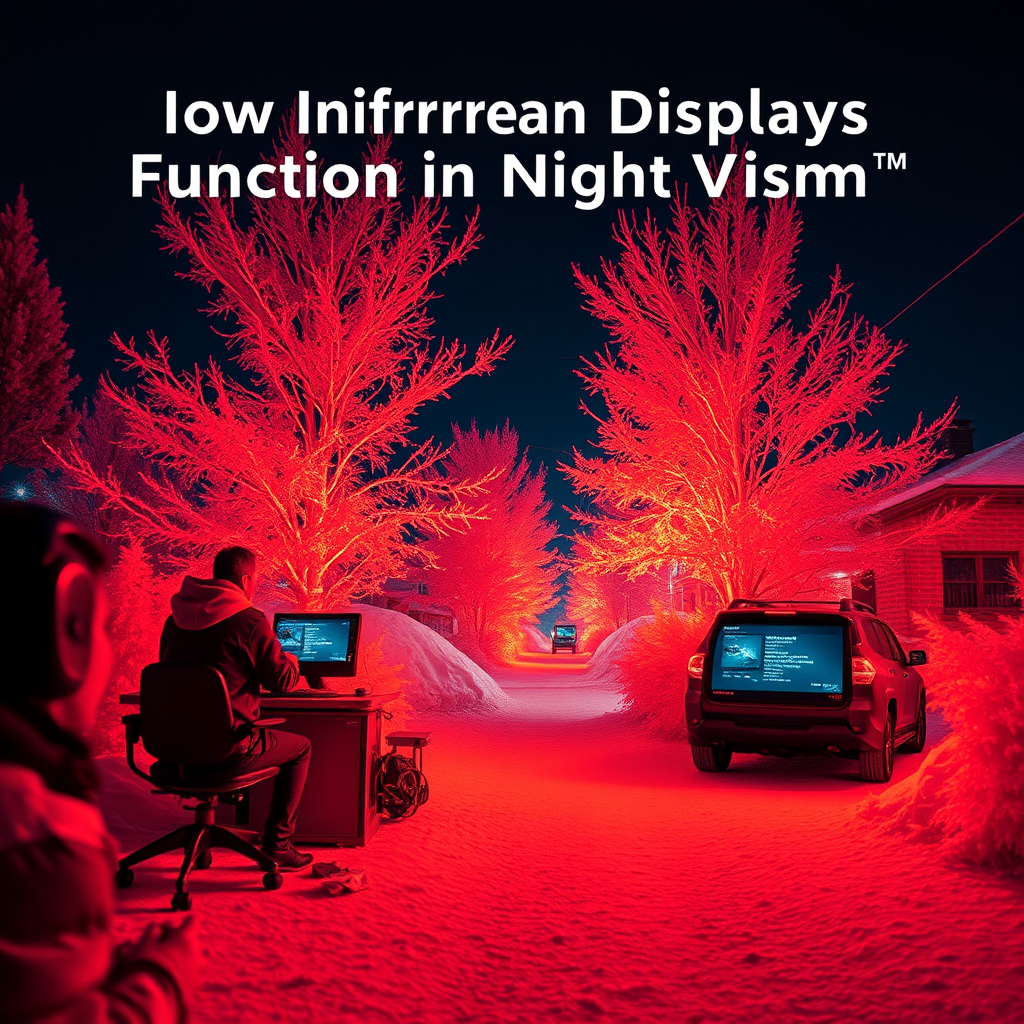

Infrared displays are crucial for night vision equipment, allowing users to see in complete darkness by converting infrared light into clear, visible images. This technology plays an essential role in various fields, from military operations to wildlife monitoring. In this article, we will delve into how infrared displays work, the technology that powers them, and the diverse applications that make them indispensable.
Understanding Infrared Light
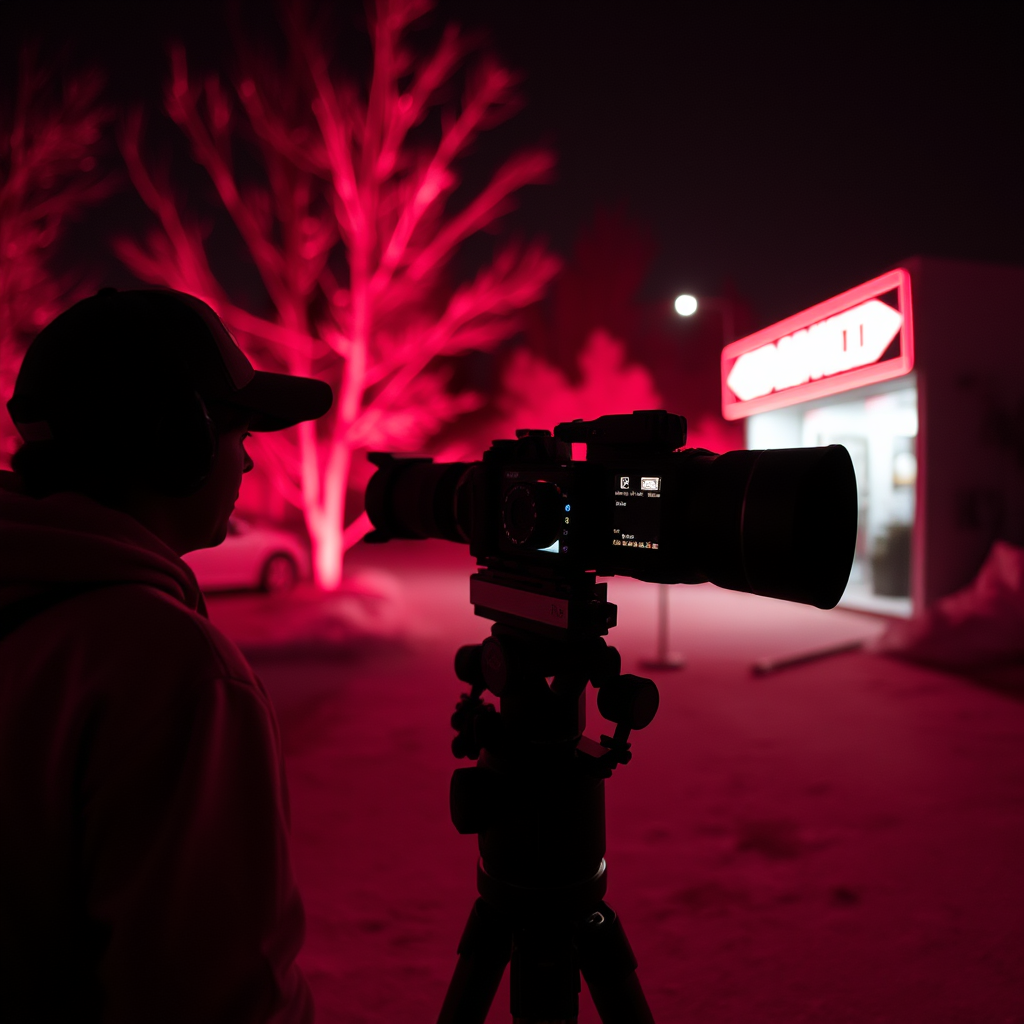
Infrared light is a form of electromagnetic radiation that exists just beyond the visible spectrum, making it invisible to the naked eye. It encompasses wavelengths ranging from 700 nanometers to 1 millimeter. While we can’t see infrared light, it surrounds us in everyday life; for instance, heat emitted by our bodies and various objects gives off infrared radiation. Night vision devices are specifically designed to detect and utilize this type of light, enabling users to create images in environments where visible light is scarce.
This ability to harness infrared light is pivotal for night vision equipment, as it allows for functionality in total darkness. For example, during military missions or search-and-rescue operations, infrared displays provide critical situational awareness, making it easier for operatives to navigate and identify targets without compromising their safety.
The Role of Infrared Sensors
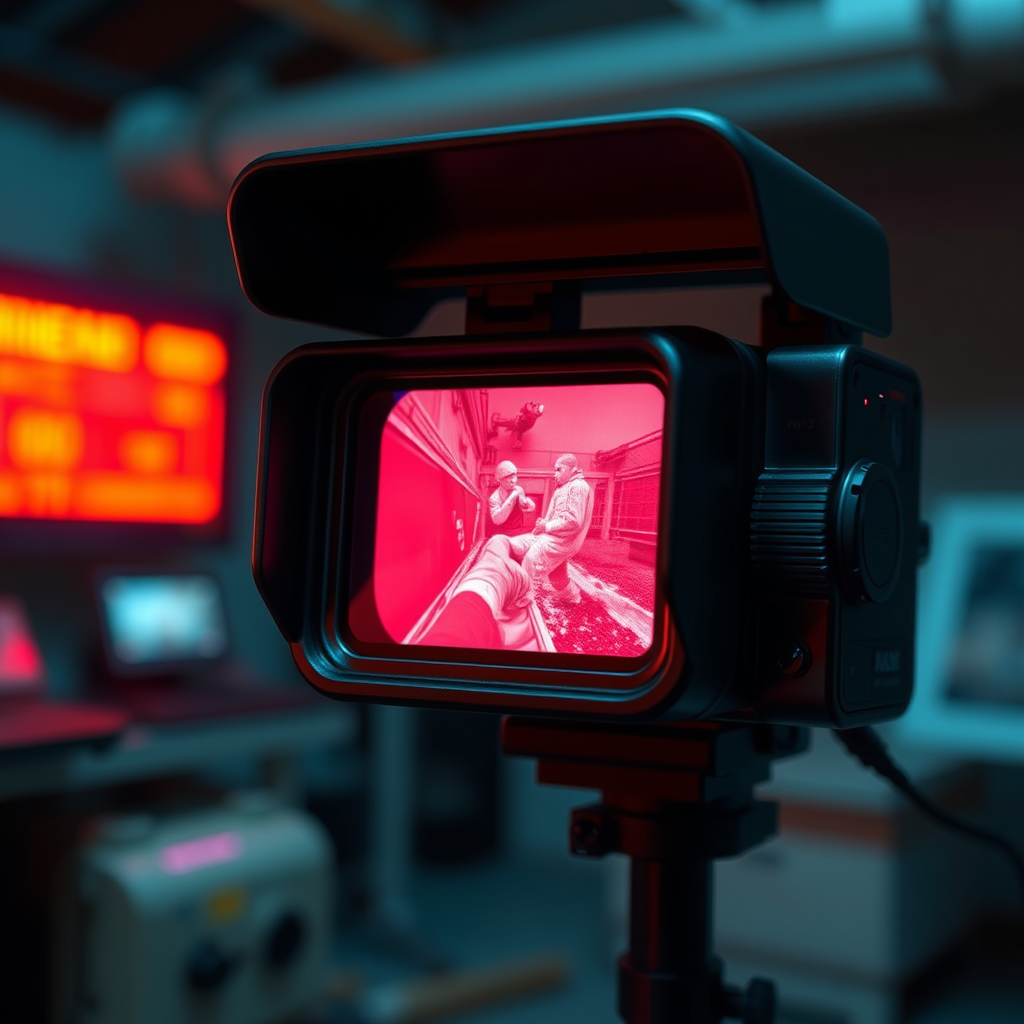
At the heart of infrared displays are infrared sensors, which play a vital role in capturing thermal radiation emitted by objects. These sensors are highly sensitive and can detect temperature variations even in complete darkness. When an object emits heat, it releases infrared radiation, which is detected by the sensor.
Once the infrared sensor captures this radiation, it converts the signals into electrical impulses. This conversion is essential for processing the data and forming images. The sophistication of these sensors varies, affecting their performance. For instance, advanced sensors used in military applications can detect even the slightest heat signatures, providing a tactical edge. In contrast, consumer-grade sensors may offer less sensitivity but are still effective for outdoor activities like hunting or wildlife observation.
The Process of Image Formation
Once the infrared sensors capture the thermal radiation and convert it into electrical signals, the next step is transforming these signals into digital images. This process involves a series of complex algorithms that enhance the clarity, contrast, and detail of the images.
The software analyzes the electrical signals and assigns colors to different temperature ranges, translating them into a visible format. For example, warmer objects might appear in shades of white or red, while cooler surfaces could be represented in blues or greens. This color-coded representation helps users easily interpret the thermal landscape.
Moreover, advancements in image processing technologies have made it possible to reduce noise and improve image stability, providing clearer visuals. In critical applications like surveillance, enhanced image quality can mean the difference between identifying a threat and missing it altogether.
Types of Infrared Displays
There are primarily two types of infrared displays used in night vision equipment: cooled and uncooled displays.
Cooled displays utilize cryogenic cooling systems to lower the temperature of the infrared sensor, significantly enhancing its sensitivity to thermal radiation. This higher sensitivity allows for the detection of minute temperature differences, which is crucial in military and high-stakes applications. However, cooled displays are more complex and often bulkier, making them less portable.
On the other hand, uncooled displays operate at ambient temperatures and are generally simpler in design. They are lightweight and more portable, making them ideal for everyday users, such as outdoor enthusiasts or wildlife researchers. Although uncooled displays may not match the sensitivity of cooled systems, they offer sufficient performance for a wide range of applications at a lower cost.
Applications of Infrared Displays
Infrared displays have a multitude of applications across various sectors. In the military, they are indispensable for surveillance, reconnaissance, and target acquisition, providing soldiers with the ability to operate effectively in low-light conditions. Law enforcement agencies also rely on infrared technology for nighttime patrols and crime scene investigations.
In search-and-rescue operations, infrared displays enable rescuers to locate individuals in need, even in completely dark environments or dense foliage. Wildlife monitoring is another area where infrared displays shine; researchers can observe animal behavior without disturbing the natural habitat, allowing for more accurate studies.
Industrial applications of infrared technology include detecting heat leaks in buildings or identifying hot spots in machinery. This capability not only enhances energy efficiency but also prevents potential hazards like fires or equipment malfunction.
Advantages of Using Infrared Displays
One of the most significant advantages of infrared displays is their ability to enhance visibility in complete darkness, which can lead to safer operations in various fields. For instance, during nighttime military missions or police operations, the ability to see threats before they are visible to the naked eye can be life-saving.
Moreover, infrared displays provide a tactical advantage in numerous professional sectors. For example, in law enforcement, being able to detect heat signatures can help officers locate suspects hiding in the dark. In wildlife observation, it allows researchers to study nocturnal animals in their natural habitats without causing disturbance.
Additionally, infrared displays can be cost-effective tools for improving safety and efficiency across different industries. By integrating this technology into routine operations, businesses can proactively identify issues, thereby reducing downtime and enhancing overall productivity.
Future Trends in Infrared Technology
The future of infrared technology is promising, with several emerging trends on the horizon. One significant development is the improvement in resolution and sensitivity of infrared displays, which will lead to better image quality and more accurate data collection.
Moreover, the integration of real-time image processing is expected to revolutionize how users interact with infrared displays. This advancement will enable instant feedback, allowing operators to make informed decisions quickly. Additionally, the convergence of infrared technology with augmented reality (AR) is on the rise, creating immersive experiences that could enhance training and operational capabilities.
As the technology advances, we can also anticipate a reduction in costs, making infrared displays more accessible to a broader audience. This democratization of technology could lead to increased usage in various fields, including environmental monitoring and even smart home applications.
The advancements in infrared displays have transformed night vision equipment, making it more accessible and effective across various sectors. By understanding how these displays work, users can better appreciate their functionality and leverage them in practical applications. Explore the latest models and technologies in the market to enhance your night vision capabilities today!
Frequently Asked Questions
What is the principle behind how infrared displays work in night vision equipment?
Infrared displays in night vision equipment operate by detecting infrared radiation, which is emitted by warm objects, including humans and animals. These displays convert the captured infrared signals into visible images, allowing users to see in complete darkness. The technology relies on sensors that are sensitive to infrared wavelengths, translating heat signatures into a clear, illuminated view that enhances situational awareness during nighttime operations.
How do infrared displays differ from traditional night vision technologies?
Infrared displays differ from traditional night vision technologies in that they do not rely on ambient light, such as moonlight or starlight, to function. Instead, they detect thermal radiation, enabling visibility in total darkness and through obstructions like fog or smoke. Traditional night vision typically amplifies available light, making infrared displays more effective for scenarios where visibility is severely limited.
Why are infrared displays important for military and security applications?
Infrared displays are crucial for military and security applications because they provide enhanced visibility and situational awareness in low-light conditions. They allow users to detect threats that would otherwise go unnoticed, improving tactical decision-making and operational effectiveness. Additionally, the ability to see through smoke, fog, or other visual obstructions makes infrared technology indispensable for surveillance and reconnaissance missions.
Which types of infrared displays are most commonly used in night vision devices?
The most commonly used types of infrared displays in night vision devices include thermal imaging cameras and cooled or uncooled infrared detectors. Cooled thermal cameras provide high sensitivity and resolution by using cryogenically cooled sensors, making them suitable for long-range detection. Uncooled thermal cameras, on the other hand, are more compact and cost-effective, making them ideal for tactical and portable applications.
What should I consider when choosing night vision equipment with infrared displays?
When choosing night vision equipment with infrared displays, consider factors such as resolution, range, and sensitivity of the infrared sensor, as these elements significantly impact image clarity and detection capabilities. Additionally, assess the weight and durability of the device for ease of use in field conditions. It’s also important to evaluate battery life and any additional features, like image stabilization or video recording, to ensure the equipment meets your specific operational needs.
References
- Night vision
- https://www.nist.gov/news-events/news/2020/10/infrared-imaging-advanced-night-vision
- https://www.army.mil/article/243373/how_night_vision_equipment_works
- https://www.sciencedirect.com/science/article/pii/S1369701219301645
- https://www.jstor.org/stable/10.5325/jsciencetechnol.2.1.0169
- | Military.com
- https://www.researchgate.net/publication/259931099_The_Development_of_Night_Vision_Devices_and_Their_Impact_on_Surveillance_Technology
- https://www.nasa.gov/feature/the-importance-of-infrared-technology-in-space-exploration