Choosing the right arrangement for your speakers is crucial for achieving the best sound quality in your home theater room. Proper placement can enhance audio clarity, create immersive experiences, and balance sound across the space. In this article, we’ll explore the essential guidelines for arranging your speakers to maximize your home theater enjoyment.
Understanding Sound Staging
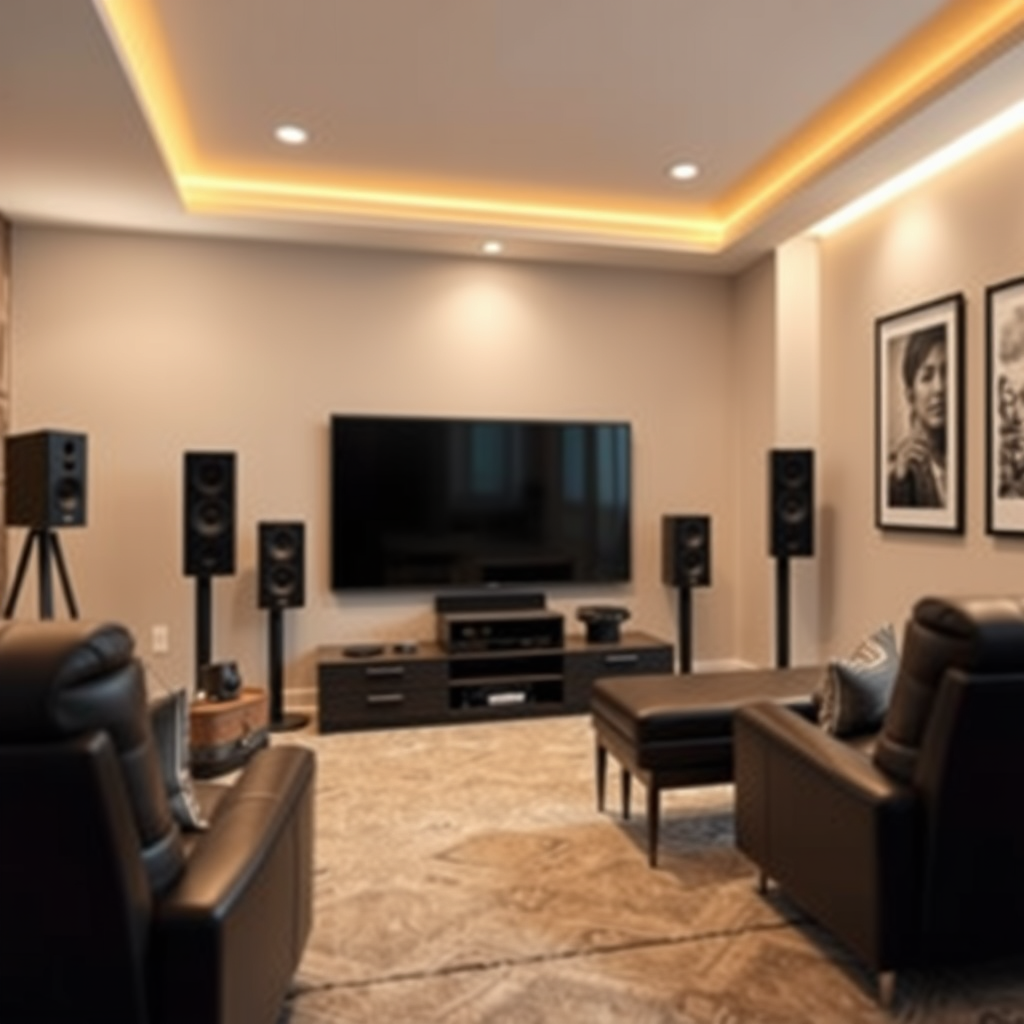
Sound staging refers to the spatial arrangement of audio in a theater setup, allowing the listener to perceive depth and direction. It is a vital aspect of audio design that influences how sounds are perceived within a defined space. When speakers are correctly positioned, they can create a three-dimensional sound experience, allowing various sound elements—such as dialogue, music, and sound effects—to emerge from different directions. This spatial awareness enhances the overall experience, making it feel as though you are truly part of the action on screen.
To achieve optimal sound staging, it is essential to understand the roles of different speakers in your system. Front speakers are primarily responsible for delivering dialogue and main audio elements, while surround speakers enhance the immersive experience, adding depth and richness. Thus, the arrangement of these speakers is pivotal for engaging viewing.
Optimal Speaker Placement
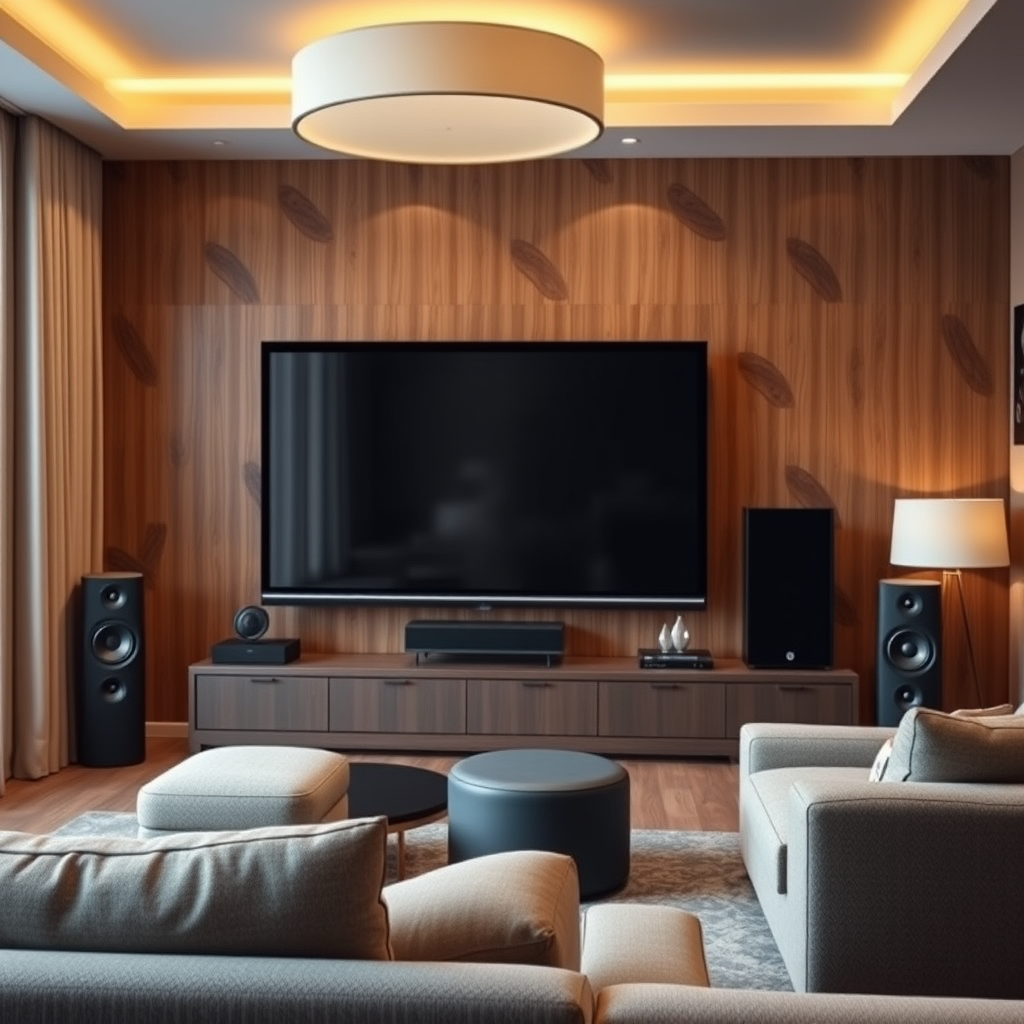
The proper placement of speakers is fundamental to achieving superior sound quality. Front speakers, which include the left, center, and right channels, should be positioned at ear level when seated, ideally between 22 to 30 degrees from the primary listening position. This angling towards the listener helps create a focused soundstage that enhances clarity and detail.
Surround speakers, on the other hand, should be positioned slightly above ear level and located to the sides or slightly behind the main seating area, typically at an angle of 90 to 110 degrees from the listening position. This setup allows for an enveloping surround sound experience, crucial for action scenes and ambient soundscapes.
Speaker Types and Their Placement
Different types of speakers, such as floor-standing, bookshelf, and in-wall models, each have unique characteristics that dictate their ideal placement.
– Floor-standing speakers: These are best positioned away from walls to avoid sound reflections that can muddle audio clarity. Ideally, they should have at least 1-2 feet of clearance from the wall.
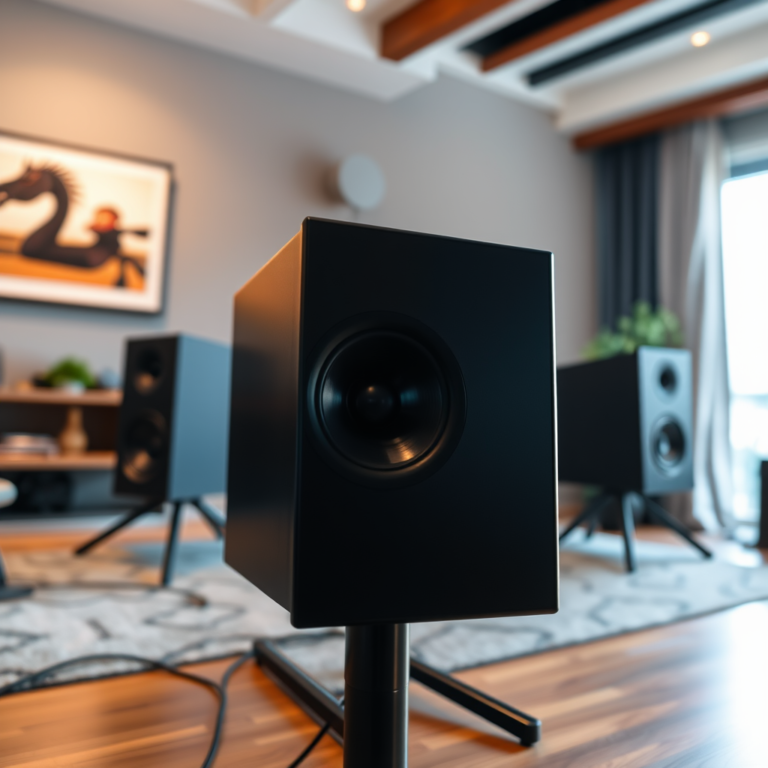
– Bookshelf speakers: These can be placed on shelves or stands, but should also be positioned ear-level with the listener and angled towards the seating area.
– In-wall speakers: The placement for these speakers should consider the wall structure and the sound dispersion pattern. They work well in any location that allows them to be flush-mounted, optimizing space while delivering sound effectively.
Subwoofers, responsible for low-frequency sounds, should be placed strategically in corners or against walls to enhance bass response. However, testing various locations is key to finding the best position, as room acoustics can dramatically affect low-frequency performance.
📋 Speaker Placement Comparison
Speaker Types and Their Best Placement
| # | Speaker Type | Ideal Placement | Recommended Height |
|---|---|---|---|
| 1 | Floor-standing | Away from walls | Ear level |
| 2 | Bookshelf | On stands or shelves | Ear level |
| 3 | In-wall | Flush-mounted | Variable |
| 4 | Surround | Slightly above ear level | Above ear level |
| 5 | Subwoofer | In corners or against walls | Variable |
📈 Speaker Frequency Response Chart
Speaker Frequency Response Ratings
Room Acoustics and Effects
The materials used in your home theater room can significantly affect sound quality. Hard surfaces like walls and floors can create unwanted echoes and reflections, leading to muddied sound. Conversely, soft materials such as curtains, carpets, and upholstered furniture can absorb sound, helping to improve clarity.
To optimize room acoustics, consider using acoustic panels or soundproofing materials strategically placed around the room. For instance, placing panels behind the speakers can help absorb excess sound energy, while bass traps in corners can mitigate low-frequency buildup. This kind of thoughtful design will greatly enhance your listening experience, ensuring that every sound detail is crisp and clear.
Common Placement Mistakes to Avoid
When designing your home theater room, there are several common mistakes to avoid that could compromise sound quality. One major error is placing speakers too close to walls or corners. This can lead to reflections that muddy the sound, resulting in a less than ideal listening experience.
Additionally, the distance between speakers and the listener should be carefully balanced. If the speakers are too far apart or too close together, it can cause audio coherence issues, leading to distortion and a less immersive experience. It is crucial to find the right balance to maintain audio integrity and clarity.
Testing and Adjusting for Perfection
Once your speakers are positioned, the next step is to test and adjust their settings. Utilizing audio calibration tools or software can help fine-tune speaker levels, ensuring they are balanced correctly. Many systems come with built-in calibration features that analyze your room’s acoustics and adjust the sound output accordingly.
Don’t hesitate to make personal adjustments based on your listening preferences and room acoustics. Each space is unique, and what works for one setup may not be ideal for another. Regularly assess your speaker setup, especially after introducing new equipment or modifying the room.
Maintenance and Future Upgrades
Maintaining your home theater system is essential for preserving sound quality over time. Regularly check the connections and integrity of the speakers. If you introduce new equipment, such as an updated receiver or additional speakers, reassess your placement and settings to ensure optimal performance.
Stay informed about emerging technologies and upgrades that can enhance your home theater experience. New speaker designs, sound processing technologies, and streaming capabilities are continuously evolving, providing opportunities to elevate your setup.
By following these guidelines, you’ll be well on your way to creating a home theater room that provides exceptional sound quality. Start implementing these speaker arrangement strategies today to elevate your audio experience and enjoy your favorite movies and shows to the fullest!
Frequently Asked Questions
What is the best speaker placement for optimal sound quality in a home theater room?
The best speaker placement for optimal sound quality involves positioning the front speakers at ear level, forming an equilateral triangle with the listening position. The center channel should be directly above or below the screen, while surround speakers should be placed slightly above ear level and to the sides or rear of the seating area, ensuring a balanced sound experience.
How can I arrange my speakers for a small home theater room?
In a small home theater room, it’s essential to maximize sound quality while minimizing space. Use bookshelf speakers instead of large floor-standing models, place them on stands or shelves at ear level, and ensure the subwoofer is positioned near a wall for enhanced bass response. Experiment with angles and distances to find the sweet spot for your seating arrangement.
Why is speaker height important in home theater design?
Speaker height is crucial in home theater design because it affects the soundstage and clarity of dialogue. Ideally, the tweeters of the front speakers should align with the listeners’ ear level when seated, ensuring that high frequencies reach the audience directly for a more immersive experience, while surround speakers should be elevated to create an enveloping sound environment.
Which surround sound configuration should I choose for my home theater?
The most common surround sound configuration for home theaters is 5.1, which includes five speakers and one subwoofer, providing a balanced audio experience. For larger rooms, consider a 7.1 setup, adding two additional surround speakers for enhanced depth and immersion. Choose a configuration based on your room size, layout, and how much you want to invest in your home theater system.
How does room acoustics affect speaker arrangement in a home theater?
Room acoustics significantly affect speaker arrangement because factors like wall materials, furniture, and room size can alter sound waves and create echoes or dead spots. To optimize sound quality, use soft furnishings to absorb sound, avoid placing speakers too close to walls, and consider acoustic treatments to enhance clarity. Testing different placements can help achieve the best sound performance in your unique space.
References
- Home cinema
https://en.wikipedia.org/wiki/Home_theater - https://www.sciencedirect.com/science/article/pii/S2212017317300272
https://www.sciencedirect.com/science/article/pii/S2212017317300272 - https://www.bbc.com/future/article/20200630-how-to-make-the-most-of-your-home-cinema
https://www.bbc.com/future/article/20200630-how-to-make-the-most-of-your-home-cinema - https://www.nytimes.com/2020/05/07/technology/personaltech/home-theater-setup.html
https://www.nytimes.com/2020/05/07/technology/personaltech/home-theater-setup.html - Home Studio Expert
https://www.homestudioexpert.com/speaker-placement-tips/ - https://www.audioholics.com/tweaks/how-to-set-up-a-home-theater
https://www.audioholics.com/tweaks/how-to-set-up-a-home-theater - https://pubmed.ncbi.nlm.nih.gov/15603977/
https://pubmed.ncbi.nlm.nih.gov/15603977/ - Google Scholar Google Scholar
https://scholar.google.com/scholar?q=Home+Theater+Room+Design - Google Scholar Google Scholar
https://scholar.google.com/scholar?q=Speaker+Arrangement+for+Best+Sound+Quality - Google Scholar Google Scholar
https://scholar.google.com/scholar?q=Home+Theater+Acoustics+and+Speaker+Placement