Calibrating your subwoofer is crucial for achieving the best possible bass response in your audio setup. Proper calibration ensures that the low-frequency sounds are not just loud, but also clear and well-integrated with the rest of your audio system. This guide will provide you with essential steps and techniques to optimize your subwoofer settings for an immersive listening experience.




Understanding Subwoofer Placement
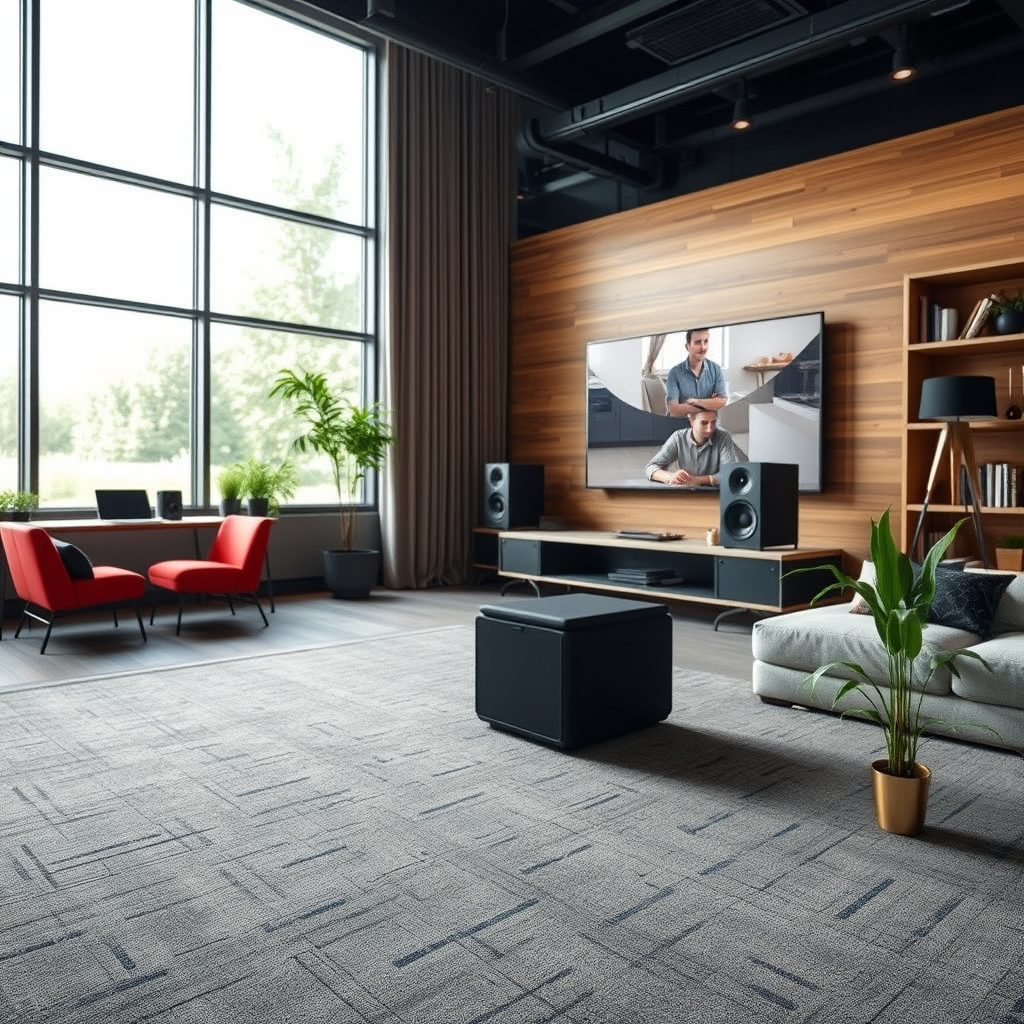
The placement of your subwoofer plays a significant role in the overall performance of your audio system.
– Choose the right location: Ideally, placing the subwoofer in a corner or close to walls can enhance the bass response due to the reinforcement of low-frequency sound waves. This method utilizes boundary loading, which can significantly amplify the bass output.
– Experiment with positioning: It’s vital to experiment with different positions within the room. Move the subwoofer around while playing bass-heavy tracks to find the “sweet spot” where the sound is most impactful. A common technique is the “subwoofer crawl,” where you place the subwoofer at your listening position and move around the room to identify where the bass is the strongest.
Adjusting the Volume and Phase
Once you have determined the optimal placement, the next step is adjusting the volume and phase settings.
– Set the volume level: Start with the subwoofer’s volume at about 50%. This provides a baseline from which you can adjust based on your personal preference and the acoustics of the room. Gradually increase or decrease the volume while listening to a variety of audio content to find the level that feels immersive without overwhelming your other speakers.
– Check the phase setting: The phase control on your subwoofer (typically set to 0° or 180°) determines how well the bass integrates with your main speakers. Experimenting with these settings can help eliminate phase cancellation, which occurs when the subwoofer and speakers are out of sync, resulting in a muddy sound. Listen closely to the transitions between bass notes and vocal ranges to determine which setting sounds more cohesive.
Using EQ Settings
Equalization (EQ) can significantly enhance your subwoofer’s performance by tailoring the sound frequencies to suit your room and listening preferences.
– Engage built-in equalization: Many modern receivers come with built-in EQ options that allow you to adjust the bass frequencies. Use these tools to boost or cut specific frequencies that may be overemphasized or lacking in your audio setup.
– Avoid over-boosting: While it’s tempting to crank up the bass for a more powerful sound, excessive boosting can lead to distortion and a loss of clarity. Make subtle adjustments and use a spectrum analyzer, if available, to visualize the frequency response in your room.
Common EQ Adjustments for Subwoofers
| # | Frequency Range (Hz) | Adjustment | Effect |
|---|---|---|---|
| 1 | 20-40 | Boost | Enhances rumble |
| 2 | 40-60 | Cut | Reduces muddiness |
| 3 | 60-80 | Flat | Balanced sound |
| 4 | 80-120 | Boost | Adds impact |
| 5 | 120-200 | Cut | Prevents boominess |
Utilizing Room Correction Technology
Modern audio systems often include room correction technology that can automate much of the calibration process.
– Employ room correction software: Tools like Audyssey, Dirac Live, or Room EQ Wizard can analyze your room’s acoustics to provide tailored adjustments. These systems measure the sound at your listening position and make adjustments to optimize the response based on your room’s unique characteristics.
– Follow the software’s recommendations: After running the analysis, the software will suggest specific settings. Make sure to implement these recommendations, as they are designed to enhance your overall audio experience by compensating for room anomalies.
Room Correction Technology Impact on Bass Response (Decibels)
Testing Your Calibration
Once calibration adjustments have been made, it’s essential to test your settings to ensure they meet your expectations.
– Play bass-heavy tracks: Use music genres like hip-hop, electronic, or action movie soundtracks that emphasize low frequencies. This will help you gauge the effectiveness of your calibration and identify areas where further adjustments may be necessary.
– Make incremental changes: As you listen, take notes on how each adjustment affects the sound. Small tweaks can lead to significant improvements, so consider altering one setting at a time for the best results.
Fine-Tuning for Personal Preference
After achieving a good baseline setup, personal preference will dictate much of your final tuning.
– Trust your ears: Everyone’s taste in sound can vary; what sounds great to one person may not resonate with another. Use your own judgment to make final tweaks that cater to your listening style.
– Gather feedback: If possible, invite friends over to listen to your setup. Their fresh perspectives might highlight aspects you hadn’t considered, helping you refine the bass quality even further.
By following these steps, you can effectively calibrate your subwoofer to deliver the maximum bass impact you desire. Start by experimenting with placement and settings, and don’t hesitate to make adjustments until you achieve the sound you love. Embrace the art of calibration as a journey rather than a destination, allowing your audio experience to evolve with your preferences and the acoustics of your space.
Frequently Asked Questions
How do I know if my subwoofer is properly calibrated?
To determine if your subwoofer is properly calibrated, listen for a balanced bass response without overwhelming the other frequencies in your audio setup. You can use a sound level meter or a calibration microphone with an audio receiver to measure the subwoofer’s output. Ideally, the bass should feel rich and full while blending seamlessly with your speakers.
What is the best method to calibrate my subwoofer for maximum bass impact?
The best method to calibrate your subwoofer is to use an SPL (Sound Pressure Level) meter to measure the output at your listening position. Adjust the subwoofer’s volume and phase settings while playing a test tone or bass-heavy music. Fine-tuning these parameters ensures your subwoofer delivers maximum bass impact without distortion.
Why is phase adjustment important when calibrating a subwoofer?
Phase adjustment is crucial when calibrating a subwoofer because it helps sync the subwoofer’s sound waves with those of your main speakers. If the phase is off, it can cause destructive interference, leading to a muddy or weak bass response. Properly aligning the phase enhances clarity and punch in the bass, maximizing its impact.
Which frequency range should I set my subwoofer to achieve optimal bass?
For optimal bass performance, set your subwoofer’s crossover frequency between 70 Hz and 80 Hz. This range effectively allows the subwoofer to handle the lower bass frequencies while the main speakers manage the higher frequencies. Adjusting the crossover ensures a smooth transition and fuller sound across the frequency spectrum.
How can room acoustics affect my subwoofer calibration?
Room acoustics significantly influence your subwoofer calibration by affecting how sound waves interact with the space. Factors like wall reflections, furniture placement, and room size can cause bass frequencies to either amplify or cancel each other out. To improve calibration, consider using bass traps or adjusting the subwoofer’s placement to minimize acoustic issues and enhance overall bass performance.
References
- Subwoofer
https://en.wikipedia.org/wiki/Subwoofer - https://www.bbc.com/future/article/20201221-how-to-get-the-best-bass-from-your-speakers
https://www.bbc.com/future/article/20201221-how-to-get-the-best-bass-from-your-speakers - https://www.sciencedirect.com/topics/engineering/subwoofer
https://www.sciencedirect.com/topics/engineering/subwoofer - https://www.nature.com/articles/s41598-020-73831-9
https://www.nature.com/articles/s41598-020-73831-9 - https://www.pubmed.ncbi.nlm.nih.gov/31975836/
https://www.pubmed.ncbi.nlm.nih.gov/31975836/ - Google Scholar Google Scholar
https://scholar.google.com/scholar?q=calibrating+subwoofer+for+bass+impact - Google Scholar Google Scholar
https://scholar.google.com/scholar?q=subwoofer+calibration+techniques - Google Scholar Google Scholar
https://scholar.google.com/scholar?q=best+practices+for+subwoofer+setup - Subwoofer | loudspeaker | Britannica
https://www.britannica.com/technology/subwoofer - https://www.theguardian.com/technology/2021/jul/20/how-to-get-the-best-sound-quality-from-your-home-audio-system
https://www.theguardian.com/technology/2021/jul/20/how-to-get-the-best-sound-quality-from-your-home-audio-system