
AI-driven facial recognition technology plays a pivotal role in modern video surveillance systems, enhancing security, efficiency, and accuracy in identifying individuals. By leveraging machine learning algorithms, this technology allows for real-time identification and tracking, significantly improving the capabilities of traditional surveillance methods. In this article, you will discover how AI is transforming surveillance practices, the benefits it brings, and the ethical considerations that arise in its implementation.



How AI Enhances Facial Recognition
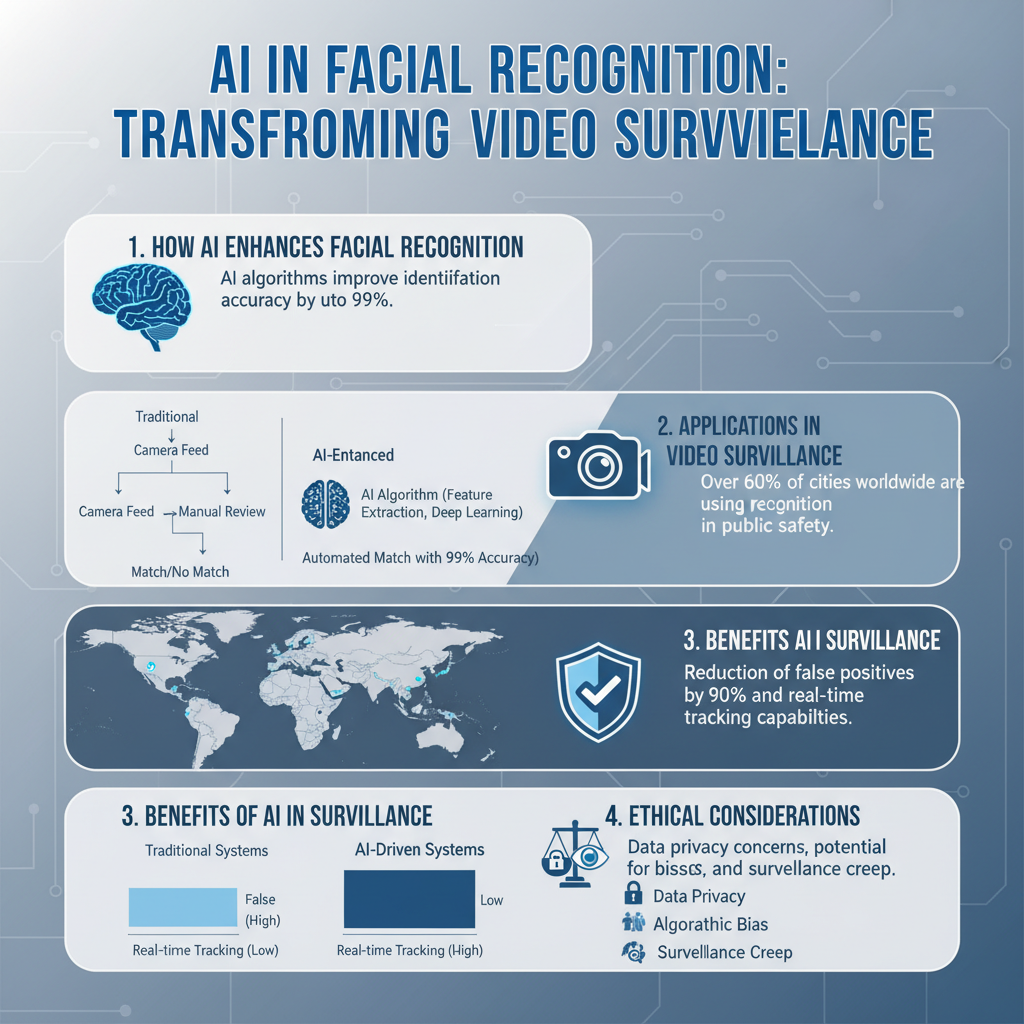
AI algorithms are at the heart of facial recognition technology, dramatically improving its accuracy and reliability. Traditional systems often struggle with high rates of false positives, where individuals are incorrectly identified. However, AI can significantly mitigate this issue. Advanced algorithms analyze facial features with precision, comparing them against extensive databases to ensure accurate matches. For instance, by utilizing convolutional neural networks (CNNs), AI can recognize unique facial landmarks, even under varying conditions.
Moreover, machine learning enables these systems to learn and adapt over time. As they process more images and encounters, they become increasingly adept at distinguishing between similar faces and recognizing individuals in diverse settings. This continuous learning process is crucial; it means that the more data the system has, the better it performs. For example, a facial recognition system used in an airport can improve its accuracy by analyzing thousands of passenger faces daily, thus adapting to new facial expressions, angles, and even changes in appearance.

Applications in Video Surveillance
The application of AI-driven facial recognition technology in video surveillance is vast and varied. Law enforcement agencies have been among the primary adopters, utilizing this technology to identify suspects in real-time during criminal investigations. For instance, police departments can tap into live surveillance feeds from public places and quickly match faces against databases of known criminals or missing persons. This capability not only aids in apprehending suspects but also serves as a deterrent for potential criminal activity.
In the business sector, companies are increasingly implementing facial recognition systems for access control and monitoring customer behavior. Retailers use this technology to enhance security measures, preventing theft by recognizing known shoplifters as they enter the store. Additionally, businesses can analyze customer interactions, tailoring marketing strategies based on behavioral insights gathered from facial recognition data. For example, a restaurant might identify frequent diners, allowing them to offer personalized promotions or greetings, thereby enhancing the customer experience.
Benefits of AI in Surveillance
The advantages of AI in surveillance extend beyond mere identification. One of the most significant benefits is increased security and crime prevention through proactive identification of threats. By analyzing patterns and behaviors, AI can flag suspicious activities before they escalate, allowing law enforcement or security personnel to respond quickly. This proactive approach is changing the landscape of public safety, making cities safer for their inhabitants.
Operational efficiency is another critical benefit. AI-driven systems automate monitoring processes that previously required extensive manpower. With facial recognition technology, fewer staff are needed to watch over surveillance feeds, as AI can alert personnel only when necessary. This not only reduces labor costs but also allows human resources to be allocated to more critical tasks, enhancing overall productivity. For example, a manufacturing plant can utilize AI surveillance to monitor employee safety compliance without needing a dedicated team of security personnel on-site.
Ethical Considerations
While the advantages of AI in facial recognition are clear, several ethical considerations must be addressed. One of the primary concerns is privacy and consent, particularly in public surveillance settings. Many individuals are unaware that they may be recorded and analyzed without their explicit consent, raising questions about the right to privacy in public spaces. This concern is particularly prominent in heavily surveilled urban areas, where citizens may feel as though they are constantly being watched.
Additionally, there is the potential for bias in AI algorithms that can lead to discrimination. Studies have shown that some facial recognition systems are less accurate in identifying individuals with darker skin tones or from certain demographic backgrounds. This bias can result in unfair treatment and exacerbate existing societal inequalities. It is essential for developers and policymakers to prioritize fairness and inclusivity in AI systems and to implement measures that mitigate these biases to ensure that technology serves all individuals equitably.
Challenges in Implementation
Implementing AI-driven facial recognition technology is not without its challenges. One major technical hurdle is the variability in environmental conditions that can affect recognition accuracy. Factors such as poor lighting, different angles, and facial obstructions (like sunglasses or masks) can hinder the technology’s ability to identify individuals accurately. Developers are continually working on improving algorithms to overcome these obstacles and enhance performance under diverse conditions.
Moreover, the legal and regulatory frameworks that govern the use of facial recognition technology vary greatly across regions. In some places, strong restrictions are in place to protect citizens’ privacy, while in others, there are minimal regulations. Navigating these complex legal landscapes can be particularly challenging for organizations looking to adopt facial recognition systems, as they must ensure compliance with all relevant laws while still achieving their security objectives.
Future Trends in AI and Facial Recognition
The future of AI in facial recognition holds exciting possibilities as technology continues to advance. One trend is the development of more sophisticated systems that leverage deep learning techniques to improve accuracy and reduce bias further. These advancements may lead to more reliable and fair facial recognition applications that can function effectively in diverse environments.
Additionally, there is a growing trend of integrating AI with other technologies, such as the Internet of Things (IoT). This convergence could enhance surveillance capabilities even further. For example, smart cameras equipped with facial recognition could communicate with other IoT devices to create a comprehensive security network, automatically adjusting surveillance strategies based on real-time data and alerts. This interconnected approach promises to enhance safety and streamline operations across various sectors.
The rise of AI in facial recognition has reshaped the landscape of video surveillance, offering numerous advantages while also raising important ethical questions. As technology continues to evolve, staying informed about its implications is crucial for both security professionals and the general public alike. By understanding the balance between innovation and ethics, we can work towards a future where AI-driven surveillance enhances security while respecting individual rights and freedoms.
Frequently Asked Questions
What is AI in facial recognition and how is it used in video surveillance?
AI in facial recognition refers to the technology that uses machine learning algorithms to identify and verify individuals based on their facial features through video surveillance systems. This technology processes image data captured by cameras in real-time, allowing for automated identification and tracking of individuals across various locations, enhancing security and operational efficiency in environments such as airports, retail stores, and public spaces.
How does facial recognition technology improve security in video surveillance?
Facial recognition technology enhances security in video surveillance by enabling rapid identification of individuals who may pose a threat or are involved in criminal activities. This system can automatically alert security personnel if it recognizes a person on a watchlist or if it detects unusual behavior, thus allowing for timely interventions and a proactive security approach that reduces response times compared to traditional monitoring methods.
Why are privacy concerns associated with AI in facial recognition for video surveillance?
Privacy concerns arise from the potential misuse of facial recognition technology in video surveillance, as it can lead to unauthorized tracking and surveillance of individuals without their consent. The ability to identify and monitor people in public spaces raises ethical questions about surveillance overreach, data protection, and the risk of false positives, which can result in wrongful accusations or discrimination against certain groups.
What are the best practices for implementing AI-driven facial recognition in video surveillance?
The best practices for implementing AI-driven facial recognition include ensuring compliance with local laws and regulations regarding data privacy, conducting thorough risk assessments, and being transparent about the technology’s use. Additionally, organizations should establish strict access controls, regularly audit their systems for accuracy, and engage with stakeholders to address concerns about privacy and ethical implications, fostering trust in the technology.
Which industries benefit the most from AI in facial recognition video surveillance?
Several industries benefit significantly from AI in facial recognition video surveillance, including retail, where it aids in loss prevention and customer insights; transportation, enhancing security at airports and train stations; and law enforcement, where it assists in criminal investigations and public safety. Additionally, sectors like banking and healthcare utilize this technology to enhance security measures and streamline access control, demonstrating its versatility and effectiveness across various applications.
References
- Facial recognition system
- https://www.bbc.com/news/technology-46979582
- https://www.ncbi.nlm.nih.gov/pmc/articles/PMC7315542/
- https://www.nist.gov/news-events/news/2020/01/ai-facial-recognition-systems-are-improving
- https://www.aclu.org/news/privacy-technology/2020/02/the-need-for-strong-regulations-on-facial-recognition-technology/
- https://www.sciencedirect.com/science/article/pii/S1568494619300637
- Mental Health Task-Shifting in Community-Based Organizations: Implementation, Impact, and Cost — …
- https://www.privacyinternational.org/explainer/3410/facial-recognition-technology-what-you-need-know
- https://www.technologyreview.com/2020/01/10/844154/facial-recognition-privacy-issues/
