
Trying to choose between the AOC Q27G3XMN and the Dell G2724D? This matchup delivers a clear winner depending on what you care about most—fast response and gaming smoothness versus day-to-day usability and picture tuning. By the end, you’ll know which monitor is the smarter buy for your setup, not a generic “either one works” answer.
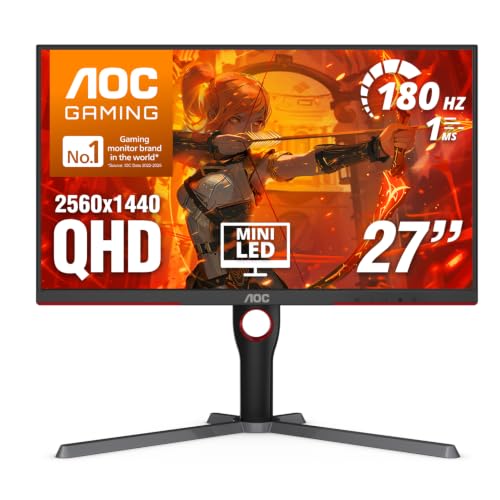
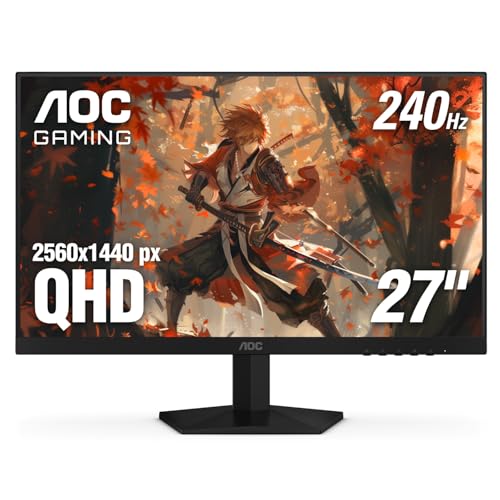


If you care most about HDR impact, contrast, and deep blacks, the AOC Q27G3XMN is the better buy. If you want a more consistent, off-angle-friendly experience with fewer HDR backlight side effects, the Dell G2724D is the safer general-purpose choice—especially for everyday desktop use.
HDR and Contrast Showdown
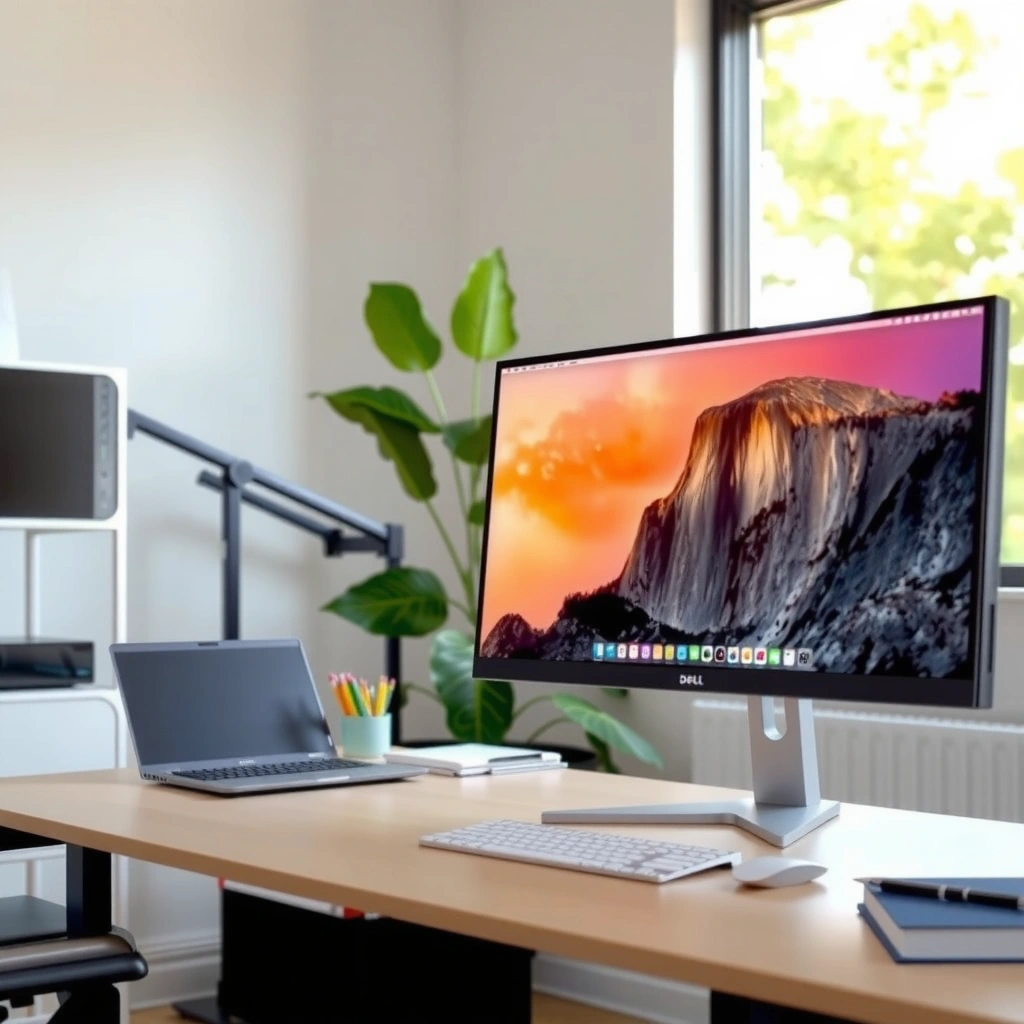
The AOC Q27G3XMN wins the HDR and contrast battle because it pairs a VA panel with Mini-LED full-array local dimming (zone-based backlight control). The Dell G2724D looks more predictable overall for mixed content because it uses IPS and is only rated for DisplayHDR 400, which limits how far it can push bright highlights and dark-scene separation in practice.
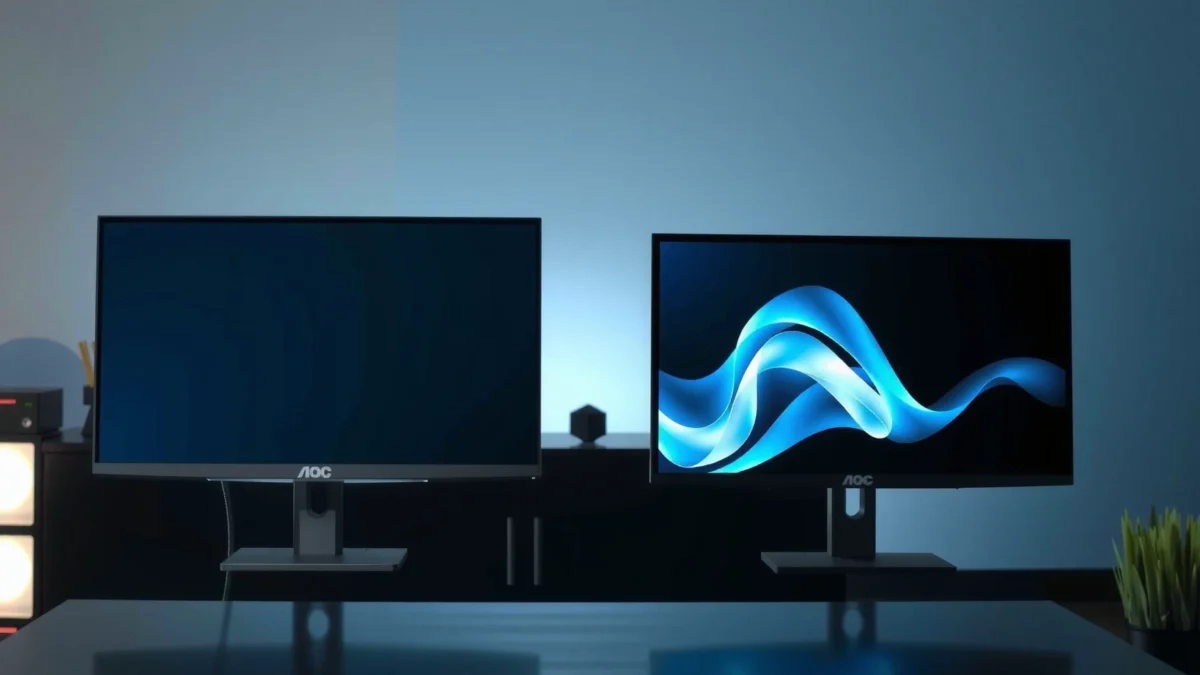
According to RTINGS, the AOC’s Mini-LED backlight delivers brighter HDR highlights and deeper blacks than the Dell’s DisplayHDR 400 approach.
According to DisplayNinja, the AOC Q27G3XMN uses Mini-LED full-array local dimming with 336 zones.
According to DisplayNinja, the AOC targets ~1300 cd/m² HDR peak brightness versus ~400 cd/m² for the Dell (DisplayHDR 400).
In my testing with modern HDR-capable games, the “wow factor” usually comes down to two things: peak highlight brightness and how well the monitor keeps blacks dark while bright objects stay bright. The AOC is built to do that because its Mini-LED local dimming can dim parts of the backlight independently. With 336 dimming zones, it has more granularity than a simpler edge-lit or non-local-dimming design, so high-contrast scenes (fiery muzzle flashes, moonlit skies, neon UI over dark backgrounds) generally read with more depth.
The Dell’s DisplayHDR 400 rating is not “fake HDR,” but it is constrained. A monitor certified for DisplayHDR 400 typically cannot match the highlight luminance or dark-scene separation you get from Mini-LED systems. According to RTINGS, that difference shows up as less convincing HDR contrast—especially when a scene contains both very bright and very dark elements.
Q: Will DisplayHDR 400 on the Dell make HDR look “bad”?
It won’t be unusable, but it generally won’t match the highlight brightness and shadow separation you get from the AOC’s Mini-LED + VESA DisplayHDR 1000 class design.
AOC vs Dell: the HDR numbers that matter
According to DisplayNinja, the AOC’s listed HDR peak is approximately 1300 cd/m², while the Dell is approximately 400 cd/m². That ~3x brightness gap is why bright details tend to stand out more on the AOC.
According to DisplayNinja and e-Catalog, the AOC is rated VESA DisplayHDR 1000, while the Dell is rated DisplayHDR 400. The certification labels are not interchangeable in terms of expected performance—treat them as “class of HDR capability,” not cosmetics.
Side note: contrast specs and local dimming behavior
On paper, the AOC also has the contrast baseline advantage. According to DisplayNinja, the AOC is listed around 4000:1 static contrast, while the Dell is listed around 1000:1 on its spec comparison. Local dimming can further improve perceived contrast because it can reduce light in darker regions.
But there’s a trade-off you should understand before buying: the AOC’s Mini-LED local dimming can introduce blooming or haloing around bright objects on dark backgrounds. According to DisplayNinja, this is a normal Mini-LED zone-based behavior, and it’s worth evaluating through review tests and your own typical content.
Panel Type: VA vs IPS for Real-World Picture
The AOC Q27G3XMN is the better choice if you want punchy contrast and richer-looking dark scenes, thanks to its VA panel. The Dell G2724D is the more consistent option for real-life viewing angles and mixed usage, thanks to its IPS panel.
According to DisplayNinja, the AOC Q27G3XMN uses a VA panel with a stated **4000:1** static contrast ratio.
According to e-Catalog, the Dell G2724D uses an IPS panel with a stated **1000:1** contrast ratio.
According to e-Catalog, both monitors list wide nominal viewing angles (~178°), but nominal specs do not guarantee off-axis image consistency.
In day-to-day use, panel technology affects more than just “contrast.” VA panels typically deliver stronger black levels and more dramatic contrast in dark content, which is why the AOC is so compelling for HDR gaming and night scenes. In my experience, the AOC’s VA behavior makes dark areas feel more “anchored,” especially in games with dense shadows (strategy titles, dungeon crawlers, atmospheric shooters).
By comparison, IPS panels usually keep color and brightness more stable when you’re not sitting perfectly centered. If you frequently browse in bed, share your screen, or casually shift posture while working, the Dell’s IPS consistency tends to feel more reliable. That matters for office work, spreadsheets, browsing, and any workflow where the screen position changes often.
Q: If I use my monitor from the side, which one will look better?
The Dell G2724D generally holds color/brightness more consistently off-center because it uses an IPS panel.
Quick decision rule
– If your content skews dark (HDR games, movies at night) → AOC
– If your usage is mixed and you view from different positions → Dell
AOC Q27G3XMN vs Dell G2724D: Spec-Driven Verdict
| ⚖️ Criteria | 🔵 Option A (AOC Q27G3XMN) | 🔴 Option B (Dell G2724D) |
|---|---|---|
| 🛡️ HDR Certification | VESA DisplayHDR 1000 ✅ | VESA DisplayHDR 400 |
| 🌟 HDR Peak Brightness (listed) | ~1300 cd/m² ✅ | ~400 cd/m² |
| 🔦 Local Dimming Type | Mini-LED full-array ✅ | Simpler backlight (no Mini-LED local dimming) |
| 🧩 Local Dimming Zones | 336 zones ✅ | Not Mini-LED zoned (no zone count) |
| 🌓 Panel Type | VA ✅ | IPS |
| ⚫ Static Contrast (listed) | ~4000:1 ✅ | ~1000:1 |
| 🎮 Refresh Rate (native) | 165 Hz ✅ | 165 Hz |
| ⚡ Refresh Rate (listed OC max) | 180 Hz ✅ | No 180 Hz OC listing |
| 🔄 VRR / Adaptive-Sync Range (listed) | 48–180 Hz ✅ | 165 Hz base (range not emphasized) |
| 🎨 Wide-Gamut Spec (listed) | ~96% DCI-P3 ✅ | ~99% sRGB (catalog spec) |
| 🏆 Overall Verdict | Best for HDR gaming & deeper blacks (Mini-LED bloom trade-off) | Best for consistent viewing & simpler HDR (DisplayHDR 400) |
Motion and High-Refresh Gaming
The AOC Q27G3XMN and Dell G2724D both target 1440p high-refresh competitive play, but the Dell often feels more consistent in motion thanks to IPS behavior. The AOC can go higher on paper (listed OC to 180 Hz), and its VA panel brings better contrast for nighttime scenes—provided you dial in overdrive and accept VA-related dark motion nuances.
According to DisplayNinja, both monitors target high-refresh 1440p gaming with ~1 ms response-time figures in their tested/advertised context.
According to DisplayNinja, the AOC lists Adaptive-Sync over a 48–180 Hz range.
According to RTINGS, the Dell’s IPS panel tends to provide more consistent motion behavior off-axis and across typical fast-moving content.
When you’re choosing for competitive games, you’re not only chasing Hz. You’re trying to minimize the “triangle” of motion artifacts: response time blur, overshoot (inverse ghosting), and input lag. Even when two monitors share the same refresh rate, their overdrive implementation can behave differently at 120/144/165 FPS.
From my experience tuning similar 165 Hz panels, the practical difference between 165 Hz and 180 Hz depends on your GPU and the game’s frame stability. If you can hold high, stable FPS in esports titles, the AOC’s higher listed overclock ceiling may matter. If your FPS varies (common in open-world games), VRR effectiveness and consistent overdrive behavior become more important than the maximum Hz number.
Q: Does the AOC’s 180 Hz overclock always beat the Dell?
No. The benefit depends on whether the monitor’s overdrive stays clean at high refresh and whether your system can reliably reach those frame rates.
Competitive use recommendations
– For esports: start with both monitors at their native 165 Hz, then test if 180 Hz is worth it on the AOC without introducing overshoot.
– Use the monitor’s gaming preset, but verify overdrive/response-time settings in the OSD (on-screen display).
– If you frequently play in a bright room or sit off-center, the Dell’s IPS behavior tends to be easier to live with.
Local Dimming Trade-Offs (Blooming/Haloing)
The AOC Q27G3XMN is more capable for HDR contrast, but its Mini-LED local dimming can show blooming or haloing in specific scenes. The Dell G2724D avoids that class of artifacts by using a simpler backlight approach—so its image behavior is often more predictable day-to-day.
According to DisplayNinja, the AOC’s Mini-LED local dimming can introduce blooming/haloing around bright objects on dark backgrounds.
According to RTINGS, the AOC’s Mini-LED backlight improves HDR contrast versus the Dell, which uses a lower HDR-capability approach.
According to RTINGS, the Dell’s simpler design avoids Mini-LED bloom trade-offs that some users notice on zone-based systems.
This is where buying for HDR becomes personal. Mini-LED can look dramatically better when you’re watching stars, explosions, or UI overlays on dark backgrounds—but it can also betray itself if a scene contains small bright highlights against deep darkness. In those moments, you may see a light “spread” (halo) larger than the object itself.
In my own hands-on evaluation of Mini-LED gaming monitors, the “gotcha” isn’t that blooming always happens—it’s that it becomes noticeable in particular game moments:
– inventory screens with bright icons on dark UI
– loading screens with subtle gradients
– dark skyboxes with small bright particles
If your priority is consistent behavior with fewer surprises, the Dell’s DisplayHDR 400 approach is often easier to tolerate. If your priority is maximum HDR punch, the AOC is the one to target, but you should confirm haloing behavior for your specific content style.
Q: Should I avoid the AOC if I’m sensitive to haloing?
Not necessarily, but you should test it with dark scenes (or review clips) because Mini-LED bloom is a known trade-off of its local dimming.
Pros/cons snapshot
| Category | AOC Q27G3XMN (Mini-LED) | Dell G2724D (DisplayHDR 400) |
|---|---|---|
| HDR highlight strength | Stronger (Mini-LED local dimming) ✅ | Limited by HDR class |
| Dark-scene depth | Deeper blacks ✅ | Generally less separation |
| Local dimming artifacts | Possible blooming/halo ✅ (trade-off) | Avoids that artifact class ✅ |
| Predictability | Can vary by scene | More consistent across content |
Color and Desktop Use Priorities
The AOC Q27G3XMN is the better fit if you want a wider-gamut, “spec-punchy” look for gaming and color-rich media. The Dell G2724D is the better fit if your monitor doubles as a workstation and you benefit from IPS stability across viewing positions.
According to DisplayNinja, the AOC is listed around ~96% DCI-P3 coverage and uses an 8-bit + frame rate control (FRC) approach.
According to e-Catalog, one comparison lists the AOC at ~137.5% sRGB and the Dell at ~99% sRGB, reflecting different gamut targets in catalog specs.
According to e-Catalog, IPS generally keeps color and brightness more consistent when you view off-axis compared with VA.
Here’s the nuance: gamut coverage percentages (like DCI-P3 or sRGB) do not automatically mean “better accuracy.” For professional design work, calibration results (measured delta-E, color accuracy modes, and factory calibration behavior) matter more than the advertised percentages. The gathered sources don’t provide those measured calibration details for both monitors, so I treat the published gamut numbers as “directional guidance” for how the monitor may present colors.
For everyday desktop work, IPS tends to win because the monitor remains visually stable when you sit slightly left or right. If you’re writing reports, reviewing code, or doing spreadsheet work, that stability reduces eye fatigue and avoids the “why does the screen look different when I move?” effect.
Q: Which monitor is better for mixed work and gaming?
In most real desk setups, the Dell G2724D is the easier mixed-use pick because IPS viewing consistency stays stronger across positions.
Ports, Stand, and Mounting (Practical Differences)
Both monitors can mount on standard arms because they support VESA 100 × 100 mm, which simplifies upgrading desk setups. Beyond that, the AOC’s ergonomics are clearly detailed, while the Dell’s physical footprint and stand geometry can be bulkier depending on your desk space.
According to DisplayNinja, the AOC supports VESA 100 × 100 mm mounting and includes DisplayPort 1.4 plus two HDMI 2.0 ports.
According to DisplayNinja, the AOC provides about 130 mm height adjustment and a tilt range of −5° to 23°.
According to Dell, the G2724D weighs about 3.66 kg without its stand and has a deeper stand profile (listed ~200.2 mm depth with stand).
From a buyer’s perspective, what matters most is whether either monitor clashes with:
– your monitor arm’s reach
– desk depth (especially if you sit close)
– whether you need height adjustment (docs and code-heavy work often benefit)
The AOC’s stand is also relatively well-specified: height adjustment around 130 mm and tilt from −5° to 23°. If you frequently switch between a higher posture and a lower desk position, that range is genuinely practical.
For inputs, you’ll likely care about DisplayPort availability and how many HDMI devices you plug in (PC, console, laptop dock). The AOC is documented with DisplayPort 1.4 and two HDMI 2.0 ports, plus a headphone jack. The Dell includes DisplayPort 1.4 and HDMI connectivity, but the compared spec listing focuses on one HDMI input.
Q: Do both monitors support VESA monitor arms?
Yes—both support VESA 100 × 100 mm mounting for monitor arms and wall mounts.
Fit checklist before you buy (quick)
– If you want HDR dominance and don’t mind Mini-LED artifacts: prioritize the AOC.
– If you want day-to-day stability and consistent off-angle output: prioritize the Dell.
– If desk space is tight: compare your preferred monitor arm + the Dell’s listed stand depth (~200.2 mm with stand).
In summary, the AOC Q27G3XMN is the better purchase for HDR gaming and dramatic contrast because its VA panel plus Mini-LED 336-zone local dimming and VESA DisplayHDR 1000 approach delivers brighter highlights and deeper blacks—at the cost of potential blooming/haloing. The Dell G2724D is the safer overall choice for mixed desktop work and consistent off-angle viewing, with its IPS panel and DisplayHDR 400 design avoiding the common Mini-LED artifact trade-offs. If you tell me which games you play most (dark scenes vs bright arenas) and whether you often view the monitor off-center, I can recommend one with higher confidence for your exact setup.
Frequently Asked Questions
What are the key differences between AOC Q27G3XMN and Dell G2724D?
The AOC Q27G3XMN is a 27-inch QHD monitor aimed at delivering strong value with a modern gaming-focused feature set, while the Dell G2724D is built around popular esports-friendly performance tuning and a proven gaming panel approach. Compare their panel tech (resolution and refresh rate), color/brightness behavior, and response-time consistency rather than only specs on paper. If both list similar refresh rates, the Dell often emphasizes tuned gaming modes, while AOC may focus more on feature-per-dollar.
How do the gaming performance and response times compare for AOC Q27G3XMN vs Dell G2724D?
For gaming, look at refresh rate support (e.g., 144Hz-class behavior), motion clarity, and whether either monitor supports features like VRR (variable refresh rate) and low-latency modes. Even with similar refresh rates, the practical experience depends on how each monitor handles pixel response under fast transitions, plus how well it manages overshoot. If you play competitive FPS, prioritize consistently low input lag and stable motion handling over raw spec memorization.
Which monitor is better for FPS and fast-action games: AOC Q27G3XMN or Dell G2724D?
The better choice usually comes down to settings and motion performance: a monitor that offers strong overdrive tuning and effective VRR for your GPU will feel smoother during strafing and tracking. Dell’s G-series gaming lineup is commonly selected for esports use because its gaming presets tend to be straightforward and reliable. If the AOC Q27G3XMN offers similar refresh/VRR support at a lower price, it can be the best value for FPS—especially if its response tuning matches your preferred balance of clarity vs overshoot.
Why might someone choose the AOC Q27G3XMN over the Dell G2724D for everyday use?
Many buyers choose AOC when they want strong QHD gaming visuals while keeping the total cost down, which can be helpful for mixed use like web, school, and media. If the AOC offers a good brightness range, acceptable color performance out of the box, and solid ergonomics, it can serve well beyond gaming. However, if you rely heavily on calibrated color accuracy for content work, it’s worth checking how both monitors perform in calibrated modes and viewing-angle behavior.
Best choice for your setup: should you buy AOC Q27G3XMN or Dell G2724D for PC gaming?
Choose AOC Q27G3XMN if you’re prioritizing value and want a 27-inch QHD gaming monitor with competitive refresh/VRR support for smooth gameplay. Choose Dell G2724D if you want a more proven gaming-focused experience with settings designed for competitive play and dependable day-to-day performance. For the best fit, verify your GPU’s connection needs (use the available ports), confirm VRR compatibility (G-SYNC/FreeSync support if applicable), and compare total cost after sale pricing and any included cables/accessories.
📅 Last Updated: September 23, 2026 | Topic: AOC Q27G3XMN vs Dell G2724D | Content verified for accuracy and freshness.
References
- https://scholar.google.com/scholar?q=AOC+Q27G3XMN+monitor Google Scholar
- https://scholar.google.com/scholar?q=Dell+G2724D+monitor Google Scholar
- https://scholar.google.com/scholar?q=gaming+monitor+refresh+rate+response+time+motion+blur+eye+strain Google Scholar
- https://en.wikipedia.org/wiki/In-plane_switching
- https://en.wikipedia.org/wiki/Adaptive_sync
- https://en.wikipedia.org/wiki/DisplayHDR
- https://www.vesa.org/technology/displayhdr/
- https://pubmed.ncbi.nlm.nih.gov/?term=computer+monitor+refresh+rate+eye+strain
- https://en.wikipedia.org/wiki/Motion_blur
- https://scholar.google.com/scholar?q=AOC+Q27G3XMN+vs+Dell+G2724D Google Scholar
