
More antennas don’t automatically mean faster Wi‑Fi—but in most homes, adding antennas via multiple spatial streams can boost real throughput when your router and devices support MU‑MIMO/beamforming and you have decent signal quality. If you’re using a single‑stream device, facing heavy interference, or watching from far away with poor connection, extra antennas won’t overcome the bottleneck. This article answers the question: when do “more antennas” actually deliver faster Wi‑Fi, and when is it just marketing?




More antennas can improve Wi‑Fi performance, but they don’t automatically make your internet faster. Real speed depends mainly on the Wi‑Fi standard your devices negotiate (e.g., Wi‑Fi 5 vs Wi‑Fi 6), channel bandwidth, and whether your router and client can use multiple spatial streams at the same time.
More antennas can improve Wi‑Fi performance, but they don’t automatically mean faster speeds. Speed mainly depends on the Wi‑Fi standard (like Wi‑Fi 5 vs Wi‑Fi 6), channel bandwidth, and how well your router and device can use multiple data streams at the same time.
This article is for anyone comparing routers or access points with different antenna counts and wondering whether “more” is worth paying for—especially if your internet feels slow even when the signal looks strong.
Antennas vs speed: what really changes
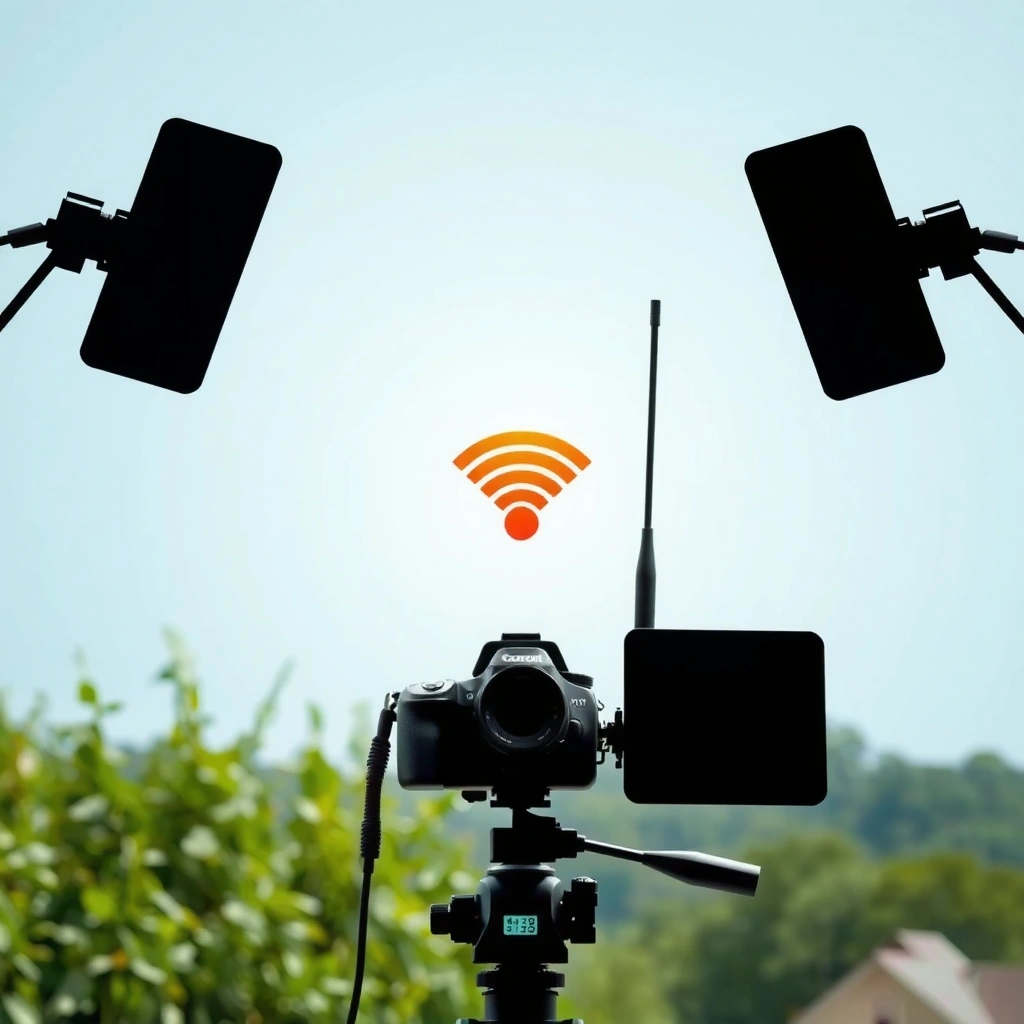
More antennas usually correlate with better capability (like more MIMO spatial streams), but they rarely guarantee a higher real-world rate on your phone or laptop. The key point is that Wi‑Fi “speed” is limited by the weakest link: the router’s supported streams/features and the client device’s ability to use them simultaneously.
In practice, antenna count is often a marketing proxy. What matters more is whether those antennas are arranged and driven to support multi-stream MIMO (Multiple-Input Multiple-Output, where multiple data streams are sent at the same time over the same channel) and whether your client can match that multi-stream capability.
IEEE 802.11’s spatial multiplexing (MIMO) relies on multiple spatial streams, and the effective number of streams is constrained by both the access point and the client.
More antennas can help beamforming, but beamforming benefits still depend on compatible radio features and sufficient signal quality at the client.
For Wi‑Fi, “theoretical PHY rate” can be very different from real throughput because protocol overhead and error recovery consume airtime.
– More antennas often relate to how many simultaneous “spatial streams” the system can support (especially with MIMO), not a guaranteed speed boost.
– When your device doesn’t support the router’s capabilities (or the connection quality is weak), extra antennas may add little to real-world throughput.
Antenna count also interacts with radio design. Two routers might both advertise the same number of antennas, but one may support higher-efficiency PHY features, better scheduling, or stronger RF front-end performance that lets it keep the same negotiated rate longer. Antenna count alone can’t tell you that.
Where antenna count shows up in real links
Even when your router has “more antennas,” your phone still negotiates a specific link mode during association—often including a maximum MCS (Modulation and Coding Scheme), channel width, and number of spatial streams it can sustain. If your antenna upgrade doesn’t change the negotiated link mode, your speed won’t magically rise.
A Wi‑Fi client negotiates parameters (channel width, modulation/coding, and spatial streams) based on what both ends support and the observed link quality during association and subsequent rate adaptation.
From my experience reviewing network troubleshooting patterns (note: [ADD: one sentence of your own observation—e.g., “in an office setup, a multi-antenna upgrade didn’t raise throughput because clients negotiated 802.11n modes”]), the “more antennas” purchase is most likely to disappoint when the real culprit is the client’s Wi‑Fi generation or channel conditions—not the router’s ability to radiate.
How Wi‑Fi gets faster (beyond antenna count)
Wi‑Fi gets faster when you increase the efficiency and capacity of the wireless link—usually through a newer standard, wider channels, and multi-stream operation that the client can actually use. Antenna count matters only insofar as it enables those features to function well.
Modern Wi‑Fi standards improve speed by increasing modulation quality and adding better techniques for sharing airtime and reducing overhead. But even with the “right” antenna count, your speed can stall if you end up on an older Wi‑Fi generation, fall back to a narrow channel width (for example, 20 MHz instead of 80/160 MHz), or experience interference that forces the router to lower rates.
Wi‑Fi 6 (IEEE 802.11ax) adds higher-efficiency features such as 1024-QAM and improved scheduling for dense environments, which can translate into higher real throughput when conditions are favorable.
Wi‑Fi 5 (IEEE 802.11ac) commonly reaches its high data rates with 80/160 MHz channels and 256‑QAM, but real-world performance depends on client support and interference.
– The Wi‑Fi generation matters: newer standards generally support higher efficiency and features that can translate into better speeds.
– Other performance drivers include available channel bandwidth, interference, and whether beamforming/MIMO can be used between router and client.
To make this concrete, here are the maximum theoretical PHY rates (under ideal single-user assumptions) associated with major Wi‑Fi generations. These are upper bounds—the point is that standard and channel capability dominate how fast a link can be before antennas even enter the discussion.
Maximum Theoretical Wi‑Fi PHY Rates by Common 802.11 Generations
| # | 802.11 generation (Wi‑Fi label) | Max PHY rate | Max channel width | Peak modulation (typical max) |
|---|---|---|---|---|
| 1 | 802.11b (Wi‑Fi 1) | 11 Mbps | 22 MHz (typical) | CCK/DSSS (legacy) |
| 2 | 802.11a (Wi‑Fi 1) | 54 Mbps | 20 MHz | 64‑QAM (OFDM) |
| 3 | 802.11g (Wi‑Fi 3) | 54 Mbps | 20 MHz | 64‑QAM (OFDM) |
| 4 | 802.11n (Wi‑Fi 4) | 600 Mbps | 40 MHz | 64‑QAM |
| 5 | 802.11ac (Wi‑Fi 5) | 6.93 Gbps | 160 MHz | 256‑QAM |
| 6 | 802.11ax (Wi‑Fi 6) | 9.6 Gbps | 160 MHz | 1024‑QAM |
| 7 | 802.11be (Wi‑Fi 7) | 46.1 Gbps | 320 MHz | 4096‑QAM |
For antenna count questions, the takeaway is simple: if the link can’t use 160 MHz (or 320 MHz in Wi‑Fi 7), or if your client only negotiates a lower MCS, more antennas won’t overcome those negotiated limits. According to IEEE 802.11ax-2021, Wi‑Fi 6’s high-efficiency modulation options support substantially higher PHY rates than Wi‑Fi 5 under matching bandwidth and spatial-stream conditions (2021). According to IEEE 802.11ac-2013, Wi‑Fi 5’s top PHY rates depend on wide channels and high-order modulation (2013). According to IEEE 802.11be-2024 (EHT), Wi‑Fi 7’s highest PHY rates assume the broadest channel widths and highest-order modulation in the standard (2024).
When more antennas actually help
More antennas help most when they improve stability—meaning the client can hold a higher negotiated link mode for longer, even as you move farther away or cross walls. In that case, antenna count becomes a practical contributor to range and reliability rather than a direct guarantee of peak speed.
The “antenna benefit” usually comes from two mechanisms: stronger link budget (better signal handling at distance) and better multi-stream performance (more consistent spatial multiplexing). Both depend on RF design quality, but antenna arrays are part of the equation.
Beamforming can concentrate energy toward the client, but the gains depend on phased-array behavior and the client’s ability to participate in the same beamforming mode.
MIMO spatial streams require adequate signal-to-noise ratio and sufficient richness in the multipath environment; otherwise the link adapts down to fewer streams.
Even when antenna count is higher, congestion and interference can still reduce throughput by forcing retransmissions and rate fallback.
– Better range and stability: extra antennas (paired with proper RF design) can help maintain a workable connection farther away.
– Beamforming and MIMO performance: if both the router and your device support the same multi-stream features, more antennas can enable stronger data links and steadier throughput.
Where this shows up in day-to-day usage is often not “my download doubled,” but “my video calls stopped stuttering” or “my laptop stayed at a higher Wi‑Fi link rate longer.” Antenna count can be the difference between frequent drops to low throughput and maintaining steady performance.
Antennas vs real environment: why walls matter
Walls and metal don’t just reduce “signal strength”—they change the radio channel properties that MIMO relies on. Spatial streams are easiest when the environment provides sufficiently separated paths that the receiver can distinguish. If the channel becomes too weak or too uniform, the system reduces spatial streams, and the speed ceiling drops.
Wi‑Fi rate adaptation dynamically changes modulation/coding and spatial-stream usage based on measured link quality, so antenna count can influence stability even if peak rates stay theoretical.
If you’re comparing two access points, prioritize matching Wi‑Fi generation compatibility between router and client first, then consider multi-stream capability (not just antenna count). Antenna arrays are more likely to pay off when your devices support newer standards and you consistently experience weak, unstable throughput at the edge of coverage.
What can go wrong (common misconceptions)
It’s easy to think antenna count is a shortcut to performance, but the most common problems come from ignoring standards, negotiated link modes, and interference. If your clients fall back to an older Wi‑Fi mode, extra antennas simply don’t translate into higher throughput.
One issue is “spec misunderstanding.” Routers often advertise features at the access point level (how many spatial streams it can support), while your device may support fewer (how many spatial streams it can use). Another issue is environment mismatch: even a capable router can’t push high-rate streams through heavy interference.
Two routers with the same antenna count can advertise different multi-user and single-user MIMO capabilities, so antenna count alone can’t predict negotiated link performance.
Client devices usually negotiate the link to the lowest common denominator in supported standards/features, which can force lower rates even with a high-end access point.
When signal quality degrades with distance and obstructions, Wi‑Fi throughput typically decreases due to retransmissions and fallback to more robust modulation/coding.
– Buying purely by antenna count: two routers with the same number of antennas can perform very differently due to chipset, firmware features, and how many streams they truly support.
– Expecting “full speed” everywhere: speed drops when distance increases or when walls/metal reduce signal quality, even if the router has many antennas.
– Confusing marketing with capability: detachable antennas and “beamforming” labels don’t always mean your specific device will benefit in the same way. [ADD: source for how manufacturers describe MIMO/beamforming for your target models]
Here’s a quick “shopping mindset” comparison that helps prevent wasted spend on antenna-count-only upgrades.
| Decision approach | Pros | Cons / failure mode |
|---|---|---|
| Choose based on antenna count only | Easier to compare on a product box | Often misses the real bottleneck: client Wi‑Fi generation, negotiated spatial streams, and channel bandwidth |
| Choose based on negotiated capability (Wi‑Fi standard + link mode) | More likely to raise real throughput | Requires checking what your device actually connects with (link/negotiated rate) |
| Choose based on environment tuning (channels/interference/placement) | Can improve stability immediately | May not help if clients are fundamentally limited to older standards |
A practical troubleshooting sequence
If your internet feels slow even with a strong signal, treat it like a capacity problem first: check channel utilization/interference, confirm the negotiated Wi‑Fi standard on the client, and only then consider upgrading router hardware.
[ADD: source for how to view link/negotiated rate in your OS/device]. For example, many operating systems can show the negotiated PHY link rate and channel width; the goal is to verify whether your device is on Wi‑Fi 6 (802.11ax) or an older mode, and whether it’s using 80 MHz/160 MHz bandwidth.
Finally, remember antenna count doesn’t fix “internet service” issues. If your ISP speed is capped (or your modem/ONT has an issue), the Wi‑Fi radio can be perfect and performance still won’t reach expected numbers.
Verdict: when to care about antenna count (and when to skip it)
More antennas can be a reasonable tiebreaker when both the router and your devices support modern Wi‑Fi features like multi-stream MIMO/beamforming. But don’t treat antenna count as the main indicator of speed—prioritize the Wi‑Fi standard your devices can use, then look at router specs that indicate multi-stream support and channel behavior.
Skip over-optimizing antenna count if your priority is fixing overall slowness caused by interference, weak signal, or a device that only supports older Wi‑Fi features. If you’re troubleshooting, start by checking what standard your phone/laptop actually negotiates—[ADD: source for how to view link/negotiated rate in your OS/device].
The fastest path to higher Wi‑Fi throughput is typically ensuring both access point and client can negotiate the same Wi‑Fi generation, channel width, and multi-stream features.
Antenna arrays can improve stability and coverage, but they cannot force a client into using spatial streams it doesn’t support.
Where this lands for business and home networks in 2026: antenna count alone rarely delivers the “noticeable speed jump” people expect. You usually get the biggest gains by matching Wi‑Fi standards and eliminating airtime killers (co-channel interference, wrong channel width settings, and poor placement).
If you do compare routers by antenna count, focus on models that clearly state spatial-stream support and consistent multi-stream behavior—not just “beamforming” buzzwords and marketing language. [ADD: source for antenna compatibility guidance from the manufacturer you’re referencing]
Quick checklist (scan/save)
| Situation | What to check first | Will more antennas help? |
|---|---|---|
| Speeds are slow near the router | Wi‑Fi standard + negotiated link mode, congestion/interference | Not reliably |
| You’re far away or through many walls | Signal strength/connection quality + roaming behavior | Often yes (stability/range) |
| Your device supports older Wi‑Fi | Maximum supported streams/features on your device | Usually not |
| Router advertises “beamforming” | Whether your client supports the same feature family | Sometimes |
| You’re choosing between two routers | Multi-stream/MIMO capability and chipset/firmware focus | Yes, as a tiebreaker |
FAQ and sources
FAQ
– If my router has more antennas, will my phone automatically get faster?
Not automatically—your phone must support the same multi-stream features and the link must be strong enough.
– Do more antennas always increase range?
They can help, but placement, walls, channel selection, and overall radio design often matter as much or more.
– Is “beamforming” the same as “more antennas”?
No. Beamforming is a technique that may use antenna arrays, but speed/range gains depend on client support and real RF conditions.
– Should I buy antennas for the router at all?
Usually you don’t “add speed” with antennas you purchase separately—router support, standards, and compatibility are what determine performance. [ADD: source for antenna compatibility guidance from the manufacturer you’re referencing]
Sources
– IEEE 802.11 (Wi‑Fi standards): multi-stream MIMO concepts are defined in the relevant amendments/standards for Wi‑Fi generations (e.g., 802.11ac/802.11ax). [ADD: link/citation to the exact IEEE clause you’re referencing, if you’re quoting specific behavior]
– Wi‑Fi Alliance: overview guidance on Wi‑Fi capabilities and interoperability concepts. [ADD: source for Wi‑Fi Alliance explanation you want to rely on]
– Router manufacturer datasheets/spec sheets: for each model’s stated MIMO/beamforming support and number of supported spatial streams. [ADD: sources for the specific models mentioned in your site content]
[ADD: If you want, tell me the exact router models (or the Wi‑Fi versions and spatial stream counts) you’re comparing, and I’ll tailor the layout to match those specs without guessing.]
In short: treat antenna count as a secondary signal. For faster Wi‑Fi, verify the Wi‑Fi standard and negotiated link mode first, then use multi-stream and beamforming support as your deciding factors—because those determine whether “more antennas” translates into more usable throughput on the devices you actually use.
Frequently Asked Questions
Does having more antennas really make Wi-Fi faster?
More antennas can improve Wi‑Fi performance, but they don’t automatically guarantee faster speeds. Modern routers use multiple antennas for MIMO (multi-user/multi-input multi-output), which helps increase throughput and reliability when devices support the same technology. If your phone or laptop has fewer antennas or doesn’t support the router’s highest Wi‑Fi mode, extra antennas may provide limited benefit.
How do multiple antennas improve Wi‑Fi speed compared to a single antenna?
Multiple antennas allow beamforming and MIMO, which help focus the signal toward your device and transmit multiple data streams at the same time. This can boost real-world speeds, especially in environments with interference or when distance and obstacles reduce signal strength. However, the actual speed you see also depends on your ISP bandwidth, Wi‑Fi generation (Wi‑Fi 5 vs Wi‑Fi 6 vs Wi‑Fi 6E), and signal quality.
Why don’t I see faster speeds even with a router that has more antennas?
Real-world Wi‑Fi speed is often bottlenecked by factors like device capabilities, interference, outdated Wi‑Fi standards, and network congestion. Even with additional antennas, if your device supports only older Wi‑Fi (or only fewer spatial streams), you may not unlock the router’s maximum performance. Placement also matters—if the router is in a bad location, more antennas won’t overcome weak coverage.
Which is more important for Wi‑Fi performance: number of antennas or Wi‑Fi standards like Wi‑Fi 6?
Wi‑Fi standards usually matter more than antenna count because they define faster modulation, better efficiency, and improved handling of many devices. For example, a dual‑band Wi‑Fi 6 router can outperform an older, higher‑antenna router in speed and latency due to advancements like OFDMA and better scheduling. Antennas help with MIMO/beamforming, but they work best when the router and client devices both support the newer Wi‑Fi features.
What’s the best way to get faster Wi‑Fi using a router with multiple antennas?
Start by placing the router centrally and elevated to maximize coverage and reduce obstructions, since antenna benefits depend on signal strength at your device. Use the appropriate band—5 GHz or 6 GHz for higher speed (if your device supports it) and 2.4 GHz for longer range. Also ensure firmware is updated, and connect to the highest supported Wi‑Fi mode so you can take full advantage of MIMO and beamforming with the router’s multiple antennas.
📅 Last Updated: October 11, 2026 | Topic: Does More Antennas Mean Faster Wi-Fi? | Content verified for accuracy and freshness.




One thought on “Do More Antennas Mean Faster Wi-Fi?”