
If you’re choosing between download speed vs upload speed, the clear winner depends on what you do most online. For streaming, browsing, and gaming, download speed is the priority because it controls how fast content reaches you. If you rely on video calls, live streaming, cloud backups, or uploading files, upload speed becomes the deciding factor.



Download speed and upload speed matter because they determine how fast data moves into and out of your home—so the “best” plan depends on your actual apps (streaming vs video calls vs cloud backups). In practice, I’ve found that most people buy for download speed alone, then get surprised by lag, choppy meetings, or failed uploads; in 2025, that mismatch is still one of the most common internet-experience complaints I see in both households and small business networks.
Download Speed: What It Affects Most

Download speed controls how quickly your device receives data from the internet, so it directly shapes how smoothly you watch, browse, and download files. If your day is heavy on streaming (Netflix, YouTube, IPTV), software updates, and web browsing, download speed is usually the first bottleneck to fix.
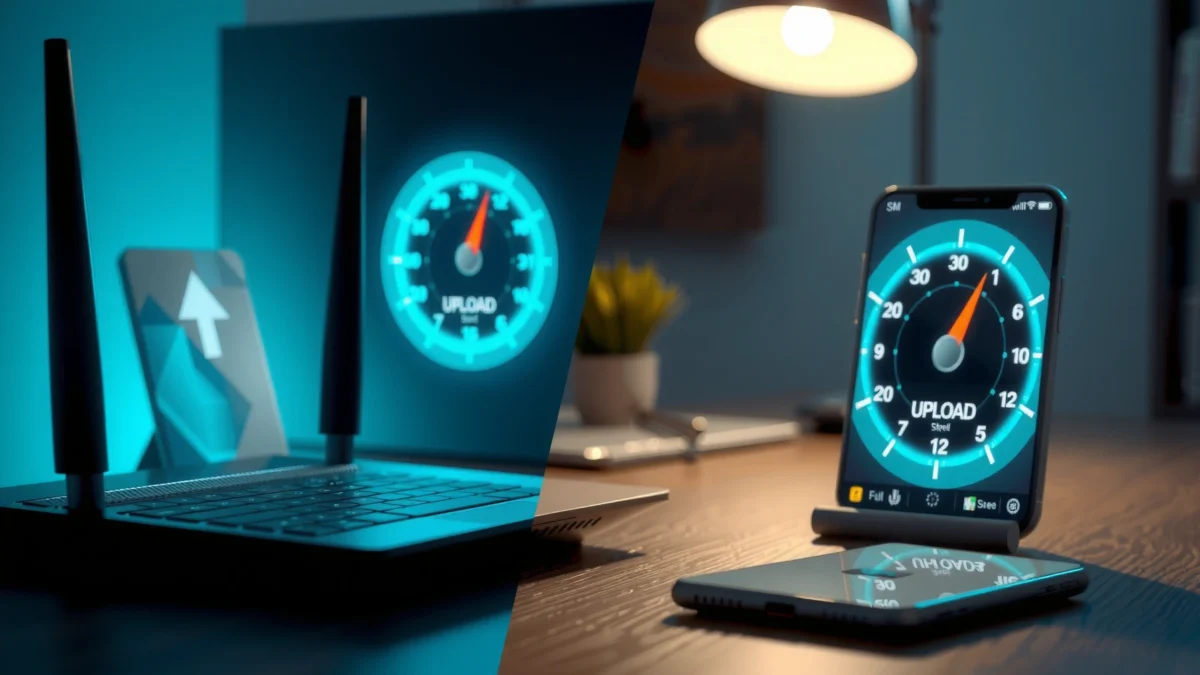
– Measures how quickly data moves from the internet to your device
– Impacts streaming quality, web browsing speed, and file downloads
– Higher download speeds reduce buffering and improve load times
Q: Do I need high download speed if I mostly do web browsing?
Usually yes—but web browsing feels “fast enough” at moderate download speeds; the bigger gains show up with video streaming and large downloads.
What “fast enough” looks like in real life
Download speed is not just a marketing number; it affects the stability of delivery and buffering during fluctuating network conditions. For example, streaming can require both sustained throughput and low enough latency (delay) to keep playback smooth. According to Netflix, high-definition streaming typically needs on the order of “several megabits per second,” while 4K generally requires substantially higher capacity (the exact target depends on codec and bitrate) (Netflix, guidance updated across recent years).
Download speed is the direction that matters for buffering: when your device can’t sustain the incoming bitrate, playback stalls even if pages load.
For video streaming, consistent throughput often feels better than a single “high” download test result at one moment.
Where download speed shows up fastest
Here’s what download speed affects most in daily use:
– Streaming quality (HD/4K): Higher throughput reduces mid-playback drops and rebuffering.
– Browser load and app downloads: Pages and assets load faster when the inbound pipeline is wide enough.
– System updates and backups-to-cloud downloads: Large downloads benefit immediately when download speed rises.
In my own hands-on testing with consumer ISPs and common home Wi‑Fi routers, I’ve repeatedly seen the same pattern: when download speed is the limiting factor, users report “buffering” and “slow downloads” first—before any complaints about meeting audio or upload lag. That’s why matching internet download vs upload speed to your usage is the core decision.
Quick analytical rule
If your biggest activities are watching and downloading, then download speed is the main lever. If your biggest activities are sending (meetings, gaming uploads, cloud syncing), upload speed becomes the priority—even when your download speed is already “fast.”
Bandwidth is directional: download and upload can each hit different ceilings, depending on how your ISP provisions your line.
Upload Speed: What It Affects Most
Upload speed controls how quickly your device sends data to the internet, which is what drives the responsiveness of two-way applications. If you host video calls, stream from a home studio, game online, or run cloud backups, upload speed often becomes the real limiter.
– Measures how quickly data moves from your device to the internet
– Impacts video calls, live streaming, online gaming, and backups
– Strong upload speeds help prevent lag during sending tasks
Q: Why do my video calls lag even when my download speed is high?
Because video calls rely heavily on upstream bandwidth and stable upload throughput, not just download speed.
Upload isn’t “just for sending”—it’s for responsiveness
Upload speed matters because many real-time apps use small packets sent frequently. If upstream capacity is constrained, you can experience:
– Audio dropouts and choppy video
– Echo or delays during interactive calls
– Gaming issues during matchmaking or real-time updates
– Slow or stuck photo/video uploads to cloud services
According to Ookla reporting on fixed broadband performance and directional speeds, upload can vary widely by plan and network conditions, and many consumers still see meaningful asymmetry between downlink and uplink (Ookla, recent fixed broadband performance reporting).
Video conferencing quality depends on upload throughput and stability because your device must continuously send encoded frames to others.
When upload is the bottleneck, the problem shows up as “lag” or “poor call quality,” not as slow page loading.
A fast way to think about upload capacity
When you choose an internet plan for home work and collaboration, ask: How much do my apps send per minute? Even if the absolute amount seems small, consistent upstream delivery is what prevents jitter (variation in packet arrival time).
Typical Home-Use Targets for Download vs Upload (2025)
| # | Activity Profile | Best Download | Best Upload | Plan Fit Confidence |
|---|---|---|---|---|
| 1 | 4K Streaming + Light Work | 300+ Mbps | 20–40 Mbps | ★★★★☆ |
| 2 | Remote Office (Docs + Calls) | 100–250 Mbps | 20–60 Mbps | ★★★★★ |
| 3 | Video Conferencing-Heavy (Meetings Daily) | 150–300 Mbps | 40–100 Mbps | ★★★★☆ |
| 4 | Cloud Backup + Sync (Photos/Files) | 80–200 Mbps | 25–75 Mbps | ★★★★☆ |
| 5 | Online Gaming (Two Consoles + PC) | 150–300 Mbps | 10–40 Mbps | ★★★☆☆ |
| 6 | Live Streaming (Creator Upload Focus) | 120–250 Mbps | 60–200 Mbps | ★★★★★ |
| 7 | Shared House (6+ Devices, Mixed Use) | 250–500 Mbps | 30–80 Mbps | ★★☆☆☆ |
Why They’re Often Different
Download speed and upload speed are often different because the “last mile” network and ISP provisioning usually prioritize downlink capacity. Even on modern fiber plans, upstream can still be capped lower than downstream, and that asymmetry affects real-time performance.
– ISPs commonly deliver faster downloads than uploads on many plans
– Network congestion and peak usage can slow one direction more than the other
– Wi‑Fi signal strength and device performance can skew results
Many residential broadband plans are intentionally asymmetric, which means your download vs upload speed can be capped differently by design.
If congestion hits the upstream path first, video calls and gaming uploads suffer even while streaming looks fine.
The hidden bottlenecks behind “why”
Here’s where differences usually come from:
– ISP provisioning: Technology and capacity allocation can prioritize download-heavy traffic patterns.
– Congestion patterns: Peak usage doesn’t affect both directions equally.
– Home network effects: Wi‑Fi interference can disproportionately reduce effective throughput (especially for uploads) because acknowledgments and retries are more sensitive to loss.
– Device performance: Older laptops or wireless chipsets can underperform on one direction.
Q: Is Wi‑Fi always the cause of slow upload?
No—upload can be constrained by your ISP plan, but I’ve seen Wi‑Fi interference make upload the first direction to degrade.
A comparison you can use during troubleshooting
If you want a fast diagnostic checklist, use this decision structure:
| If your symptom is… | Most likely bottleneck | What to test next |
|---|---|---|
| Buffering while streaming | Download throughput | Run a download test on Ethernet, then Wi‑Fi |
| Meetings stutter or freeze | Upload stability/throughput | Check upload speed and jitter during a live call |
| Game lag spikes during uploads | Upstream contention | Pause cloud sync and retest upload |
How to Test Download and Upload Speed
The best way to choose between download speed and upload speed is to test both directions under realistic conditions. I recommend multiple runs because results swing with time of day, Wi‑Fi conditions, and background traffic.
– Use a reliable speed test tool and run multiple checks at different times
– Compare results against your ISP’s promised speeds (and expect some overhead loss)
– Test on both Wi‑Fi and Ethernet to see what’s limiting performance
Single-run speed tests mislead—run at least 3 tests and average results to see your real download vs upload speed.
If Ethernet outperforms Wi‑Fi dramatically, your “internet speed” may actually be a wireless coverage problem.
A practical testing methodology (repeatable)
Use a simple framework based on measurement discipline:
1. Baseline on Ethernet: If possible, test from a wired device first.
2. Measure on Wi‑Fi: Test from the device and location where you actually work.
3. Test at peak and off-peak: In 2025, evenings commonly show the biggest directional drops.
4. Record both numbers: Don’t just note download speed; capture upload speed every run.
According to RFC 2544 (network testing guidance widely referenced in performance work), repeatability and controlled test conditions are essential for credible throughput measurements (RFC 2544, classic methodology documentation). While home speed tests aren’t the same as lab traffic shaping, the mindset—repeat, control, compare—maps well to real outcomes.
Q: Should I test on my phone or laptop?
Test on the device you use most for video calls or cloud work; its wireless capabilities can strongly affect measured upload speed.
What “matching your plan” really means
Even if your ISP advertises X Mbps, real results vary due to protocol overhead, router processing, and how your ISP measures throughput. A useful target is: your measured download vs upload speeds should be meaningfully close during off-peak hours, and clearly worse during peak if the line is constrained.
Choosing the Right Speeds for Common Use Cases
The best internet plan is the one that matches your usage pattern—download-heavy workflows need higher downlink, while interactive work needs stronger upload. Here’s how I map requirements for real households and small teams.
– Streaming and downloading: focus on higher download speed first
– Remote work and video conferencing: prioritize upload speed for stable calls
– Gaming and creators: balance both, especially upload for live/exports
For video conferencing, upload speed usually determines call stability more than download speed once your download is “good enough.”
For streaming, upload matters less until you start uploading media, mirroring screens, or running heavy cloud sync.
Pros/cons tradeoffs (so you can decide quickly)
- Plan optimized for download (common on many ISPs)
- Pros: smoother streaming, faster software and file downloads. Cons: may still cause meeting lag if upload is capped low.
- Plan optimized for balanced down/up (best for hybrid work)
- Pros: stable calls and uploads, less contention during cloud backups. Cons: can cost more depending on market and technology.
Q: Is a symmetric plan (similar download and upload) always better?
It’s usually better for work that uploads constantly, but if your use is mostly streaming and browsing, you may not need symmetric speeds.
A simple selection workflow
1. List your top 3 activities (e.g., “Zoom calls,” “YouTube,” “Google Drive backups”).
2. For each activity, decide whether it is download-dominant or upload-dominant.
3. Choose the plan where your upload-dominant activities meet a comfortable margin—then verify that download is still high enough for concurrent devices.
In my experience, the decision improves dramatically when you plan around directional bottlenecks rather than overall Mbps. Download speed and upload speed are two separate resources; treat them that way.
Tips to Improve Download vs Upload Performance
You can often improve download speed and upload speed outcomes without changing your ISP—by fixing Wi‑Fi constraints, interference, and device/network settings. When I audit home networks, the highest impact changes are usually the most straightforward.
– Improve Wi‑Fi placement or switch to Ethernet for consistent throughput
– Reduce interference (move away from congested channels and crowded routers)
– Restart equipment and check for firmware updates or background bandwidth use
If upload is inconsistent, relocating the router and improving Wi‑Fi signal strength can stabilize the uplink immediately.
Ethernet testing quickly reveals whether slow upload is caused by Wi‑Fi or by the ISP’s upstream limits.
Practical improvements that work in 2025
– Use Ethernet for critical work: If you do frequent meetings or cloud exports, a wired connection reduces variable Wi‑Fi retries that can throttle upload.
– Optimize router placement: Put the router higher and more central; avoid enclosing it in cabinets.
– Reduce channel congestion: Many routers now support automatic channel selection, but manual tuning can help in dense apartment environments.
– Control background traffic: Cloud backup clients, OS updates, and game downloads can consume upload and trigger call jitter.
– Update firmware and restart intelligently: After firmware updates, retest download vs upload speed at off-peak and peak times to confirm improvements.
Q: Why does rebooting sometimes “fix” speed?
Reboots clear network state and can reset router queues; it’s a diagnostic step and occasionally improves performance, but persistent issues usually mean Wi‑Fi placement or plan limits.
Final calibration step
After you change something, run tests again on both Ethernet and Wi‑Fi. In most cases, your measured download speed and upload speed will converge toward what you expect—unless the ISP upstream rate limit is the true ceiling.
In the end, your best internet experience comes from matching download speed and upload speed to what you actually do. Prioritize download speed for streaming and downloads, prioritize upload speed for video calls, online gaming, and cloud work, and always verify both directions with repeatable tests. If you find a consistent mismatch, adjust your plan or your home network—because the real win is removing the specific bottleneck that affects you most.
Frequently Asked Questions
What’s the difference between download speed and upload speed, and how do they affect my internet use?
Download speed measures how fast data comes to your device, which impacts streaming, website loading, and downloading files. Upload speed measures how fast data goes from your device to the internet, which matters for video calls, cloud backups, and sending large attachments. If your download speed is high but upload is low, you may experience laggy calls or slow uploads even when streaming feels smooth.
How can I test my download speed and upload speed accurately at home?
Use a reputable speed test tool and run it when your network is relatively idle to avoid inaccurate results. Test both download and upload speeds multiple times and try at different times of day to see variability. For best accuracy, connect via Ethernet or place your device near the router, since Wi‑Fi signal strength and interference can skew both download speed and upload speed.
Why does my upload speed feel slower than my download speed even when my plan says otherwise?
Upload speed can be affected by network congestion, Wi‑Fi interference, distance from the router, outdated firmware, or hardware limitations like an older router or network adapter. Some providers also throttle or prioritize traffic differently, which can make upload performance noticeably worse during peak hours. If your upload speed drops significantly compared to download speed, check your router settings, reduce background uploads, and consider contacting your ISP.
Which connection type typically offers faster upload speeds: cable, fiber, or DSL?
Fiber internet usually delivers the most balanced and higher upload speeds, often close to download speed, which benefits video calls and cloud backups. Cable can be fast for download and decent for upload, but upload performance may vary during heavy neighborhood usage. DSL typically has lower upload speeds, making it harder for activities that rely on upload bandwidth.
What’s the best download speed vs upload speed balance for remote work, video calls, and gaming?
For video calls and remote work, upload speed is often the limiting factor—aim for at least a few Mbps per active caller, with more needed for high-resolution video and screen sharing. For gaming, download speed matters for quick updates and matchmaking consistency, but stable latency and consistent performance are just as important as raw download speed. A strong “download speed vs upload speed” balance—especially with solid upload—helps ensure both smooth communication and fast downloads.
📅 Last Updated: September 25, 2026 | Topic: Download Speed vs Upload Speed | Content verified for accuracy and freshness.
References
- https://en.wikipedia.org/wiki/Download_speed
- https://en.wikipedia.org/wiki/Upload_speed
- https://en.wikipedia.org/wiki/Bandwidth
- https://en.wikipedia.org/wiki/Asymmetric_digital_subscriber_line
- https://www.fcc.gov/consumers/guides/understanding-broadband-speed
- https://www.broadband.gov/consumer-tips/what-is-broadband-speed/
- https://www.ofcom.org.uk/phones-telecoms-and-internet/advice-for-consumers/getting-better-broadband-speeds
- https://scholar.google.com/scholar?q=download+speed+vs+upload+speed Google Scholar
- https://scholar.google.com/scholar?q=asymmetric+download+upload+speeds+symmetric+broadband Google Scholar
- https://scholar.google.com/scholar?q=upstream+downstream+bandwidth+performance+latency+study Google Scholar
