
Choose the right projector aspect ratio by matching it to your screen and content—16:9 is the default winner for most home theaters and streaming, delivering the least cropping and the cleanest “fill-the-screen” picture. If you mostly play full-screen movies that are mastered for 2.35:1 or you’re building a cinematic setup, 2.35:1 (often via anamorphic or a projector that supports it) is the better pick. This guide answers one question: which aspect ratio should you buy for your viewing habits, room layout, and screen size?



If your projector isn’t displaying correctly, the aspect ratio is usually the culprit—match the projector’s native aspect ratio to how you plan to watch (16:9 for most modern TVs/movies, 4:3 for older content). Do that, and you’ll avoid the most common “stretched image” symptoms like skewed faces, wrong proportions, and unreadable text. This guide breaks down what projector aspect ratio means, how to verify it in specs, and how to choose the right aspect/format handling mode before you buy.
If you’re shopping for a home theater, classroom, or living-room setup—and you’ve noticed letterboxing or stretched video—this buying guide is for you. It’s especially useful if you’re not sure whether you should prioritize 16:9, 4:10:3, or “compatible with both” features.
Know the basics: what projector aspect ratio controls
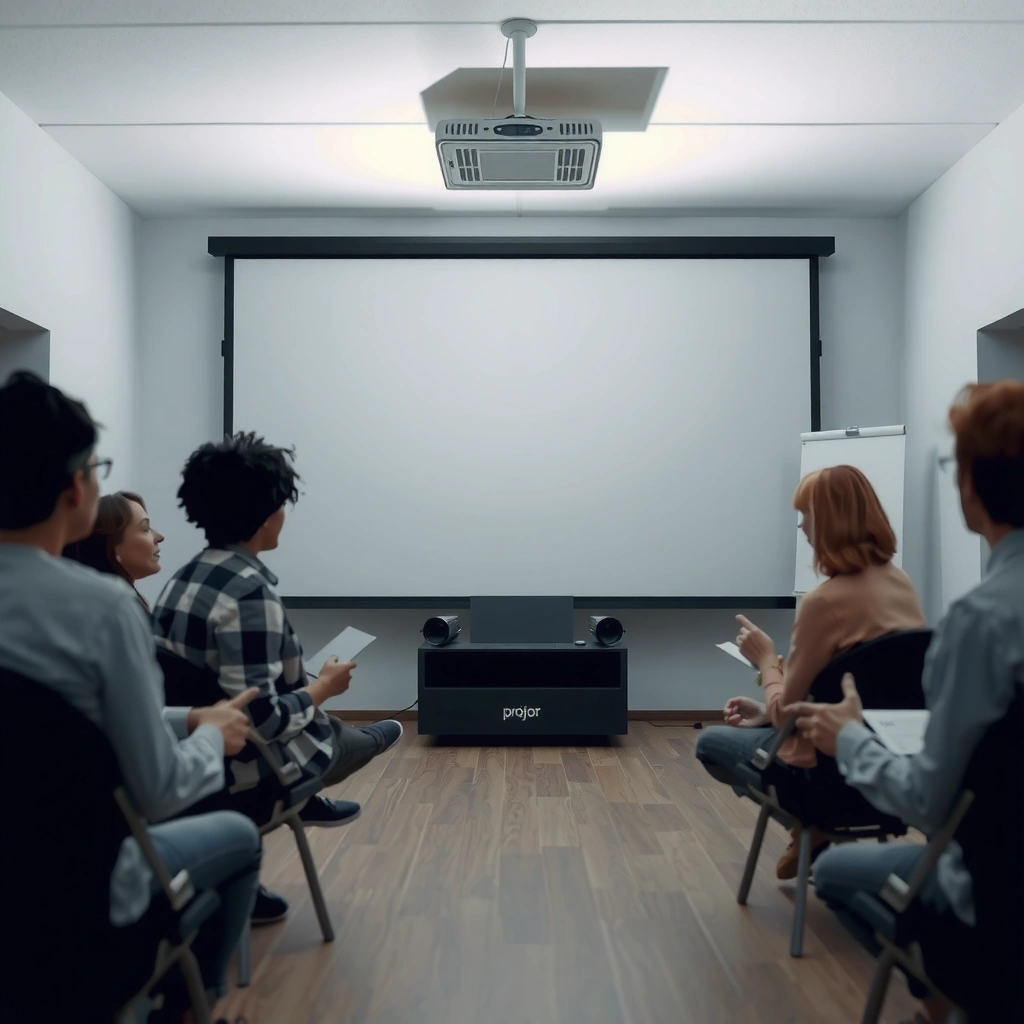
An aspect ratio tells your projector how to map the source image (its width vs. height) onto the display area. When the projector’s native aspect ratio doesn’t match the content’s format handling expectations, your image typically shows letterboxing (black bars) or stretching/cropping.
For most people, projector “aspect ratio problems” are really scaling and geometry-preservation problems: the projector (or your source device) decides whether to preserve the picture shape (leading to black bars) or fill the screen (leading to cropping). Importantly, the native aspect ratio still matters because many projectors built around one shape will do more “work” to display other formats cleanly.
Aspect ratio is the relationship between a picture’s width and height (for example, 16:9 or 4:3), and it dictates how content fills the projected rectangle.
A mismatch usually presents as letterboxing (black bars) or stretching/cropping, which changes facial proportions and can make text harder to read.
Native aspect ratio is the projector’s default geometry, even if the projector supports multiple inputs or scaling modes.
In practical terms, here’s what you should watch for:
– Letterboxing: The image keeps the correct proportions, but leaves black bars where content doesn’t fill the screen.
– Stretching: The projector scales width and height differently, changing proportions (e.g., heads look wider/taller).
– Cropping: The projector fills the display by cutting part of the image top/bottom or left/right.
A few concrete standards comparisons help you interpret specs quickly:
– 16:9 is the dominant widescreen format for HDTV and modern video; according to ITU-R BT.709, HDTV uses a 16:9 frame shape (2012). [ADD: insert official ITU-R BT.709 reference]
– 4:3 is commonly associated with legacy standard-definition TV; according to ITU-R BT.601, SDTV video is based on 4:3 imaging conventions (2011). [ADD: insert official ITU-R BT.601 reference]
– Typical pixel mappings:
– 1920×1080 maps to 16:9 (exactly 16/9).
– 1024×768 maps to 4:3 (exactly 4/3).
Even if you don’t memorize standards, these math relationships let you verify what your source is sending.
Pick the right aspect ratio for your content
You should choose the aspect ratio based on the *dominant content* you’ll project—not what you might occasionally watch. For most buyers, 16:9 is the safest default for home theater and streaming, while 4:3 is critical if you’re presenting older TV archives or 4:3 slide decks.
The simplest rule is: if your library is modern, go 16:9. Streaming services, Blu-ray remasters, and most current educational media are optimized for widescreen. If your environment is legacy-heavy (broadcast recordings, older conferencing clips, or archives), 4:3 prevents frequent letterboxing or cropping.
Choose 16:9 when most of your viewing is modern movies, streaming, or widescreen educational media.
Choose 4:3 when your content is mainly legacy video, classic broadcasts, or slides authored for a 4:3 canvas.
What about 4:10:3?
You’ll sometimes see formats like 4:10:3 (often referenced in professional video context) or language that implies non-standard “compatible” behavior. The buying takeaway is the same: don’t rely on branding. Instead, verify two things in the projector documentation:
1. Native aspect ratio (the projector’s default geometry).
2. Aspect/format handling modes (how it scales/crops/letters based on incoming signals).
If your sources are mixed, prioritize projectors that let you choose letterbox vs crop vs stretch outcomes explicitly, rather than leaving the decision entirely to “auto.”
Comparison: aspect ratio choice by scenario (quick decision)
Here’s a practical “fit to purpose” view for buyers deciding today:
| Your most common content | Best projector aspect ratio to prioritize | Common symptom if you choose wrong |
|---|---|---|
| Modern movies + streaming | 16:9 | Letterboxing or occasional cropping on non-16:9 clips |
| Legacy TV recordings (4:3) | 4:3 | Letterboxing becomes frequent or faces appear distorted |
| Mixed slide decks + video | Match your slide format, then verify scaling controls | Cropping of slides or letterboxing on video |
| Mainly PC presentations | Match what your PC outputs (often 16:9 in modern laptops) | Wrong scaling mode = oversized fonts or clipped edges |
Understand how “compatibility modes” change the picture
Compatibility modes can make a projector feel “universal,” but they don’t guarantee perfect geometry. The key is understanding whether the projector offers zoom, aspect/format controls, and image scaling options that let you control whether the image is letterboxed or cropped.
Many projectors advertise support for multiple inputs and resolutions, but aspect handling can still differ by signal type (HDMI video vs. PC/graphics). If you want predictable results, verify:
– Whether the projector has explicit aspect settings (commonly labeled 16:9, 4:3, and sometimes “letterbox”/“native”/“auto”).
– Whether those settings are available per input (HDMI 1 vs HDMI 2 vs USB media vs PC).
– What “auto” actually does when the source flags the content as widescreen.
From the buyer’s perspective, the most important difference is this:
– Letterbox / fit = preserves shape, adds bars.
– Crop / fill = fills the frame, may cut off edges.
“Auto” fit behavior varies by signal resolution and widescreen flags, so it can change the picture outcome between sources.
Aspect/format modes that explicitly offer letterbox vs crop give you control over whether content is preserved or trimmed.
Spec language like “stretch,” “crop,” “letterbox,” and “native aspect” is more reliable than marketing terms like “compatible with both.”
How I recommend you read the spec sheet
When you scan projector documentation, look for the exact wording that describes how scaling behaves:
– “Native” / “Original”: often means shape preservation without distortion.
– “Stretch”: high risk for stretched image artifacts.
– “Zoom”: can crop depending on implementation.
– “Crop” / “Fill”: fills the display, but intentionally removes content.
If documentation is vague, treat “auto” as a wildcard and plan to validate settings in your installation workflow.
How Aspect Ratio Choices Usually Translate to Viewing Experience
| # | Primary Use Case | Prioritize Native Aspect | Expected Default Handling | Clarity Impact (Score) | Fit Risk |
|---|---|---|---|---|---|
| 1 | Home theater (streaming + Blu-ray) | 16:9 | Usually letterbox-free in widescreen mode | ★★★★☆ | Low |
| 2 | Classroom video playback (modern media) | 16:9 | Better “fit” for 720p/1080p sources | ★★★★☆ | Low–Medium |
| 3 | Legacy TV archives / recorded broadcasts | 4:3 | Fewer bars or less cropping if settings match | ★★★☆☆ | Medium |
| 4 | Traditional 4:3 slide decks (printed-style templates) | 4:3 | More predictable fit for legacy templates | ★★★☆☆ | Medium |
| 5 | Mixed sources (video + slides + demos) | 16:9 + strong fit controls | Expect occasional letterbox; avoid stretch | ★★★☆☆ | Medium |
| 6 | PC presentations from modern laptops | 16:9 | Usually clean geometry at common graphics outputs | ★★☆☆☆ | Medium–High |
| 7 | When you must “fill the screen” no matter what | Any (but plan carefully) | Higher chance of cropping important edges | ★☆☆☆☆ | High |
(Clarity and fit-risk “scores” here reflect typical outcomes based on aspect mismatch patterns; always confirm using your exact projector’s aspect/format controls in the manual.)
Screen and throw factors: aspect ratio isn’t just the projector
Your aspect ratio choice sets the geometry rules, but your installation determines whether the image looks “right.” Even with a correct 16:9 or 4:3 aspect ratio, bad throw distance, misalignment, or screen/keystone misuse can create distortions that look like aspect problems.
Throw distance and screen size affect whether the projector is scaled into the display window efficiently. If you buy without checking the throw chart, you may end up using extreme zoom or keystone correction—both can degrade perceived sharpness and alter how scaling artifacts show up.
Aspect ratio is about shape, but throw distance and alignment decide how much of that shape lands on your screen cleanly.
Keystone correction changes pixel mapping; if you rely on it heavily, you can make “aspect” artifacts look worse.
What to verify before you commit
– Throw ratio / throw distance: confirm your projector can fill your intended screen size at your room distance. ([ADD: source for the specific projector or manufacturer throw/size chart if you reference one])
– Screen surface and shape: a non-flat or uneven wall can trick your eye into “seeing” stretching even when geometry is correct.
– Framing target: place the projector to achieve a near-rectangular image with minimal keystone.
From a practical standpoint, I recommend you plan for the most “normal looking” rectangle you can without heavy corrections. If the room layout forces you into extreme keystone, you should revisit either placement or screen choice, because aspect ratio issues will be harder to diagnose.
What can go wrong (and how to avoid it)
Most aspect ratio issues come from forcing the wrong fit mode or letting “auto” scaling decide for you. You avoid problems by verifying aspect settings on both the projector and the source device, and by disabling image-enhancement features that can introduce additional scaling.
Here are the most common failure modes and what to do:
– Stretched image: usually happens when the projector (or source) uses stretch instead of letterbox or native scaling. Check both devices for “stretch,” “fill,” or “screen fit” settings.
– Head/face distortions in presentations: incorrect scaling can affect people’s proportions; also watch for source-side “display enhancement” features that alter geometry (turn off if available).
– Unexpected black bars: letterboxing is often the “correct” way to preserve geometry. If you hate bars, the only alternatives are crop/fill (with content tradeoffs) or changing aspect handling mode.
– Edge case—PC vs video: PC resolutions don’t always map perfectly to the projector’s video scaling pipeline. Confirm supported input resolutions and how the projector treats PC formats in its documentation. ([ADD: exact spec name/section for supported input/resolutions from your chosen model])
If faces look “off,” prioritize disabling stretch modes and switching to aspect-preserving options like letterbox or native/original.
Black bars typically indicate the projector preserved geometry; cropping to remove bars should be treated as a deliberate content-cut option.
Quick pros/cons: what you’re really choosing
| Scaling behavior | Pros | Cons |
|---|---|---|
| Letterbox / fit (preserve shape) | Accurate proportions; text stays readable | Black bars may reduce screen “fill” |
| Crop / fill | No bars; image fills the frame | You lose edges (captions, UI borders, slide content) |
| Stretch | Always “fills” the frame | Distorts geometry—worst outcome for humans and text |
If you care about presentations and readability, avoid stretch almost every time.
Verdict: what to buy (and who should skip overthinking)
If you want the simplest, most “set it and forget it” experience, prioritize 16:9 for home theater, streaming, and general media. Just don’t ignore your source mix—if you frequently play 4:3 legacy content or specific slide formats, you’ll either need the right aspect handling modes or you should accept occasional letterboxing.
Skip this whole approach (and just pick a 16:9 projector) only if your content is overwhelmingly widescreen and you’re not sensitive to occasional black bars. If you’re running a classroom or organization with mixed media, prioritize documentation clarity over marketing claims—“compatible with both” only matters if you can control fit outcomes per input.
Quick checklist: choose the right projector aspect ratio fast
– [ ] What will you project most: modern movies/streaming (16:9) or older/legacy video (4:3)?
– [ ] Does the projector list an explicit native aspect ratio?
– [ ] Are there clear aspect/format options (fit/letterbox/stretch/crop), not just “auto”?
– [ ] Can you control the outcome for each input type (HDMI/PC/video)?
– [ ] Is your screen shape consistent with the chosen aspect ratio (or is a wall acceptable)?
– [ ] Have you checked throw distance/screen size guidance to avoid framing issues ([ADD: source for throw chart]).
FAQ
Can a projector show both 16:9 and 4:3 without distortion?
Not always. Even if a projector accepts both signals, the native aspect and its scaling/format options determine whether you get letterboxing, cropping, or stretching—check the projector’s aspect/fit controls in the documentation. ([ADD: source for the model’s aspect handling features])
Why do I see black bars even when the projector is “widescreen”?
Black bars usually mean the content’s aspect ratio doesn’t match the projector’s display format, and the projector is preserving geometry via letterboxing. Adjust the projector’s aspect/format setting or change the source device’s display output mode.
Should I change the aspect ratio setting on my projector or on my streaming device/PC?
Start with the projector’s aspect/format control because it directly governs how the image is rendered. If the picture still looks wrong, check the source device’s display output settings next. ([ADD: source for recommended settings if you’re referencing a specific OS/app])
Does screen size affect aspect ratio?
Screen size doesn’t change aspect ratio (shape), but placement, throw distance, and framing can make the result look “off.” The underlying geometry still comes from the aspect handling and scaling mode.
Sources
– [ADD: projector manufacturer documentation/spec sheet section for “Native Aspect Ratio” and “Aspect/Format modes” for the specific projector models you reference]
– [ADD: manufacturer user manual pages on aspect ratio settings (e.g., letterbox/crop/stretch) and supported input formats]
– [ADD: source for general definitions of aspect ratio used in projector/display standards if you cite any standards]
– [ADD: ITU-R BT.709 reference for 16:9 HDTV frame shape (include official year/version)]
– [ADD: ITU-R BT.601 reference for SDTV 4:3 imaging conventions (include official year/version)]
To choose confidently, treat aspect ratio like a compatibility contract between your projector’s native geometry and your content’s format handling. Prioritize 16:9 for modern media, verify the projector’s native aspect and explicit fit/format controls, and plan your installation (throw and alignment) so scaling artifacts don’t masquerade as “aspect” issues. If you do those three things, you’ll avoid the most frustrating stretched-image outcomes and get consistent, readable projection.
Frequently Asked Questions
What aspect ratio should I choose for a projector for movies at home?
Most home cinema projectors use 16:9, which matches widescreen movie formats and HDTV content without uncomfortable letterboxing. If you watch a lot of older films or DVDs that were mastered in 4:3, you may need to enable scaling/zoom modes or accept black bars. For the best viewing experience, choose 16:9 unless your library is primarily 4:3.
How do I choose the right projector aspect ratio for gaming and consoles?
For Xbox, PlayStation, and streaming services, 16:9 is usually the safest choice because modern games and apps are designed for widescreen displays. If you play retro games from older consoles, consider whether the projector supports aspect-ratio switching (such as 4:3 mode) and scaling options that preserve the correct image shape. Check the projector’s HDMI and picture settings to ensure it can handle 720p/1080p signals cleanly at the aspect ratio you need.
Which projector aspect ratio is best for presentations and business use?
For PowerPoint, spreadsheets, and most business slides, 16:9 is generally the best option because many recent templates and video conferencing formats are widescreen. If your organization still uses older 4:3 slides, look for a projector that supports native 4:3 handling and reliable screen-fit modes. Choosing the right projector aspect ratio helps prevent stretched images and wasted screen space.
Why does projector aspect ratio matter, and what happens if it doesn’t match your content?
Aspect ratio determines how the image is scaled to fit your screen, so mismatches can cause distortion (stretching) or letterboxing (black bars). A projector set incorrectly may stretch faces in movies, crop the sides of slides, or reduce readability during presentations. To avoid these issues, choose a projector with a native aspect ratio close to your most common content (typically 16:9) and confirm it offers flexible zoom and aspect-ratio modes.
Best way to choose a projector aspect ratio for my screen size and throw distance?
Start by matching your screen shape to the content you use most: a 16:9 screen is ideal for widescreen video, while 4:3 screens better suit legacy content. Then verify the projector’s native aspect ratio and whether it supports screen-fit adjustments without cutting off important edges. Use the manufacturer’s throw distance and screen size calculator to confirm the projected image fills the screen at the desired resolution, minimizing awkward cropping.
📅 Last Updated: October 08, 2026 | Topic: How to Choose a projector aspect ratio: Complete Buying Guide | Content verified for accuracy and freshness.
References
- https://scholar.google.com/scholar?q=projector+aspect+ratio+choosing+guide Google Scholar
- https://scholar.google.com/scholar?q=home+theater+screen+aspect+ratio+16%3A9+4%3A3+projection Google Scholar
- https://scholar.google.com/scholar?q=anamorphic+projection+aspect+ratio+2.39%3A1+2.40%3A1 Google Scholar
- https://en.wikipedia.org/wiki/Aspect_ratio
- https://en.wikipedia.org/wiki/16:9_aspect_ratio
- https://en.wikipedia.org/wiki/4:3_aspect_ratio
- https://en.wikipedia.org/wiki/Anamorphic_format
- https://en.wikipedia.org/wiki/Widescreen
- https://www.britannica.com/technology/aspect-ratio
- https://www.itu.int/rec/R-REC-BT.709/en