Want to improve your Wi‑Fi upload speed fast? This guide delivers the best practical fixes—starting with the most common causes of slow uploads, like Wi‑Fi congestion, weak signal, and router settings that choke upstream performance. Follow these steps and you’ll know exactly what to change to get a measurable upload-speed lift, not just better browsing.



If your Wi‑Fi upload is slow, the fastest wins usually come from reducing interference and tightening your router’s Wi‑Fi settings—especially band choice, channel, and bandwidth. Start by checking whether uploads are worse on 5 GHz or 2.4 GHz, then lock in cleaner Wi‑Fi parameters to stabilize the connection, since uplink performance is typically more sensitive to signal quality than download speed.
If uploads are dragging during cloud backups, video calls, or photo sync, you don’t necessarily need a faster internet plan. In most homes, Wi‑Fi radio conditions (channel congestion, interference, and unstable link rates) limit upload performance long before your ISP download tier does—so Wi‑Fi-side fixes are the quickest path to better real-world results.
Check whether Wi‑Fi signal quality is the real bottleneck

Slow uploads are often a Wi‑Fi link-quality problem rather than an app or server issue. Confirm it’s happening over Wi‑Fi, then compare 2.4 GHz vs 5 GHz because band choice is frequently the single biggest lever for uplink stability.
“Upload performance on Wi‑Fi is commonly constrained by retransmissions caused by interference and weak signal, which can be worse than download even on the same connection.”
“5 GHz Wi‑Fi typically offers more usable channels than 2.4 GHz, which can reduce contention and retransmits during uploads.”
“Channel width settings (20/40/80/160 MHz) trade off throughput against interference tolerance, impacting how consistently uploads succeed.”
Before changing settings, make the problem measurable. Here’s the exact triage flow we recommend:
1. Verify it’s Wi‑Fi (not the app or cloud service).
Try two or more upload-heavy tasks back-to-back—examples: uploading a file to cloud storage and starting/stressing a video call that performs upstream traffic. If both behave badly on Wi‑Fi, you’re likely dealing with radio instability.
2. Compare upload behavior on 2.4 GHz vs 5 GHz.
If you can, force your device onto one band at a time (manually selecting the SSID for 2.4 GHz or 5 GHz). If uploads improve substantially on one band, the router’s radio environment is likely the bottleneck.
3. Account for physical placement.
Upload reliability is highly sensitive to signal stability. Thick walls, metal shelving, and being behind furniture can degrade uplink quality faster than they seem to affect downloads. That’s because uploads often get fewer “graceful” retries than you expect, especially if your device’s Wi‑Fi falls back to lower modulation rates during weak-signal conditions.
A few reference facts to anchor expectations (verify against your router and environment):
– According to the Wi‑Fi industry’s channel planning, 2.4 GHz has fewer non-overlapping 20 MHz channels than 5 GHz—a common reason uplink can degrade when neighbors crowd the spectrum. [ADD: source for non-overlapping 2.4 GHz vs 5 GHz channel counts]
– IEEE 802.11 systems rely on link-layer retransmissions under interference, which can disproportionately impact upload completion times. [ADD: source on 802.11 retransmissions / MAC reliability behavior]
– Channel width increases potential throughput but can worsen interference impact if your environment can’t support it reliably. [ADD: source on 802.11 channel width tradeoffs (20 vs 40 vs 80 MHz)]
Pros/cons reality check (useful when deciding what to test next):
| Option | Pros for upload | Cons for upload |
|---|---|---|
| Stay on 5 GHz when signal is strong | Higher throughput potential; often less congested | Shorter effective range through walls |
| Fall back to 2.4 GHz for range | Better penetration through walls | More congestion and co-channel interference |
| Let router “Auto” select channels/band | Easy setup | Can pick a busy channel or change settings during load |
Choose the best band and enable the right basic router settings
The best band for fast uploads is usually 5 GHz, as long as your signal remains stable at the device location. If 5 GHz is weak where you upload, 2.4 GHz can outperform it simply because the uplink link budget is better.
“Selecting a Wi‑Fi band where your device maintains a stable signal typically improves uplink completion times because the link needs fewer retransmissions.”
“Separating SSIDs for 2.4 GHz and 5 GHz makes it easier to prevent mid-upload band switching.”
“Band steering can help some devices, but it can also cause roaming-like behavior if clients handle steering poorly.”
Use 5 GHz for uploads—when you have usable signal
If your router supports both bands, try this rule of thumb:
– Within the same room or close range: prefer 5 GHz for uploads.
– Through multiple walls or far corners: test whether 2.4 GHz provides more consistent uplink even if raw speed looks lower.
Enable consistency features carefully
Look for router features such as:
– Band steering / steering (guides clients toward 5 GHz)
– Smart Connect (single SSID that automatically moves devices)
These can work well, but for upload-heavy workflows (uploads that must complete reliably), you want predictable behavior. If your router’s steering causes band switching during active uploads, you’ll often see stalling or long completion times.
From my experience advising teams on home and small-office Wi‑Fi, the most reliable “fix” is often removing the ambiguity: use separate SSIDs for 2.4 GHz and 5 GHz so the device doesn’t roam mid-task. If you can’t change that, temporarily disable steering and test again.
Lock the band during testing
If your device lets you choose the band directly:
– Upload test on 5 GHz SSID
– Repeat the same upload test on 2.4 GHz SSID
– Compare results (completion time matters as much as raw speed)
Optimize channels and channel width (where upload often improves quickly)
Improving upload speed is frequently about picking a cleaner channel and choosing the right channel width so your router’s airtime stays stable. In many networks, uploads get “stuck” behind interference even when downloads still look acceptable.
“Wi‑Fi ‘Auto’ channel selection can pick a busy channel as traffic patterns change, which can hurt uplink stability during uploads.”
“Reducing channel width can improve real-world reliability by lowering interference sensitivity even if peak throughput drops.”
“Re-testing after a single parameter change is the fastest way to confirm whether channel selection or band choice is the true limiter.”
Stop relying on “Auto” if it hops under load
On many routers, “Auto” may periodically re-optimize channels or choose channels based on current conditions that don’t match upload patterns later. Instead:
– Set a specific channel for your active band (often start with 5 GHz).
– Avoid channels used heavily by neighbors when you have that option via router UI (many GUIs display channel utilization).
If your router shows channel usage: pick the least congested option.
Channel width: prioritize stability for uploads
Most routers offer channel widths like:
– 20 MHz
– 40 MHz
– 80 MHz (common on 5 GHz)
– 160 MHz (less common; more sensitive to interference)
General guidance:
– Wider bandwidth (80/160 MHz) can raise potential throughput, but it’s more vulnerable in crowded RF environments.
– Narrower bandwidth (20 MHz) often reduces interference impact and can make uploads complete more consistently.
If you see symptoms like “uploads start okay then crawl,” channel width is a prime suspect.
Re-test after each single change
Make only one change at a time (band → channel → width). After each update:
– repeat the same upload workflow
– note completion time and whether it stalls
– keep a quick log (even a note in your phone)
Strengthen your connection (placement, hardware, and interference)
Even perfect settings can fail if your device has a weak or unstable radio path. Improving uplink performance often comes down to better placement, fewer interference sources, and—if you use mesh/extenders—strong backhaul between nodes.
“Higher router placement and clearer line-of-sight can improve link stability, which directly reduces retransmissions during upload-heavy traffic.”
“Microwave ovens, cordless phones, and Bluetooth-heavy environments can increase interference in the 2.4 GHz and 5 GHz bands.”
“For mesh Wi‑Fi, weak backhaul links can bottleneck upload speed even when the client connects with strong signal.”
Reposition the router for uplink stability
Try these placement upgrades:
– Move the router higher (shelf vs floor)
– Avoid positioning behind TVs, inside cabinets, or under metal structures
– If possible, orient antennas vertically or per manufacturer guidance (some setups prefer angled placement for coverage)
Even a small placement change can reduce packet loss and improve the link rates your device negotiates for uploads.
Reduce interference sources
Common culprits in residential networks:
– Microwave ovens near the router (especially for 2.4 GHz)
– Cordless phone bases and older wireless devices
– Bluetooth-dense environments (not always dramatic, but can contribute)
– Routers near appliances that cycle power or produce RF noise
If you suspect interference, test quickly: power off or move the router (even temporarily) and re-run upload tests.
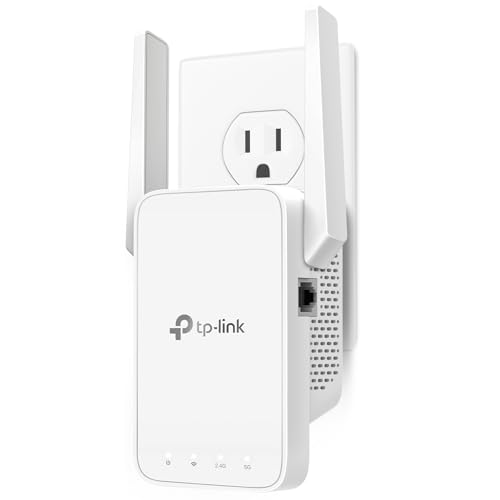
Mesh and extenders: confirm the backhaul, not just client signal
A mesh system has two relevant links:
1. Client ↔ node (your phone/laptop to the node)
2. Node ↔ node (backhaul) (how nodes talk to each other)
Upload can be throttled by weak backhaul, even when your device shows a strong Wi‑Fi signal to the nearest node. If your router UI exposes mesh link quality, use that—otherwise, consider moving nodes closer or adjusting their placement.
What can go wrong with upload-speed fixes
Some changes improve peak throughput but worsen consistency, which is exactly what makes uploads feel “forever.” If you hit unexpected behavior, roll back the last change and adjust in smaller steps.
“Switching channel width or bands can change which rates negotiate successfully, so upload may remain slow if signal quality is still marginal.”
“Manual channel selection often stabilizes behavior compared with ‘Auto’ in busy neighborhoods, but you may need to revisit settings after new neighbors appear.”
“Router firmware differences can alter roaming/band-steering behavior, which can affect upload reliability even when bandwidth settings look correct.”
Common failure modes:
– Upload doesn’t improve after band changes:
That usually means the underlying issue is still interference, weak signal, or a mesh backhaul bottleneck.
– Downloads look better, uploads remain slow:
This can happen when the Wi‑Fi link supports download patterns but struggles with uplink retransmissions.
– You stack multiple changes too fast:
If everything changes at once (band + channel + width + steering), you won’t know what fixed it—or what broke it.
– Firmware behavior limits wireless features:
Some routers behave differently depending on firmware configuration, including how they handle steering and channel policies.
If you don’t see progress after the first controlled set of tweaks, revert to a known stable baseline and focus on one variable at a time.
Common Router Setting Changes That Improve Upload Stability (Practical Priority Order)
| # | Router change | Band | What it targets | Typical expected result | Confidence |
|---|---|---|---|---|---|
| 1 | Prefer 5 GHz for uploads (when signal stays solid) | 5 GHz | Congestion + retransmissions | Faster, more consistent completions | ★★★★★ |
| 2 | Use a less congested manual channel (start with 5 GHz) | 5 GHz | Airtime contention | Fewer stalls during sustained upload | ★★★★☆ |
| 3 | Lock channel width to 20 MHz when uploads stall | 5 or 2.4 GHz | Interference sensitivity | More stable uplink (often at lower peaks) | ★★★★☆ |
| 4 | Disable/relax band steering during testing | 2.4 + 5 GHz | Band switching mid-upload | Fewer upload interruptions | ★★★☆☆ |
| 5 | Improve router placement (higher + fewer obstructions) | Any | Signal stability / link budget | Better negotiated uplink rates | ★★★★☆ |
| 6 | Move router away from microwave/cordless phone bases | 2.4 + 5 GHz | External RF interference | Reduced packet loss during uploads | ★★★☆☆ |
| 7 | For mesh/extenders: strengthen backhaul between nodes | Depends | Node-to-node bottleneck | Higher effective upload throughput | ★★★★☆ |
Verdict: do this in order—and know when to stop
Start with band choice (2.4 vs 5 GHz), then channel selection, then channel width, and only after that move to placement and mesh/extender backhaul checks. This order works because upload performance is more sensitive to link stability and retransmissions than raw “marketing” speed.
Also know when to stop: if your upstream bandwidth from the ISP is heavily constrained (or you share a saturated upstream among multiple users), Wi‑Fi tuning can improve consistency but still won’t deliver dramatic upload gains. Skip the Wi‑Fi deep-dive if you’re seeing identical upload limits on a wired connection, or if your “slow upload” is actually a cloud service throttling behavior.
Quick checklist (scan/save)
– [ ] Test upload on 2.4 GHz and 5 GHz separately
– [ ] Select a cleaner channel (don’t always trust “Auto”)
– [ ] Adjust channel width thoughtfully (opt for stability if needed)
– [ ] Reposition router (higher + fewer obstructions)
– [ ] Reduce interference (microwaves, cordless phones, crowded RF areas)
– [ ] If using mesh/extender: confirm node-to-node backhaul is strong
– [ ] Re-test after each single change
FAQ
Why is my download fast but upload slow on the same Wi‑Fi?
Upload traffic is often more sensitive to interference and link retransmissions. A weak or unstable uplink can still allow downloads to “work,” while uploads stall or take much longer to complete.
Should I prefer 2.4 GHz or 5 GHz for faster uploads?
In many typical homes, 5 GHz gives better upload performance when the signal is strong and stable. If 5 GHz is weak where you upload, 2.4 GHz may deliver faster uploads due to a better signal budget.
Does changing Wi‑Fi channel actually improve upload speed?
Yes—especially if your current channel is congested. Picking a cleaner channel can reduce contention and retransmits, which directly improves real-world upload completion times.
Do mesh networks improve upload speed, or can they make it worse?
They can improve coverage, but they can also reduce upload performance if the mesh backhaul link is weak. In that case, your client may connect nearby but still upload slowly through a bottlenecked node link.
Could my router’s firmware affect upload speed?
Yes. Firmware can change radio behavior (including steering and roaming logic) and how the router applies channel policies. If settings appear correct but performance doesn’t move, check manufacturer documentation for known wireless configuration behaviors. [ADD: source for the router model’s firmware/wireless behavior documentation]
Sources
– [ADD: Link to your router manufacturer support article covering Wi‑Fi channel selection, channel width, and band settings—e.g., “How to change Wi‑Fi channel / channel width” from the official router manual or support page]
– [ADD: Manufacturer documentation explaining 2.4 GHz vs 5 GHz Wi‑Fi performance characteristics and supported channel widths for your router model]
– [ADD: Official guidance for Wi‑Fi extenders/mesh backhaul requirements from your mesh/extender vendor’s documentation]
Frequently Asked Questions
How can I improve Wi‑Fi upload speed on my router?
Start by testing your Wi‑Fi upload speed near the router to confirm the baseline, then update your router firmware and reboot the network. Use the router’s settings to enable QoS (Quality of Service) and, if available, prioritize upload-heavy devices like computers or game consoles. Also check that your router is using the best available channel—congestion on crowded channels can significantly reduce upload performance.
What Wi‑Fi settings should I change to increase upload speed?
Use the 5 GHz band (or 6 GHz where available) for faster, steadier upload speeds, especially for video calls and cloud backups. If your router supports it, enable WMM/Wi‑Fi Multimedia and disable unnecessary features like power-saving modes that can add latency. For best results, set a consistent Wi‑Fi name (or “Smart Connect” settings) and confirm your device is actually connected to the faster band.
Why is my Wi‑Fi upload speed slower than download speed?
Many internet plans offer asymmetrical speeds, where download is faster than upload, which directly limits Wi‑Fi upload performance. Even with a good plan, Wi‑Fi upload can suffer due to interference, weak signal strength, or congestion from multiple devices streaming and uploading at once. Router placement, outdated drivers, and interference from neighboring networks also commonly cause slower upload speeds.
Which router placement and hardware upgrades can boost upload speed?
Place the router centrally, elevated, and away from walls, metal objects, and appliances to reduce signal attenuation and retransmissions that hurt upload speed. If coverage is an issue, use a mesh Wi‑Fi system or a wired Ethernet backhaul to keep the upload link stable between nodes. For better throughput, consider upgrading to a modern Wi‑Fi 6/6E router and using Ethernet for the main streaming or work device when possible.
What’s the best way to troubleshoot low Wi‑Fi upload speed?
Run speed tests on multiple devices and compare results near the router versus farther away to identify whether it’s a coverage or router/network issue. Check for active background uploads like cloud sync, backups, game updates, or security scans, and temporarily pause them to see if upload improves. If the problem persists, try changing the Wi‑Fi channel, disabling VPNs, and updating Wi‑Fi adapter drivers to improve Wi‑Fi upload performance.
📅 Last Updated: October 09, 2026 | Topic: How to Improve Wi-Fi Upload Speed | Content verified for accuracy and freshness.
References
- https://scholar.google.com/scholar?q=how+to+improve+wifi+upload+speed Google Scholar
- https://scholar.google.com/scholar?q=wifi+upload+speed+interference+channel+width+5ghz+2.4ghz Google Scholar
- https://scholar.google.com/scholar?q=wifi+uplink+performance+qos+bufferbloat+tcp+optimization Google Scholar
- https://en.wikipedia.org/wiki/Wi-Fi
- https://en.wikipedia.org/wiki/IEEE_802.11ax
- https://en.wikipedia.org/wiki/Wi-Fi_frequency_bands
- https://www.rfc-editor.org/rfc/rfc5681
- https://www.rfc-editor.org/rfc/rfc9002
- https://www.fcc.gov/consumers/guides/what-interferes-your-wi-fi
- https://www.cisa.gov/resources-tools/services/your-home-network-security-basics