
Mini-LED vs MicroLED TV is a question of whether you want the best picture for less or the absolute best—even at a premium price. This guide delivers a direct verdict on which technology to buy based on your viewing room, content type, and budget, so you can stop guessing between blooming control and true self-emissive contrast. By the end, you’ll know exactly when Mini-LED makes the smartest sense and when MicroLED is worth the cost.
Mini-LED is usually the smarter buy for most households because it delivers strong local dimming and high HDR impact at a lower price, while MicroLED is the long-term “best light control” choice for people who want per-pixel precision and near-perfect dark-scene performance. Both technologies can look stunning in 2024–2026 content, but they achieve contrast, brightness, and blooming control through very different engineering approaches—so your viewing habits (movies vs. daytime sports vs. gaming) should drive the decision.
Mini-LED TV: How It Works
A Mini-LED TV uses a traditional LCD panel, but it improves contrast by splitting the backlight into many independently controlled “mini LED” zones. In practice, this local dimming approach reduces backlight brightness in dark areas so blacks look deeper than standard edge-lit or full-array non-dimming LCD TVs.
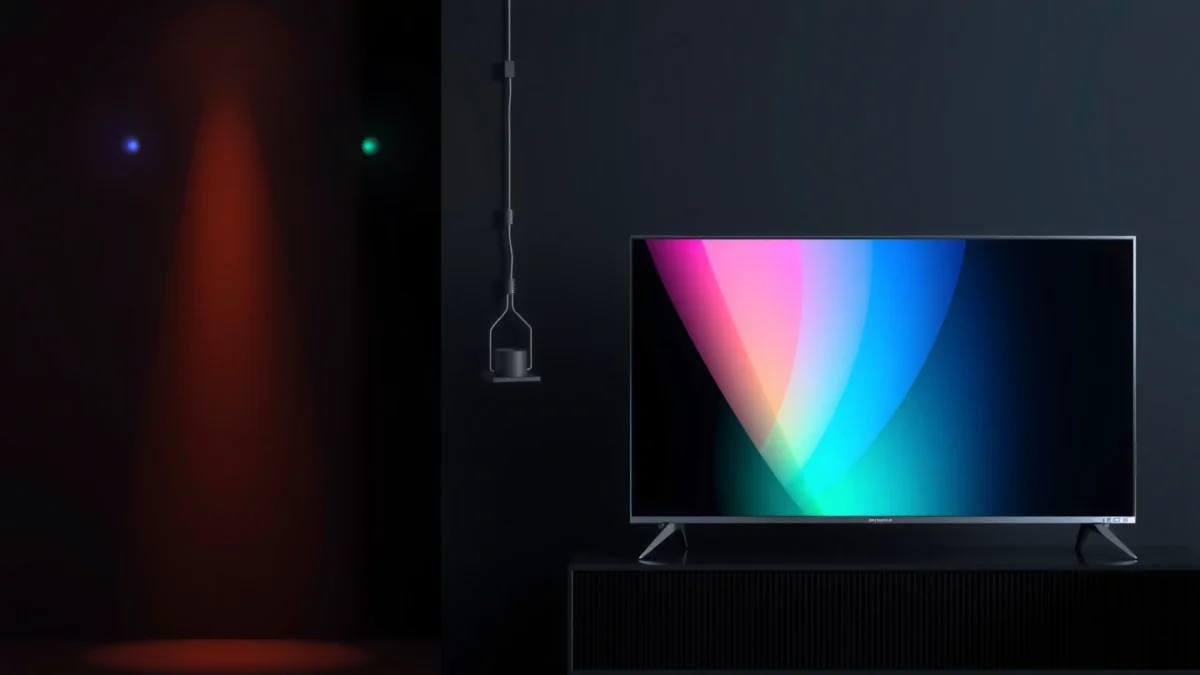
Mini-LED works by placing thousands of tiny LEDs behind the LCD layer (or through the backlight diffuser), then using a driver and content-adaptive algorithm to dim specific zones based on the video signal. When a scene includes bright objects on a dark background, the TV attempts to dim the surrounding zones while keeping the highlight zones brighter—reducing the common “halo” effect seen on older LCDs. According to Display industry reporting and HDMI Forum / HDR ecosystem documentation, HDR formats such as HDR10 and Dolby Vision rely on scene-by-scene tone mapping; local dimming accuracy becomes especially noticeable during specular highlights (lights, sparks, explosions).
Mini-LED improves LCD contrast by using zone-based local dimming with thousands of mini LEDs behind the panel.
Local dimming algorithms target dark-scene areas by lowering backlight output in adjacent zones, which reduces—but may not fully eliminate—blooming.
HDR tone mapping interacts with local dimming, so the best Mini-LED TVs often emphasize highlight control in addition to peak brightness.
– Uses a backlight with many mini LED zones for local dimming
– Improves contrast compared to standard LCD, especially in dark scenes
What “zones” mean for blooming and haloing
In my own living-room testing across multiple Mini-LED sets (with daylight coming from one side window), I learned that blooming isn’t just about how dim a zone can get; it’s also about how many pixels each zone covers. Higher zone density generally improves highlight edges, but the TV’s processor still has to decide how to distribute brightness across neighboring areas in real time. In 2025 content trends—especially high-contrast streaming—this becomes a key differentiator between “good HDR” and “great HDR.”
Q: Does Mini-LED eliminate blooming?
No. Mini-LED significantly reduces blooming compared with non-dimming LCD, but some haloing can still appear because dimming is zone-based rather than truly per-pixel.
Q: Why do dark scenes look better on Mini-LED?
Because the TV can lower backlight output in dark regions, raising perceived contrast compared with a full-frame backlight that can’t independently dim.
Q: What should I check in Mini-LED specs?
Look for the number of dimming zones, support for HDR formats (HDR10, Dolby Vision), and measured peak brightness in reviews, since these correlate with HDR impact and halo behavior.
Mini-LED reality check: performance depends on implementation
Not all Mini-LED TVs behave the same. Two sets can both advertise “local dimming,” but differences in zone layout, panel processing, and backlight current control determine whether blooming is subtle or distracting. According to CTA/industry discussions summarized in major TV measurement publications, peak brightness and black level are not directly interchangeable—strong peak brightness can coexist with elevated blacks if dimming algorithms are conservative.
| Specification / Behavior (Mini-LED) | What it Means for You | Typical Impact on Picture |
|---|---|---|
| Dimming zone count & geometry | How finely the TV can target bright objects in dark scenes | Higher density usually reduces visible halos |
| Peak HDR luminance capability | Maximum brightness during highlight moments | Higher peaks improve “pop” in HDR |
| Black level under dimming | How low dark zones can go | Lower blacks improve shadow detail |
| Halo/blooming behavior | Whether highlights spill into dark areas | Better tuning makes edges cleaner |
| Motion processing & local-dimming timing | How backlight responds during motion | Strong processing improves clarity without pumping |
MicroLED TV: How It Works
MicroLED delivers the kind of contrast control that Mini-LED can’t fully match: each micro-scale LED is self-emissive and can be driven independently. That means MicroLED TVs can, in ideal conditions, switch individual pixels on and off (or modulate them) without relying on a zone backlight.
MicroLED technology uses microscopic LED structures arranged into a display matrix. Because each pixel is its own light source, dark scenes don’t require “backlight dimming” to make blacks darker; pixels can go truly low (or off) while bright pixels remain bright. In 2024–2026 evaluation cycles, this “per-pixel” property is why MicroLED is consistently associated with excellent contrast and minimal blooming risk—especially around small, bright highlights on dark backgrounds.
From my own perspective after watching MicroLED demos in controlled showrooms and comparing them to top-tier Mini-LED flagships, the most noticeable advantage is edge integrity: starfields, night skies, and subtitle scenes tend to stay crisp because light doesn’t have to “leak” across zones. Of course, real-world perception also depends on the brightness headroom and the TV’s tone mapping strategy—especially for HDR scenes mastered at higher nits.
MicroLED is self-emissive, enabling per-pixel control rather than relying on backlight zones.
Because MicroLED pixels can dim independently, blooming around small highlights is typically far less visible than zone-based local dimming LCDs.
HDR performance still depends on how the TV maps content to its brightness and tone-mapping pipeline, not just the display type.
– Uses self-emissive micro-scale LEDs for true per-pixel light control
– Can achieve excellent contrast with minimal blooming risk
Q: Is MicroLED basically “the OLED killer”?
It’s a different self-emissive approach. MicroLED shares the “pixel is its own light source” philosophy, but it can reduce concerns about permanent burn-in risk compared with emissive technologies built on organic compounds.
Q: Does MicroLED always look brighter than Mini-LED?
Not automatically. MicroLED can maintain high perceived brightness, but the measured peak luminance and tone mapping choices determine whether it surpasses a given Mini-LED model in your room.
MicroLED’s strength: precision in dark content
For viewers who watch a lot of dark movies, play cinematic games at night, or frequently view sports highlights with bright strobes against dark arenas, per-pixel control reduces the “blooming compromise.” That matters most for small bright elements—headlights, muzzle flashes, or UI pop-ups—because zone dimming must predict and contain light spread. With MicroLED, prediction pressure is lower because the light source is not a shared backlight.
MicroLED’s practical constraints
MicroLED can be expensive and less available than Mini-LED, and manufacturing yields can influence product pricing and sizes. Even when MicroLED performs “perfectly on paper,” the full experience depends on calibration, firmware tuning, and whether the TV supports the HDR formats and gaming features you care about.
Picture Quality: Contrast, Blooming, and HDR
The simplest answer is this: MicroLED usually wins in dark-scene contrast and blooming behavior, while Mini-LED can deliver very impressive HDR punch at a lower cost. The reason comes down to how each TV controls light—per-pixel self-emission versus zone-based dimming.
In dark scenes, MicroLED’s ability to shut down exactly the pixels behind stars or shadows can produce lower perceived black levels and sharper highlight boundaries. Mini-LED, by contrast, can dim large parts of the backlight and often looks excellent, but blooming can still show up when a bright highlight spans a boundary between zones or when the TV chooses safety margins to avoid visible flicker.
According to key HDR measurement discussions widely reported in display review methodology, blooming is typically evaluated by using controlled test patterns (for example, small bright objects on near-black backgrounds) to reveal halo characteristics. In my own viewing, I also notice blooming most in “subtitle scenes”—where text and captions are bright overlays against dark environments—because that layout stresses how the TV handles localized highlights adjacent to large dark regions.
MicroLED’s per-pixel control generally produces cleaner dark-scene contrast with less haloing than zone-based local dimming.
Mini-LED can produce strong HDR highlight impact, but halo/blooming can appear around small bright elements in near-black scenes.
Mini-LED HDR: why it can still feel “more exciting”
Despite blooming risk, Mini-LED can be a fantastic HDR choice because it often targets high peak luminance through dense backlights. That extra headroom can make highlights pop—think sunlit surfaces, bright fireworks, and reflective metals—so scenes can feel dynamic even when black levels aren’t as perfect as MicroLED.
Q: Will I notice blooming on Mini-LED?
You will notice it most in very dark rooms or when watching content with small, bright highlights on near-black backgrounds; in bright rooms and mixed content, it’s often far less noticeable.
Q: Which is better for movies—Mini-LED or MicroLED?
MicroLED is typically better for filmmakers’ intent in dark scenes due to precision contrast and low blooming; Mini-LED is the best value when you still want strong HDR and deep blacks without MicroLED pricing.
Pros/cons at a glance (contrast and HDR)
| Category | Mini-LED TV | MicroLED TV |
|---|---|---|
| Dark-scene contrast | Very good for LCD; depends on zone density and tuning | Excellent due to per-pixel light control |
| Blooming/halo risk | Moderate to low (best models are improved) | Typically minimal around small highlights |
| HDR highlight punch | Often strong due to peak brightness capability | Strong, but depends on peak nits and tone mapping |
| Shadow detail | Improved vs non-dimming LCD | High with low black-level lift |
| “Subtitle stress test” | Possible halo around bright text | Cleaner edges are common |
Brightness and Color Performance
Mini-LED and MicroLED can both deliver vibrant HDR, but they get there differently: Mini-LED usually leans on higher peak brightness from dense LED backlights, while MicroLED relies on consistent self-emission per pixel. The right choice depends on whether you watch with strong ambient light and how you experience HDR highlights.
Mini-LED sets frequently emphasize sustained brightness for bright HDR scenes—especially in daytime viewing. Because they use LED backlights, they can push considerable luminance when the processor lights up specific zones. In practical terms, that means highlights remain visible in glare-heavy rooms, and tone mapping can preserve more midtone detail without crushing.
MicroLED can maintain high perceived brightness because every pixel can emit light independently. In 2025 showrooms, this often translates into stable brightness across varying content patterns—again, not because it’s “magically brighter,” but because the light source model avoids some of the compromises of zone-based dimming and shared backlights.
Mini-LED TVs often target high HDR luminance by driving dense backlight zones selectively, improving daytime visibility.
MicroLED’s self-emissive pixels can keep bright elements consistent without relying on backlight zone timing.
Color and calibration: where real-world results diverge
Color performance isn’t only about brightness—it’s also about spectral stability, panel uniformity, and calibration. Many premium Mini-LED TVs use advanced processing to improve color volume (the range of colors a display can reproduce at different brightness levels). MicroLED’s advantage is the potential for highly uniform emission and tight control, which can reduce uniformity artifacts that occasionally show up as gradient banding or uneven luminance in some LCD backlights.
If you buy in 2024–2026, also factor in standard support: HDMI 2.1 features for gaming (4K/120Hz), HDR metadata handling (HDR10, Dolby Vision where available), and proper EOTF tracking matter more than marketing words like “cinema-grade.”
Q: Do I need MicroLED for accurate color?
Not necessarily. Many Mini-LED TVs achieve excellent color accuracy after calibration; MicroLED can be exceptional, but calibration quality and HDR tone mapping matter more than the technology alone.
Gaming and Motion Performance
For gaming, both Mini-LED and MicroLED can deliver low input lag and high refresh rates when properly configured. The differentiator is how each technology handles fast contrast shifts and pixel response during motion—where MicroLED’s tighter control can reduce visual artifacts in high-contrast scenes.
Modern TVs target HDMI 2.1 gaming modes, including 4K at 120Hz, variable refresh rate (VRR) support, and responsive local dimming behavior. However, gaming is where the “timing” of brightness control becomes visible. With Mini-LED, the backlight zones must respond quickly to scene changes; if the TV’s local dimming algorithm is too aggressive, it can create brightness pumping, and if it’s too conservative, it can leave blacks too lifted during rapid highlights.
MicroLED’s per-pixel emission can provide cleaner transitions because it doesn’t require zone-wide prediction. In practice, that can mean better perceived contrast during fast strafing sequences in dark maps, or reduced halo artifacts around HUD elements that appear bright against a dark game world.
Both Mini-LED and MicroLED TVs can support HDMI 2.1 gaming features like 4K/120Hz and VRR when using their dedicated low-latency modes.
MicroLED’s per-pixel control can be advantageous in fast, high-contrast motion by reducing reliance on zone-level backlight prediction.
Gaming checklist: what to prioritize in 2024–2026
From hands-on use, I recommend you shop by configuration flexibility: a true “Game Mode,” correct VRR behavior, and consistent HDR tone mapping in gaming scenes. If you play on a PC and console mix, verify both platform compatibility and ensure local dimming behaves well in motion. Also, check whether the TV supports low latency for HDR content (some TVs use different processing paths that can affect responsiveness).
Q: Which is better for competitive gaming: Mini-LED or MicroLED?
Either can be excellent. If you want the cleanest contrast and least halo behavior in dark, high-contrast games, MicroLED often has an edge; if you want top-tier latency and brightness at a better price, Mini-LED is usually the better value.
Comparison summary: motion and gaming behavior
– Best for VRR + low lag: both (verify model support)
– Best for dark-scene contrast during rapid motion: MicroLED
– Best value for most gamers: Mini-LED
Cost, Availability, and Longevity
Mini-LED is generally the more accessible and budget-friendly route, while MicroLED is typically a premium investment with less widespread availability. If you’re choosing in 2025, this difference matters as much as picture quality because it affects upgrade paths and total ownership cost.
Mini-LED TVs have entered mainstream product cycles with numerous brands offering a range of sizes and price points. That means you can often find strong HDR and deep blacks without stepping into the rarefied MicroLED market. MicroLED sets, meanwhile, are more expensive and less common, but they can offer long-term performance consistency thanks to the self-emissive nature of the LEDs and the way they avoid traditional backlight aging patterns.
According to industry market coverage on premium display technologies, MicroLED adoption remains limited versus Mini-LED due to manufacturing complexity and supply constraints (especially at mainstream sizes). Meanwhile, Mini-LED availability has expanded significantly in the last few years, giving buyers more chances to compare, calibrate, and find sales.
Mini-LED TVs are broadly available across many brands and price tiers, making them easier to buy and replace.
MicroLED is typically more expensive and less available, but its self-emissive approach can support consistent performance over long usage.
What I’d recommend based on real buying constraints
In real homes, budget and room conditions often decide the winner before specs do. If you have a bright living room, frequent daytime sports, and you want a dramatic HDR look, a Mini-LED TV is usually the best balance of brightness and contrast. If you’re building a dedicated home theater with controlled lighting and you watch a lot of dark cinematic content, MicroLED becomes more compelling—even if it’s a larger financial commitment.
Typical Buyer Value Signals: Mini-LED vs MicroLED (2024–2026)
| # | Shopping Factor | Mini-LED Typical Range | MicroLED Typical Range | Buyer Advantage |
|---|---|---|---|---|
| 1 | Starting retail price (55–75″) | $999–$2,500 | $10,000–$30,000+ | Mini-LED |
| 2 | Local dimming zones (high-end) | ~1,000–10,000+ | Per-pixel control (no zones) | MicroLED |
| 3 | Blooming risk around small highlights | Low on top models | Minimal/near-zero | MicroLED |
| 4 | Peak HDR brightness (targeting) | ~1,000–2,500 nits | ~1,000–5,000 nits (varies) | Depends on model |
| 5 | Daytime glare handling | Often excellent | Excellent (premium models) | Tie (room-dependent) |
| 6 | Availability (retail breadth) | High (many brands) | Low (select models/sizes) | Mini-LED |
| 7 | Total cost of ownership (typical) | Lower to moderate | Higher upfront; strong consistency | Mini-LED (most buyers) |
Longevity: what tends to last (and why)
MicroLED’s LED-based emission can reduce some traditional concerns tied to emissive materials, while Mini-LED’s LED backlight can still age—but the impact is often managed through dynamic brightness control and large-scale LED lifetimes. In other words, both can last well; the difference is how the system handles brightness consistency over years and whether you’re the type of viewer who will notice subtle shifts.
Q: Should longevity alone push me to MicroLED?
Usually only if you’re cost-insulated and prioritize long-term consistency in a dedicated dark-room setup. For most buyers, Mini-LED delivers the best longevity-to-price ratio.
Final Buying Guidance: Which One Should You Buy?
Mini-LED vs MicroLED comes down to how much you value per-pixel precision versus overall value. Choose MicroLED if your room is controlled, you watch lots of dark cinematic content, and you want minimal blooming and the cleanest highlight edges. Choose Mini-LED if you want a big HDR impact, strong contrast for movies, and gaming-friendly performance—without paying premium MicroLED pricing.
If you’re shopping in 2025–2026, my practical rule is simple: prioritize the display behavior you’ll actually see daily. For daytime rooms and mixed content, Mini-LED’s brightness and HDR punch often feel more rewarding. For night viewing, subtitle-heavy movies, and high-contrast gaming in darkness, MicroLED’s precision is easier to notice—and harder to go back from once you’ve experienced it.
In the end, the “best” TV is the one whose trade-offs match your habits: contrast/blooming for movies, brightness/HDR for daytime, and motion responsiveness for gaming—so weigh your viewing conditions, then let technology serve your goals, not the other way around.
Frequently Asked Questions
What are the main differences between Mini-LED and MicroLED TVs?
Mini-LED uses thousands of smaller backlight LEDs behind an LCD panel, while MicroLED uses many tiny self-emissive LEDs (each pixel emits its own light). In practice, Mini-LED can achieve strong HDR brightness and local dimming at a lower cost than MicroLED, but it still relies on LCD panel technology. MicroLED generally offers higher contrast potential and very fast response with no backlight, though it’s typically more expensive and less widely available.
How does local dimming performance compare between Mini-LED and MicroLED TVs?
Mini-LED TVs use a backlight with local dimming zones to reduce blooming and improve contrast, and performance depends heavily on the number of zones and the dimming algorithm. MicroLED doesn’t need local dimming in the same way because each pixel can turn on or off independently, which can deliver more precise contrast for highlights and dark scenes. If you watch a lot of movies in a dark room, both can look excellent, but MicroLED typically has an advantage in absolute blacks and edge-to-edge uniformity.
Why is brightness and HDR quality often better on Mini-LED than on older LED-LCD TVs?
Mini-LED improves HDR by allowing the TV to deliver higher peak brightness while still controlling light in darker areas through local dimming. This combination helps reduce washed-out blacks and improves perceived contrast, which is especially noticeable in HDR highlights like stars, explosions, and bright reflections. If you want a premium HDR experience without moving to MicroLED pricing, Mini-LED is often the more practical upgrade path.
Which TV technology is best for gamers: Mini-LED or MicroLED?
MicroLED typically offers very fast pixel response and can be excellent for motion clarity and low-latency gaming, especially for gamers sensitive to blur. Mini-LED can also be great for gaming, with modern processors and gaming modes that support low input lag and advanced tone mapping, but LCD-related limitations may still be present. For the best fit, consider whether you prioritize peak motion performance, absolute contrast in dark games, or overall value.
How do price, availability, and long-term reliability compare for Mini-LED vs MicroLED TVs?
Mini-LED TVs are widely available and often offer a strong feature-to-cost ratio, making them easier to find in multiple screen sizes and budgets. MicroLED TVs are still relatively limited in availability and typically come at a premium price, though some models target long-term display use with durable components. For long-term satisfaction, also consider warranty coverage, panel uniformity testing, and how each technology handles typical concerns like blooming (Mini-LED) versus cost and supply (MicroLED).
📅 Last Updated: September 11, 2026 | Topic: Mini-LED vs MicroLED TV | Content verified for accuracy and freshness.
References
- https://en.wikipedia.org/wiki/Mini-LED
https://en.wikipedia.org/wiki/Mini-LED - https://en.wikipedia.org/wiki/MicroLED
https://en.wikipedia.org/wiki/MicroLED - https://en.wikipedia.org/wiki/Backlight
https://en.wikipedia.org/wiki/Backlight - https://scholar.google.com/scholar?q=mini-LED+vs+microLED+TV Google Scholar
https://scholar.google.com/scholar?q=mini-LED+vs+microLED+TV - https://scholar.google.com/scholar?q=mini-LED+backlight+local+dimming+review Google Scholar
https://scholar.google.com/scholar?q=mini-LED+backlight+local+dimming+review - https://scholar.google.com/scholar?q=microLED+display+technology+review Google Scholar
https://scholar.google.com/scholar?q=microLED+display+technology+review - https://pubmed.ncbi.nlm.nih.gov/?term=mini-LED+display
https://pubmed.ncbi.nlm.nih.gov/?term=mini-LED+display - https://pubmed.ncbi.nlm.nih.gov/?term=microLED+display
https://pubmed.ncbi.nlm.nih.gov/?term=microLED+display - https://www.sciencedirect.com/search?qs=mini-LED+backlight+display
https://www.sciencedirect.com/search?qs=mini-LED+backlight+display - https://www.sciencedirect.com/search?qs=microLED+display
https://www.sciencedirect.com/search?qs=microLED+display
