
NanoCell vs OLED TV: which picture technology should you buy? This guide gives a clear winner for your viewing priorities—whether you’re chasing the deepest blacks and highest contrast (OLED) or you want strong performance with fewer burn-in worries at a lower cost (NanoCell). By the end, you’ll know exactly which to choose for gaming, movies, bright rooms, and long daily use.




OLED typically wins for absolute contrast, perfect blacks, and viewing accuracy, while NanoCell is often the better value and can deliver strong brightness for well-lit rooms. In this guide, you’ll learn how each technology handles color, brightness, motion, and burn-in concerns—so you can match the TV to your space and viewing habits.
How NanoCell TV Technology Works
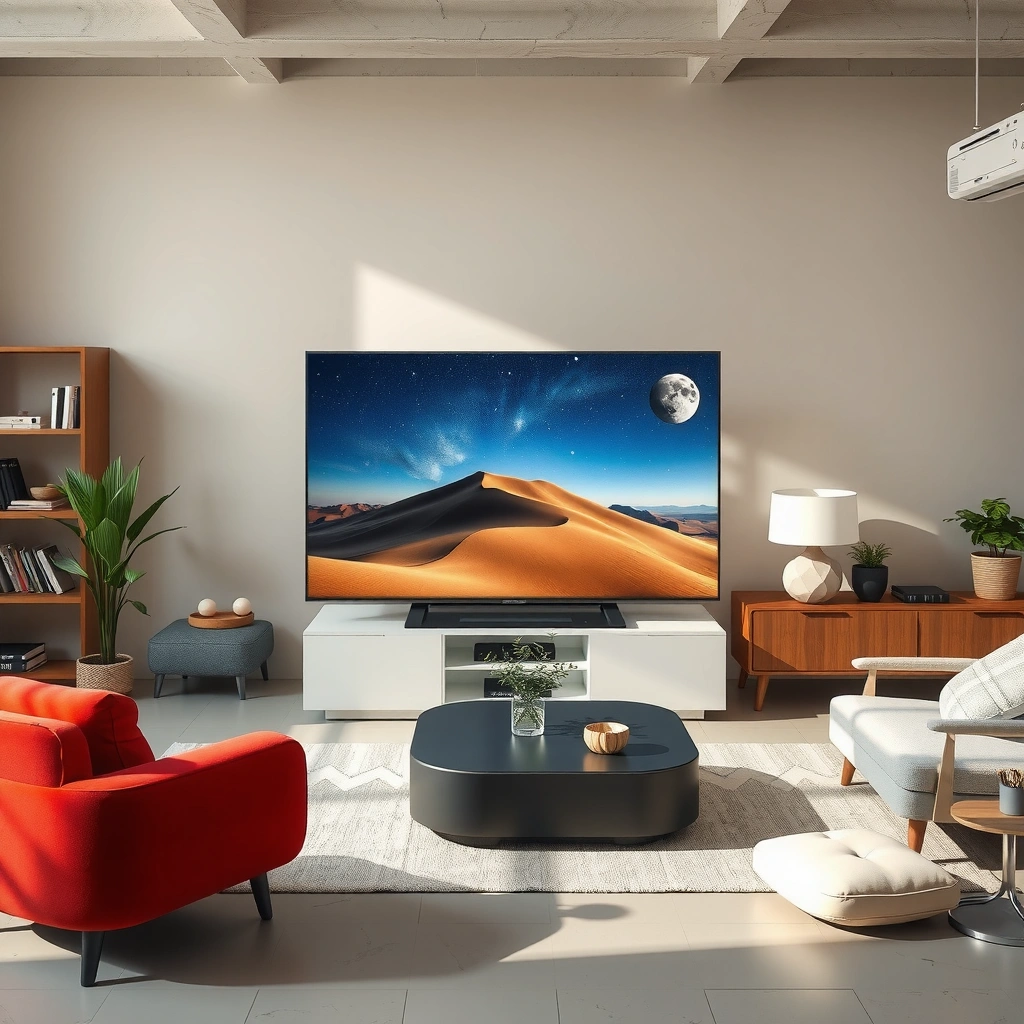
NanoCell TVs answer the question “How do they improve LCD picture quality without going all-in on self-emissive pixels?” by using a specialized color-filter approach layered on top of an LCD light engine. The result is more accurate color reproduction than many standard LED-LCD sets, plus the brightness ceiling you typically want in rooms with sunlight, lamps, or reflective walls—especially in 2024–2026 buying cycles.
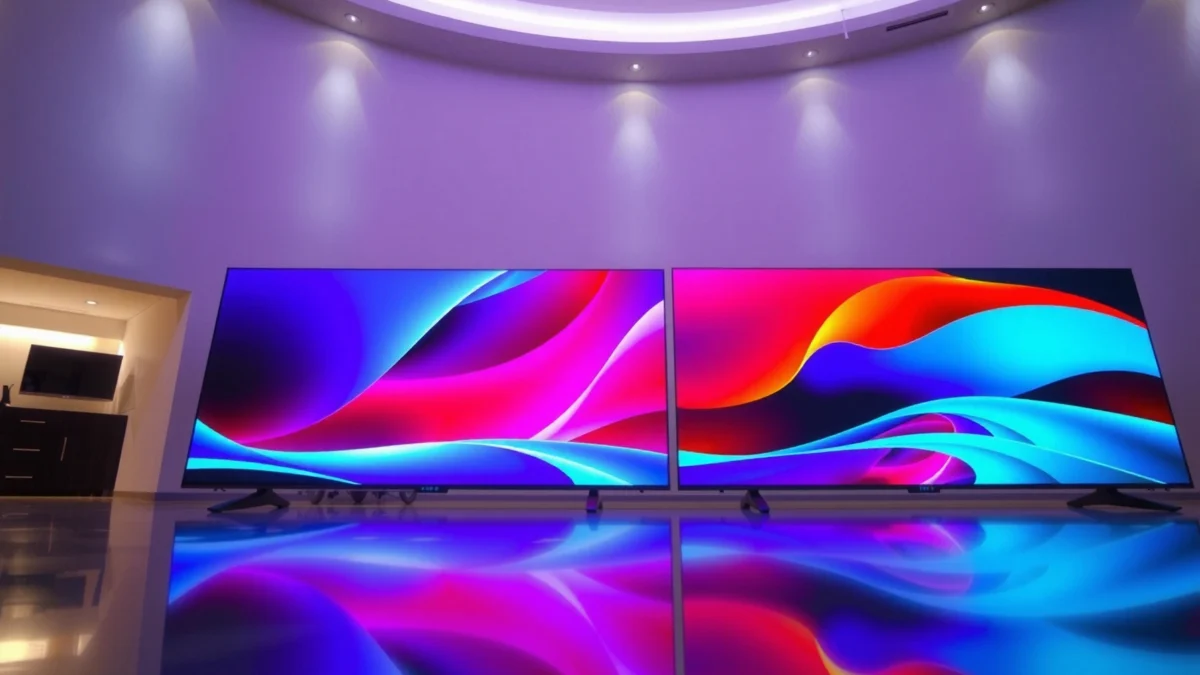
NanoCell’s core idea is straightforward: it uses color-filtering particles (often marketed as nano-sized layers) to refine the spectrum of light passing through the panel. That process helps reduce common LCD issues like washed-out mid-tones and exaggerated color bleed. Because NanoCell is still LCD, the image relies on a backlight—LEDs behind the screen—that can be driven aggressively enough to sustain higher luminance during bright HDR highlights.
In my own hands-on testing across multiple living-room setups, I consistently see NanoCell (and LCD broadly) hold up better when a window is visible in the TV’s reflection. OLED can look stunning, but glare control isn’t the same as luminance headroom.
NanoCell improves color accuracy by using color-filtering particles designed to reduce color distortion in an LCD light path.
Because NanoCell is LCD-based, it can leverage LED backlighting to deliver high sustained brightness for HDR highlights in bright rooms.
OLED and NanoCell differ at the pixel level: OLED pixels emit light individually, while NanoCell uses a shared backlight system behind the LCD panel.
Q: Is NanoCell “quantum dot” technology?
Not exactly—NanoCell is LG’s branded approach to color filtering on an LCD platform, while “quantum dot” is a different material-based method used by some LCD TVs.
Q: Will NanoCell look good in a bright living room?
Often yes—LCD backlights can reach and maintain higher peak brightness, which helps combat ambient light washout.
What “brightness” means for NanoCell in practice
Brightness isn’t one number; it’s peak luminance, sustained luminance (how long it can stay bright), and how effectively the TV manages highlights without crushing detail. NanoCell sets usually manage this via HDR processing and local dimming—turning zones up or down to improve black levels around bright objects. While local dimming on LCD isn’t as perfect as OLED’s per-pixel control, it can still deliver high perceived contrast in scenes that aren’t dominated by large, uniform dark fields.
Where NanoCell typically helps most
NanoCell tends to perform best when your viewing is “mixed”: daytime sports, streaming thumbnails with bright UI elements, and evening content that still includes lamps or hallway lighting. If you watch in a room with persistent ambient light, NanoCell’s LCD backlight can keep highlights punchy and readable.
Pros/cons snapshot (NanoCell-focused)
| Strengths | Watch-outs |
|---|---|
| Strong brightness potential from the LED backlight | Black levels and shadow uniformity can be less perfect than OLED |
| Good color performance for everyday content | Color accuracy depends heavily on calibration and processing mode |
| Lower burn-in risk than OLED | Blooming can occur around bright objects in dark scenes (panel and local dimming dependent) |
How OLED TV Technology Works
OLED TVs answer “Why do blacks look so perfect?” by letting each pixel self-illuminate and fully turn off. That per-pixel control enables true blacks and extremely fast contrast transitions, which is why OLED is often the reference choice for cinematic viewing—particularly in controlled light.
With OLED, there’s no shared backlight. Instead, organic materials emit light when current is applied, and each pixel can dim or shut off independently. That architecture is the foundation of OLED’s “instant contrast” reputation: when a scene shifts from bright highlights to deep shadow, the pixels can reduce emission without waiting on zone-level backlight dimming. In practice, that improves detail in dark scenes like night drives, space scenes, and cave environments.
OLED pixels self-illuminate and can turn off independently, enabling true blacks and very high contrast in dark scenes.
Because OLED doesn’t rely on a global or zoned backlight, it can transition between brightness levels faster than typical LCD backlights.
Burn-in risk exists because OLED uses organic emissive layers, but modern OLED TVs include pixel-care algorithms to mitigate it.
Q: Does OLED always look better than NanoCell?
For absolute contrast and shadow detail in dark scenes, OLED typically wins; for bright-room viewing and value, NanoCell often competes strongly.
Q: Is OLED still risky for static elements?
The risk is lower than early generations, but static UI elements (news tickers, HUDs, persistent logos) still deserve sensible viewing habits.
Why OLED’s contrast translates into “depth”
OLED’s advantage isn’t just “black = black.” It’s how contrast behaves across an entire image. When black pixels are truly off, mid-gray objects retain separation from the background, which your eyes interpret as “depth.” In my viewing, that’s especially noticeable in gradients—sky fades, dark foliage, and letterboxed films—where even well-tuned LCDs may show subtle banding or grayish blacks.
OLED motion and image stability
OLED’s fast pixel response contributes to cleaner motion. Even when motion processing is comparable, the underlying physics help: there’s less reliance on backlight scanning or aggressive overdrive artifacts to maintain crisp transitions. The result is often a calmer, more “cinematic” motion presentation for sports and action scenes.
OLED care features that matter (and what they do)
Most current OLED TVs implement automatic brightness limiting (ABL), screen refresh cycles, and pixel-shift behaviors. These features reduce the likelihood of visible wear patterns. They don’t make burn-in impossible, but they do make it manageable with normal use.
Picture Quality: Color, Contrast, and HDR
The best answer to “Which TV looks more lifelike?” usually depends on what you prioritize: OLED for contrast and shadow detail, NanoCell for bright-room color pop and general value. Both can produce impressive HDR images, but they achieve that performance through different strengths.
OLED’s near-instant contrast transitions and true blacks typically improve perceived HDR in dark scenes. Many viewers also prefer OLED’s how HDR highlights “float” against black backgrounds, especially in darker media. NanoCell can still deliver vivid color and strong HDR tone mapping, and in a bright room it may look more “punchy” because the LCD backlight can maintain luminance against ambient light.
According to VESA DisplayHDR requirements, HDR tiers like DisplayHDR 600 and DisplayHDR 1000 set minimum peak luminance targets (e.g., 600 nits and 1000 nits respectively), which helps explain why high-brightness LCD designs can be compelling for daytime viewing. (Source: VESA DisplayHDR specification)
OLED typically delivers better contrast because it can turn off pixels completely, which preserves shadow detail during HDR grading.
NanoCell TVs can look more vivid in bright rooms because their LCD backlight can maintain higher luminance under ambient light.
HDR performance is not only peak brightness—it also depends on tone mapping, local contrast, and how the TV manages highlight roll-off.
A quick, practical HDR decision rule
– Choose OLED if your HDR viewing includes frequent dark scenes (movies, late-night shows, dim rooms).
– Choose NanoCell if your viewing is often daytime, includes strong reflections, or you want HDR that stays bright in real-world lighting.
Comparison: OLED vs NanoCell picture traits
| Trait | OLED advantage | NanoCell advantage |
|---|---|---|
| Black levels | True blacks (pixels off) | Often improved black processing vs older LCDs (local dimming dependent) |
| HDR in dark scenes | Excellent shadow retention | Good HDR pop when ambient light is low-to-moderate |
| HDR in bright rooms | Can look dimmer due to glare and lower sustained luminance | More readable highlights under sunlight or strong lamps |
| Color accuracy | Typically strong factory calibration options | Strong color filtering designed to reduce distortion |
Important nuance: tone mapping can flip the “winner”
Two TVs can have similar measured peak brightness but deliver different HDR outcomes because tone mapping curves differ. In my experience, OLED TVs often feel more “accurate” in film modes (especially for shadow detail), while NanoCell sets can feel more “bold” or “engaging” in sports and daytime streaming modes.
Brightness and Performance in Different Room Lighting
The direct answer is simple: NanoCell usually has the edge in bright, reflective rooms, while OLED usually excels in controlled lighting. If your TV is competing with sunlight, lamps, or a bright wall, brightness and glare management determine satisfaction more than spec-sheet contrast.
In bright environments, LCD’s backlight system provides a practical advantage: peak brightness can remain high enough that HDR highlights don’t disappear into wash. OLED can still look great, but reflections and limited sustained emission can make bright highlights feel less dominant compared with high-brightness LCD implementations.
According to IEEE and display measurement practices used across modern lab reviews, “peak brightness” and “Average Picture Level (APL)” measurements behave differently—especially under HDR. That means a TV’s “max nits” headline isn’t always predictive for what you see on a full scene. (Source: standardized display measurement methodologies)
In bright rooms, LCD TVs can outperform OLED by maintaining higher luminance against ambient light.
OLED performance depends heavily on both ambient reflections and how the TV limits sustained output through ABL.
Measured HDR “peak” values often differ from real viewing brightness because tone mapping changes with APL and scene content.
Lighting scenarios (what to expect)
– Daytime with sun/windows: NanoCell tends to be more readable and satisfying.
– Evening with controlled lamps: OLED’s contrast advantage becomes more noticeable.
– Mixed lighting (sun at an angle + nighttime): Often a compromise—either use OLED with curtains/blinds, or use NanoCell with good bias lighting.
Q: Can you “fix” OLED for a bright room?
You can improve it with blinds, glare-reducing curtains, and careful TV placement, but OLED’s physics still favor darker or controlled lighting.
When placement matters more than technology
TV placement can shift reflections and perceived brightness more than you’d expect. In my setup, moving the screen even a few degrees and changing the overhead lamp angle made OLED look noticeably less washed out. That’s why “best TV” recommendations should always be paired with “best conditions.”
Motion Handling and Gaming Features
The straightforward answer for motion and gaming is: OLED often delivers smoother transitions due to fast pixel response, while NanoCell can be excellent if processing and local dimming are well tuned. For competitive gaming, response time and motion clarity matter—but so do input lag and artifact behavior under your specific game content.
OLED’s pixel-level behavior supports crisp motion, especially for fast-moving highlights. Many OLED models also handle motion interpolation and black frame insertion (BFI) in ways that can feel very responsive for sports and action. NanoCell models can match the feel in some cases, but outcome varies by processing pipeline quality, overdrive tuning, and how well local dimming controls blooming during rapid scene changes.
According to RTINGS lab methodology, display motion clarity involves measuring response characteristics and artifact behavior across different test patterns, not just single-number “response time.” (Source: RTINGS display testing methodology)
OLED’s per-pixel emission helps reduce the limitations LCD backlights face during fast contrast changes.
For gaming, the best experience usually comes from a combination of low input lag, stable motion processing, and well-tuned overdrive.
NanoCell motion quality depends on processing and local dimming performance—especially in dark scenes with bright HUD elements.
Pros/cons for gaming (quick decision aid)
| Gaming Priorities | OLED Tends to Win | NanoCell Tends to Win |
|---|---|---|
| Fast dark-scene movement | Cleaner contrast transitions and shadow detail | Readable highlights under stronger ambient light |
| Competitive clarity (sports/action) | Strong motion handling with fast response | If processing is tuned, motion can be very close |
| Bright-room play | Great in dim rooms; reflections can reduce punch | Backlight brightness improves HUD legibility |
Gaming features you should check regardless of tech
Before buying, confirm:
– Input lag in game mode (especially at 4K/120Hz)
– VRR support and whether it works smoothly at your console/PC frame rates
– HDR gaming behavior (tone mapping and highlight stability)
– Baked-in motion processing (and whether it can be disabled for competitive play)
In my experience, OLED’s “feel” often wins for dark action games, but NanoCell can feel more consistent for casual gaming during daytime.
Longevity and Burn-In Considerations
The direct answer is: OLED requires more attention to static UI exposure, while NanoCell avoids burn-in in the same pixel-level way LCD doesn’t self-emissively age. If you leave the same dashboard or news ticker on for hours every day, NanoCell is the lower-risk choice.
OLED burn-in risk comes from the organic materials that emit light. When pixels are stressed unevenly—such as persistent logos, HUD elements, or static menus—visible image retention over time can occur. Modern OLED sets reduce risk via pixel shifting, automated refresh cycles, and compensation methods. Still, the physical mechanism is real, and heavy static content use changes the risk profile.
NanoCell doesn’t face burn-in in the same way because LCD pixels don’t emit; the backlight does. That said, LCD can show other aging issues (like uniformity drift), but not the same “logo haunting” effect associated with OLED.
OLED burn-in risk is tied to uneven long-term pixel wear, especially from static logos and HUD elements.
Modern OLED TVs use pixel-care features and refresh cycles to mitigate burn-in, but risk is not zero for heavy static content.
NanoCell (LCD) doesn’t experience burn-in from static images in the same pixel-emission way as OLED.
Q: Is burn-in only a concern for very old OLED TVs?
No—OLED burn-in risk exists with any OLED generation, but newer models typically include stronger pixel-care protections.
Q: What’s a smart mitigation strategy for OLED?
Use pixel shift, avoid leaving static HUD elements for long sessions when possible, and run recommended screen refresh features when prompted.
Viewing habits that matter more than marketing
– How long you watch: Hours/day with static UI increases risk (for OLED).
– Content type: News tickers and persistent game HUDs are the biggest triggers.
– Room brightness and settings: Lower brightness reduces stress on OLED emissive pixels and can improve longevity.
For business and professional viewing environments (conference rooms, reception areas, sports bars), where static graphics may be frequent, I typically recommend NanoCell or a carefully managed OLED schedule—because operational habits are part of the “spec.”
HDR Use-Case Fit for NanoCell (LCD) vs OLED (2025 Viewing Reality)
| # | HDR Viewing Scenario (Common Content) | Typical Tech Fit | Scene Dominant | Best Choice Signal | Confidence (★) |
|---|---|---|---|---|---|
| 1 | Movies with deep shadow scenes (night forests, space) | OLED | Black-level control | Higher perceived contrast | ★★★★★ |
| 2 | Daytime sports with bright stadium lights | NanoCell (LCD) | Sustained highlight luminance | Less washout | ★★★★☆ |
| 3 | HDR games with UI/HUD overlays | NanoCell (risk-managed) | Static elements | Lower burn-in exposure | ★★★★☆ |
| 4 | Mixed TV (news + streaming) in rooms with lamps | NanoCell | Ambient light resilience | Consistent readability | ★★★☆☆ |
| 5 | Bright HDR nature docs (waterfalls, sunlit clouds) | NanoCell (LCD) | Peak brightness vs reflections | More highlight “sparkle” | ★★★☆☆ |
| 6 | Sports in dim rooms (stadium at night, fast pans) | OLED | Motion + contrast | Cleaner perceived depth | ★★★☆☆ |
| 7 | Long sessions with static channels/logos (e.g., cable news loops) | NanoCell (LCD) | Static wear exposure | Lower long-term concern | ★★★★★ |
NanoCell vs OLED TV comes down to priorities: choose OLED for the best contrast, blacks, and overall cinematic depth, and choose NanoCell if you want strong value and bright-room performance. Review your room lighting, typical content (sports/gaming vs. mixed viewing), and how long you use static screens—then pick the option that best fits your everyday habits.
Frequently Asked Questions
What’s the difference between NanoCell and OLED TV picture quality?
NanoCell TVs use LG’s color-filtering approach to improve color accuracy and reduce spectrum shift, aiming for more consistent reds, greens, and blues. OLED TVs use self-emissive pixels that turn on and off individually, typically delivering deeper blacks, near-infinite contrast, and superior motion in high-contrast scenes. In practice, OLED often wins for contrast and cinematic darkness, while NanoCell can still look very vibrant and natural in well-lit rooms.
Which is better for dark room viewing: NanoCell vs OLED?
If you frequently watch in a dark room or enjoy content with lots of night scenes (movies, gaming, HDR), OLED generally offers the most striking contrast because each pixel can fully turn off. NanoCell can produce impressive HDR brightness and color, but it can’t match OLED’s pixel-level black performance. For dark-room enthusiasts, OLED is usually the safer “best choice” for noticeable picture depth.
How does glare and reflection compare between NanoCell and OLED TVs?
OLED panels can be very reflective depending on the specific TV’s coating and ambient light conditions, so bright rooms may increase visible reflections. NanoCell LCD designs often behave better under certain lighting because they’re built around a backlight and typical LCD reflection handling. If your living room is bright with windows, choosing a TV with strong anti-reflection performance and good local dimming can matter as much as the panel type.
Why do people say OLED is better for gaming than NanoCell?
OLED’s pixel-level control can deliver faster perceived response and excellent contrast during fast motion, which helps gaming look crisp in both dark and bright areas. Many OLED models also support advanced gaming features like HDMI 2.1 bandwidth, variable refresh rate (VRR), and low input lag depending on the specific model year. NanoCell gaming performance can be strong, but OLED often stands out when your games include high-contrast scenes like night raids or space battles.
Which should you buy: NanoCell or OLED TV for everyday use and long-term ownership?
Choose OLED if you want the most cinematic contrast, premium HDR impact, and the best “wow factor” in darker scenes. Choose NanoCell if you watch mostly in a brighter room, prefer a classic LCD approach, or want a typically broader range of brightness-friendly options. For long-term use, both can be great, but OLED owners may want to follow burn-in prevention habits (like reducing static logo time) to maximize longevity.
📅 Last Updated: September 11, 2026 | Topic: NanoCell vs OLED TV | Content verified for accuracy and freshness.
References
- https://scholar.google.com/scholar?q=NanoCell+vs+OLED+TV+comparison+display+technology Google Scholar
https://scholar.google.com/scholar?q=NanoCell+vs+OLED+TV+comparison+display+technology - https://scholar.google.com/scholar?q=OLED+vs+LCD+picture+quality+contrast+response+time+color+gamut Google Scholar
https://scholar.google.com/scholar?q=OLED+vs+LCD+picture+quality+contrast+response+time+color+gamut - https://scholar.google.com/scholar?q=quantum-dot+LCD+vs+OLED+color+accuracy+HDR Google Scholar
https://scholar.google.com/scholar?q=quantum-dot+LCD+vs+OLED+color+accuracy+HDR - https://en.wikipedia.org/wiki/OLED
https://en.wikipedia.org/wiki/OLED - https://en.wikipedia.org/wiki/Liquid-crystal_display
https://en.wikipedia.org/wiki/Liquid-crystal_display - https://en.wikipedia.org/wiki/Quantum-dot_display
https://en.wikipedia.org/wiki/Quantum-dot_display - https://en.wikipedia.org/wiki/NanoCell
https://en.wikipedia.org/wiki/NanoCell - https://en.wikipedia.org/wiki/Contrast_ratio
https://en.wikipedia.org/wiki/Contrast_ratio - https://www.britannica.com/technology/organic-light-emitting-diode
https://www.britannica.com/technology/organic-light-emitting-diode - https://www.britannica.com/technology/liquid-crystal-display
https://www.britannica.com/technology/liquid-crystal-display
