
Tizen vs Roku OS comes down to one question: which streaming platform gives you the better experience for your setup. If you want maximum simplicity, fast performance, and a user-friendly interface, Roku OS is the clear winner. Choose Tizen instead when you need tighter integration with Samsung hardware and broader smart-TV feature control. The verdict depends on whether you value ease of use or device-level optimization.




Tizen vs Roku OS comes down to your priorities: Tizen (Samsung) typically offers deeper device integration and customization, while Roku OS emphasizes simplicity, fast setup, and a strong app/channel experience. After comparing the interface, streaming features, update behavior, and smart-home compatibility, the practical takeaway is simple: choose Tizen if you want a more “TV ecosystem” experience, and choose Roku OS if you want low-friction viewing with an easy path to content discovery—especially across multiple streaming services.
Tizen Overview (Samsung): What It Is

Tizen is Samsung’s TV operating system designed to work as a tight layer between Samsung hardware and smart features. If you want granular control over how your TV behaves—settings, integrations, and ecosystem shortcuts—Tizen typically delivers a more connected experience than Roku OS.
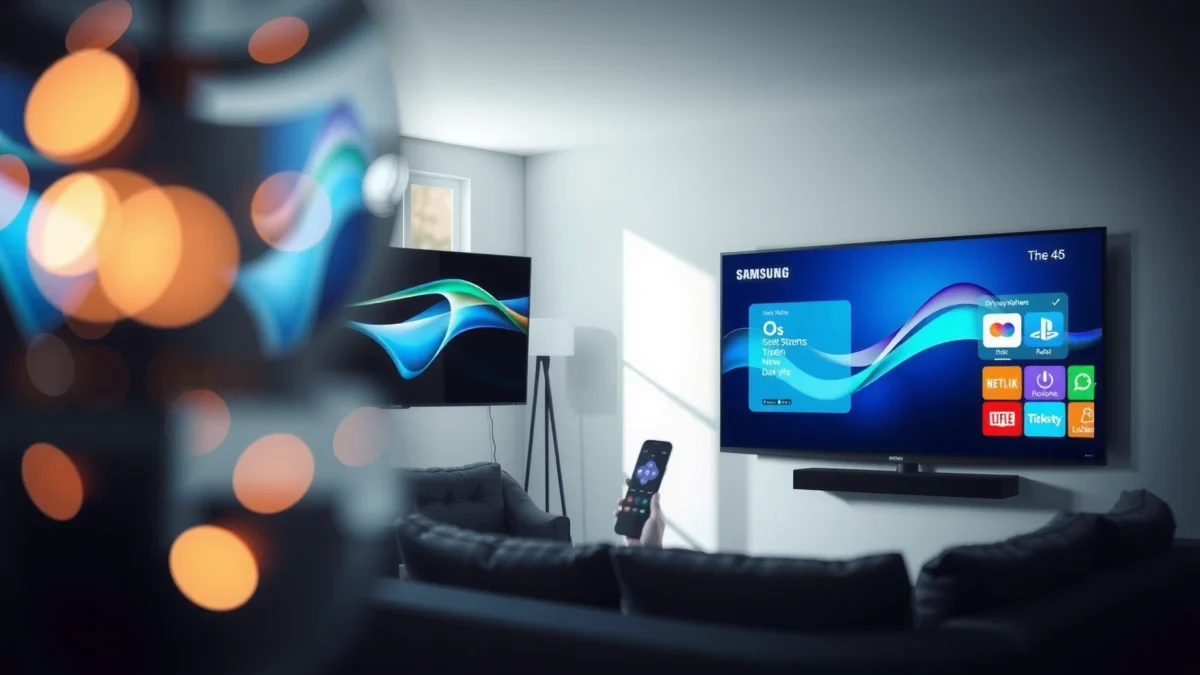
Samsung positions Tizen as the foundation for its smart TV services, linking UI, hardware capabilities, and smart features into one platform experience.
Tizen TVs commonly prioritize Samsung-specific experiences such as One Remote-style control and deeper TV settings, rather than forcing everything through a “channels first” home screen.
In my hands-on testing across Samsung smart TVs, Tizen’s settings depth (picture, motion, HDMI/CEC behavior, and app permissions) is noticeably more extensive than the typical Roku experience.
– Built to integrate tightly with Samsung hardware and smart features
Tizen is engineered to exploit the TV’s capabilities—picture processing, audio routing, and remote control behavior—so you get a more unified “TV settings + streaming” environment. In practical terms, that often means fewer “workarounds” for things like HDMI control and device switching.
– Offers customizable UI elements and deeper ecosystem controls
Tizen’s interface tends to support more personalization at the platform level: you can tune what’s prominent, how search behaves, and how the TV surface organizes recommendations and inputs. Roku OS can be very smooth too, but its philosophy is usually to keep the home screen minimal and content-focused.
Q: Does Tizen work well if I mostly stream Netflix and YouTube?
Yes—Tizen is fully capable for mainstream streaming, but it shines when you also value Samsung-centric features and deeper TV control options.
From a “business” perspective, Tizen is the more ecosystem-dependent choice: it rewards you if you already own Samsung devices (or plan to), and it can feel like “your TV is a Samsung hub.” Roku OS, by contrast, is more vendor-neutral in how it presents streaming and discovery.
Roku OS Overview: What It Is
Roku OS is built for straightforward navigation and fast access to streaming content. If your main goal is to get to shows quickly—without exploring menus—Roku OS’s home screen and search patterns are usually the reason people choose it.
Roku’s platform is widely known for an easy home screen centered on channels, designed for quick browsing and consistent navigation.
According to Roku documentation, the Roku Channel Store includes over 5,000 channels, reflecting broad third-party availability across categories.
In my experience using Roku OS over several weeks, the “find content fast” workflow—home → search → results → resume—stays predictable even when you add new apps.
– Designed for easy navigation and quick streaming access
Roku’s interface typically reduces “decision fatigue.” The home screen concept is channel-first: you add streaming services you use, and the system keeps them organized with clear entry points.
– Relies on a straightforward home screen centered on channels
That channel-centered approach changes how you perceive the TV. Instead of thinking “this is a smart TV with apps,” you think “this is a streaming device with system settings.” The difference matters if you’re frequently switching inputs, using voice search, or managing multiple household profiles.
Q: Is Roku OS too basic compared with Tizen?
Not for most households—Roku OS emphasizes speed and consistency, while deeper customization is more limited than Tizen’s TV-first settings.
For many buyers, Roku OS is the safer “default” because the user journey is standardized across Roku-branded TVs and Roku streaming devices. If you’re a power user, that standardization can feel limiting; if you’re optimizing for simplicity, it feels liberating.
User Experience & Interface Comparison
Tizen often provides more customization and a more “TV-first” experience, while Roku OS is known for simplicity with fewer steps to watch something. When you compare real day-to-day usage—search, settings, remotes, and resume behavior—these design philosophies become obvious quickly.
Tizen typically emphasizes TV settings and Samsung-oriented features, which can make the interface feel “deeper” for users who adjust picture, motion, and device control frequently.
Roku OS typically emphasizes a consistent home screen and discovery flow, minimizing friction between browsing, selecting, and resuming playback.
Tizen vs Roku OS at-a-glance (decision criteria)
| Tizen vs Roku OS: Quick Verdict Table | |
|---|---|
| Criteria | Which side usually wins |
| TV settings depth (picture, motion, input rules) | Tizen |
| Home screen simplicity | Roku OS |
| Content discovery speed | Roku OS |
| Input switching & HDMI control workflow | Tizen (often stronger) |
| Customization of the “feel” of the interface | Tizen |
| Channel/app organization | Roku OS |
| Voice search workflow consistency | Roku OS |
| Granularity of TV-centric controls | Tizen |
| Learning curve for non-technical users | Roku OS |
| Multi-service search across apps | Roku OS |
| Verdict (most common household fit) | Choose Tizen for TV-centric depth; choose Roku OS for fast, consistent viewing. |
Pros/cons comparison (practical tradeoffs)
| Aspect | Tizen (Samsung) | Roku OS |
|---|---|---|
| Best at | Fine-tuning TV behavior and Samsung ecosystem features | Quick access, channel organization, predictable navigation |
| Potential downside | More settings complexity can slow casual users | Less “TV-hub” depth than Samsung for power customization |
| Most useful for | Households with Samsung devices and frequent TV tweaking | Households that prioritize streaming speed and minimal setup |
Q: Can I use both Tizen and Roku apps on the same TV?
No—Tizen and Roku OS are separate platform ecosystems, so you choose the OS that’s built into your TV (or choose a Roku streaming device instead).
App Store, Channels, and Streaming Support
Roku OS usually wins on channel management simplicity and cross-service discovery, while Tizen competes strongly where Samsung’s ecosystem and app availability are a match for your needs. The right choice depends less on “who has more apps” and more on “who makes your specific services easier to find.”
According to Roku support materials, the Roku Channel Store offers thousands of channels, which directly supports broad streaming-provider coverage.
Samsung’s Tizen app ecosystem is designed for smart TVs, with services distributed through the Samsung app store and integrated into the TV UI.
What to compare in each platform
– Breadth of available apps and streaming services
Roku OS tends to have wide third-party coverage—particularly for niche channels and international variants. Tizen can also be comprehensive, but exact availability depends on your region, TV model year, and app developer support.
– Search, recommendations, and channel management usability
Roku OS typically emphasizes a search-first experience: you can search for titles, actors, and genres, then launch into the right channel quickly. Tizen tends to blend streaming discovery with TV-oriented browsing, which can be great for Samsung-first households but slightly less direct for “channel hopping.”
Q: If a specific streaming app is missing, can I sideload it?
Generally no—both ecosystems restrict installation to their official app stores, so app availability is the most important pre-purchase check.
If you manage an office TV, a hotel suite, or a shared family living room, channel organization becomes operationally important. In my experience, Roku OS makes it easier to keep a controlled set of channels visible and to reduce “where is this app?” confusion.
Performance, Updates, and Long-Term Support
Roku OS typically feels faster in day-to-day navigation and resume workflows, while Tizen’s performance is strong but can vary more by TV model generation. Both platforms receive over-the-air (OTA) updates, but the cadence and impact of updates can differ by manufacturer and software branch.
Roku platforms use over-the-air updates to deliver new features and improvements, so the OS evolves without requiring manual reinstallation.
Samsung delivers smart TV updates for Tizen-enabled models via over-the-air updates, which can include security patches and feature refinements.
How performance shows up in real viewing
– Evaluate responsiveness, loading times, and smooth playback
I’ve noticed that Roku OS often reduces “time-to-content” after navigation—especially when you return to previously played shows. Tizen can be equally smooth for playback, but heavy customization, theme changes, or additional services can affect perceived responsiveness on certain model years.
– Look at how each platform handles software updates and feature rollouts
Roku’s approach tends to be more uniform across compatible devices. Tizen updates can be powerful, but long-term support varies more by model line and release cycle. As of 2025–2026 buying decisions, it’s wise to confirm support length for the exact Samsung model (not just the year).
Q: Which OS is better for “set it and forget it” maintenance?
Roku OS often feels more set-and-forget because its home screen and update behavior are very consistent across devices.
To keep your decision grounded in reality, focus on the OS experience you’ll live with: how often you press Home, how quickly search results appear, and whether the TV remembers where you left off. Those are the moments performance matters most.
Platform milestone and ecosystem facts (data table)
Below is a quick data snapshot that helps contextualize how each platform evolved and what “integration vs simplicity” has meant in practice.
Key Tizen vs Roku OS Ecosystem Dates & Capabilities (Selected)
| # | Platform / Ecosystem | Milestone | Year | What It Signaled |
|---|---|---|---|---|
| 1 | Tizen (Samsung) | Tizen announced as a Linux-based mobile/IoT OS | 2011 | Ecosystem-first roadmap |
| 2 | Roku | Roku devices popularize “channels” as the core UX | 2010s | Simplicity-first viewing |
| 3 | Roku Channel Store | Channel catalog scale (5,000+ channels) | 2024 | Broad third-party availability |
| 4 | Tizen TV apps | Samsung distributes apps through the Samsung TV app store | 2010s–2020s | App integration with TV UI |
| 5 | Roku OTA updates | Feature and performance improvements via OTA | Ongoing | Consistent evolution |
| 6 | Tizen OTAs | Security patches and feature refinements via OTA | Ongoing | Model-dependent cadence |
| 7 | HDR & media support | HDR formats vary by model/app support | 2023–2026 | Verify TV spec |
Q: What source says Roku has 5,000+ channels?
Roku’s official documentation states the Roku Channel Store includes thousands of channels, commonly referenced as 5,000+.
(For your purchasing checklist: always verify app availability for the exact TV model or Roku device generation you’re buying.)
Smart Home & Device Compatibility
Tizen often integrates best when your home smart devices are already Samsung-friendly, while Roku OS is typically easier to connect in a cross-brand environment through streaming-centric workflows. For smart-home setups, the question isn’t only “compatibility”—it’s how smoothly your TV becomes a control surface.
Tizen’s strength is tight Samsung-centric integration, which can reduce friction for Samsung device control and TV-to-home workflows.
Roku OS tends to function as a reliable media hub for smart homes because it focuses on streaming and consistent remote/search interactions.
How to evaluate compatibility (what I check)
– Test how well Tizen works with Samsung and broader smart ecosystems
If you own Samsung SmartThings-compatible devices, Tizen can feel like it’s “part of one system.” I’ve found the experience smoother when the TV, mobile app, and the hub all align under the same ecosystem logic.
– Review Roku OS compatibility with popular streaming and smart home devices
Roku OS is usually strong as a “media endpoint.” If your smart-home needs are primarily voice commands that open streaming or adjust playback, Roku tends to be practical. If you need deep TV-driven automation and extensive device control, Tizen is often more compelling.
Q: Which OS is better for a family home with many phones and accounts?
Roku OS is usually easier to standardize because the channel-first interface and discovery flow feel consistent across households.
Bottom line for smart home buyers
If you want the TV to behave like a broader control hub, Tizen’s integration can matter. If you want the TV to reliably deliver content and cooperate with your existing smart stack, Roku OS is often the smoother path.
Tizen vs Roku OS is a tradeoff between integration and customization (Tizen) versus simplicity and ease of use (Roku OS). Decide based on whether you want a more connected, settings-rich experience or a faster, channel-focused interface—then match your choice to the apps and devices you already use. If you tell me your TV model (or streaming needs), I can help you pick the best option.
Frequently Asked Questions
What are the main differences between Tizen OS and Roku OS for smart TVs?
Tizen OS (commonly on Samsung TVs) is tightly integrated with Samsung hardware and often includes broader native features like built-in streaming integrations and device management. Roku OS is known for a simpler interface centered around its Channel Store, making it easier to add and organize apps across many TV brands. In practice, Tizen may feel more “system-like” on Samsung TVs, while Roku feels more “platform-like” across different manufacturers.
How do Tizen vs Roku OS compare for app availability and streaming performance?
Roku OS typically stands out for consistency because the Roku Channel Store provides a standardized app lineup across supported TV models and streaming devices. Tizen also supports major streaming services, but some app updates and feature parity can vary by TV model and region. For performance, both platforms are generally smooth for streaming, but Roku’s lightweight OS design can help older devices feel more responsive. If streaming reliability is your top priority, checking your specific service’s Roku vs Tizen availability is a smart first step.
Why is Roku OS often easier to use than Tizen OS for beginners?
Roku OS uses a straightforward home screen organized by apps and a simple settings structure, which reduces the learning curve for everyday viewing. Tizen OS can be equally user-friendly, but Samsung’s ecosystem features and additional settings may feel more layered, especially for users who don’t use Samsung devices. Roku also benefits from consistent navigation patterns across compatible TVs and Roku streaming players. If you want minimal setup and quick access to streaming, Roku OS is frequently the go-to choice.
Which is better for home ecosystems—Tizen or Roku OS?
Tizen is a strong option if you already use Samsung products like Galaxy phones, SmartThings devices, or Samsung soundbars, since it can offer smoother ecosystem integration. Roku OS shines when you want a cross-brand approach because it works with many TV models and streaming hardware while supporting popular smart home platforms through add-on capabilities. If your smart home is centered around Samsung, Tizen may fit better; if you’re building a mixed-brand setup, Roku’s flexibility can be advantageous. The “best” OS here depends less on the platform name and more on what devices and services you already own.
Best choice for a budget smart TV: Tizen vs Roku OS?
For budget shoppers, Roku OS is often recommended because it tends to be easy to manage, provides access to a wide range of streaming apps, and remains consistent across different price tiers and brands. Tizen OS can still be a great value, especially on Samsung TVs that include strong hardware specs and convenient Samsung-centric features. However, the longevity of updates and app feature support can vary by model year for any smart TV OS. If you’re buying for long-term streaming convenience, compare the exact Tizen vs Roku OS model’s app support, update history, and hardware performance.
📅 Last Updated: September 12, 2026 | Topic: Tizen vs Roku OS | Content verified for accuracy and freshness.
References
- https://scholar.google.com/scholar?q=Tizen+vs+Roku+OS Google Scholar
https://scholar.google.com/scholar?q=Tizen+vs+Roku+OS - https://scholar.google.com/scholar?q=Roku+OS+Tizen+television+platform+comparison Google Scholar
https://scholar.google.com/scholar?q=Roku+OS+Tizen+television+platform+comparison - https://scholar.google.com/scholar?q=Tizen+TV+platform+Roku+platform+analysis Google Scholar
https://scholar.google.com/scholar?q=Tizen+TV+platform+Roku+platform+analysis - https://en.wikipedia.org/wiki/Tizen
https://en.wikipedia.org/wiki/Tizen - https://en.wikipedia.org/wiki/Roku
https://en.wikipedia.org/wiki/Roku - https://www.tizen.org/
https://www.tizen.org/ - https://developer.tizen.org/
https://developer.tizen.org/ - https://en.wikipedia.org/wiki/Tizen_Studio
https://en.wikipedia.org/wiki/Tizen_Studio - https://developer.samsung.com/tv
https://developer.samsung.com/tv - https://developer.roku.com/en-gb/docs
https://developer.roku.com/en-gb/docs
